Bubble Witch 3 Saga
- 166.25K
- 4.7
- Installs
- 100.00M
- Price
- Free
Screenshots


Analysis by Reviewed
I tend to enjoy bubble shooters most when they give me a quick, clear decision rather than asking me to learn a complicated rulebook. Bubble Witch 3 Saga fits that mood: I can pick it up for a short break, aim a shot, and still find room to think ahead. It is a free puzzle game from King, rated for Everyone, and its familiar matching idea is dressed up with Stella’s magical setting rather than treated as a bare arcade challenge.
A simple routine that rewards a little planning
My usual approach is to pause before each shot and look beyond the nearest cluster. Matching three bubbles is the basic aim, but the useful question is often which group will open a route to the bubbles above it. A shot that clears a small patch may feel satisfying, yet a carefully placed shot can bring down a larger section and conserve opportunities. That difference becomes more important when the layout is awkward.
The game works well in the small gaps of a day: waiting for a drink to brew, taking a quiet break, or unwinding before bed. A level gives me a definite task, so it is easier to stop after a round than with a game built around long sessions. Still, the “one more try” pull is real, particularly when I can see how a slightly better angle might solve the board.
Settings and small habits that make play smoother
Before settling in, I check the sound and notification options available on my device and adjust them to suit the moment. That is a practical habit rather than a special trick: bubble pops can be pleasant with sound on, while silent play is better in a waiting room or beside someone who is resting. I also avoid starting a level when I know I have only a few seconds, since a rushed shot is more likely to waste a move than save time.
When a level stalls, I try changing the order of my shots instead of repeating the same attempt. If a route is blocked, clearing the support bubbles can be more valuable than aiming directly at the target. I save magical boosters for a board where they solve a specific problem, rather than using one simply because the game offers it. That keeps the decision meaningful and makes a difficult win feel earned.
Building a repeatable approach to stubborn boards
One habit that helps me is to treat the first attempt as a chance to read the layout, not as a test I must pass immediately. I notice which colors are actually useful, which cluster is supporting the section I need, and whether a direct shot is realistic. On a second attempt, I can make one deliberate change instead of randomly changing several things at once. That makes a loss more informative and keeps retries from feeling like the same shot on repeat.
I also try to distinguish between a board that needs accuracy and one that needs a different plan. If a bubble can reach a useful pocket by banking off a wall, I take a moment to judge the angle rather than firing at the visible target. If the route is blocked, I work on access first. The useful shortcut is not shooting faster; it is deciding what the shot is meant to accomplish before I release it.
More From Our News Desk

Weather by Xiaomi Review: Clear at a Glance, Less Clear Up Close

X Under Pressure: Can It Recover When Posting Goes Wrong?

Clash of Clans Is Won Between the Battles

Android Auto Makes the Case for Quieter Car Software

MobiOffice: Transforming Mobile Productivity with Seamless Integration

EA SPORTS FC™ Mobile Soccer: Redefining Mobile Sports Gaming
Step into the Magical World
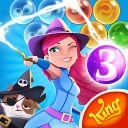
From the moment you open Bubble Witch 3 Saga, you're whisked away into a world filled with colorful bubbles, cheeky cats, and a quest to defeat the wicked Wilbur. If you've played the previous Bubble Witch games, you'll notice that this one feels like a polished gem. The graphics are vibrant, and the animations are smooth, making every pop and explosion feel so satisfying.
The storyline is simple but engaging. You join Stella the witch as she battles to save the magical world from Wilbur's mischief. Along the way, you'll rescue adorable critters trapped in bubbles and rebuild Stella's home, adding a charming layer of customization that keeps things fresh.
Gameplay Mechanics that Pop
Here's where the game really shines. The mechanics are straightforward: aim, shoot, and pop bubbles by matching three or more of the same color. But don't let the simplicity fool you. As you progress, the levels get more challenging, introducing obstacles like ghost traps and tricky bubble arrangements that require strategic thinking.
The game offers a variety of modes that keep the experience dynamic. Whether you're rescuing owls, clearing the top row, or freeing ghosts, there's always a new challenge to tackle. Plus, the addition of magical boosters adds a fun twist, giving you the power to clear levels with a flick of your wand when things get tough.
Choosing the right moment to use a booster
There is a useful trade-off here: boosters can turn a frustrating board around, but leaning on them too quickly can make it harder to judge whether your own aim and route choices are improving. I treat them as a fallback for a genuinely awkward layout, not as the default opening move. If I am close to clearing a level, I first look for a shot that changes the board’s structure; if the same obstacle keeps shutting down every attempt, a booster may be the more sensible choice.
This also affects how I handle a quick session. If I am interrupted, I would rather finish the current level than begin another and rush it. Bubble shooters reward attention to angles, and a few seconds spent tracing where a shot will land can matter more than firing rapidly. The game is casual in presentation, but not every board is best approached casually.
Social Features and Competitive Edge
In the spirit of friendly competition, Bubble Witch 3 Saga includes leaderboards where you can see how you stack up against friends and other players. This feature adds a social element that can be quite motivating. There's nothing like seeing a friend’s high score to push you to try just one more time.
Another aspect of its social features is the ability to connect with friends and send or receive lives, ensuring that you're never stuck for too long. It’s a nice touch that makes the game feel more connected and community-driven.
What the numbers and purchases mean in practice
The game has a 4.7 average from around 2.7 million ratings and has passed 100 million installs, which suggests that its easy-to-grasp format has found a large audience. It first arrived on January 11, 2017, and version 10.14.2.0 supports devices running Android 6.0 or later. Those details make it a long-running option, though they do not change the basic appeal: aim carefully, solve the board, and move on to the next puzzle.
It is free to start, with optional in-app purchases priced from $0.49 to $99.99 per item. I would go in expecting the option to spend, not assuming that spending is necessary for every session. If you prefer games with no purchase prompts or progression pressure, that may be a reason to choose a different puzzle title. The Everyone age rating makes it approachable for a broad audience, while parents may still want to check purchase settings on a shared device.
Making a short session fit real life
For me, the best everyday use is a small, intentional break rather than something to fill every spare second. If I have a few minutes while waiting for an appointment, I can focus on one board, make a couple of considered shots, and stop when I reach a natural pause. If I am playing near bedtime, I keep the screen and sound comfortable and avoid turning a difficult level into a reason to stay up for “just one more” attempt.
That boundary matters because the game gives a clear next step, and a near-win can be persuasive. I find it useful to decide before opening it whether I have time for one level or a longer stretch. Players who want a puzzle that can be put down at any moment may prefer something with no level progression or retry temptation; this one is more satisfying when I can give each board at least a little attention.
When another puzzle game may suit you better
Compared with a typical match-three game, this asks more of your aim and your ability to read a vertical layout; matching colors is only part of the solution. Compared with a stripped-down bubble shooter, it has a continuing story, varied objectives, social competition, and Stella’s home to rebuild. I like that extra structure, but players who only want a plain, score-focused arcade round may find the map, characters, and progression unnecessary.
It is also not my first choice when I want a completely predictable difficulty curve. Different objectives and tricky arrangements keep the play from feeling identical, but they can make a level feel stubborn if I am looking for a calm, effortless distraction. For that mood, a simple offline puzzle with no competitive layer may be a better fit. Here, the strongest sessions come when I am willing to pause, reconsider the route, and try again.
Rebuild and Customize
One of the unique aspects of Bubble Witch 3 Saga is the option to rebuild and customize Stella's home. As you progress and earn stars, you can redesign her abode, choosing different styles and decorations. This feature adds a personal touch and gives you something to work towards outside the regular bubble-popping action.
It's surprisingly satisfying to see the house transform, and it provides a nice break from the intense levels. Plus, it adds a layer of depth that keeps you coming back for more.
What progression is good for—and what it cannot fix
The home-building thread gives me a gentler reason to care about progress than simply chasing a better score. It can be a welcome change of pace after a run of demanding boards, especially if I enjoy seeing a place take shape over time. At the same time, it does not replace the puzzle itself: if aiming and retrying are not enjoyable for you, decorating will not turn the core loop into a different kind of game.
I would also keep expectations modest about what a changing level objective means. Rescuing owls, freeing ghosts, and clearing a row give the board different priorities, but the central skill remains reading the bubble layout and making shots count. That consistency is a strength for players who like mastering one basic system, and a limitation for anyone hoping each mode will feel like a completely separate game.
Mastering the rhythm without turning it into a chore
For a repeatable routine, I play a level, review what blocked my best route, and then decide whether another attempt is worth the time. I avoid treating every loss as a cue to spend a booster or keep tapping until I win. That small boundary helps preserve the relaxing side of the game. The home-building rewards offer a different reason to progress, but they work best as a pleasant side activity rather than a task I feel obliged to complete.
That balance is why I would recommend it to someone who likes light strategy, colorful presentation, and short puzzle sessions with a bit of ongoing progression. I would steer away anyone who dislikes retries, optional purchases, or social score comparisons. If you enjoy thinking through a shot and seeing the board respond, though, it has enough variety to keep the familiar bubble-shooter loop engaging.
Who is likely to enjoy the challenge
I think it suits players who enjoy a clear objective but still want to make small tactical choices, especially anyone who likes aiming puzzles more than swapping tiles on a grid. It is also a good fit for someone who appreciates a playful story and a separate decorating goal alongside the levels. Younger players can find the colorful presentation inviting, though on a shared device I would still review purchase settings before handing it over.
On the other hand, I would skip it if I strongly dislike retries, prefer every attempt to be equally easy, or want a game with no social comparisons and no optional spending. It is not ideal as a mindless tap-along either: the boards ask for attention, and a rushed shot can make a simple session feel irritating. If those trade-offs sound acceptable, the free entry point makes it easy to see whether Stella’s style and the aiming loop suit you.
Final Thoughts
If you're in the mood for a game that's both relaxing and challenging, Bubble Witch 3 Saga is a perfect choice. With its engaging gameplay, charming graphics, and a sprinkle of strategy, it's easy to see why it's a favorite among casual gamers.
So, whether you're a seasoned bubble shooter or a newbie looking for something magical, this game is worth a download. Just be prepared to lose track of time as you get sucked into Stella's enchanting world. Happy popping!
Bubble Witch 3 Saga Frequently Asked Questions
Is Bubble Witch 3 Saga appropriate for children?
Bubble Witch 3 Saga is rated Everyone, so its content is intended for a broad audience. It is a colorful puzzle game focused on shooting and matching bubbles, with Stella the witch on a rescue adventure. As with any game that offers optional purchases, parents may want to review purchase settings on the device before letting a child play.
How much storage space does Bubble Witch 3 Saga need?
The amount of storage the game needs can vary by device and installation, so it is worth checking the available space shown on your device before downloading. Bubble Witch 3 Saga is free to install, but keeping some room available can also help with updates and normal device use. The game is a puzzle adventure built around bubble-shooting levels.
Does Bubble Witch 3 Saga have in-app purchases?
Bubble Witch 3 Saga is free to download, with optional in-app purchases available. Players can choose whether to buy items or progress through the game without spending money, relying on their shots and strategy instead. Purchases range from $0.49 to $99.99 per item, so it is sensible to check the purchase options and device settings before confirming a transaction.
Is Bubble Witch 3 Saga suitable for casual players?
Yes. Bubble Witch 3 Saga is a puzzle game built around straightforward bubble-shooting rounds, so it is easy to pick up for a quick play session. Its levels add challenges as you progress, giving players reasons to think about their shots without changing the basic, approachable style. The game is rated Everyone, making it suitable for a broad audience.
What kind of game is Bubble Witch 3 Saga, and who developed it?
Bubble Witch 3 Saga is a puzzle game developed by King. Its central activity is shooting and matching bubbles, with Stella the witch leading the adventure. The simple premise makes it easy to understand before starting, while the level-based format gives players a steady sequence of goals to work through. The game is free to download.
Pros
- Simple and intuitive gameplay.
- Vibrant and colorful graphics.
- Regular updates with new levels.
- Engaging storyline with charming characters.
- Daily rewards and challenges.
Cons
- In-app purchases can add up.
- Occasional ads interrupt play.
- Requires constant internet connection.
- May drain battery quickly on some devices.
- Later levels can be quite challenging.
- Category
- Puzzle
- Version
- 10.14.2.0