Amaze GO!
- 7.74K
- 4.9
- Installs
- 100.00M
- Price
- Free

Screenshots
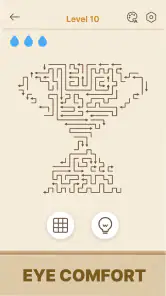
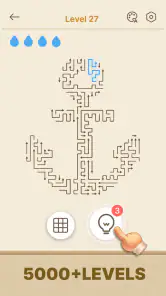
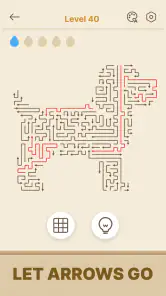
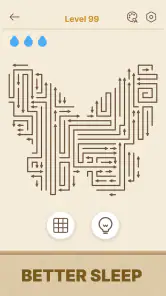
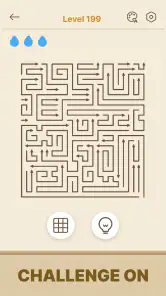
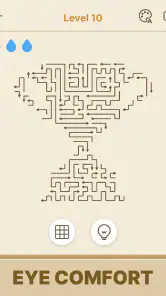
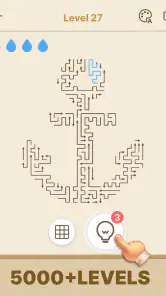
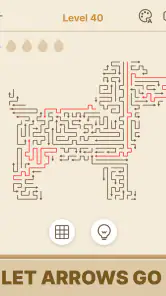
Analysis by Reviewed
When I have a spare moment and want to do something more active than scroll, I like a puzzle that gives me one clear problem to think through without asking for a whole evening. Amaze GO fits that mood: I look at a board, consider what a tap might change, and try to clear it with a sensible plan. The idea is immediately approachable, though its lasting appeal depends on whether you enjoy compact visual challenges more than stories, wordplay, or long-term strategy.
A quick test of whether its puzzle style suits you
I would start by playing in a moment when I can give the board my attention, rather than while rushing between messages. A useful first question is whether you enjoy predicting the result of a move before making it. If that small act of planning feels satisfying, the central loop may suit you; if you mainly want to tap without thinking, the puzzles may feel like an interruption rather than a break.
That distinction also helps set expectations. This is best approached as a series of brief reasoning tasks, not as a substitute for a deep strategy game or a narrative adventure. I find that framing useful because it makes the game’s modest scale a strength when I have a short pause, but a limitation when I want a more substantial project.
What playing it feels like now
Oakever Games makes this free puzzle game for quick, focused sessions. The basic interaction sounds simple, but a board-clearing puzzle is most satisfying when I pause before tapping and consider what each move will change. I treat each level less like a reflex test and more like a small logic problem: scan what is on the board, identify a sensible first move, and check whether clearing it will leave a solvable arrangement.
That rhythm is a good fit for the moments when I want something more involving than scrolling, but not another app that expects me to learn a complicated control scheme. The store’s short description is “Amaze GO!”, yet the useful way to think about it is as a light brain teaser built around taps and board states. It is a puzzle game, not a substitute for a deep strategy game or a narrative adventure.
I would recommend it first to people who like noticing patterns and testing a plan one move at a time. It can also suit someone who wants to share a low-pressure puzzle break with a friend: take turns proposing a move, then see whether the board behaves as expected. That small change turns a solo tap game into a conversation about consequences, without requiring a competitive setup.
A simple loop that rewards a deliberate first move
In games built around clearing a board, tapping quickly can feel productive, but it is often more useful to look before acting. My practical habit would be to scan the available layout, choose a move that seems to open the most useful options, and then reassess rather than tapping through automatically. This keeps the puzzle element in view and makes mistakes easier to learn from.
More From Our News Desk

Weather by Xiaomi Review: Clear at a Glance, Less Clear Up Close

X Under Pressure: Can It Recover When Posting Goes Wrong?

Clash of Clans Is Won Between the Battles

Android Auto Makes the Case for Quieter Car Software

MobiOffice: Transforming Mobile Productivity with Seamless Integration

EA SPORTS FC™ Mobile Soccer: Redefining Mobile Sports Gaming
One non-obvious use case is a short “reset” between tasks. I would play a single puzzle when I have a brief pause, then put the phone away instead of treating the game as an endless distraction. The compact premise is well suited to that boundary, provided the player is comfortable stopping after a level or a short session. If you tend to lose track of time in games, decide in advance how long you want to play.
A second useful approach is to use the game as a low-stakes way to practise patience. Before tapping, say aloud or mentally what you expect the move to do. If the board changes in a way you did not anticipate, the mismatch is a clue to revise your reasoning. That is more rewarding than tapping at random, and it helps explain why a seemingly simple board can still hold attention.
Who will enjoy it, and who may want something else
Amaze GO is a reasonable pick for casual puzzle fans who prefer clear actions over elaborate instructions. Its Everyone age rating makes it broadly approachable, and the free price means trying it does not require a purchase. A parent looking for a puzzle to play alongside a child could use the simple tap-based premise as a chance to talk through choices, though I would still suggest checking the game together and deciding whether its pacing suits your household.
It is less suitable if you want puzzles that rely on word knowledge, a rich story, or long chains of increasingly complex planning. Someone who enjoys crossword clues may get more satisfaction from a word game; someone looking for spatial construction or a campaign with a strong sense of progression may prefer a different kind of puzzle. The board-clearing concept is the draw here, so it is also the likely limitation for players who tire quickly of repeating one central style of interaction.
Compared with the usual alternatives in the puzzle category, this looks like a better fit for a quick, tactile problem than for a lengthy session of deduction. A paper puzzle can be easier to revisit slowly and annotate, while a traditional logic game may give more room for notes and multi-step proofs. Amaze GO’s strength is immediacy: you can look at a board and act. The trade-off is that players who want to externalize complicated reasoning may find a notebook or a more involved puzzle title more comfortable.
Using a short session well
A realistic time to try it is during a quiet wait—say, while waiting for a ride or for a kettle to boil—when I can focus on one board without needing to keep several things in mind. I would avoid opening it in the middle of a conversation or while walking: the point is to think about the layout, and divided attention makes it easier to tap before I have a plan. This is a small practical distinction, but it helps the game feel like a chosen pause rather than another source of distraction.
For a shared session, I would have one person explain the move they are considering before anyone touches the screen. That turns the board into a simple prediction exercise and makes the result interesting even if the move fails. It also avoids treating the game as a race, which suits its measured, think-first appeal better than competing over who can tap fastest.
Version, audience, and what has changed
The current version is 1.32.0, and the game’s release date is February 13, 2026. Those details place the review in a particular point in the product’s life, but they do not by themselves show which mechanics changed between releases. I would not assume that a version number means a particular feature was added or that every update altered how a puzzle plays. For a player deciding whether to try it today, the practical evidence is the current board-clearing premise and the game’s present availability.
Existing players can approach the current build with the same useful habit as newcomers: take a moment to understand a board before making a move, especially when returning after a break. If you already know the basic loop, the main question is whether it continues to provide fresh decisions for you, rather than whether a new number in the version label promises a different game. Version history can matter, but it is most meaningful when tied to specific changes that players can actually observe.
The audience response is notably strong: Amaze GO has a 4.9 average from around 343,000 ratings, with roughly 7,700 written reviews and over 100 million installs. I read those figures as evidence that the game has reached a broad audience and that many players have been willing to rate it positively, not as a guarantee that every puzzle fan will enjoy its particular style. A large audience can include people who want very different things from a mobile game, so the best test is whether a tap-to-clear puzzle matches your own taste.
Its free price lowers the barrier to trying the game, while the Everyone rating signals a general-audience classification. Neither fact tells me how any individual will respond to the puzzles, but together they make it easier to consider as a casual option. The minimum OS is 7.1, which is a practical compatibility detail to check before installing on an older device.
Small habits that make the puzzles more satisfying
For a better first session, I would avoid tapping simply because a move is available. Look for a move that seems to preserve useful choices, then compare the resulting board with your expectation. This is especially helpful when you are playing in a noisy place or between errands: a deliberate pause is more effective than trying to rush through while attention is divided.
Another trade-off is the phone itself. Touch controls make a board feel direct, but a small screen or an imprecise tap can make close inspection less comfortable. If you find yourself misreading the layout, rotate or reposition the phone only if that is comfortable on your device, and play somewhere you can focus for a minute. The point is not to turn a casual game into homework; it is to make sure the challenge comes from the puzzle rather than from struggling to see the board.
If you get stuck, try changing the question you are asking. Instead of searching immediately for the perfect move, ask which move would leave the fewest useful possibilities, or which part of the board you should understand first. That approach is a general reasoning technique rather than a claim about a special in-game hint system. It can make a stalled puzzle feel manageable without assuming that the game provides a particular aid.
What I would still want from future updates
The main limitation for me is that the premise places a lot of weight on the variety and pacing of its boards. A simple interaction can stay engaging when each puzzle asks for a meaningfully different decision, but it can feel repetitive if the same kind of reasoning keeps returning. I would pay attention to whether later play continues to surprise me, rather than judging the game only by how quickly I understand the first few boards.
I would also watch how the game develops across future versions, especially for changes that make the experience clearer or more varied without making a quick puzzle feel overcomplicated. That is an expectation, not a claim about planned features. For now, the version number is useful context for identifying the current build, while the game’s appeal remains its straightforward board-based challenge.
There is another reasonable gap for some players: this kind of game is not automatically the best choice for every break. If you are tired, distracted, or looking for something that can run in the background, a puzzle that asks you to reason about each tap may be less relaxing than music or a simple idle game. If you want a challenge that occupies your full attention for a longer stretch, a more involved logic title may be the better choice. Amaze GO works best when a small, self-contained puzzle is exactly what you want.
My recommendation
I would suggest Amaze GO to a friend who enjoys quick brain teasers and is happy to think before tapping. Its uncomplicated premise is easy to approach, and the free price makes it a low-commitment way to see whether board-clearing puzzles hold your interest. I would not recommend it as a universal pick for puzzle fans: people who want wordplay, deep strategy, or a substantial story should look elsewhere.
For me, the game’s strongest everyday role is a brief, intentional pause: one board, a few careful decisions, then back to whatever I was doing. The useful question before installing is not whether it has a huge audience, but whether you enjoy working through a visual puzzle with taps as your main tool. If that sounds appealing, Amaze GO is an easy one to try; if you need more variety in puzzle mechanics, choose a game built around a different kind of challenge.
Amaze GO! Frequently Asked Questions
What is Amaze GO!?
Amaze GO! is an app whose exact purpose and features can vary depending on the version and the developer distributing it. Before downloading, check the app-store listing for a current description, screenshots, and supported features. This helps confirm that the app is the Amaze GO! you are looking for, rather than another app with a similar name, and gives you a clearer idea of what to expect.
Is Amaze GO! free to download and use?
The cost of Amaze GO! depends on the listing and version available in your region. Check its Google Play or Apple App Store page for the download price, in-app purchases, subscriptions, and any trial terms before installing. A free download does not necessarily mean every feature is free, so review the purchase details carefully and confirm the billing terms before starting a subscription or making an in-app payment.
Is Amaze GO! available for Android and iPhone?
Availability may differ by platform, country, and device. Search for Amaze GO! directly in the official Google Play Store or Apple App Store, and verify the developer name and app details before downloading. If it does not appear in your store, it may not currently be offered for your device or region. Avoid unofficial download sites, which may provide outdated or modified files that could pose security risks.
What permissions or personal information might Amaze GO! require?
The permissions Amaze GO! requests depend on its features and the version you install. Review the permission prompts during setup and the privacy information on the app-store listing before granting access to sensitive data such as location, contacts, photos, or notifications. If a requested permission seems unrelated to the app’s stated purpose, consider declining it and checking the developer’s privacy policy for details about data collection, use, and sharing.
What should I check before downloading Amaze GO!?
Before installing Amaze GO!, confirm that the store listing matches the app you intend to use, and review its latest update date, device requirements, user ratings, and developer information. Check whether it needs an internet connection, offers in-app purchases, or has any region restrictions. Reading recent reviews can also reveal current compatibility issues or changes in functionality, helping you decide whether it is suitable for your device and expectations.
Pros
- Simple interface makes browsing and organizing files easy.
- Supports common file operations such as copying
- moving
- and deleting.
- Lightweight design is suitable for devices with limited storage.
- Folder navigation provides a straightforward way to locate files.
- Useful for basic file management without a steep learning curve.
Cons
- Advanced file-management features may be limited.
- The app’s usefulness depends on the Android version and device permissions.
- Large folders may take longer to browse on older devices.
- Some file types may require separate apps to open or edit.
- Check recent updates and compatibility before installing.
- Category
- Puzzle
- Version
- 1.32.0