Double Tile!
- 4.02K
- 4.9
- Installs
- 10.00M
- Price
- Free

Screenshots
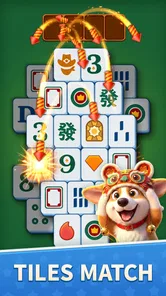
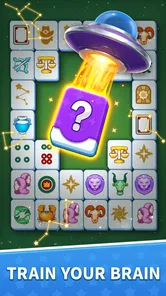
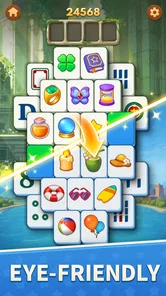
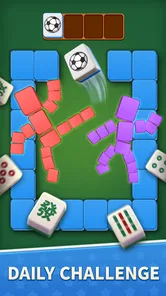
Analysis by Reviewed
I like puzzle games that make their point quickly: give me a clear board, a satisfying move, and a reason to try one more round. Double Tile! is built around that kind of immediate appeal. It is a free mahjong solitaire game from HungryStudio, and its central pleasure is simple to understand: find matching tiles and work through puzzles one level at a time. That makes it easy to pick up when I have a small gap in the day, though the familiar format also means its appeal depends on whether I enjoy repeating this kind of visual puzzle.
A quick match, followed by a little planning
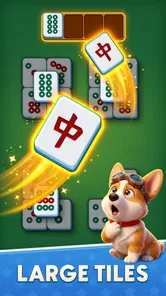
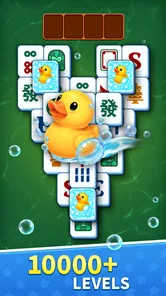
The game sits firmly in the mahjong puzzle category, rather than offering the social table play some people associate with mahjong. Here, the challenge is solitaire-style matching. I scan the layout, identify a pair I can remove, and consider how that choice affects the tiles left behind. A match feels straightforward; choosing the right match is where the puzzle starts to engage.
That difference matters because a board is not just a collection of pairs waiting to be tapped. Removing tiles changes what I can see and reach, so I get more out of each level when I pause briefly to look beyond the most obvious match. If I simply clear whatever pair catches my eye, I can make progress without much thought, but I may also leave myself with a less convenient board. The satisfying rhythm is a small loop of scan, choose, clear, and reassess.
The store’s short label, “Double Tile!”, gets at the basic matching idea, but the useful question for a player is whether that loop feels good in short bursts. In my view, it does when I want a light mental reset rather than a demanding puzzle session. A visible pair gives me an immediate action, while the changing board supplies just enough reason to think about the next one. I don’t need to study instructions for long before the main activity makes sense.
Why the first few moves matter
My most useful habit is to take a quick inventory before tapping: look for pairs that seem easy to access, then notice whether a match could expose or open up other tiles. It is a small adjustment, but it changes the game from reflexively pairing pictures into a more deliberate sequence. When the board looks busy, I focus on what a move might reveal rather than trying to plan every possible turn at once.
That approach also helps keep the game relaxed. I can give a level a little attention without treating it like a high-stakes test. If I make a move that doesn’t feel ideal, I can still continue evaluating the board instead of getting stuck on the idea that there was one perfect opening. The best fit is someone who enjoys gentle visual decision-making and is comfortable learning the puzzle’s flow through play.
Small sessions suit the level-by-level format
Double Tile! is naturally suited to a spare moment: a short wait, a quiet break, or a few minutes after finishing a task. Because play is organized around individual puzzles, I can approach one board as a complete little activity rather than needing to settle in for a long stretch. That clear unit of play is the game’s strongest practical advantage for anyone who wants a casual phone puzzle.
More From Our News Desk

 Gmail
Gmail in a Busy Inbox: Who Benefits Most?
From first account to crowded workday, Gmail earns its place through dependable search and flexible sorting—but its best fit depends on how much inbox maintenance you can tolerate.

 Prime Video
Switching to Prime Video: What Changes in Your Viewing Routine
Prime Video can make a compelling second home for streaming, but switching means learning a different catalog, rental layer, and route from browsing to playback.

 Universal TV Remote Control
 Works Best as a Reliable Backup
A phone remote earns its place through quick setup and reliable habits. Here is how to get more from Universal TV Remote Control—and where its limits show.

 Weather - By Xiaomi
Weather by Xiaomi Review: Clear at a Glance, Less Clear Up Close
Xiaomi’s weather app makes everyday forecasts quick to scan, but its calm surface can leave useful details and recovery paths harder to find than they should be.

 X
X Under Pressure: Can It Recover When Posting Goes Wrong?
A resilience-focused review of X, examining setup, mistaken posts, interruptions, weak connections, and the gaps that matter when recovery needs to be dependable.

 Clash of Clans
 Is Won Between the Battles
Its raids are quick; its community is a long-term project of coordination, teaching, rivalry, and shared responsibility—with all the friction that entails.
Latest News



For example, I might open it while waiting for a friend who is running late. I can focus on the visible layout, make a few matches, and decide whether I want to continue when the wait ends. It works better in that situation than a game that asks me to remember a complicated story or coordinate with other people. The board itself is the task, so returning to the immediate challenge feels natural.
The level-by-level structure can also make progress feel approachable. I’m not being asked to master an entire collection of rules before I can enjoy a round; the same basic matching idea carries from one puzzle to the next. That consistency is useful for casual play, but it does mean the game’s variety has to come from the layouts and the decisions they create. Players looking for many distinct mechanics may find the central loop too narrow.
Pausing is easy; interruptions still break concentration
A simple puzzle is usually easier to set aside than a game that depends on a live match or a long chain of actions. If a message or everyday interruption pulls me away, the basic goal remains easy to understand when I come back: inspect the tiles and find a useful pair. That makes this a sensible choice for fragmented free time, especially when I only have enough attention for a modest challenge.
Still, an interruption can cost me my mental picture of the board. The practical trick is to look at the current arrangement again instead of relying on memory. I’d treat each return as a fresh scan: identify what remains available, then choose a move based on the board in front of me. That little reset is more reliable than trying to remember which match I had planned before putting the phone down.
This is also why I would not choose it for every kind of break. If I have only a moment and expect to be interrupted repeatedly, even a simple matching puzzle can feel more like another thing to keep track of. It is low-commitment in concept, but not completely attention-free. Someone who wants background entertainment with no need to inspect the screen would be better served by an audio-first option or a game built around passive play.
Replay value comes from the board, not a changing rulebook
The replay question is more nuanced than “Can I play another level?” The game’s basic pleasure is repeatable because each puzzle asks me to make another sequence of matching decisions. I can return when I want that familiar, quiet activity, and the appeal lies in noticing the available options and managing the order in which I clear them. It is a dependable kind of replay value, not necessarily a constantly surprising one.
That distinction helps set expectations. If you enjoy mahjong solitaire already, the recognizable format is a feature: you can get into the activity quickly and concentrate on the board. If you tire of matching tiles after a few rounds, a long run of similar decisions may start to feel repetitive. I would not recommend it as a substitute for a puzzle game whose appeal comes from new rules, narrative twists, or sharply different challenges from one session to the next.
One way I’d keep the loop engaging is to change how I approach a board. Instead of making the first available match automatically, I can look for a move that improves what I’ll be able to assess afterward. On another round, I can play more casually and follow the obvious pairs. That variation comes from my own decision-making rather than a separate mode, so it is a useful way to refresh the experience but not a cure for someone who dislikes the core mechanic.
How it compares with other casual puzzle choices
Compared with word puzzles, Double Tile! asks less of my language skills and more of my visual scanning. Compared with a traditional match-three game, it feels less like making a large cascade of adjacent pieces and more like selecting pairs from a layout while thinking about what remains. Those differences make it a good alternative when I want a quiet, screen-focused task without needing to form words or chase a rapid sequence of effects.
On the other hand, players who prefer puzzles with a stronger sense of progression through new systems may find a word game or a more varied logic title more rewarding over time. Double Tile! is at its best when the act of spotting and ordering matches is already enjoyable to you. Its simplicity lowers the barrier to starting, but it also places more weight on whether that one central activity holds your attention.
It may also suit a shared household where people want a game that is easy to explain without assuming specialist knowledge. The content rating is Everyone, and the premise is uncomplicated enough that the basic activity can be understood quickly. That doesn’t mean every player will enjoy it equally: a person who wants competitive play, a social table, or a brisk action game should look elsewhere. This is a solo-style tile puzzle experience, not a replacement for those formats.
What the game’s popularity does—and doesn’t—tell me
Double Tile! has a 4.9 average from around 436 thousand ratings, with more than 4 thousand written reviews and over 10 million installs. Those figures suggest that the straightforward tile-matching idea has found a substantial audience, but popularity alone cannot tell me whether the repeated puzzle loop matches your taste. I’d use it as a reason to consider trying the game, not as a promise that every level will stay fresh for every player.
It is free to download, which makes it easy to try without committing to a purchase. The game was released on October 18, 2025, and version 2.2.9 is the current release. It supports Android 7.0 and later. Those details make the basic decision simple for compatible Android users: if mahjong solitaire sounds appealing, trying it costs nothing upfront. I would still judge it by whether the board-by-board rhythm suits the way you like to spend a break.
Who I’d recommend it to
I’d recommend Double Tile! to someone who wants a calm, readable puzzle that can fit around ordinary interruptions, enjoys visual matching, and doesn’t need a new mechanic every session. It is particularly appealing if you like to think one or two moves ahead without turning a casual game into a demanding commitment. The core action is easy to grasp, while the order of matches gives you a small but real reason to pay attention.
I’d suggest skipping it if you want social mahjong, a competitive challenge, constant novelty, or something you can play without looking closely. I’d also hesitate to recommend it to anyone who quickly gets tired of repeating the same kind of puzzle, because the game’s strongest quality—its familiar, immediate loop—is also the main source of its limitations. Knowing that trade-off is more useful than expecting a simple tile game to be something it isn’t.
Overall, I see this as a good pick for short, intentional puzzle breaks rather than a game that demands a place in every spare moment. HungryStudio has made a free, approachable option for fans of mahjong solitaire, and the level-based format gives each visit a clear starting point. If you enjoy scanning a board, making a considered pair, and seeing what that choice opens up, I think you’ll find a comfortable little routine here. If you need deeper variety or a more social experience, another puzzle style will likely keep you interested longer.
A practical way to fit it into your day
I’d use it when I can give the screen a little attention but don’t want to commit to a longer activity: for example, during a quiet lunch break or while waiting for an appointment to begin. The useful distinction is between a pause with a few uninterrupted minutes and a stop-start moment where I keep having to look away. In the first case, a board gives the break a clear shape; in the second, I’m better off choosing something that doesn’t ask me to track a changing visual layout.
If I’m deciding whether to keep playing after a board, I’d pay attention to how I feel rather than treating completion as a reason to continue automatically. When I’m still curious about what the next layout will ask me to notice, another round makes sense. When I’m matching mechanically, that’s a sign the session has already done its job. This is a small but useful way to preserve the game’s immediate pleasure instead of turning a pleasant diversion into a repetitive chore.
What kind of challenge to expect
The main question before installing is whether matching pairs while considering the remaining layout sounds satisfying on its own. This isn’t the best choice if you’re hoping for wordplay, a story to follow, or a puzzle that changes its basic rules as you progress. I’d choose it for visual attention and modest planning, not for a broad collection of puzzle styles. Its strength is that I can understand what I’m doing quickly; the trade-off is that the pleasure relies on enjoying that same kind of decision repeatedly.
For a first try, I’d resist rushing through the opening choices. A quick look across the board can help me spot which matches are available and which ones might make later decisions easier to see. I don’t need to map every move in advance; a brief scan is enough to make the puzzle feel more intentional. If that small pause makes the activity more satisfying, the game is probably a good fit. If it feels like needless friction, a faster, more reactive casual game may suit you better.
A clear fit, with a clear limit
The practical answer to whether I’d keep it installed is simple: yes, if I regularly want a quiet tile puzzle and enjoy returning to a familiar format. I wouldn’t make it my only casual game if I wanted sharply different activities from one visit to the next. It is also a poor match for anyone who expects a game to fill time without focused looking, since the board is the whole point and the choices only make sense when I pay attention to it.
That makes Double Tile! an easy recommendation with a specific boundary, rather than an all-purpose pick. It offers a direct route into a mahjong solitaire puzzle, a manageable way to spend a short break, and enough choice in the order of matches to reward a little thought. I’d try it for that compact, visual routine, then keep it only if the repeated loop continues to feel pleasant rather than automatic.
Double Tile! Frequently Asked Questions
What is Double Tile!?
Double Tile! is a mobile puzzle game built around matching tiles and clearing them from the board. Players typically need to spot pairs or follow the level’s matching rules while working through increasingly challenging layouts. The exact objectives and available modes can vary by version, so check the game’s current store listing for a description of its features before downloading.
How do you play Double Tile!?
The main idea is to examine the tiles on screen and select valid matches to remove them or make progress toward the level goal. Planning ahead matters: a choice that looks useful now may leave fewer options later. If you are new to the game, start by reading the on-screen instructions and using early stages to learn how matching works, what limits apply, and how each level is completed.
Is Double Tile! free to download, and does it include in-app purchases or ads?
The download price, advertising, and optional purchases can depend on the platform, region, and version available to you. Many mobile puzzle games are free to install but may show ads or offer purchases such as hints, extra moves, or other bonuses. Review the Google Play or App Store listing and the purchase details in the app before spending money; availability and pricing may change.
Can I play Double Tile! offline?
Offline access is not guaranteed and may depend on the version installed. Some puzzle games let you play previously loaded levels without an internet connection, while other features—such as ads, rewards, cloud saves, or new content—may require connectivity. If offline play is important, check the store listing and test the game after installation with your device disconnected. Avoid assuming progress will sync without an online connection.
Is Double Tile! suitable for children, and what should I check before downloading?
A tile-matching puzzle may be approachable for a wide range of ages, but suitability depends on the game’s current content, advertising, privacy practices, and any purchase options. Before installing it for a child, check the age rating, permissions, data-safety information, and in-app purchase settings on the relevant store. You may also want to enable purchase authentication and parental controls to help prevent unintended spending.
Pros
- Quick rounds make it easy to play in short breaks.
- Simple matching rules are easy for new players to learn.
- Finding pairs gives the game a satisfying puzzle feel.
- A good choice for casual play without complicated controls.
- Increasing difficulty can keep matching challenges engaging.
Cons
- Repeatedly matching tiles may feel monotonous over time.
- Later levels can be difficult for players who prefer relaxed puzzles.
- Small tiles may be hard to distinguish on smaller screens.
- Timed challenges can feel stressful rather than casual.
- Progress may depend on replaying levels to improve your results.