Bubble Shooter Rainbow
- 9.78K
- 4.7
- Installs
- 100.00M
- Price
- Free
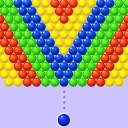
Screenshots


Analysis by Reviewed
I like a puzzle game that makes a short break feel satisfying without asking me to learn a complicated system, and Bubble Shooter Rainbow fits that role well. Its appeal is straightforward: line up a shot, clear matching bubbles, and work through the puzzle in front of you. That familiar loop is easy to understand, but aiming carefully gives each move just enough thought to keep it from feeling automatic.
When a quick puzzle fits the day
I find this kind of game most useful when I want a small, contained task rather than something that needs a long setup. A short wait for a coffee, a quiet pause between errands, or a few minutes at home can be enough time to focus on a board. The rules are easy to return to after putting the phone down, which matters more to me than a game that demands a continuous session.
There is a small trade-off: a puzzle that feels quick can make it tempting to continue after the break is over. I would decide in advance whether I have time for one board or a longer stretch, especially if I am using it while waiting for something. If I need a game that actively reminds me to stop, I would not count on this one to do that.
What spending does—and does not tell you
The game is free to download, with in-app purchases listed from $0.99 to $99.99 per item. That is useful context if you are deciding whether to try it, but it does not tell me what each purchase contains or whether buying anything is necessary to make progress. I would treat optional spending cautiously: enjoy the basic puzzle first, and only consider a purchase if its purpose is clear to you in the game.
That distinction matters for families, too. The age rating is Everyone, but the presence of in-app purchases still makes it sensible for a parent to review purchase settings on the device before handing it to a child. I would not assume that a free download means there is no spending prompt, nor would I assume purchases are required. The confirmed purchase range is the practical fact to keep in mind.
How to play with less wasted effort
Bubble shooters reward planning more than speed. I try to look beyond the nearest match and check whether clearing a small group could also release bubbles attached above it. A shot that opens space can be more valuable than one that simply removes the easiest cluster. When the available angle is awkward, I also pause to judge where the bubble will bounce rather than firing quickly and hoping for the best.
Power-ups can help when a board becomes stubborn, but I would save them for a moment when they solve a specific problem rather than use one as soon as it appears. If a special bubble can clear a blocked route or finish a difficult cluster, that is a better reason to spend it than mild impatience. This makes each helper feel like a choice instead of a reflex.
More From Our News Desk

Weather by Xiaomi Review: Clear at a Glance, Less Clear Up Close

X Under Pressure: Can It Recover When Posting Goes Wrong?

Clash of Clans Is Won Between the Battles

Android Auto Makes the Case for Quieter Car Software

MobiOffice: Transforming Mobile Productivity with Seamless Integration

EA SPORTS FC™ Mobile Soccer: Redefining Mobile Sports Gaming
Reading the board before spending a helper
One habit that makes a meaningful difference is to look at the board in two passes. First, identify a match you can reach now; then check whether a different shot could remove support and drop a larger section. It is easy to focus on the bright cluster nearest the launcher, but the visible match is not always the most useful one. I would rather take a moment to compare routes than use a helper to undo a rushed decision.
That approach also helps when a level feels difficult. Instead of immediately concluding that I need a power-up, I can ask whether the problem is a poor angle, an obstructed route, or a shot that clears too little. If the board still resists after I have considered those options, a helper has a clearer purpose. The trade-off is that careful play takes more attention than casual tapping, so it suits me best when I am not distracted.
A Burst of Color and Fun
First things first, the visuals in Bubble Shooter Rainbow are just stunning. The game is like a rainbow exploded in the best way possible. Each level is a splash of color that feels like a treat for your eyes. I mean, who doesn't love a good color palette? The graphics are crisp, and the interface is super user-friendly, so you won't find yourself lost in a sea of bubbles.
As for the gameplay, it's your classic bubble shooter with a twist. The aim is simple: match three or more bubbles of the same color to pop them. But there's more to it. The game introduces various challenges and obstacles that keep things interesting. Just when you think you've mastered a level, a new element is added to spice things up.
Levels That Keep You Hooked
One of the things I love about this game is its level design. The developers have done an amazing job at keeping each level fresh and engaging. As you progress, you'll encounter different layouts and bubble types, each requiring a slightly different strategy. It's like solving a puzzle every time, and trust me, you won't be able to stop at just one level.
Another cool feature is the power-ups. These little helpers can make a huge difference when you're stuck. Whether it's a bomb to clear a section or a rainbow bubble to match any color, they add an extra layer of strategy to the game. Plus, they're super satisfying to use!
Choosing between puzzle styles
Compared with match-three games, this asks me to think more about aiming and the route a shot will take than about swapping pieces around a grid. That makes it a better fit when I want a spatial puzzle with a direct action for each move. Compared with a fast arcade game, the pace is gentler; I can study the board rather than relying on quick reactions.
The flip side is that the central action stays familiar. Someone who wants a new mechanic every few minutes, a story that unfolds between levels, or a puzzle based on words and deduction may prefer a different game. I would choose this one for the pleasure of making a good shot, not for a broad range of genres or a narrative campaign.
Planning Around Real-Life Breaks
For a realistic everyday use, I can imagine opening it while waiting for a coffee or sitting through a short gap between errands. One board gives that spare moment a clear focus, and the simple aim-and-shoot control makes it easy to begin without a warm-up. I would still set a stopping point before starting: the quick-session format can turn “one more level” into a longer break than intended.
Compared with match-three puzzles, this asks more of your aim and angle judgment; compared with action games, it is calmer and gives you time to think. That makes it a good fit when I want a little concentration without a fast reaction test. If I wanted a story, elaborate character progression, or a deep competitive system, I would choose another kind of game instead.
Perfect for Quick Sessions
What's great about Bubble Shooter Rainbow is that it's perfect for those quick gaming sessions when you have a few minutes to spare. Waiting in line? Pop some bubbles. On your commute? Pop some more. It's the kind of game that you can easily pick up and put down without losing your place or momentum.
The controls are intuitive, making it easy to aim and shoot with precision. This means less frustration and more fun. I found myself getting into a rhythm, and before I knew it, I'd breezed through multiple levels.
Using the leaderboard without making it the point
A leaderboard can add a reason to revisit a puzzle, but I would keep its role in perspective. The appeal here is the immediate board, not a promise that comparison will make every session more rewarding. Players who like measuring themselves against others may enjoy having that extra target; anyone who finds rankings stressful can simply focus on clearing levels and treat the competitive element as optional.
I would also avoid using a leaderboard position as a measure of whether a purchase is worthwhile. The listed purchase range does not establish how rankings are calculated or whether purchases affect them. If fair competition is your main reason to install a game, that uncertainty is a real reason to compare other options before settling in.
Fairness and the Competitive Side
There is a leaderboard feature, which gives players who enjoy comparing results a reason to revisit the game. I would see it as a light competitive extra rather than the main attraction: the satisfying part is still solving the board in front of me. Purchases are listed, but I cannot establish from that alone whether they affect leaderboard outcomes, so I would not call the competition either pay-to-win or fully purchase-neutral.
The game is from Blackout Lab, and its broad audience is reflected in its Everyone rating. It has a 4.7 average from around 728,000 ratings and over 100 million installs, which suggests many people have tried it; those figures do not guarantee that every player will enjoy the pacing or feel the same about its difficulty. I would judge it by whether its basic aiming-and-clearing loop suits you.
A Community of Poppers
If you're the competitive type, you'll be happy to know there's a leaderboard feature. You can see how you stack up against other players globally, which adds a nice competitive edge. It's always fun to aim for that top spot and show off your bubble-popping skills.
There's also a community aspect where you can connect with friends and share your progress. It's a nice touch that adds a social element to what is already a delightful gaming experience.
What to check before settling in
If you are wondering whether you can play without spending, the game is free to start, but the purchase range alone cannot answer how every level is balanced or what individual items do. I recommend trying the ordinary puzzle loop first and making a decision only after seeing the in-game options for yourself. Likewise, the existence of a leaderboard does not tell me how its rankings are calculated, so competitive-minded players should treat it as an extra rather than a promise of a particular tournament experience.
The current version is 2.92.1, and the stated minimum operating system is 7.1. If you are choosing it for an older device, checking that requirement before downloading is a straightforward way to avoid disappointment. The game is free, but listed in-app purchases can still matter if you share a device or prefer to keep all spending disabled.
Who may want a different kind of game
I would skip this if I were looking for a puzzle that keeps changing its basic rules, asks me to uncover a story, or offers a clearly defined competitive format. Its bubble-shooting focus is a strength for someone who enjoys careful, repeatable shots, but it can feel narrow if I want each session to introduce a very different activity. The same applies if I do not enjoy aiming: the simple controls do not remove the need to choose a useful angle.
It is also worth thinking about where you plan to play. This works best for me when I can give the board a little attention; trying to make a tricky shot while walking or splitting focus with another task makes the puzzle less satisfying. For a truly hands-off way to pass time, a passive game would be a better match. For a focused pause that still lets me stop between attempts, this one makes more sense.
Final Thoughts
All in all, Bubble Shooter Rainbow is a fantastic game that combines colorful visuals with engaging gameplay. It's perfect for both casual gamers looking for some light-hearted fun and those who enjoy a bit of a challenge. The game consistently keeps you coming back for more with its clever level design and strategic elements.
If you've got a knack for puzzle games and enjoy a vibrant aesthetic, give this game a shot. Trust me, once you start popping, you won't want to stop!
Who I would recommend it to
I would recommend it to someone who enjoys short, self-contained puzzle attempts and likes improving by noticing better shots. It is also an easy choice for a casual player who wants colorful visuals and familiar rules rather than a long tutorial. If you prefer puzzles built around words, deduction, or a steadily unfolding story, this may feel too focused on repeating the same core action.
Its release was on March 6, 2020, and its puzzle format remains an uncomplicated reason to pick it up. My trust verdict is positive but measured: the free entry point and clear purchase range make the spending context easy to understand, while details about purchase effects and leaderboard rules are not established here. I would try it for the board-by-board challenge, keep purchases optional, and choose another game if I wanted deeper social competition or more varied mechanics.
Bubble Shooter Rainbow Frequently Asked Questions
Is Bubble Shooter Rainbow suitable for children?
Bubble Shooter Rainbow has an Everyone content rating, making it suitable for a broad audience. Its colorful bubble-shooting puzzle format is easy to understand, so younger players can quickly grasp the basic idea. The game does include optional in-app purchases, so parents may want to review purchase settings on a shared device before letting children play.
What kind of gameplay can I expect from Bubble Shooter Rainbow?
The core activity is shooting bubbles to make matching groups and clear them from the board. This familiar puzzle format is straightforward to pick up, while aiming each shot gives you a simple strategic choice as you play. The store describes it as a classic bubble shooter with colorful puzzle levels, making it a fit for players who enjoy casual matching challenges.
Is Bubble Shooter Rainbow free to download, and what device does it need?
Bubble Shooter Rainbow is free to download, though it offers optional in-app purchases. It is a puzzle game from Blackout Lab, and its minimum operating system requirement is Android 7.1. Before installing, check that your device meets that requirement and has enough available storage for the download and any updates. The game is rated Everyone, so it is intended for a broad audience.
Who makes Bubble Shooter Rainbow, and when was it released?
Bubble Shooter Rainbow is developed by Blackout Lab and was released on March 6, 2020. It remains available as a bubble-shooting puzzle game, with a current version of 2.92.1. Its familiar match-and-clear format makes it easy to understand before starting, while the levels and optional gameplay aids offer reasons to keep playing. If you are considering a download, these details can help you identify the game and its developer.
What is Bubble Shooter Rainbow?
Bubble Shooter Rainbow is a vibrant and engaging puzzle game available on both Android and iOS platforms. The game involves shooting colored bubbles to create matching sets of three or more. With its colorful graphics and simple mechanics, it appeals to players of all ages looking for a fun and relaxing experience. Its store description presents it as a classic bubble shooter focused on popping and blasting bubbles through colorful puzzle levels.
Pros
- Engaging and colorful graphics.
- Smooth and intuitive controls.
- Variety of levels and challenges.
- Regular updates with new content.
- Free to play with optional in-app purchases.
Cons
- Contains frequent ads between levels.
- Limited lives can restrict playtime.
- In-app purchases can be pricey.
- Requires internet for some features.
- Occasional lag on older devices.
- Category
- Puzzle
- Version
- 2.92.1