TextMe Up Calling & Texts
- 10.91K
- 4.2
- Installs
- 10.00M
- Price
- Free

Screenshots
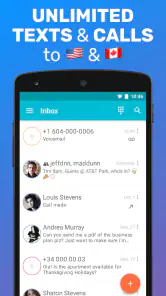

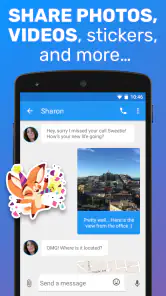
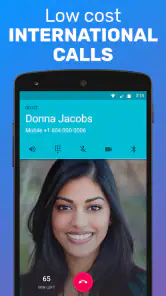
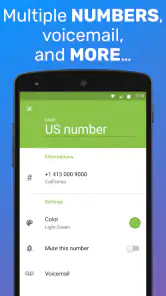
Analysis by Reviewed
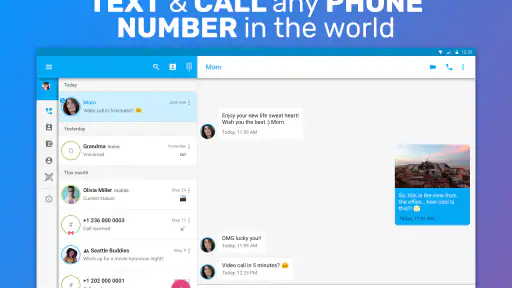
I started looking at TextMe Up Calling & Texts as a practical communication tool rather than another app I would keep open all day. Its main appeal is simple: it gives me a way to text and call from a free phone number, while also supporting multiple numbers within one account. That changes the role of a phone number from something fixed and personal into something I can use more deliberately.
That distinction matters in everyday life. Sometimes I want to contact someone without handing over my main number. Sometimes I need a separate line for a temporary project, a marketplace conversation, travel planning, or a group that generates more messages than I want mixed into my personal inbox. TextMe Up is built around those situations. It is a free communication app in the Communication category, developed by TextMe, Inc., and it is available for Everyone.
After spending time with it, my view is that this is less about replacing every normal call and more about creating breathing room around communication. It can make conversations easier to organize, but it can also introduce another inbox and another place where people expect an answer. The value depends heavily on how intentionally I use the number.
Articles Related to TextMe Up Calling & Texts
Clash of Clans Is Won Between the Battles
Its raids are quick; its community is a long-term project of coordination, teaching, rivalry, and shared responsibility—with all the friction that entails.
Android Auto Makes the Case for Quieter Car Software
The car interface is no longer judged by how much it can do, but by how quietly it helps. Android Auto shows what drivers now expect—and what still gets in the way.
MobiOffice: Transforming Mobile Productivity with Seamless Integration
MobiOffice: Word, Sheets, PDF is redefining mobile productivity with a surprising blend of functionality and innovation.
EA SPORTS FC™ Mobile Soccer: Redefining Mobile Sports Gaming
Dive into EA SPORTS FC™ Mobile Soccer, where immersive gameplay and strategic depth transform mobile sports gaming.
Why a second communication space can be useful
My usual phone number carries a lot of weight. Friends, family, delivery services, work contacts, old groups, and one-time conversations can all end up competing for attention. A separate number gives each situation a little distance. I can use it for a particular purpose without immediately exposing the number attached to everything else in my life.
A realistic example is selling something online. I may want to discuss pickup times and answer questions, but I may not want a stranger to have my everyday number permanently. Using a separate number through TextMe Up lets me keep that conversation in its own lane. When the exchange is finished, I am less likely to keep receiving unrelated calls or messages through my personal line.
The same approach works for a short-term group activity. Imagine arranging a community event, coordinating a home repair, or helping with a club where several people need one contact point. A dedicated number can make the conversation clearer. Instead of asking everyone to search through personal messages, I can keep the relevant communication tied to one line.
That flexibility is the strongest reason I would recommend trying it. The app is not merely useful because it sends messages; many apps do that. It is useful because it lets me choose which communication deserves access to my primary number and attention.
You May Like

How Microsoft OneDrive Became a Mobile Productivity Giant

How Google Translate Breaks Language Barriers Effortlessly

Why Google Sheets Is the Ultimate Mobile Productivity Tool

Unveiling the Dynamic World of My Talking Tom Friends

Free Fire MAX: Dominating the Battle Royale Arena

Free Fire: Winterlands – The Ultimate Winter Gaming Adventure
The store summary presents the service as a way to text and call from a free phone number and enjoy multiple numbers in one account. In practical terms, I see that as a boundary-setting tool. It does not automatically solve privacy or distraction problems, but it gives me a structure for handling them.
Setting expectations before relying on it
I would not treat a secondary number as a universal replacement for a mobile carrier line. A person who needs one dependable number for banking, emergency contact, account recovery, or every important personal relationship should keep those responsibilities with the service they already trust. TextMe Up makes more sense when I need separation, flexibility, or an additional channel.
It is also worth remembering that a free app can still have optional spending. TextMe Up is free to install and use, with in-app purchases ranging from $0.99 to $79.99 per item. I would begin with the basic experience and only consider a purchase after deciding that the extra communication capacity genuinely fits my routine. That prevents a temporary need from turning into an unnecessary recurring habit.
The age rating is Everyone, which makes the app approachable for a broad audience. Still, the conversations I conduct through it may involve strangers, public listings, or groups I do not know well. The rating describes accessibility, not a guarantee that every interaction will be comfortable or trustworthy.
How the conversation flow feels in real use
The most important test for a communication app is not whether it can start a conversation. It is whether the conversation remains understandable once several exchanges, people, and purposes begin to overlap. TextMe Up works best for me when I assign a clear reason to each number and resist treating every line as another general-purpose inbox.
For example, I might use one number for a short project and another for personal contacts. That division creates a mental cue before I even read a message. A call from the project number means I should think about that project; a message on my personal line belongs to a different part of the day. This small separation reduces the need to reconstruct context from the message itself.
Multiple numbers can also help when a conversation has a natural end date. A temporary group, a local sale, or a one-off service discussion does not need to become part of my permanent contact identity. I can keep the exchange available while it matters, without letting it define how people reach me afterward.
There is a trade-off, though. Every additional number creates another decision: which line should I check, which one should I share, and which one should I silence? If I create numbers without a system, the app can make communication more scattered rather than more organized. I recommend naming each purpose in my own notes and using one number for one clear role whenever possible.
A useful habit is to tell the other person what the number is for. I might say that it is my number for a particular project or temporary conversation. That simple explanation reduces confusion later, especially if I also have a regular number. Clarity is not only a feature of the app; it comes from how I introduce the number.
Calls and texts do not demand the same response
Texting and calling create different rhythms. A text gives me room to read, think, and answer when I am ready. A call asks for immediate attention and can interrupt whatever I am doing. Having a separate number makes that difference more visible because I can decide which kinds of contact deserve instant access to me.
For a casual arrangement, texting is often the calmer option. I can confirm a time, ask for a detail, or leave a short update without forcing both people into a live conversation. This is especially helpful when the subject is practical rather than emotional. A few clear messages can be easier to review than a call remembered from fragments.
Calls remain valuable when a discussion is becoming confusing. If several messages are going back and forth about directions, timing, or a changing plan, a short call may restore clarity faster than another paragraph. My advice is to use the app's two communication styles intentionally: text when a record and flexibility matter, call when tone or speed matters more.
I also find that a separate line can make it easier to avoid accidental over-familiarity. Sharing a number does not have to mean offering unlimited access to my time. I can answer a message later, return a call when I am free, or let a non-urgent conversation remain asynchronous.
The attention cost of having another inbox
The downside is easy to underestimate. A second number may protect my personal line, but it can still add another stream of alerts and unfinished conversations. If I already struggle with too many notifications, installing a communication app without a checking routine may simply move the pressure somewhere else.
I would approach TextMe Up with a schedule rather than a reflex. For a temporary project, I might check the relevant number at set points during the day instead of reacting to every message. That keeps the app useful without allowing every incoming contact to dictate my attention.
This is where the app changes communication rhythm most noticeably. A regular phone number often feels permanent, so every call can seem important. A purpose-specific number gives me more context before I respond. If the line belongs to a marketplace conversation, I know it probably does not require the same urgency as a call from someone close to me.
That context can reduce mental switching, but only if I preserve it. I should avoid sharing the same secondary number with unrelated groups. Once one number serves a sale, a volunteer activity, and a professional contact, its meaning disappears. The app's flexibility is strongest when I use it to create clean channels rather than collect them randomly.
Another practical issue is continuity. If I use a number for something important, I need to remember which number I gave out. I would keep a simple note with the purpose of each line and the people connected to it. This is not glamorous, but it prevents the awkward situation of answering from one number while the other person expects a different identity.
TextMe Up is therefore better for people who enjoy lightweight organization. Someone who wants one phone, one inbox, and no extra decisions may find the additional structure irritating. The app can reduce noise in one place while adding responsibility in another.
When notifications help and when they become pressure
Notifications are useful when I am waiting for a time-sensitive reply. They are less helpful when a conversation has no deadline but still appears urgent. I try to judge the line by its purpose. A temporary service appointment may justify prompt checking; a casual group discussion may not.
I also prefer to close conversations clearly. A final message confirming that a plan is complete prevents an old thread from feeling permanently open. With a separate number, this matters even more because I may not naturally see the conversation as part of my everyday social world.
The app can support a healthier communication boundary, but it cannot enforce one for me. If I answer every message immediately, the advantage of separation fades. If I use the number as a deliberate buffer, it helps me decide when communication belongs in my current moment.
Privacy, boundaries, and choosing the right identity
The strongest personal benefit is control over what I share. I do not have to give my main number to every person who needs to contact me once. That is useful for low-trust or short-lived interactions, but I would still avoid treating the secondary number as complete anonymity. I would share only the information needed for the conversation and remain cautious about unexpected requests.
A second number is particularly helpful for people who work from home, manage a small side activity, or participate in public communities. It creates a line that can be presented during those activities without blending them into family and close-friend communication. The boundary is simple enough to explain and practical enough to maintain.
There is also an emotional boundary. If a difficult conversation arrives through a separate line, I can recognize that it belongs to a particular context rather than allowing it to occupy my entire phone identity. That does not make the conversation easier, but it can stop one demanding relationship from feeling present everywhere.
At the same time, I would not use TextMe Up to avoid accountability or mislead someone about who I am. A separate number should clarify roles, not disguise harmful behavior. In normal use, it is best understood as a communication compartment, not a license to ignore trust and consent.
People who need their number to work seamlessly with every traditional phone function may prefer their carrier's service. The same applies to anyone who dislikes managing accounts, switching between lines, or explaining which number to use. For those users, the usual phone app is simpler even if it offers less separation.
On the other hand, users who regularly deal with temporary contacts may find the extra layer worthwhile. The app is a good fit when the problem is not “How do I contact people?” but “How do I contact them without allowing every conversation into the same space?”
What I would do before installing
I would first define the problem in one sentence. If the answer is “I need a separate number for a short-term activity,” TextMe Up is a sensible candidate. If the answer is “I want a complete replacement for my normal phone service,” I would compare the practical requirements more carefully before moving everything over.
I would also decide how many communication spaces I can realistically maintain. Multiple numbers sound convenient, but each one needs a clear purpose. Starting with one is less confusing than creating several and forgetting why they exist. Once the workflow feels natural, I can decide whether another line would genuinely improve organization.
The app's current version is 3.55.0, and it supports devices running Android 7.0 or later. That makes compatibility a straightforward consideration for Android users with older phones. I would still check the app's current store page before installing if my device is unusual or if I am preparing to rely on it for an important project.
TextMe Up has reached over ten million installs, with an average rating of 4.2 from around ninety thousand ratings and roughly eleven thousand written reviews. Those figures suggest that the idea has broad appeal, while also reminding me that a communication app can feel very different depending on how each person uses numbers, calls, and notifications.
My verdict on changing the way I stay reachable
I recommend TextMe Up to people who want more control over the edges of their communication life. Its free starting point, calling and texting functions, and support for multiple numbers make it useful for temporary contacts, side projects, online listings, and situations where my main number should remain private.
My favorite aspect is not the ability to send another message. It is the chance to give a conversation a defined place. When I match a number to a purpose, I know what kind of attention that conversation deserves. That can make communication feel less like a constant demand and more like something I choose to open.
The limitation is that the app can also create another layer to manage. If I do not set boundaries, the extra number becomes another source of alerts, forgotten threads, and uncertainty. I would not install it casually just because it is free. I would install it for a specific communication problem and decide in advance how I will check and use the line.
For someone who wants the simplest possible phone experience, a standard carrier number remains the better choice. For someone who needs separation without carrying another physical phone, TextMe Up offers a practical middle ground. I see it as a tool for clearer communication habits: not a replacement for judgment, but a useful way to decide who can reach me, where they reach me, and when I am ready to respond.
In the end, I would recommend giving it a try for one well-defined use case rather than migrating every conversation at once. That approach shows whether the extra number reduces pressure or merely adds another inbox. Used with that discipline, TextMe Up can make everyday contact more flexible while helping me protect the attention and boundaries that my primary number tends to consume.
TextMe Up Calling & Texts Frequently Asked Questions
Is TextMe Up available for both Android and iOS?
TextMe Up Calling & Texts is a mobile communication app, and the Android version supports devices running Android 7.0 or later. Before downloading on Android, check your operating system version and make sure you have enough storage for the installation and updates. The app is free to download, with some in-app purchases. It is rated for Everyone.
Can I get a phone number with TextMe Up, and how does that work?
TextMe Up’s store summary describes texting and calling from a free phone number, as well as using multiple numbers in one account. The number options available to you can depend on your location and account setup, so review the choices shown during signup. If you need a number for a particular purpose, make sure the available option suits that need before relying on it.
Can I use TextMe Up on my device?
TextMe Up Calling & Texts is available for Android devices running version 7.0 or later. Before downloading, check your device’s operating system version and make sure you have enough storage for the installation and app updates. The app is free to download, though some features may involve in-app purchases. It is rated for Everyone, making it suitable for a broad audience.
Who develops TextMe Up, and is it widely used?
TextMe Up is developed by TextMe, Inc. It is a communication app with a 4.2 average rating from around 90,000 ratings, and it has been installed over 10 million times. Those figures suggest that many people have tried it, but individual experiences can still vary depending on location, connectivity, and the features available to each account. Consider whether its calling and texting options meet your needs.
What is TextMe Up Calling & Texts, and what can I use it for?
TextMe Up Calling & Texts is a communication app that can provide calling and messaging features through an internet connection. Depending on your location and account setup, you may be able to obtain a phone number, send text messages, make voice calls, and communicate with contacts who use regular mobile numbers. It is useful for separating personal and secondary communications, but availability and included features can vary by country.
Pros
- Includes a separate phone number for calls and texts.
- Supports calling and messaging over Wi‑Fi or mobile data.
- Useful for keeping personal and secondary contacts separate.
- Offers international communication options in many destinations.
- Available on both Android and iOS devices.
Cons
- Free features may be limited by credits
- ads
- or subscription plans.
- Call and text quality depends heavily on your internet connection.
- Some numbers or regions may not be supported.
- Recipients may not recognize calls from a virtual number.
- Privacy policies and permissions should be reviewed before use.

- Category
- Communication
- Version
- 3.55.0