SBB Mobile
- 328.00
- 3.5
- Installs
- 5.00M
- Price
- Free

Screenshots

Analysis by Reviewed
I first appreciated how much easier Swiss public transport could feel when I stopped trying to hold every connection in my head. SBB Mobile is a free travel app from Schweizerische Bundesbahnen SBB, built around planning journeys by train, tram, and bus. Its focus is Switzerland, so I’d treat it as a practical companion for moving around the country rather than a general-purpose world map. If you’re opening it for the first time, the most reassuring goal is simple: look up one trip you already expect to take and use the result to plan your next step.
Simplifying Swiss Travel
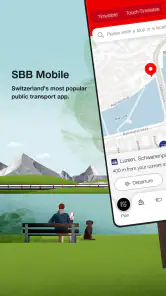
From the moment you open SBB Mobile, it’s like having a Swiss travel guide in your pocket. The app's interface is sleek, intuitive, and surprisingly easy to use. No more fumbling around trying to find the next train to Zurich or the fastest route to the Matterhorn. Everything you need is right there, and it feels as if the app anticipates your travel needs before you even think of them.
Getting started without overthinking it
The app is for everyone, and its first useful task doesn’t need to be complicated: enter where you’re leaving from and where you want to go, then compare the proposed connections before you set off. I’d start with a familiar station or a planned outing, rather than testing it with an unfamiliar destination while already rushing. That gives you a chance to learn how departures and transfers are presented while you still have time to make sense of them.
For an everyday example, imagine finishing work and needing to get across town, then continue by train to another Swiss city. Checking the whole route before leaving helps you see how the local leg connects to the longer journey. I find that especially useful when a trip involves more than one type of public transport: instead of treating each leg as a separate puzzle, I can think about the journey as a sequence and leave with a clearer plan.
The Features You Didn’t Know You Needed
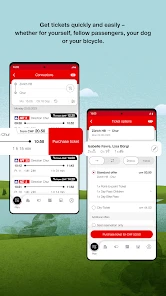
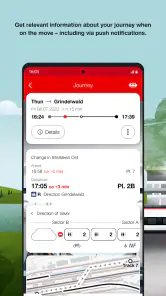
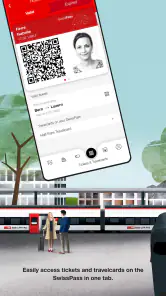
One of the standout features of the app is its real-time information updates. Whether it’s a sudden change in train schedules or unexpected delays, SBB Mobile keeps you in the loop. You can even buy your tickets directly through the app, which saves a ton of time and spares you from the hassle of queuing at ticket machines. Plus, the app supports multiple languages, so you’re covered no matter where you’re from.
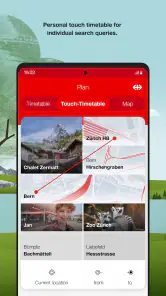
The journey planner feature is a lifesaver for someone like me who tends to get lost easily. You input your departure and arrival points, and voilà, the app provides all possible routes, including transfers, walking distances, and estimated travel times. It’s like having a personal travel assistant who’s got your back 24/7.
One practical habit I recommend is checking the connection again shortly before you travel, not just when you first plan it. That makes the live updates more useful: you can compare the latest information with the route you had in mind and adjust before you’re standing on a platform. If your itinerary includes a transfer, pay attention to that part of the trip rather than looking only at the final arrival time; a route that appears straightforward on paper can feel very different when you’re unfamiliar with the station.
More From Our News Desk

Weather by Xiaomi Review: Clear at a Glance, Less Clear Up Close

X Under Pressure: Can It Recover When Posting Goes Wrong?

Clash of Clans Is Won Between the Battles

Android Auto Makes the Case for Quieter Car Software

MobiOffice: Transforming Mobile Productivity with Seamless Integration

EA SPORTS FC™ Mobile Soccer: Redefining Mobile Sports Gaming
What Makes It Stand Out
What really sets SBB Mobile apart is its integration with other travel services. Got a Swiss Travel Pass? You can link it directly to the app. Need to hop on a bike once you get to your station? The app’s got you covered with bike rental options. It’s this holistic approach to travel that makes it an indispensable tool for anyone navigating Switzerland.
Another thing I adore is the app’s commitment to sustainability. It actively promotes eco-friendly travel options, encouraging users to choose public transport over private cars. Not only does it make your travel seamless, but it also helps you contribute to a greener planet.
Making the first trip go smoothly
For a first outing, I’d separate planning from buying. Search the journey, read the departure and destination carefully, and inspect each change of vehicle before deciding whether to purchase a ticket. This small pause is useful if several places have similar names or if you’re travelling from a stop rather than a major station. It also gives you a chance to notice whether the suggested route suits your pace, instead of choosing a connection only because it looks quickest.
Once you have a route, keep the key details easy to revisit while you travel. At a station, I focus on the next leg and the transfer point, then check for fresh information before boarding. That is more manageable than trying to memorise the whole itinerary. If you’re travelling with someone who is less comfortable navigating, showing them the next step as well can make the journey feel collaborative rather than leaving one person to manage every change.
A useful trade-off is that a fast connection is not always the least stressful one. A route with a tight change may look attractive, but a first-time visitor might prefer a connection with more breathing room, especially when carrying bags or unfamiliar with the station. I’d compare the route details and choose the option I can follow confidently, not just the one with the earliest arrival.
Where it fits among travel tools
Compared with a general mapping app, this one makes more sense when the central question is how to connect Swiss public transport services, not how to drive or explore a street map. A map can still be handy for checking the area around your destination, while SBB Mobile is the one I’d open to work out the public-transport journey. That distinction matters: it complements a map rather than replacing every navigation tool on your phone.
It’s a particularly good fit for visitors making several trips by public transport and for residents who want one place to check connections and tickets. If your plans are mostly walking, driving, or travelling outside Switzerland, a broader mapping or local transport app may suit you better. I also wouldn’t assume that a suggested connection removes the need to make your own decisions; check the route details and leave yourself enough time to follow the transfer comfortably.
There can be a small learning curve when you’re unfamiliar with Swiss station names, transfer layouts, or the way a route is divided into legs. I’d search using the destination as it is commonly shown on signs and take a moment to inspect the full connection, rather than choosing solely by the earliest arrival. Buying through the app can save a stop at a machine, but you should still make sure the ticket you select matches your actual journey before setting off.
Common points of confusion
The main thing to remember is that a journey result is a plan to interpret, not a reason to stop paying attention. Read the complete route, including where you change, and check the latest travel information when departure is getting close. If a disruption changes your options, take a moment to compare the revised choices rather than automatically following the first alternative presented. That habit is especially valuable when you are somewhere unfamiliar and need to decide quickly.
It is also worth keeping route planning and ticket choice distinct in your mind. A connection that looks right does not mean every ticket option will necessarily fit your circumstances. Before buying, confirm that the chosen ticket covers the trip you intend to take. I find this check reassuring, not burdensome: it is easier to resolve uncertainty while planning than to discover you misunderstood something after you have boarded.
For visitors, local names and station layouts can be the trickiest part, not the basic search. If a destination seems ambiguous, use the full name you see on local signs and verify the endpoint before proceeding. For a transfer, look beyond the station name and give yourself enough time to orient yourself. The app can show the connection, but your own awareness of luggage, mobility, and how quickly you can move should shape which option you choose.
A sensible choice for the next Swiss trip
The app has been available since March 7, 2011, and its current version is 12.47.1.153.master. It has a 3.5 average from around 32,000 ratings, with more than 5 million installs; that reach makes it a familiar option, though the rating suggests experiences aren’t uniformly smooth. It’s free, rated for everyone, and requires Android 8.0 or later. For me, those details make it easy to try before a trip, while the real test is whether its route information fits the way you plan to travel.
If you’re deciding whether to install it, ask yourself what you need most. For checking Swiss train, tram, and bus connections and handling tickets in the same travel workflow, it’s a useful place to begin. For navigation that needs to cover driving, walking exploration, or destinations beyond Switzerland, keep your usual map app alongside it. I’d install it before travelling, search one real route, inspect the transfers, and only then rely on it for a time-sensitive outing. That small practice turns the first successful search into a calmer start to the journey.
It is best suited to people who expect to use public transport repeatedly, not only to someone making one isolated stop. A resident can use it as a regular planning companion, while a visitor can learn the basics before setting out on a day trip. If you mainly want turn-by-turn driving directions or a broad map for wandering on foot, it is not the tool I would make primary. Keeping a general map available for the final walk or nearby landmarks is a practical pairing, rather than a criticism of the app’s narrower purpose.
For a realistic first day, I would plan a simple trip from my accommodation to a central station, then check a later connection to the place I actually want to visit. I’d review the transfer and ticket selection at home, when I have time to read them, and recheck the travel information before leaving. At the station, I’d use the route as a guide to the next leg and confirm that I am following the correct departure. This routine creates a first success without expecting the app to make every decision for me.
A calmer routine for changing plans
Where the app becomes more useful is when a day does not follow the original plan. If a meeting runs late or you decide to stay longer in one place, search the onward journey again instead of assuming the earlier plan still works. The benefit is not simply seeing a route; it is having a single place to reassess the public-transport part of the day. I would still use judgement about how much time I need, particularly if the new option involves an unfamiliar interchange.
For people travelling together, agree on the destination and the next transfer before splitting attention between bags, messages, and platform signs. One person can check the route while the other keeps an eye on the surroundings, but both should know the next stop or change. That simple shared understanding is more reliable than one traveller silently managing the whole trip, and it makes the app’s information easier to act on when plans shift.
The app’s focus also shapes its limits. Its public-transport planning is the reason to choose it for Swiss journeys, but it should not be expected to replace a dedicated walking map, a driving navigator, or every local tool for travel elsewhere. If your trip crosses into a different country or depends on navigating streets after leaving transit, use the right companion for that part. I prefer this practical division of tasks to expecting one app to handle every kind of navigation equally well.
Conclusion: A Must-Have for Swiss Adventures
In conclusion, if you’re planning to explore Switzerland, downloading SBB Mobile is a no-brainer. It’s like having the Swiss rail system at your fingertips, offering convenience, efficiency, and a touch of Swiss hospitality. With this app, getting around the country feels less like a daunting task and more like an adventure waiting to happen. So, go ahead, download it, and let your Swiss journey begin!
My recommendation is strongest for someone who wants to make public transport the backbone of a Swiss visit or routine. Start with a familiar journey, inspect the full connection, and make sure any ticket you buy suits that trip. Then check the latest details again as you travel and keep a general map handy for places beyond the transport route. That is a simple, realistic way to get value from it without expecting it to remove every uncertainty. If that matches how you move around, it is an easy app to try and a useful one to have ready before the next journey.
SBB Mobile Frequently Asked Questions
Can I install SBB Mobile on my phone or tablet?
SBB Mobile is a Maps & Navigation app developed by Schweizerische Bundesbahnen SBB. It is available for Android and iOS devices, and Android users need version 8.0 or later. Checking your device’s operating-system version before downloading can help you avoid installation problems. The app is free to download, and its purpose is to support public-transport travel planning.
Is SBB Mobile suitable for younger travelers?
SBB Mobile has an Everyone content rating, so it is suitable for a broad audience, including families and younger travelers. The app focuses on public transport, with tools for planning journeys and accessing travel information, rather than entertainment or messaging. Parents may still want to help younger users with trip choices and ticket purchases, particularly when they are travelling independently.
What devices and operating systems can run SBB Mobile?
SBB Mobile is a public transport travel companion for mobile devices, and it is available for Android and iOS. Before downloading, check that your phone or tablet meets the minimum operating-system requirement; the app requires Android 8.0 or later. Keeping your device’s software reasonably up to date can also help you use the app smoothly and access its travel-planning and ticketing features.
Who develops SBB Mobile, and is it suitable for all ages?
SBB Mobile is developed by Schweizerische Bundesbahnen SBB and is designed to help people plan and manage public transport journeys. Its content rating is Everyone, so it is suitable for a broad audience, including families and younger travelers. It is categorized as a Maps & Navigation app, which reflects its role in finding routes and supporting travel rather than providing entertainment or general-purpose messaging.
What is SBB Mobile and what are its primary features?
SBB Mobile is a comprehensive mobile application designed for travelers using the Swiss public transportation system. It offers real-time information on train schedules, connections, and delays. Users can purchase tickets directly from the app, access personal travel itineraries, and receive notifications about any changes. Additionally, the app provides route planning capabilities, allowing users to find the fastest and most convenient travel options.
Pros
- User-friendly interface.
- Efficient ticket booking.
- Real-time train updates.
- Supports multiple languages.
- Easy navigation.
Cons
- Limited payment options.
- Occasional app crashes.
- Requires stable internet.
- Frequent updates needed.
- Limited offline features.
- Category
- Maps & Navigation
- Version
- 12.47.1.153.master











