Paid Tester: Test Online Games
- 644.00
- 4.4
- Installs
- 100.00K
- Price
- Free

Screenshots





Analysis by Reviewed
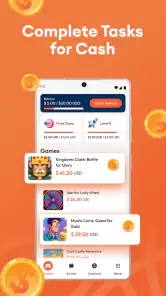
I approached Paid Tester: Test Online Games as a lifestyle app with a very specific promise: it connects people interested in trying multiplayer games with opportunities to provide testing feedback and earn money. That makes it different from a normal game-discovery app. You are not opening it simply to find something fun for the evening; you are considering whether your time, attention, and opinions can be useful in a testing process.
My first impression is that the concept is appealing, but it requires realistic expectations. The app is free to install, developed by Paid Tester AB, and aimed at adults, with a Mature 17+ content rating. Its store presence shows a 4.4 average from around 5.1 thousand ratings, along with more than 100 thousand installs. Those figures suggest that the idea has attracted a meaningful audience, although popularity alone is not proof that every testing opportunity will suit every user.
What I like most is the clear connection between the activity and the reward: you test multiplayer games, ranging from puzzle experiences to action titles, and your feedback is intended to have practical value. What I would not do is treat it like a dependable salary source. I see it as a possible way to use spare time, especially if I already enjoy trying unfinished or unfamiliar games and can give thoughtful feedback rather than simply saying whether I liked something.
What the app is really useful for
The best way to understand this app is as a bridge between casual players and game-testing tasks. A typical user is likely to be someone who enjoys experimenting with different genres, can follow instructions carefully, and does not mind that a test may feel less polished than a finished game. Multiplayer testing can also involve a social element, since the quality of a game may depend on how real people interact with its systems rather than how one person plays alone.
That distinction matters. If I want a fully finished game with stable performance, a large community, and immediate entertainment, I would use a conventional game store or a dedicated gaming platform instead. Paid Tester is more suitable when I am curious about the process behind game development and willing to exchange some convenience for the possibility of paid testing work.
The app’s lifestyle classification also makes sense to me. It is not itself a single game, and it is not a traditional employment platform with a broad range of careers. Its value depends on how well testing opportunities fit into my routine. Someone with a few quiet periods during the week may find it useful, while someone looking for predictable hours or guaranteed income will probably be disappointed by the nature of this type of activity.
How I would use it during an ordinary week
Imagine I have a free evening after work and want to do something more purposeful than scrolling through social media. I could open the app, look for a suitable game-testing opportunity, read the instructions carefully, and decide whether the expected time and requirements fit my schedule. If the task involves multiplayer play, I would also need to think about whether I have a reliable connection, a suitable device, and enough uninterrupted time to complete the session properly.
You May Like

Clash of Clans Is Won Between the Battles

Android Auto Makes the Case for Quieter Car Software

MobiOffice: Transforming Mobile Productivity with Seamless Integration

EA SPORTS FC™ Mobile Soccer: Redefining Mobile Sports Gaming

How Microsoft OneDrive Became a Mobile Productivity Giant

How Google Translate Breaks Language Barriers Effortlessly
The important step is not rushing into the first available test. I would first check what kind of game is involved, what feedback is expected, and whether the task appears to match my experience. A puzzle tester may need to notice confusing progression or unclear instructions, while an action-game tester may pay closer attention to controls, pacing, matchmaking, or moments where the experience becomes frustrating. The more specific my observations are, the more useful my participation should be.
I would keep brief notes while playing instead of relying on memory afterward. Writing down where I became confused, when a feature felt satisfying, and what interrupted the flow would make my feedback more precise. This is one of the less obvious advantages of approaching the app seriously: I am not merely playing for a reward; I am practicing the kind of observation that makes a tester valuable.
Trust begins with visible choices
For an app connected with testing opportunities and potential earnings, I pay attention to user control before I think about entertainment. I want to know what I am agreeing to at each stage, what information is requested, and whether the account experience makes those choices understandable. I also prefer to review task details before committing time, rather than discovering important conditions only after I have started.
My advice is to treat every screen that asks for information or permission as a decision point. Read the wording, check whether the request is relevant to the task, and avoid giving more access than you are comfortable with. This is not a criticism of a particular permission or data practice; it is simply sensible behavior for any service that combines accounts, testing activities, and financial expectations.
I would also keep my profile information accurate but limited to what is genuinely needed for participation. A testing profile may be more useful when it reflects my devices, game preferences, and experience honestly, but I would not add personal details casually just to make the account look complete. A focused profile can help me judge whether an opportunity is relevant without turning the registration process into an invitation to overshare.
Another practical habit is to separate app-related communication from important personal accounts where possible. I would use a dedicated email address for testing platforms if that fits my setup, keep my password unique, and review account settings from time to time. These steps do not guarantee a perfect experience, but they improve my control and make it easier to notice unexpected changes.
Data-sensitive moments deserve extra attention
The most sensitive moments are not necessarily when I am playing a game. They are more likely to occur when I create an account, complete a profile, respond to a qualification form, or move toward receiving a payment. Those steps can involve information that is more personal than ordinary gameplay feedback, so I would slow down and read each request rather than treating registration as a formality.
I would also distinguish between information needed to match me with a test and information that feels unrelated. For example, details about my gaming habits or device setup may be directly relevant to a testing opportunity. A request that seems disconnected from the task deserves more scrutiny before I continue. If the app presents a clear explanation, I can make an informed choice; if I do not understand why something is requested, I would pause instead of guessing.
When an opportunity involves a game from a genre I already know, I would still avoid assuming that the task is risk-free. Testing may expose me to unfamiliar software, unusual login flows, or external instructions. I would follow only the steps presented through trusted, clearly identified channels and remain cautious about requests that ask me to install unrelated files, share account credentials, or move a conversation somewhere I did not expect.
The same care applies to earnings. I would read the conditions attached to a task before investing time, especially if completion depends on a particular device, multiplayer session, feedback format, or approval step. The word “earn” can create unrealistic expectations, but testing rewards are usually tied to completing the required work correctly. I would regard any task as an exchange of time and feedback, not as effortless money.
Where the app gives users agency
The strongest form of user control is the ability to choose which opportunities fit my circumstances. I would use that choice actively. If a test requires a genre I dislike, a schedule I cannot meet, or equipment I do not have, skipping it is better than accepting and submitting weak feedback. A poor match wastes my time and may be less useful to the people evaluating the test.
I would also establish a personal rule for stopping. If an activity becomes unclear, asks for information I do not want to provide, or takes significantly longer than expected, I would reassess rather than continuing simply because I have already begun. That kind of boundary is particularly important in an app where the reward is connected to task completion. Sunk time should not pressure me into accepting conditions I no longer consider comfortable.
Keeping a simple record of completed tests, dates, expected rewards, and any follow-up can help me stay organized. I would not need an elaborate spreadsheet; a short private note would be enough. This makes it easier to notice which types of tests suit me, how much effort they require, and whether the activity is worthwhile compared with other uses of my free time.
There is also a quality advantage to being selective. If I accept every opportunity, I may end up giving rushed comments that are too vague to help anyone. If I choose fewer tests and approach them attentively, I can describe specific problems and useful improvements. In my view, that is a better long-term strategy than chasing every possible listing.
What separates useful feedback from casual opinion
A tester does more than report that a game is fun or boring. I would explain what happened, where it happened, and why it affected the experience. Instead of writing that a puzzle was confusing, I would identify the clue I missed, the action I tried first, and the point at which I stopped understanding the intended solution. Instead of saying that an action game felt slow, I would describe whether the delay came from controls, loading, matchmaking, or the rhythm of the encounter.
For multiplayer titles, I would pay attention to how other players affect the experience. Is the objective understandable when several people act at once? Does the game remain enjoyable when teammates have different skill levels? Are instructions clear enough for a new participant to join without constant explanation? These observations are more valuable than a simple rating because they show how the design behaves in a real social setting.
I would also separate a personal preference from a genuine usability issue. I may dislike a particular visual style, but that does not automatically mean the interface is poor. On the other hand, if important information is difficult to find or a control behaves inconsistently, that is a more actionable concern even if the game itself is not my preferred genre. This distinction helps me give fairer feedback and prevents the app from becoming a place where personal taste is mistaken for testing evidence.
How it compares with ordinary alternatives
Compared with browsing a normal app store, this service offers a more task-oriented experience. A store helps me find finished games and decide what to download. Paid Tester is aimed at participation before or around the testing stage, where the experience may be less predictable and my feedback has a different purpose. The trade-off is straightforward: I may gain a chance to contribute and earn, but I should expect more variation than I would from a polished commercial release.
Compared with survey apps, the activity is more interactive. I am not only answering questions from memory; I may need to play, observe, and explain. That can be more engaging for someone who enjoys games, but it also demands more concentration. A short survey may be easier to fit into a busy day, while a game test may provide a better match for someone who wants a hands-on task.
Compared with freelance marketplaces, the barrier may feel more approachable for a person whose main qualification is gaming experience. However, I would not expect the same control over pricing, clients, or project scope that a traditional freelancer might have. The app is better for exploring game testing and finding occasional opportunities than for replacing a structured professional workflow.
Compared with simply joining game betas, the possibility of payment changes the relationship. Beta participation is often driven by early access or enthusiasm for a title, whereas this app frames testing as a task with responsibilities. That means I would take instructions, deadlines, and feedback quality more seriously than I would during casual early access.
Who should try it, and who should skip it
I think the app is a good fit for adults who already play games, notice small details, and can describe their experience clearly. It may also suit people who want flexible activity rather than a fixed schedule, provided they understand that flexibility does not mean guaranteed income. Someone who enjoys switching between puzzle and action games could find the variety appealing, especially when the task itself feels like a change from ordinary entertainment.
I would be more cautious if I were easily frustrated by bugs, interruptions, or unclear instructions. Testing is not always as smooth as playing a finished product, and a person who wants immediate polish may find the process tiring. I would also skip it if I needed predictable earnings for essential expenses. The app can be an optional side activity, but I would not build a financial plan around occasional testing opportunities.
It is also not the right choice for anyone uncomfortable with reviewing account, device, or profile requests. Even when a task looks interesting, personal boundaries matter more than a possible reward. Users who prefer to keep gaming completely private may be happier with regular games that do not involve participation in a testing workflow.
Version, access, and practical expectations
The current version is 1.0.11, and the app supports devices running Android 7.0 or later. That makes checking compatibility an easy first step before I plan around it. If I were using an older phone, I would confirm that the app installs and runs comfortably before accepting a task that may require additional performance from the device.
The app is free, which lowers the barrier to trying it. Still, free installation should not be confused with free participation in the broader sense. My time, internet connection, battery, storage, and attention all have value. I would consider those costs when deciding whether a particular opportunity is worth completing, especially if the test requires a longer session or repeated attempts.
I would also keep my device prepared before starting. Closing unnecessary apps, charging the battery, checking available storage, and using a stable connection can prevent avoidable interruptions. Those are ordinary steps, but they matter more when the purpose is to evaluate a game accurately. A technical problem on my side can easily look like a problem with the game, which could make my feedback less reliable.
My cautious verdict
After looking at the app through the lens of control and trust, I see a useful idea rather than a shortcut to easy money. Paid Tester AB has built a focused lifestyle app for people who want to test multiplayer games and turn their observations into possible paid opportunities. The free entry point, adult-oriented rating, and substantial user interest make it reasonable to explore, but they do not remove the need for careful reading and selective participation.
I would recommend it to a friend who enjoys games, has patience for imperfect experiences, and is willing to give detailed feedback. I would tell that friend to begin with one suitable opportunity, review every instruction and account choice, and keep notes about the time involved. That approach gives a much clearer sense of whether the app fits their routine than accepting several tests at once.
My final view is positive but measured: the app is most convincing when treated as a controlled way to explore game testing, not as guaranteed employment. Use the available account choices thoughtfully, protect personal information, judge each task on its actual requirements, and leave when the conditions no longer feel right. For the right adult user, that balance can make the experience worthwhile; for anyone seeking certainty, finished games, or dependable income, a conventional alternative will be the better choice.
Paid Tester: Test Online Games Frequently Asked Questions
Is Paid Tester: Test Online Games free to download?
Paid Tester: Test Online Games is free to download, so you can try the app without paying an upfront purchase price. Keep in mind that completing tests may involve downloading games or using mobile data, so it is sensible to check your data plan and available storage before accepting an assignment. The app is intended for people interested in testing games and sharing feedback.
Who develops Paid Tester: Test Online Games, and what is its age rating?
The app is developed by Paid Tester AB and is rated Mature 17+. That age rating is worth checking before installing, particularly if the device is used by a younger person or managed through parental controls. As with any testing app, read the instructions for each campaign carefully and consider whether its requirements and the games involved are appropriate for you.
What is Paid Tester: Test Online Games?
Paid Tester: Test Online Games is an app that connects users with opportunities to evaluate mobile games and provide feedback. Depending on the available campaigns, testers may be asked to play a title, complete specific tasks, answer survey questions, or report bugs. The app is mainly intended for people who enjoy discovering games early and sharing practical opinions about gameplay, performance, and usability.
Can I really earn money by testing games with this app?
The app may offer rewards for completing eligible testing assignments, but earnings should not be considered guaranteed or consistent. Available opportunities can depend on your location, profile, device, age, and the requirements of each campaign. Before accepting a task, carefully review its payment amount, completion rules, deadline, and withdrawal conditions, since not every activity necessarily provides the same reward.
How do game-testing assignments usually work?
After creating a profile, you may receive or browse testing opportunities that match your information and device. A typical assignment can involve installing a game, playing for a specified period, completing certain actions, and submitting written feedback or screenshots. Read every instruction carefully, because missing a required step, submitting incomplete feedback, or exceeding a deadline could make the task ineligible for payment.
Pros
- Flexible way to earn by testing games in your spare time
- Simple interface makes available tests easy to browse
- Suitable for users who enjoy discovering new mobile games
- Testing tasks can provide useful feedback on game quality
- Works well as a side activity alongside other commitments
Cons
- Test availability may vary greatly by location and user profile
- Some tasks may require significant time for modest rewards
- Payment terms and processing times should be checked carefully
- You may need to meet specific device or demographic requirements
- Not a reliable replacement for regular employment or steady income

- Category
- Lifestyle
- Version
- 1.0.11