Freebie Alerts: Free Stuff App
- 28.68K
- 4.7
- Installs
- 1.00M
- Price
- Free

Screenshots

Analysis by Reviewed
I judge a freebie-finding app by what it helps me do between ordinary errands, not by how many tempting posts it can put in front of me. Freebie Alerts: Free Stuff App is a lifestyle app for spotting local giveaways, and its appeal is practical: it brings alerts from several neighborhood free-item platforms into one place. That can save time when I’m looking for something useful, but it works best when I treat each alert as a lead to check, not a guaranteed offer.
Readable enough for quick checks
The layout feels approachable, and I can see why someone who doesn’t enjoy digging through multiple apps might prefer a single starting point. Freebie Alerts is developed by Freebie Alerts - Free Stuff Alerts, has a 4.7 average from around 248,000 ratings, and has been installed over a million times. Those figures suggest a well-used service, though they don’t tell me whether any particular item nearby will suit me.
The key is to make the app fit a routine rather than constantly interrupt one. I’d check alerts when I’m already planning a trip or looking for a household item, then decide whether a listing is worth pursuing. This is especially useful for people who are comfortable comparing short posts and acting promptly. If browsing small listings is tiring or confusing, the app may still require more effort than its simple premise suggests.
Using local alerts in everyday life
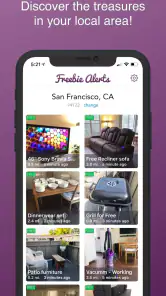
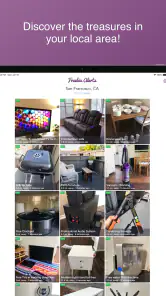
The moment I downloaded and opened the Freebie Alerts: Free Stuff App, I was impressed by its clean and straightforward interface. Everything is laid out intuitively; even if you're not tech-savvy, you'll find it a breeze to navigate. With just a few taps, you can start receiving alerts for the latest freebies. It feels like having a personal assistant who’s always on the lookout for the best free deals for you.
Readable listings, not a substitute for checking
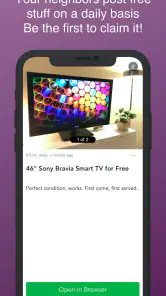
For me, the practical value is less about scrolling for entertainment and more about reducing the number of places I need to check when I have a specific, flexible need. If I’m hoping to reuse a kitchen item or furnish a corner of a room, a single place to notice opportunities can be a useful starting point. I still need to read each post carefully: a short description may not answer whether the item is the right size, whether pickup is realistic, or whether someone else has already claimed it.
That distinction matters for anyone who finds dense or hurried marketplace browsing difficult. An alert can bring a possible item to my attention, but it cannot do the comparison for me. I’d pause on a listing and check its wording, location, and pickup details before making a plan. If those details are unclear, asking a question or moving on is better than assuming the item will work out.
Customization at Its Best
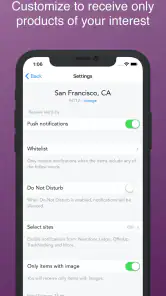
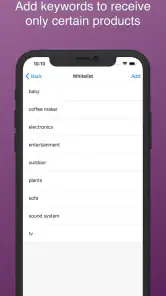
One of the standout features of this app is its customization options. You can tailor the alerts to match your interests, ensuring you only get notifications for the stuff you actually want. Whether it’s free samples, coupons, or even giveaways, you can set your preferences and let the app do the rest. It’s incredibly satisfying to receive alerts that are actually relevant to your needs.
More From Our News Desk

Clash of Clans Is Won Between the Battles

Android Auto Makes the Case for Quieter Car Software

MobiOffice: Transforming Mobile Productivity with Seamless Integration

EA SPORTS FC™ Mobile Soccer: Redefining Mobile Sports Gaming

How Microsoft OneDrive Became a Mobile Productivity Giant

How Google Translate Breaks Language Barriers Effortlessly
For a more grounded approach, I’d use those preferences to reduce the noise and focus on items I can genuinely collect. Before responding, check the post details, pickup location, and any arrangements the person has shared. A free item can still cost time, transport, or effort, so I’d compare the likely trip with the item’s usefulness. This small pause is a good safeguard against rushing toward something just because an alert arrived.
Notifications and sensory comfort
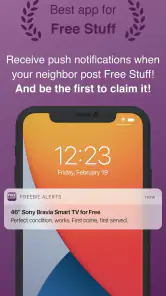
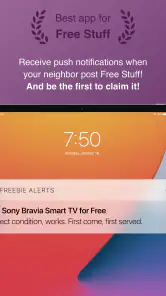
This app is all about timeliness. I was amazed at how quickly the alerts came through; it’s like having a direct line to the best free offers on the internet. The real-time notifications ensure that you’re always in the loop, so you can snag those limited-time deals before they’re gone. This feature alone makes the app a must-have for anyone serious about saving money.
In everyday use, though, I would not treat speed as a reason to keep every prompt turned on. A stream of alerts can feel distracting, especially when I’m working, traveling, or trying to focus on something else. I’d start with only the kinds of opportunities I can act on, then adjust my routine if notifications become more of a burden than a help. That approach keeps the app available without making it the center of my attention.
People with sensory sensitivities or who prefer fewer interruptions may find it more comfortable to check at chosen times instead of reacting to every prompt. On the other hand, someone who can respond quickly and enjoys spontaneous local finds may value timely alerts more. I see that as a personal trade-off, not a reason to assume one notification style suits everyone.
Community posts and local context
Another fantastic aspect of this app is the community-driven content. Users can share deals they’ve found, making it a collaborative effort to unearth the best freebies out there. It's like being part of a savvy community of deal hunters, all looking out for one another. The social aspect adds a fun layer to the app, making it not just a tool, but a community space.
The service is aimed at alerts connected with Nextdoor, Letgo, OfferUp, and TrashNothing, so it differs from a general coupon app or a broad marketplace. I’d choose it when the goal is to find nearby items people are giving away; I’d use a retailer’s own app for store promotions, or browse a marketplace directly when I want a wider range of listings and more control over search. The trade-off is that an alert-based approach can surface opportunities, but it cannot make a listing available, nearby, or suitable for my needs.
That makes it a better fit for browsing with an open mind than for finding one exact thing on a deadline. A local giveaway may be useful because it turns up unexpectedly, but the variety and practical value depend on what people nearby choose to post. If I wanted to compare several listings for a specific model or condition, I’d go directly to a marketplace and search there instead of expecting a notification feed to act like a complete catalog.
Using it around different routines
A realistic use case for me would be checking the app before a trip I was already taking across town. Suppose I need a small shelf but can wait for the right one: I could look through relevant alerts, read the pickup information, and decide whether a detour makes sense. If the location adds a separate journey or the post is vague, I can pass without losing anything. The useful habit is to match a free find to an existing routine, not to let a low-cost item create an expensive or stressful outing.
This also helps when transport, carrying capacity, or time is limited. A bulky item may be free but still impractical without a suitable way to collect it. I’d consider those constraints before messaging, rather than after arranging pickup. For someone who depends on another person for transport or assistance, it may help to check the location and likely effort first, then coordinate only when the listing seems worthwhile.
Comfort, access, and practical limits
Quick notifications can be useful when I’m out and about, but they can also compete for attention. I’d keep alerts focused on the kinds of items I can collect and check them when it is safe and convenient, rather than responding while walking, driving, or managing another task. People who are sensitive to frequent prompts may prefer a more deliberate check-in routine. Likewise, anyone who relies on specific accessibility settings should try the app on their own device before depending on it; a simple-looking interface does not guarantee that every interaction will feel comfortable.
Motor access is another reason to avoid making an alert feel urgent. If reading, tapping, or switching between posts takes extra time, a listing that attracts quick interest may be harder to pursue. I would give myself permission to skip anything that requires rushed decisions or complicated coordination. The app can make opportunities easier to notice, but it does not remove the physical and communication steps involved in arranging a pickup.
There are other limits to consider. A free listing may attract interest quickly, and a notification is not a reservation. The value also depends on how many relevant offers appear in your area and whether pickup is practical. If I needed a particular item by a fixed deadline, I wouldn’t rely on alerts alone; I’d look at direct listings or shops as well. The app is strongest as an extra channel for flexible searches, not as a dependable way to obtain a specific item on demand.
Who is likely to enjoy it?
I can see this working well for people who enjoy reusing household goods, have some flexibility about what they collect, and can check a post before making plans. It may also suit someone who wants one place to notice free-item opportunities across several familiar services. It is less appealing if you dislike notifications, rarely have time to arrange pickups, or want guaranteed stock and a predictable checkout. The free download lowers the barrier to trying it, while in-app purchases range from $1.99 to $9.99 per item, so I’d review any purchase prompt carefully rather than assume every option is included at no cost.
I’d also recommend it more readily to someone who already uses local community or resale platforms than to someone expecting a polished store catalog. The app’s role is to help surface possible giveaways, not to make every post equally relevant or every exchange effortless. If I were short on time, needed reliable delivery, or required a precise item immediately, a conventional shop or a direct search would be a more sensible first choice.
For age and device context, the app is rated Teen, runs on Android 7.0 or later, and its current version is 3.9.4. It was released on June 9, 2019. Those details can help with basic compatibility decisions, but the more important everyday question is whether checking local posts fits your schedule and comfort level. If you share a device or help a younger user, consider whether the way they browse and arrange pickups is appropriate for them.
Before relying on it, I’d make a small trial of the routine rather than plan around a major find. Check whether the kinds of items you care about appear locally, whether the posts are readable at a comfortable pace, and whether the pickup arrangements suit your day. That gives a clearer sense of its value than judging it by a promising notification alone. If it fits, it can become a handy background tool; if not, checking the source platforms directly or using a different route may be less frustrating.
A more inclusive way to judge its usefulness
I like the basic idea of bringing local free-item opportunities together, but accessibility is personal and depends on the device, settings, and the way someone uses an app. A clean-looking screen is not proof that every person will find it easy. I’d judge it by whether I can comfortably notice an alert, understand the post, and complete the next step without pressure. Anyone who uses larger text, assistive technology, or other device adjustments should test those interactions early, while there is no time-sensitive item at stake.
For me, the inclusive case is strongest when the app is used at the user’s pace: alerts can be treated as invitations to check, not commands to act. That leaves room for people with different schedules, attention needs, mobility, or pickup options to decide what is genuinely manageable. It is a useful distinction because a free item is only a good find if collecting it is safe and practical for the person considering it.
In conclusion, the Freebie Alerts: Free Stuff App is a game-changer for anyone who loves getting free stuff without the hassle. Its user-friendly interface, customizable alerts, and real-time notifications make it an indispensable tool for bargain hunters. Plus, being part of a community that shares your enthusiasm for freebies adds a social element that’s both engaging and rewarding. Whether you’re a seasoned freebie hunter or just getting started, this app is definitely worth a download. Happy hunting!
Freebie Alerts: Free Stuff App Frequently Asked Questions
Is Freebie Alerts: Free Stuff App free to download, and are there optional purchases?
Freebie Alerts is free to download, and its main purpose is to help you find items listed as free. It also offers optional in-app purchases priced from $1.99 to $9.99 per item, so check the purchase details before choosing one. These purchases are separate from the free items posted through the app. Your mobile carrier may also charge for data use, depending on your plan.
What kinds of listings can I find through Freebie Alerts?
The app focuses on free stuff posted through Nextdoor, Letgo, OfferUp, and TrashNothing. That can make it useful when you are looking for things people nearby are giving away, rather than shopping for paid products. What appears will depend on local listings and what is being offered at the time, so the selection can vary. Check the listing details and communicate with the person offering the item before making plans.
Does Freebie Alerts: Free Stuff App work in my area?
Freebie Alerts is intended to help people find free items nearby, so its usefulness depends on whether local listings are available where you live. The app brings together free-stuff alerts associated with Nextdoor, Letgo, OfferUp, and TrashNothing. Before relying on it for a particular item, check what appears around your location and remember that listings can vary by area.
What is Freebie Alerts: Free Stuff App?
Freebie Alerts: Free Stuff App is a mobile application designed to help users find free items being given away in their local area. It aggregates listings from various sources and sends alerts when new free items are available nearby, making it easier for users to save money and find useful items without cost.
How does Freebie Alerts work to notify users about free items?
Freebie Alerts works by scanning various online platforms and local listings to identify items being given away for free. Users can set their location preferences and the app sends notifications when new free items matching their criteria are posted. This ensures that users don’t miss out on opportunities to acquire items they need or want without any expense.
Pros
- User-friendly interface
- Wide variety of free items
- Real-time alerts
- No in-app purchases
- Easy navigation
Cons
- Limited to certain regions
- Occasional spam listings
- Requires constant updates
- Dependent on user uploads
- Ads can be intrusive
- Category
- Lifestyle
- Version
- 3.9.4