7NOW: Food Delivery & Alcohol
- 14.51K
- 4.2
- Installs
- 1.00M
- Price
- Free

Screenshots
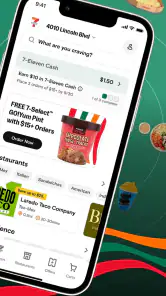
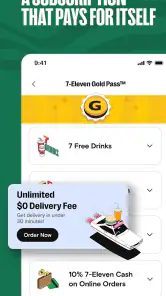
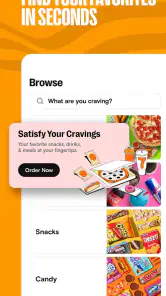
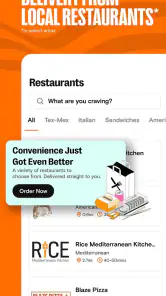
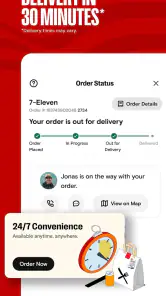
Analysis by Reviewed
When I need a quick drink, snack, or a few last-minute groceries without making a separate trip, 7NOW: Food Delivery & Alcohol makes a convincing case for using a convenience-store delivery service. I see it as a practical bridge between ordering a full meal and walking into a nearby store: the selection is aimed at immediate needs, the ordering process is built around speed, and the app comes from 7-Eleven, Inc., a name most people already associate with convenience shopping.
That focus is also the reason I would not treat it as a universal replacement for a supermarket, restaurant-delivery app, or a dedicated alcohol marketplace. It is most useful when the order is small, the need is time-sensitive, and the local 7-Eleven store can cover what I want. My experience with this Food & Drink app is best summed up this way: it reduces a short shopping trip to a few taps, but the quality of the result depends heavily on the store, the delivery handoff, and the exact items available in my area.
From an immediate need to a delivered order
Starting with the right kind of shopping trip
The best starting condition is simple: I already know roughly what I need, and I want convenience more than a broad catalog. A late-evening snack run, drinks for an informal gathering, breakfast items before work, or a forgotten household essential are all situations where this app feels natural. The store summary promises ordering beer, snacks, and more around the clock, and that describes the central appeal better than any elaborate feature list could.
I would open it with a specific purpose rather than browse aimlessly. If I want something like a cold drink and a salty snack, I can think in terms of a compact basket. If I am planning a full weekly shop, I would choose a supermarket service instead. That distinction matters because convenience-store delivery is about solving a small problem quickly, not necessarily getting the widest range or the best value on every item.
The app is free to download, which removes an obvious barrier to trying it. It has reached over a million installs and holds a 4.2 average from around seventy-five thousand ratings, so it is clearly used beyond a tiny group of occasional customers. At the same time, popularity does not guarantee that the nearest participating store will have the exact item I want, so I still approach each order with realistic expectations.
Building the basket without overcomplicating it
My preferred workflow is to set the delivery location first, then look through the categories that match the immediate need. That order of operations is useful because the local store determines what makes sense to browse. A basket built before checking the service area can create unnecessary disappointment if an item is unavailable or if delivery is not practical for that address.
For a small order, I try to group items by purpose rather than search for every product individually. For example, I might assemble drinks, a snack, and one convenience item in the same pass. This is faster than treating the app like a large online supermarket, and it helps me notice whether the basket is actually worth sending out instead of making a short walk to the store.
You May Like

Clash of Clans Is Won Between the Battles

Android Auto Makes the Case for Quieter Car Software

MobiOffice: Transforming Mobile Productivity with Seamless Integration

EA SPORTS FC™ Mobile Soccer: Redefining Mobile Sports Gaming

How Microsoft OneDrive Became a Mobile Productivity Giant

How Google Translate Breaks Language Barriers Effortlessly
One non-obvious advantage is that the app can act as a decision filter. When I am tired or busy, I do not need to compare dozens of brands across multiple supermarkets. I can focus on what is available from a familiar convenience location. The trade-off is that this narrower choice can work against me when I care about a particular size, flavor, dietary requirement, or brand.
Alcohol orders need a more deliberate handoff
Alcohol changes the nature of the order. I would not treat beer as just another item to place in a basket and forget about. The content rating is Mature 17+, and an alcohol delivery involves a real-world exchange at the door rather than a completely unattended drop-off. I keep the receiving process in mind from the beginning and make sure the person accepting the order is prepared for whatever age-verification step applies at delivery.
This is also where convenience can meet friction. If I am ordering for a shared apartment, a hotel room, or a workplace, I need to think about who will actually receive the order. A delivery that works smoothly for a person at home may become awkward when the address has a front desk, restricted access, or no reliable recipient. I would choose a non-alcohol order if the handoff cannot be managed clearly.
Another practical tip is to avoid combining an urgent alcohol request with a complicated basket. A simple order is easier to check at the door, easier to correct if something changes, and less likely to leave me sorting out which item caused a problem. This is not a glamorous feature, but it is the kind of workflow detail that makes a convenience app more dependable.
Reviewing the order before sending it out
Before confirming, I would pause to check the basket, delivery location, and any instructions the app presents. The most useful habit is to read the order as if I were the person receiving it: Is the address clear? Are the quantities sensible? Is the order small enough to justify delivery? If the answer to one of those questions is no, I would adjust it before submitting rather than trying to repair the situation after dispatch.
I also compare the convenience with the usual alternatives. A restaurant app is better when I want a prepared meal and a supermarket app is better for a planned shop. Walking to a nearby 7-Eleven is usually better when I am already outside and the store is only a few minutes away. This service wins when the value of staying where I am outweighs the extra cost or uncertainty that can come with delivery.
The first handoff: from the app to the local store
Once the order is placed, the app has to pass it to a nearby 7-Eleven location for preparation. That handoff is important because the experience is not controlled by the interface alone. The local store has to locate the products, prepare the order, and pass it onward. If a chosen item is unavailable, the smoothness of the entire workflow can change even though the app itself worked correctly.
This is why I avoid building an order around one irreplaceable product. A basket with several interchangeable snacks or drinks is more resilient than one where every item has to be exact. When a particular brand or flavor matters, I treat availability as a possible weak point and keep a backup plan in mind. That approach makes the app more useful without pretending that a convenience store has the inventory depth of a supermarket.
The local-store connection is also a strength. I am not waiting for a distant warehouse to assemble a small order; the service is designed around nearby convenience retail. That can make it a sensible option for immediate needs. However, the same local variation means two users can have noticeably different experiences depending on their neighborhood, store stock, and delivery coverage.
The second handoff: from store staff to the recipient
The next transition is the delivery handoff. For an ordinary snack order, this may be straightforward, but I still prefer to be available and attentive around the expected arrival. For alcohol, I consider this step essential. I would keep my phone close, make sure the delivery location is accessible, and avoid placing the order at a time when I know I will be away from the door.
This is one of the clearest differences between 7NOW and simply picking something up myself. A store visit gives me direct control over substitutions, stock, and the final inspection. Delivery saves the trip but adds another person and another transition to the process. If the order is time-sensitive, I would rather place it when I can respond quickly than assume the handoff will take care of itself.
For apartment buildings, I would be especially careful with entry instructions. A delivery driver may need a practical way to reach the recipient, and vague directions can turn a simple order into a series of calls or delays. I do not see this as a flaw unique to this app, but it is a real part of using any convenience delivery service, and the small size of the order does not remove that responsibility.
The result: where the app earns its place
When the workflow goes well, the result is genuinely convenient. I can stay home, avoid a separate store trip, and receive a compact selection of everyday items from a familiar convenience retailer. That is particularly valuable during a busy evening, when I need something quickly, or when leaving the house would be disproportionate to the size of the shopping list.
The app also works well for people who think in immediate tasks rather than long shopping sessions. I can solve “we need drinks and snacks” without opening a full supermarket catalog. For someone who lives near a 7-Eleven but cannot easily make the trip, the service can be more useful than its simple store summary suggests.
My strongest recommendation is for small, flexible orders. If I am happy with whatever suitable options the local store carries, the experience feels efficient. If I need a precise product, a large quantity, or a carefully optimized total, the convenience advantage becomes less certain. In those cases, another service may offer better control even if it takes longer.
Where the flow breaks down
The first breaking point is inventory. A convenience-store catalog is intentionally compact, and local stock can affect the outcome. I would not rely on this app for specialty ingredients, a complete meal plan, or a hard-to-find product. It is better to use it as a rapid-access option than to expect it to behave like a warehouse with unlimited substitutions.
The second is the economics of a small order. Delivery is convenient, but convenience has to be weighed against the total cost and effort. If the store is directly on my route, walking in may be simpler. If I am already ordering dinner through another service, adding a snack there may be more efficient. I use 7NOW when avoiding the trip has real value, not automatically for every purchase.
The third is timing. The store summary emphasizes availability around the clock, but an always-open ordering concept does not mean every local handoff will feel identical at every hour. Late-night orders can be especially sensitive to store workload, recipient availability, and alcohol-related checks. I would leave extra flexibility when the order matters for a specific event.
The fourth is the receiving process itself. Alcohol makes the handoff more structured, and any order can become inconvenient if nobody is ready to accept it. People who want a delivery that can be left without interaction may find this service unsuitable for certain baskets. In that situation, a standard grocery order or an in-person purchase may be the cleaner choice.
Who should use it, and who should choose something else?
I would recommend this app to people who regularly need quick convenience-store items, live within a workable delivery area, and value saved time over maximum selection. It is also a good fit for spontaneous gatherings, forgotten snacks, drinks for a movie night, and small top-up purchases that do not justify a supermarket trip.
I would be more cautious recommending it to someone managing a strict grocery budget, planning a large household shop, or requiring exact dietary products. A supermarket can provide broader comparison and a more deliberate basket. A restaurant-delivery app is the better choice when the main goal is hot prepared food. A direct store visit remains superior when immediate control matters more than staying home.
People ordering alcohol should also be comfortable with an in-person delivery handoff and should plan around being available at the address. That is a practical requirement, not a minor detail. If the recipient cannot reliably be present, I would skip that type of order rather than depend on an uncertain delivery situation.
My practical routine for getting better results
I get the most from the app by treating it as a focused convenience tool. I start with a short list, confirm the local destination, choose items that can tolerate minor stock variation, and review the basket before submitting. For a gathering, I place the order early enough to absorb a delay instead of waiting until the exact moment guests arrive.
I also separate “must have” items from “nice to have” items. If the must-have product is unavailable, I reconsider the whole order rather than filling the basket with random replacements. This keeps the final result useful and prevents the delivery from becoming an expensive collection of compromises.
Keeping the phone available during the handoff is another small but worthwhile habit. It matters even more for alcohol orders or addresses that are not immediately obvious. The app can simplify ordering, but it cannot remove the need for clear communication between the store, delivery person, and recipient.
Version, age rating, and overall recommendation
The current version is 5.2608.0, and the app supports operating systems from version 10 onward. Those details make it worth checking device compatibility before installing, especially if I am using an older phone. The mature age classification also fits the inclusion of alcohol ordering and is something families should consider when deciding which device or account will access it.
After following the complete path from need to basket, store preparation, delivery handoff, and final receipt, I see 7NOW as a useful specialist rather than an all-purpose shopping app. Its best quality is focus: it helps turn a small convenience-store run into a delivery request. Its main weakness is that the outcome is tied to local stock, local operations, and the practical realities of receiving the order.
My final take: I would keep it installed for those moments when a few drinks, snacks, or everyday items are worth more than the trip to the store. I would not use it as my primary grocery service, and I would plan alcohol deliveries carefully. If your needs are small, immediate, and flexible, this free Food & Drink app can save genuine time. If you need the lowest total cost, the broadest selection, or complete control over substitutions, another option—or a quick visit to the store—will usually serve you better.
7NOW: Food Delivery & Alcohol Frequently Asked Questions
Is 7NOW suitable for first-time users who want a quick way to order convenience-store items?
The app is built around browsing nearby 7-Eleven selections and ordering items for delivery, so it can be useful when you want snacks, drinks, meals, or other everyday convenience-store products without making a store visit. You’ll need to enter a delivery address to see the options available to you. The actual selection and service depend on the participating store and your location.
What age rating does 7NOW have, and should parents consider it appropriate for children?
7NOW has a Mature 17+ age rating. That rating is worth considering before installing the app on a device used by a child, particularly because the service includes alcohol ordering in eligible locations. Alcohol purchases are subject to local age requirements and identity checks at delivery. Parents can also review the app’s available device and family settings before deciding whether it is appropriate for their household.
Is 7NOW free to download, and which devices can run it?
7NOW is free to download, though placing orders can involve item prices and delivery or other fees. The app is available for Android and iOS devices that meet its minimum operating-system requirement. Before installing, check your device’s software version and make sure you can enter a delivery address in an area served by a participating store. Availability and the features you can use depend on your location.
Who makes 7NOW, and what can I expect from the app?
7NOW is developed by 7-Eleven, Inc. and is a Food & Drink app for ordering convenience-store items for delivery. Its store summary highlights beer, snacks, and more, with ordering available around the clock where service is offered. The app has an average rating of 4.2 from around 75,000 ratings, giving prospective users a useful sense of its overall reception while remembering that individual experiences can vary.
What is 7NOW: Food Delivery & Alcohol?
7NOW is a delivery service connected with participating 7-Eleven stores. Through the app, users can browse available snacks, meals, drinks, groceries, convenience items, and, in eligible locations, alcoholic beverages. After entering a delivery address, the app shows the products, prices, estimated delivery time, and availability for that area. Selection can vary significantly by store and location.
Pros
- Wide selection of meals
- snacks
- groceries
- and convenience items
- Alcohol delivery is available in eligible locations
- Real-time order tracking helps monitor delivery progress
- Useful for late-night cravings and urgent household needs
- Simple reordering makes frequent purchases faster
Cons
- Availability and delivery times vary significantly by location
- Delivery fees
- service charges
- and small-order fees can add up
- Alcohol orders require age verification at delivery
- Product substitutions may occur when items are out of stock
- Promotions and discounts may have location-specific restrictions

- Category
- Food & Drink
- Version
- 5.2608.0