Texas Hold'em Poker: Pokerist
- 12.72K
- 4.4
- Installs
- 10.00M
- Price
- Free

Screenshots




Analysis by Reviewed
I like Texas Hold'em Poker: Pokerist best as a convenient way to play social, familiar poker hands on a phone—not as a substitute for learning in a quiet, structured setting. It is a free card game from KamaGames, and its mix of quick play, tournaments and interaction with other players gives it more of a lively online table feel than a basic solo poker app. The trade-off is that this is a connected, free-to-play experience: the pace and chip economy may not suit someone who wants a purely analytical tool or an entirely offline game.
The short version of my verdict is that this game works best when I want company and a ready-made place to play, not when I want a careful lesson in poker. Its strongest quality is the way it makes a familiar Hold’em session easy to start; its biggest limitation is that quick access and social competition can also encourage me to stay longer than I planned. Knowing which kind of session I want before opening it makes a real difference.
Gameplay and Features
From the moment you launch the app, it’s clear that Texas Hold'em Poker: Pokerist isn’t just any ordinary poker game. The interface is sleek and user-friendly, making it easy to navigate through the various game modes and features. You can dive straight into a quick game or join a tournament to test your mettle against players from around the globe.
That flexibility is useful in practice. A quick table fits a short break when I want a few hands without committing the evening, while a tournament makes more sense when I have time to follow a longer run. Before joining, I’d decide which kind of session I actually have time for: poker is easy to start and less easy to stop at a convenient moment once a game gets engaging.
The game is Texas Hold’em, so the useful habit is to focus on decisions rather than on chasing every hand. I’d treat each session as practice in patience: fold weak starting cards, notice how the table is playing, and avoid reading a short streak as proof that a strategy is working. Online opponents can make hands move quickly, which is entertaining but leaves less room to pause than a book or training app.
One of the standout features of this app is its social aspect. Not only can you play against random opponents, but you can also invite friends to join in on the action. It’s a great way to enjoy a friendly game or engage in some competitive play. Plus, the in-game chat feature lets you communicate with other players, adding an extra layer of interaction that makes the game feel more realistic.
That social layer is also a matter of preference. If I’m playing with friends, chat can make a casual session feel less like a sequence of anonymous hands. If I just want to concentrate, player interaction can be distracting; I’d keep my attention on the cards and decisions rather than feeling obliged to respond. This is a better fit for people who enjoy a shared table atmosphere than for anyone looking for a silent, solitary puzzle.
For a newcomer, I’d separate learning the rules from learning to make good decisions. The game gives a place to encounter real opponents and see how hands unfold, but fast play can make it tempting to click through choices without thinking. I’d start by concentrating on one thing at a time—such as whether a starting hand is worth playing—rather than trying to judge every opponent and every betting situation at once. That small constraint makes casual play more useful without pretending that a social game is a structured course.
Visuals and Sound
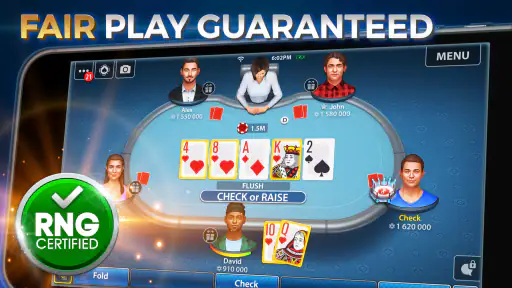
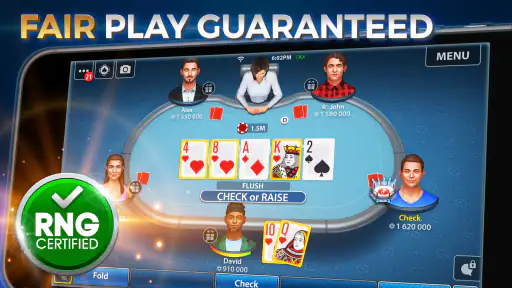
Let’s talk about the visuals for a moment. The graphics are crisp and vibrant, making every card game an eye-catching experience. The developers have done a fantastic job in creating an environment that is both immersive and authentic. The sound effects are equally impressive, with the shuffling of cards and the clinking of chips adding to the realism of the game.
For those who enjoy a bit of customization, the app offers a variety of avatars and table designs. This means you can personalize your gaming experience to suit your style, which is a nice touch that enhances the overall enjoyment of the game.
On a practical level, table styling is a personal touch rather than a poker advantage. I’d choose an avatar and design I can recognize at a glance, then leave them alone; spending time adjusting appearances does not improve decisions. The visual presentation supports the social atmosphere, but players who prefer a stripped-back interface may find the lively look less appealing than a minimalist poker client.
The audio and visual treatment also affect when I’d use it. A phone game with a lively table presentation feels more at home during a relaxed break than in a quiet setting where sound or animated effects would be unwelcome. I’d lower or mute the sound when I need discretion, and avoid treating the table’s atmosphere as a reason to play with more focus than I actually have. The presentation makes the game feel sociable; it cannot make a distracted session a good one.
In-App Purchases and Currency
Now, let’s discuss the elephant in the room: in-app purchases. Like many free-to-play games, Texas Hold'em Poker: Pokerist offers a range of in-app purchases. While you can earn chips and other rewards through gameplay, there’s also the option to purchase additional chips if you’re looking to boost your bankroll quickly.
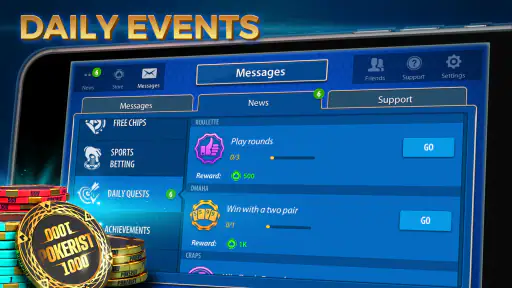
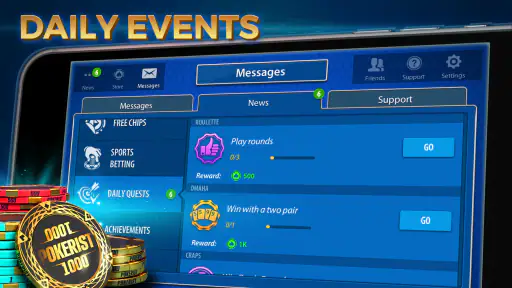
However, I found that the game is quite generous with its daily bonuses and rewards, which means you can still enjoy the game without feeling pressured to spend real money. It’s refreshing to see a balance between free play and paid options, ensuring that all players can have a good time regardless of their spending choices.
Still, I’d set a personal spending boundary before opening the purchase screen. The listed in-app items range from $0.99 to $999.99, a very wide span that makes it especially sensible to treat purchases as optional entertainment, not as a way to recover chips or guarantee better results. Free play is the safer starting point; if the game stops being fun without buying more, taking a break is better than spending to keep a session going.
One useful routine is to collect any available daily reward when I actually plan to play, then choose a table that matches the amount of time I have rather than escalating stakes to make a short session feel exciting. That keeps the game’s virtual currency in perspective. It is still a poker-themed game, not a dependable way to earn money, and I would not recommend it to anyone who has trouble keeping in-app spending under control.
A useful personal rule is to treat virtual chips as a session limit, not a target to win back. If a run goes badly, I’d step away rather than immediately looking for a purchase or a bigger game to reverse it. That approach matters even when I never spend: the pressure to keep playing can be its own cost in time and attention. For anyone sharing a device with a younger player, I’d also talk through the difference between game currency and real-money purchases before handing it over.
Who Will Enjoy the Table
The strongest audience is casual Texas Hold’em fans who want opponents, a quick route into a game and the option to play socially. It can also suit a beginner who already understands the basic rules and wants repeated hands in a relaxed setting. The Teen content rating is worth noting for households choosing games for younger players, while the social environment and purchase options are reasons for parents to make that choice thoughtfully.
For a realistic everyday use, imagine having a short wait before an appointment. A quick game can fill that gap, but I’d avoid entering a tournament if I might need to leave at any moment. Conversely, a planned evening with friends is a more natural time to use the social side. The key distinction is commitment: quick play suits interruptions; a longer competitive session is better when you can give it your attention.
Compared with poker apps built mainly around lessons, hand analysis or solitary practice, Pokerist puts more emphasis on playing at a table with other people. That makes it more immediately entertaining, but less suitable as a dedicated study aid. If my goal were to review decisions carefully or learn rules step by step, I’d choose a focused training resource alongside it; if I wanted a social mobile game centered on Hold’em, this is the more natural fit.
There is another useful comparison: a simple offline card game is better when I want something that works without relying on a table of other players, while Pokerist is the more appealing choice when opponents and the sense of a shared game are the point. Someone who enjoys only quick, low-pressure puzzles may be happier with a solo card game. Someone who already likes Hold’em but misses the unpredictability of playing against people is much closer to this app’s intended audience.
There are a few practical questions I’d consider before installing. The game is free to start, but optional purchases mean it is not a no-spend environment by definition. It is a multiplayer experience, so I would expect an internet connection to be part of normal use rather than treating it as an offline time-killer. I’d also check that my phone meets the minimum OS requirement of 5.1 and leave enough attention for a session, since a hand can demand a decision even when I only meant to play briefly.
For a first session, I’d keep the goal modest: learn where the quick game and tournament options sit, play at a comfortable pace, and see whether the social atmosphere suits me. I would not judge my poker ability by a few lucky or unlucky hands, and I would not spend just to prolong the trial. That is a practical way to answer the main question—whether I enjoy this particular table experience—before making it part of a routine.
It is also worth being honest about attention. A short game may fit a break, but the app is not ideal if I need to remain available every second or expect an interruption at any moment. I’d choose a quick session only when I can comfortably finish the hands I start, and save a tournament for a time when I can stay engaged. That distinction keeps the game enjoyable instead of turning an easy launch into an awkward early exit.
Final Thoughts
In a nutshell, Texas Hold'em Poker: Pokerist is a must-have app for anyone who loves poker. Its combination of engaging gameplay, stunning visuals, and social features make it a standout in the crowded mobile gaming market. Whether you’re playing a quick hand on your lunch break or settling in for a long tournament session, this app delivers a top-notch poker experience.
Its audience reach is substantial: it has more than 10 million installs, around 412,000 ratings and an average score of 4.4. Those figures suggest a well-established choice, though popularity is not a guarantee that every table or interaction will match your taste. It was released on May 11, 2011, and version 65.44.0 reflects a game with a long-running presence rather than a brand-new experiment.
That history is relevant mainly as context, not as a promise that every player will prefer it. The game has clearly found a large audience, but the right test is whether its pace and social focus match what I want from a poker app. Its Teen rating, free entry and optional purchases make it sensible to approach it as entertainment with boundaries, rather than as a risk-free way to spend unlimited time or money.
If you’re ready to take your poker skills to the next level, download Texas Hold'em Poker: Pokerist and start playing today. Just remember to keep your poker face handy, because you’re going to need it!
My recommendation is more specific: try it if you want accessible Hold’em with a social, competitive feel and can keep virtual chips and purchases in perspective. Skip it if you need offline play, a quiet training environment, or a game without optional spending. For the right player, it’s an enjoyable way to fit poker into spare time; for everyone else, a simpler practice app or a non-poker card game may be a better match.
Texas Hold'em Poker: Pokerist Frequently Asked Questions
How much storage space should I have available before downloading Pokerist?
It is sensible to leave some free space on your device before installing Texas Hold'em Poker: Pokerist, as with any mobile game. The amount required can vary with your device and the version you download. Check the space shown by your app store before starting, and keep additional room available for the game to install and run comfortably.
What is the minimum Android version needed for Texas Hold'em Poker: Pokerist?
For Android users, Texas Hold'em Poker: Pokerist requires Android 5.1 or later. Check your device’s operating system version before downloading so you can confirm compatibility. The game is also available on iOS, giving players another mobile option. On either platform, downloading through its official app store is the straightforward way to install it.
What kind of game is Texas Hold'em Poker: Pokerist?
Texas Hold'em Poker: Pokerist is a card game built around Texas Hold'em, with online play against other players. Its focus is the familiar poker format, presented with a casino-style atmosphere and a range of ways to join a game. It may suit players looking for a social poker experience, while those new to the game may want to learn the basic rules before joining a table.
Is Texas Hold'em Poker: Pokerist suitable for younger players?
The game has a Teen content rating, so it is aimed at a teen audience rather than very young children. Poker play and its casino-style presentation may not appeal to every family, so parents can consider the rating and the game’s social features when deciding whether it is appropriate. It is a poker game, not a guide to real-money gambling.
What platforms is Texas Hold'em Poker: Pokerist available on?
Texas Hold'em Poker: Pokerist is available for download on both Android and iOS platforms. You can find it on the Google Play Store for Android devices and the Apple App Store for iOS devices. This ensures that a wide range of users can enjoy the game regardless of their device preference.
Pros
- Realistic graphics and smooth gameplay
- Variety of poker games and tournaments
- Active player community for social interaction
- Daily bonuses and in-game rewards
- Intuitive interface for easy navigation
Cons
- In-app purchases can be expensive
- Requires constant internet connection
- Ads can be intrusive at times
- Limited features in free version
- Occasional connectivity issues

- Category
- Card
- Version
- 65.44.0