Plink by Pokerist
- 377.00
- 4.2
- Installs
- 1.00M
- Price
- Free
Screenshots







Analysis by Reviewed
I can see why Plink by Pokerist is appealing the moment you start a round: it turns a familiar physical game into a quick arcade session built around dropping, bouncing, and watching the outcome unfold. The attraction is immediate rather than complicated. You do not need to learn a large set of rules before trying it, and the realistic physics give each attempt enough movement and suspense to make “one more round” feel natural.
After spending time with it, my opinion is that its best quality is short-session clarity. I can open it when I have only a few minutes, understand what I am doing almost immediately, and enjoy the result without committing to a long campaign. That makes it a very different proposition from a story-driven game or a demanding competitive title. At the same time, its simple central idea means the long-term appeal depends heavily on whether I enjoy repeating the same kind of physical challenge.
Why the first few rounds work so well
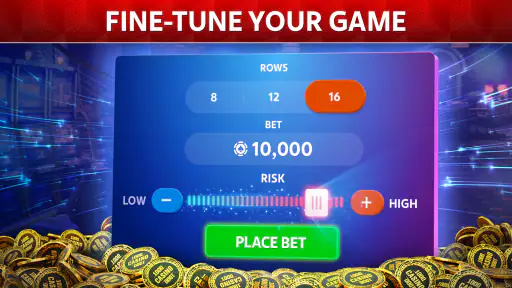
The game comes from KamaGames and sits in the arcade category, which is a good fit for its straightforward design. Its store summary focuses on a real-life Plink experience, realistic physics, and multiplayer, but the important practical point is how quickly those ideas become understandable in play. I do not have to study a complicated interface before I can judge whether the game suits me.
The physical behavior is the main source of pleasure. A drop can look predictable at first, then take a different path as it meets obstacles and changes direction. That small uncertainty gives each attempt a reason to watch through to the end. It is not the same kind of excitement as a fast action game; the tension comes from anticipation and the final result rather than rapid movement or elaborate controls.
I also like that the game does not ask me to build a large mental model before having fun. Someone who has played a physical version of Plink will recognize the basic appeal, while someone unfamiliar with it can still understand the objective through observation. This makes it suitable for a quick handoff to a friend. I would not need to explain a long progression system before letting them try.
The multiplayer angle adds another layer to that simple foundation. Playing against or alongside other people can make an ordinary attempt feel more meaningful, especially when the result is close. However, multiplayer does not automatically solve the repetition issue. It improves the social context, but the underlying action remains centered on the same kind of drop-and-watch rhythm. Players who need constant variety may still find the game narrow after the novelty fades.
A useful game for the gaps in an ordinary day
My clearest use case is a short waiting period: I might have a few minutes before an appointment, during a commute with reliable phone access, or while taking a break from a longer task. Plink works in those moments because the basic interaction is easy to resume and does not demand the concentration of a platformer or a strategy game.
It is also a reasonable choice when I want something lighter than a traditional card or board game. Those alternatives can be more strategic and deeper, but they often ask me to remember more rules or spend longer in a match. Plink gives me a smaller commitment. I can enjoy a handful of attempts without feeling that I have abandoned a larger plan.
That convenience has a limit. If I am looking for a game that rewards careful planning over many hours, this would not be my first recommendation. Its appeal is strongest when I want an accessible physical toy-like experience, not when I want a complex system to master.
The rhythm of a session: quick pleasure, then a familiar loop
The session rhythm is easy to understand. I begin with an attempt, watch the physics produce a result, and decide whether the outcome makes me want another try. That loop has a pleasant natural pace because the result arrives without a long setup. There is little friction between deciding to play and actually seeing the game in motion.
This is where the title performs better than many arcade alternatives that bury their basic action under menus, upgrades, or lengthy tutorials. Plink’s central activity is visible right away. For a casual player, that can matter more than having a huge amount of content. The game respects the fact that not every mobile session is planned in advance.
I found the physics especially important to the rhythm. If every result looked completely fixed, the game would feel like a button press followed by a predetermined animation. The bouncing behavior creates enough uncertainty to keep my attention on the board. Even when I think I understand where the piece will go, the final route can remain interesting.
There is a trade-off here. Realistic movement can be satisfying, but it can also make a result feel less controllable than in a conventional arcade game. Players who prefer precise timing, direct character control, or a clear skill ceiling may want something more responsive. In Plink, part of the experience is accepting that the physics are doing much of the visible work.
How I would approach a short session
I would not treat every attempt as a serious test of skill. A better approach is to use the first few rounds to read the pace and understand how much influence the game gives me. Once that is clear, I can decide whether I am playing for a quick distraction, a better result, or the social enjoyment of comparing outcomes.
That distinction is useful because it prevents the game from promising more control than it actually offers. If I expect a precision arcade challenge, I may become frustrated by the physical randomness. If I treat it as a compact physics-based pastime with competitive flavor, the same uncertainty becomes part of the fun.
I would also recommend setting a personal stopping point before starting a longer session. The loop is intentionally easy to repeat, and that is both a strength and a weakness. A simple limit—such as playing until a short break ends—helps preserve the freshness of the idea instead of turning every spare moment into an automatic replay.
Returning after an interruption
Plink is well suited to the stop-and-start nature of mobile gaming. I can approach it as something to pick up when convenient rather than as a game that requires a dedicated evening. That matters to me more than it might sound. Many mobile titles are technically portable but still punish interruptions through long matches, complicated objectives, or a need to remember a detailed position.
Here, the compact nature of the central action makes returning less intimidating. I do not need to reconstruct a story or remember a large inventory before I can enjoy the next attempt. For a person who regularly plays while waiting or between tasks, that is a genuine advantage.
There is still a practical distinction between pausing during an individual attempt and leaving between attempts. I would be most comfortable using the game in naturally small chunks rather than assuming every moment of play can be interrupted at any point. That is a sensible habit for any physics-based arcade game, where watching the result is part of the satisfaction.
The age classification is Teen, so I would keep that in mind when deciding whether it is appropriate for a younger player. The game is free to start, which lowers the barrier to trying it, but it includes in-app purchases ranging from $0.99 to $999.99 per item. That wide purchase range is the biggest reason I would recommend checking spending controls before handing the device to someone else.
For my own use, I would approach the free entry as a chance to test the core loop rather than as a promise that every part of the experience will remain equally satisfying without spending. The right question is whether the basic play is enjoyable on its own. If it is not, purchases are unlikely to fix the underlying issue of repetition.
What the current release tells me about upkeep
The current version is 75.8.0, and the game runs on Android 6.0 or later. That makes it accessible on a broad range of Android devices, including phones that are not recent flagship models. I would still judge the experience on the particular phone in hand, because physics-heavy motion and online play can feel different depending on performance and connection quality.
The game has passed one million installs and holds a 4.2 average from around seventeen thousand ratings. Those figures suggest that the basic concept has found a substantial audience, while the score also leaves room for individual preferences and occasional friction. I would interpret that combination as encouragement to try it, not as proof that every player will enjoy the loop for the long term.
The listing also shows around three hundred seventy reviews, which gives the game a visible history of player reaction without changing the most important test: whether its rhythm matches the way I want to play. A popular arcade game can still be a poor choice for someone who needs deep progression, while a modestly complex game can be perfect for someone seeking a quick physical distraction.
Where repetition becomes the real test
The central question is not whether the first session is enjoyable. It is whether the same pleasure survives after the surprise of the physics becomes familiar. Plink has a clear advantage here: the result is visually easy to follow, and small changes in the path can keep an attempt from feeling completely identical.
But the game’s foundation is still narrow. I am repeatedly engaging with the same broad action, so replay value depends on personal tolerance for that loop and on how much I care about the multiplayer context. Someone who enjoys chasing a better outcome or sharing results with others may return often. Someone who wants new mechanics, environments, or objectives at regular intervals may run out of reasons sooner.
This is an important difference from more traditional arcade games. A platformer can refresh its challenge with new enemy patterns and level layouts. A puzzle game can introduce new rules. A card battler can expand its decisions through deck construction. Plink’s appeal is more focused: it offers a compact physical scenario and asks whether that scenario remains enjoyable through repetition.
I see that focus as honest rather than automatically negative. Not every mobile game needs to become a second job. In fact, the limited scope helps preserve the immediate accessibility that makes it attractive. The cost is that I should not expect the same depth or variety I would find in a larger arcade package.
Multiplayer changes the mood more than the mechanics
Multiplayer is most valuable when I want a shared reason to keep playing. A result can feel more exciting when another person is involved, even if the underlying action remains simple. It gives the game a conversational quality: I can react to a lucky bounce, compare an outcome, and decide whether the next attempt is worth taking.
Still, I would not choose Plink solely because I expect multiplayer to transform it into a complex competitive game. The social layer supports the main activity; it does not replace it. If I am searching for team roles, elaborate rankings, or a broad competitive ecosystem, another arcade or multiplayer title may serve me better.
For a casual group, though, that simplicity can be exactly right. Friends do not have to spend a long time learning the rules before participating. The game can sit beside a conversation rather than demanding complete attention, provided everyone is comfortable with the pace and the available connection.
Who should try it, and who should skip it?
I would recommend Plink to someone who likes physical game ideas, short arcade sessions, and outcomes that are partly shaped by bouncing movement. It is a good fit for players who want to open a game, understand the immediate objective, and get a small burst of suspense without navigating a large progression system.
It is also a sensible pick for a person who enjoys casual multiplayer but does not want to teach friends a complicated ruleset. The free starting price makes experimentation straightforward, and the Android requirement of version 6.0 or later means many users can at least consider installing it on an older compatible phone.
I would be more cautious about recommending it to players who dislike chance-like results or who need direct, precise control. If the pleasure comes from mastering exact movement, a conventional action arcade game may feel more rewarding. I would also steer away from it if the main goal is a long-form solo experience with a story, character development, or a broad sequence of changing challenges.
Families should pay attention to the Teen content rating and to the in-app purchase range. The game may be free to download, but free entry does not mean spending is irrelevant. I would enable appropriate device-level purchase protections before letting a younger player experiment, especially because the highest listed item price is substantial.
Three practical ways to get more from it
Use it as a deliberate transition game. A few attempts can mark the end of a work break or the beginning of a commute without requiring the mental investment of a full match in a deeper title.
Judge it over separate short sessions rather than one long test. The physics are easier to appreciate when the game remains a small treat; extended repetition can make its limited core more obvious.
Try the social side only after deciding whether the basic loop works for you. Multiplayer can add motivation, but it should not be used to disguise a lack of personal interest in the main action.
Those habits also clarify the game’s main trade-off. Plink is strongest when convenience and immediate pleasure matter more than content volume. It becomes less convincing when I ask it to provide a deep, constantly changing arcade journey.
My casual verdict after living with the loop
Plink by Pokerist succeeds because it gets to its point quickly. The realistic physics create a small moment of suspense, the arcade format suits brief sessions, and multiplayer can give otherwise simple attempts a social reason to continue. I appreciate that I can understand the attraction without reading a manual or committing to a long play session.
Its weakness is equally clear: the same focused design that makes it accessible can limit replay value. Once the basic surprise has settled, I need to enjoy the physical rhythm itself—or have friends involved—to keep returning. Players looking for constant novelty, detailed strategy, or precise action should probably choose another game.
For me, the right way to view it is as a compact physics-based arcade break, not as a full replacement for a deeper multiplayer game. It is free to try, has a substantial installed audience, and works best when I want a quick, understandable activity with a little uncertainty in every result. I would recommend giving it a fair test during several short sessions, keeping spending controls in place, and deciding from there whether the bounce-and-watch loop remains enjoyable after the first impression.
Pros
- Quick
- casual poker matches that are easy to join on mobile.
- Several poker variants provide more variety than standard Texas Hold’em.
- Chips and rewards create a steady sense of progression.
- Clean interface makes tables and actions easy to understand.
- Social features let you interact with other players during games.
Cons
- Uses virtual chips
- which may encourage repeated purchases after losses.
- Random matchmaking can place beginners against much stronger players.
- Online play depends heavily on a stable internet connection.
- Chat and social interactions may include distracting or unwanted messages.
- Progress and rewards can feel slow without frequent play or spending.
- Category
- Arcade
- Version
- 75.8.0