FlyAce: Crash Game by Pokerist
- 12.00
- 4.5
- Installs
- 10.00K
- Price
- Free

Screenshots



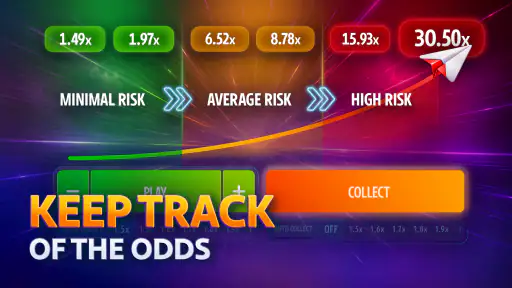




Analysis by Reviewed
I tried FlyAce as the kind of game you open when you have a spare minute rather than a long evening to fill. Its central idea is immediately understandable: choose a wager, watch the flight climb, and decide whether to cash out before the crash. That simplicity gives it a very quick hook, but it also means the quality of the experience depends less on discovering new content and more on how comfortably you handle repeated, high-pressure decisions.
This is a free arcade game from KamaGames, aimed at adults and older teenagers under its Teen content rating. It has reached over ten thousand installs and holds a 4.5 average from around 160 ratings, which suggests that the compact format has found an audience. In my experience, its strongest appeal is the short-session rhythm: a round can be understood almost instantly, and you can stop after one attempt without feeling that you have abandoned a lengthy mission.
Why the first round is so easy to understand
The opening experience is built around one question: how long will the flight last before it crashes? You are not learning a complicated control scheme or studying a large map. The game presents a rising opportunity, and your job is to decide whether the current return is worth taking or whether you want to risk waiting longer. That makes the first few rounds accessible even if you rarely play arcade games.
I like that the basic decision is visible rather than buried under menus. The attraction comes from the tension between a modest, sensible exit and the temptation to wait for a better result. The game does not need a long explanation to create that tension. It is closer to a quick reaction to changing confidence than to a conventional arcade challenge based on movement, enemies, or level design.
That clarity is also the first important limitation. Once you understand the loop, there is not much mystery left in the core action. The pleasure comes from timing and self-control, not from unlocking a new play style or mastering a deep set of mechanics. If you want an arcade game with stages, characters, collectibles, or increasingly complex obstacles, this will feel unusually narrow.
The store summary describes the experience as a crash casino game, and that description matters when deciding whether it belongs on your phone. Although the presentation is simple and game-like, the wager-and-cash-out structure is the heart of every round. I would not recommend treating it as a harmless reflex toy if you are uncomfortable with gambling-style mechanics. The Teen rating should not be read as a reason for younger players to use it casually, especially because in-app purchases range from $0.99 to $999.99 per item.
A short round needs a clear personal limit
My most useful advice is to decide your session boundary before opening the game. Because each attempt is brief and the next one is always close at hand, it is easy to think, “I will just try once more.” That is not a technical flaw, but it is a real design consequence of the format. A timer or a fixed number of rounds is more useful here than relying on how you feel in the moment.
I also found it helpful to separate the entertainment decision from the money decision. If I opened the game for a few minutes of suspense, the session worked best when I treated that as the complete purpose. Chasing a previous result changes the mood quickly. The game’s immediate hook is strongest when you appreciate the choice itself, not when you expect a particular outcome.
The rhythm of play: quick decisions, repeated tension
FlyAce is at its best when you want a compact burst of attention. A typical use case would be waiting for a friend, sitting through a short break, or taking a brief mental pause between tasks. You can understand what is happening without sound, a tutorial marathon, or a large amount of free time. That makes it more interruption-friendly than many arcade games that punish you for stepping away from a level.
The rhythm is deliberately repetitive. A round begins, the value rises, uncertainty builds, and you choose whether to leave before the crash. Then the cycle starts again. This gives the game a clean pulse, but it also makes replay value depend on your response to risk. There is no broad adventure structure carrying you forward, so the question is not “what comes next?” but “will I make a different decision this time?”
That distinction is important when comparing it with usual arcade alternatives. A traditional endless runner gives you movement, obstacles, and a visible personal best. A match-style arcade game usually offers changing board states and a clear sense of solving something. FlyAce replaces those forms of progress with anticipation. It is more immediate than those games, but less varied. If you want a game that keeps surprising you through new layouts or mechanics, another arcade option will probably hold your attention longer.
On the other hand, that narrow structure is exactly why it can suit someone who dislikes complicated games. There is no need to remember a long objective or rebuild your understanding after a week away. The core action remains recognizable every time you return. For short sessions, that is a genuine strength rather than a missing feature.
How to make the short format work better
One practical approach is to use a fixed exit rule for your own session rather than making every decision from scratch. You might decide to stop after a small number of rounds, after one disappointing result, or once the game no longer feels entertaining. The point is not to find a perfect strategy; it is to prevent the repeated loop from quietly becoming the entire activity.
Another useful habit is to avoid opening it when you are already distracted or emotionally frustrated. The game asks for quick judgment, and a rushed decision can feel more personal than it really is. If you are checking messages, commuting, or trying to work at the same time, the short rounds may seem convenient, but the wager structure deserves more attention than a normal idle pastime.
I would also keep the free-to-play label in perspective. You can download and start the game without paying, but the presence of purchases means it should be approached with the same care as any other game built around optional spending. If the phone is shared with a younger family member, I would check the device’s purchase controls before allowing access. That is a sensible precaution for this particular format, not an extra step I would consider necessary for every arcade title.
Stopping and returning after an interruption
The game’s strongest quality under the editorial test of interruption tolerance is that it does not demand a long continuous commitment. If someone calls you, a task starts, or you simply lose interest, you can leave without sacrificing a campaign or forgetting a complicated objective. That makes it more convenient than level-based arcade games where an interruption can mean losing a run you had spent several minutes building.
Still, “easy to interrupt” does not mean “risk-free to reopen.” The same compactness that makes the game convenient also makes another round feel effortless. Returning after a pause takes almost no mental preparation, and that can be good when you want a quick diversion. It can also encourage automatic repetition if you keep tapping back into the next attempt without deciding whether you still want to play.
For me, the best use is to treat each visit as a small, complete session. I would open it with a reason, play briefly, and close it deliberately. That approach preserves the immediate pleasure without letting the game fill every idle gap. It also makes the experience easier to judge honestly: if the rounds are still enjoyable after a clear stopping point, you have found a good casual fit; if you reopen only because the next round is available, the loop may be doing more work than the entertainment.
The current version is 75.8.0 and it requires Android 6.0 or later. Those details make it approachable for people using older Android devices, although compatibility alone does not determine whether the game feels right for you. The more important question is whether your phone use suits a game that asks for frequent, small decisions rather than extended concentration.
What happens when the novelty fades
The first sessions benefit from curiosity. You want to see how the flight develops and how your own timing feels. Later, the experience becomes more revealing. Without new levels or a wider arcade toolkit, the game has to earn replay through the tension of the next decision. Some players will find that satisfying because the loop is clean and easy to revisit. Others will notice that the same shape repeats sooner than expected.
I think the game works best as a companion activity, not as a main game for a long night. It can sit alongside a short break or a quick change of pace, but it is less convincing when asked to provide hours of variety. That is not a criticism of its simplicity by itself. It is a reminder to match the game with the right expectation before installing it.
There is also a difference between replay value and repeat availability. FlyAce makes it easy to play another round, but ease is not the same as depth. Its replay value comes from personal discipline, changing decisions, and the emotional suspense of waiting. If those elements do not interest you, repeated access will not create the variety you might expect from a larger arcade game.
Who will enjoy it, and who should skip it
I can see this working for an adult who wants a very direct arcade experience with no lengthy setup. It is suitable for someone who enjoys making quick risk judgments, prefers sessions that can end at any time, and does not need a story or a large progression system. The free download also makes it easy to test the basic feel before deciding whether it deserves a place on your phone.
I would be more cautious recommending it to anyone who is sensitive to gambling-style loops, easily tempted by optional purchases, or looking for a conventional skill game. The central tension is not just “how fast can I react?” It is “how much longer will I wait before taking the current result?” That difference changes the emotional character of the game.
It is also a poor choice for a child simply because it looks simple. The Teen rating, the casino framing, and the available purchase range all point toward adult supervision and sensible device controls. Families seeking a safer casual arcade option would be better served by a game based on puzzles, movement, or score chasing without wager-focused decisions.
Players who want a deeper arcade hobby should look elsewhere as well. A runner, puzzle arcade title, or action game with stages will offer more mechanical variety and clearer long-term goals. FlyAce is better understood as a focused micro-session game: quick to learn, quick to revisit, and intentionally limited in what it asks you to do.
My final take on the everyday experience
After spending time with it, I see the appeal in the clean structure. You do not need to memorize controls, wait through a long introduction, or commit to a campaign. The flight creates an immediate question, and the answer arrives quickly. For a short break, that can be more satisfying than launching a larger game and spending half the session getting back into it.
The trade-off is that the same clarity leaves little room for discovery. Once the basic timing decision is familiar, the game depends heavily on whether you enjoy repeating that tension. Its interruption tolerance is excellent for a quick phone session, while its long-session variety is modest. The experience is therefore easy to fit into a day, but not necessarily easy to keep fresh for weeks.
My recommendation is conditional: try it if you want a compact arcade game built around suspense and can keep optional spending firmly under control. Before playing, set a personal session limit and decide whether you are there for a brief diversion rather than a result. If that sounds comfortable, KamaGames has made a focused game that gets to its point quickly.
If you want a broader arcade experience, choose something with levels, movement, or changing challenges instead. If you want an immediate, interruption-friendly round and understand the casino-style design, FlyAce can be a convenient little game for spare moments. I would not call it a complete replacement for a traditional arcade favorite, but as a tightly focused short-session option, it knows exactly what it is trying to do.
Pros
- Simple controls make it easy for beginners to start playing.
- Quick rounds suit short gaming sessions.
- The rising multiplier creates clear
- immediate tension.
- Clean interface keeps the focus on the current round.
- Pokerist integration may appeal to existing platform users.
Cons
- Gameplay relies heavily on luck rather than meaningful strategy.
- Rounds can encourage impulsive
- repeated bets.
- Losses may accumulate quickly during fast-paced sessions.
- The format can become repetitive after extended play.
- Availability and features may vary by region or device.

- Category
- Arcade
- Version
- 75.8.0