Piano Music Go-EDM Piano Games
- 5.31K
- 4.4
- Installs
- 100.00M
- Price
- Free

Screenshots


Analysis by Reviewed
I like music games that give a song a little more purpose than simply playing in the background, and the central idea here is easy to understand: follow a track by tapping its moving tiles. Piano Music Go-EDM Piano Games is a free music game from Joy Journey Music Games, built around that small but absorbing challenge. It doesn’t ask me to know piano or read music before starting; it asks me to listen, watch, and keep time. That makes it an approachable choice when I want a brief, hands-on break rather than a lesson or a full gaming session.
The key to enjoying it is knowing what kind of musical interaction it offers. The tiles turn a song into a sequence of timing decisions, so I’m not just hearing the beat but responding to it. In my experience, that simple shift is the game’s strongest idea: it can make a familiar spare moment feel more engaging without requiring much preparation. It is best approached as a rhythm challenge with a piano-themed presentation, not as a way to learn to play an actual piano.
Turning a song into a timing challenge
Right off the bat, the first thing you'll notice about Piano Music Go-EDM Piano Games is its user-friendly interface. Seriously, it's like the developers knew exactly what we needed. The moment you launch the app, you're greeted with a slick, intuitive design that just screams "play me!"
The central appeal is the simple musical challenge: you tap tiles in time with the track, trying to keep up as the rhythm moves along. That turns listening into something active without asking you to learn piano technique. I see this as the game's most useful distinction from a music player: it gives restless hands a job, so a song can become a short, focused activity rather than background sound.
That design also explains why the game works well in short bursts. I can decide to play a track, give it my attention, and stop when I’m ready to return to whatever I was doing. There’s no need to set aside a long block of time just to get something out of it. At the same time, the format is not ideal for every listening mood: if I want to relax with a song and do nothing else, having to watch for the next tile changes the experience from passive listening into a task.
One of the standout features is the vast library of songs. Whether you're into classical melodies or the latest EDM hits, there's something here for everyone. The tracks are neatly categorized, making it super easy to find your favorites or discover new ones. Just imagine tapping away to the rhythm of both Beethoven and Marshmello in the same app!
Learning the rhythm without learning piano
Now, let's talk about the gameplay. If you're worried about the learning curve, don't be. The app caters to both beginners and seasoned pianists. You start off with simpler songs and gradually work your way up as you master each track. The game cleverly challenges you by increasing the speed and complexity of the songs. It's like having a personal music tutor who knows just when to push you a little harder.
More From Our News Desk

Weather by Xiaomi Review: Clear at a Glance, Less Clear Up Close

X Under Pressure: Can It Recover When Posting Goes Wrong?

Clash of Clans Is Won Between the Battles

Android Auto Makes the Case for Quieter Car Software

MobiOffice: Transforming Mobile Productivity with Seamless Integration

EA SPORTS FC™ Mobile Soccer: Redefining Mobile Sports Gaming
In practice, I’d treat each attempt as a quick concentration break, not a substitute for piano lessons. The timing challenge can reward patience: rather than tapping frantically, listen for the beat and keep your attention on the next tile. If a song starts feeling too demanding, switching to something more manageable is a sensible way to keep the session fun. The satisfaction comes from following the music accurately, not from pretending that tile-tapping teaches hand position, reading notation, or keyboard skills.
A useful approach is to choose a track for its rhythm, not just because you recognize its name. A song you already know may feel comfortable, but a strong beat can be easier to follow than a familiar tune with a rhythm that catches you off guard. I’d start with something that feels steady, focus on the timing, and only move to a more demanding choice when the taps feel controlled. This is a small adjustment, but it can make the game feel like a musical challenge instead of a test of how quickly I can react.
It also helps to separate a missed sequence from a lack of musical ability. The game is testing timing and attention in its own format; it is not measuring whether someone can play a melody on a keyboard. If a round goes badly, I’d pause for a moment, listen to the pulse, and try again only if it still feels enjoyable. Repeating a track can be satisfying when I’m trying to improve my timing, but repetition can also make a casual game feel like work if I’m chasing a perfect run rather than having fun.
Where a quick round fits into the day
A realistic moment for it is a short wait before an appointment or a quiet break at home. I can see opening a track, playing for a few minutes, then putting the phone away without needing to plan a longer session. It is also a better fit for headphones in a shared room, where the music can stay personal; the trade-off is that a fast, attention-heavy round is less suitable when you need to watch your surroundings or should be focusing on another task.
For example, if I have a few minutes between finishing a chore and starting dinner, I could play one track as a deliberate reset. I’d keep the session short, choose music that matches my mood, and stop before it turns into one more thing I feel obliged to complete. That is where the game’s format makes sense: it offers a compact activity with a clear beginning and end. On a commute or while walking, though, I’d put safety first and leave the game alone until I’m somewhere stationary.
It can also work as a low-pressure way to share a music game with someone nearby. One person can take a turn, then hand the device over, making the timing challenge easy to understand without needing a lengthy explanation. I would not assume that this makes every track equally suitable for every player; different rhythms and speeds can change how approachable a round feels. Letting each person choose a song they actually enjoy is a better way to keep the experience friendly than turning every attempt into a score contest.
And hey, if you're a competitive spirit like me, you'll love the leaderboard feature. It adds an extra layer of excitement as you strive to beat your own high scores or challenge friends. Trust me, there's nothing more satisfying than seeing your name climb up the rankings!
That competitive side is most enjoyable when it stays optional. I’d use a score as a reason to replay a track I like, not as proof that I should keep going after I’ve lost interest. A leaderboard can give a short session a target, but the core appeal still needs to be the music and the act of keeping time. If competition makes me rush or turns a relaxing break into frustration, ignoring the rankings is a perfectly reasonable way to play.
Sound, style, and what they do for play
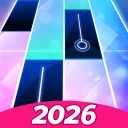
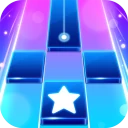
Visually, the app is a treat. The graphics are vibrant and dynamic, complementing the energetic beats perfectly. But it's not just about the looks; the sound quality is top-notch too. With a good pair of headphones, you can get lost in the immersive soundscape that the app provides. It's like having a mini concert in your pocket.
For this kind of game, sound is not just decoration. It helps me follow the rhythm, while the moving tiles give me a visual cue for when to respond. Headphones can make it easier to concentrate in a noisy room, but they also make it more important to stay aware of what is happening around me. At home, I’d use them when I want a focused, personal session; in a shared space, I’d keep the volume comfortable and avoid playing when I need to listen for someone calling me.
The visual presentation has a similar practical role: it supports a quick read of the action, but the player still has to divide attention between the screen and the track. If I find myself watching the tiles without listening, I’m missing part of what makes the game feel musical. I get more from it when I let the beat guide my taps and use the visuals as a prompt, rather than treating every round as a purely visual reflex challenge.
Compared with a piano-learning app, this is a lighter, more immediately playful choice: the point is keeping time with a song, not building a practical repertoire. Compared with a music rhythm game that focuses on other instruments or styles, its piano-tile presentation and music-game framing are the draw. That also defines who should skip it: if you want structured lessons, detailed theory, or a way to practise on a real keyboard, I’d choose a dedicated learning tool instead. If you mainly want an interactive music break, this approach makes more sense.
It also sits somewhere different from simply opening a streaming playlist. A playlist is better when I want uninterrupted listening, while this game asks me to stay involved and react. A conventional piano lesson has a clearer educational purpose, but it also asks for more time and deliberate practice. This game is the middle ground for someone who wants music to be the focus of a brief activity without making a commitment to learning an instrument. That distinction matters more than whether it can replace either alternative, because it really isn’t trying to serve the same need.
The game is free to start, though in-app purchases range from $0.99 to $49.99 per item, so I’d check the purchase details before confirming anything. Its Everyone age rating makes it broadly accessible, but younger players should still have an adult’s help with purchases. The current version is 2.120, and the game comes from Joy Journey Music Games. Its 4.4 average from around 506,000 ratings, alongside more than 100 million installs, suggests it has found a large audience, though popularity alone won’t tell you whether its song selection suits your taste.
Since it can be played in short sessions, I’d also make the purchase decision separately from the decision to try the basic game. Free access is a low-commitment way to see whether tapping along is enjoyable, while optional purchases make it worth slowing down and checking the cost shown before confirming. For a child, that is a useful moment for a parent to set expectations. The game’s broad age rating does not remove the need to pay attention to purchase choices on a shared device.
The app also does a great job of keeping things fresh with regular updates. New songs and features are added frequently, ensuring that you never run out of reasons to keep playing. It's clear that the developers are passionate about keeping the community engaged and entertained.
One practical way to decide whether it will hold your attention is to try a few different tracks rather than judging it from one round. The appeal depends on enjoying the rhythm and the tapping itself; if repeated timing challenges feel more like pressure than play, a standard playlist will probably be more relaxing. I’d also keep expectations focused on entertainment: the game can make a spare moment lively, but it isn’t the right pick when I want uninterrupted listening or real piano instruction.
Who will enjoy it, and who should look elsewhere
I think it is especially suited to people who already enjoy music but want something to do with their hands while listening. It can be a good fit for a casual player who likes short challenges, for someone curious about rhythm games, or for a fan of piano-style presentation who does not want the commitment of lessons. The low barrier to starting is a real advantage: no instrument is required, and the basic idea is clear as soon as a track begins.
It is less suitable for anyone whose main goal is learning a real instrument. Tapping tiles does not give the same practice as using a keyboard, working through notation, or receiving structured instruction. I would also steer away from it when I need a calm background soundtrack, when repeated attempts make me tense, or when I cannot safely give the screen my attention. Those are not flaws that a different playing style will necessarily fix; they are signs that another kind of music app or activity would better match the moment.
My best advice is to judge it by the feel of a few contrasting tracks and by whether the tapping adds to the music for you. If the rhythm makes you want to replay a song, the central mechanic is doing its job. If you only enjoy the idea of piano but do not like timed tapping, there is no need to force it. A music player, a rhythm game with a different format, or a proper piano-learning app may be a better match depending on what you want from music that day.
In conclusion, Piano Music Go-EDM Piano Games is more than just a game; it's a musical journey that lets you unleash your inner pianist. Whether you're looking to relax, challenge yourself, or just have a bit of fun, this app hits all the right notes. So, why not give it a try and see if you can hit the high score?
Piano Music Go-EDM Piano Games Frequently Asked Questions
Is Piano Music Go-EDM Piano Games suitable for quick play sessions?
Yes. Piano Music Go-EDM Piano Games is built around tapping tiles in time with music, making it easy to pick up for a short session when you want a quick rhythm challenge. The non-stop tapping style can also keep a longer session lively, especially if you enjoy energetic EDM tracks and testing your timing. It is a game, rather than a piano-learning course.
How much does Piano Music Go-EDM Piano Games cost, and are purchases required?
Piano Music Go-EDM Piano Games is free to download and play, so you can try its core tile-tapping gameplay without paying upfront. It also offers optional in-app purchases, with items priced from $0.99 to $49.99 each. Purchases are not required to enjoy the basic game, but reviewing device purchase settings is sensible if children might play.
What devices and operating systems can run Piano Music Go-EDM Piano Games?
Piano Music Go-EDM Piano Games is available for Android devices running version 4.4 or later. Before downloading, check the operating system on your device and make sure you have enough available storage for the game. It is a music game focused on tapping tiles in time with songs, so a responsive touchscreen can make the rhythm-based play more enjoyable.
What is Piano Music Go-EDM Piano Games?
Piano Music Go-EDM Piano Games is a dynamic mobile game that combines the thrill of playing the piano with the energetic beats of EDM music. It's designed to provide a fun and engaging experience for both casual gamers and music enthusiasts, allowing players to tap along to a variety of popular songs while improving their rhythm and coordination.
Is Piano Music Go-EDM Piano Games free to play?
Yes, Piano Music Go-EDM Piano Games is free to download and play. However, like many mobile games, it offers in-app purchases that allow players to unlock additional songs, features, or game enhancements. These purchases are optional, and players can enjoy the core gameplay without spending money. Optional purchases range from $0.99 to $49.99 per item, so it is worth reviewing purchase settings if children may use the device.
Pros
- Engaging gameplay with diverse music tracks.
- Regular updates with new songs added.
- Simple controls suitable for all ages.
- Visually appealing graphics and animations.
- Smooth performance with minimal lag.
Cons
- Contains ads that may disrupt gameplay.
- In-app purchases can be pricey.
- Requires internet for some features.
- Limited free song selection.
- May drain battery quickly during play.
- Category
- Music
- Version
- 2.120