Smash Colors
- 9.06K
- 4.3
- Installs
- 100.00M
- Price
- Free
Screenshots
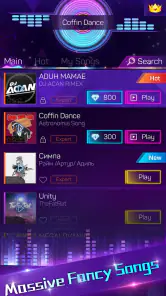
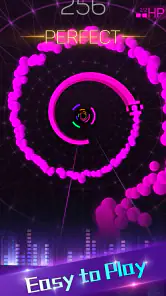
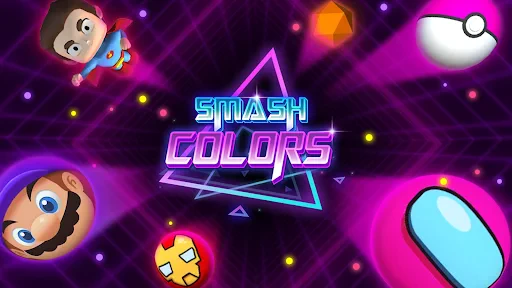
Analysis by Reviewed
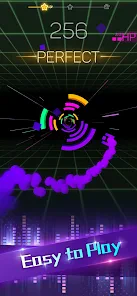
I reach for Smash Colors when I have a few spare minutes and want something that asks for my attention without asking me to learn a complicated set of rules. Its central idea is easy to grasp: steer a ball through circular obstacles, matching its color to the section it can pass through. That color-matching action is the reason the game feels more like a quick test of focus than a conventional music player or a long-form puzzle.
Why the color match is the real hook
The most useful way to think about this game is as a visual timing challenge with music alongside it. The color rule gives each obstacle a clear decision: find the matching section and guide the ball through. That simple relationship is easy to understand, but it still asks me to look ahead and act at the right moment. I’m not memorizing a complicated set of commands; I’m trying to keep my attention on the next opening while the scene moves.
That makes the game approachable without making every run effortless. A new player can understand the basic goal quickly, while someone who enjoys reflex games can focus on improving their timing. The distinction matters if you are choosing between this and a traditional rhythm game: the music shapes the atmosphere, but color recognition and steering are the skills I rely on most.
I also find that the visual cue changes how I listen. Instead of concentrating on a sequence of notes, I notice the energy of the track while keeping my eyes on the matching color. If I try to treat every beat as an instruction, I can distract myself from the actual task. The better approach is to let the soundtrack set the pace and use the visible sections to guide each move.
Matching color to the beat
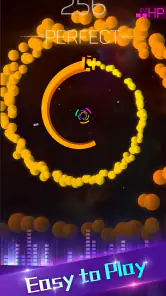
When I first downloaded Smash Colors, I was instantly drawn in by its vibrant visuals. The premise is simple yet surprisingly addictive. You control a ball that smashes through circles, with the catch being that the ball can only pass through sections that match its color. It sounds straightforward, right? But trust me, as the speed increases and the colors start to blur, you'll find yourself on the edge of your seat!
Simple controls, demanding timing
The controls in the game are as intuitive as it gets. With just a swipe of your finger, you guide the ball through the colorful obstacles. This simplicity is what makes the game so accessible to players of all ages. Whether you're a gaming veteran or a complete newbie, you'll find yourself picking it up with ease. And the best part? There's no complicated tutorial to wade through. Just dive in and start smashing colors!
One thing that really stands out to me is the soundtrack. The upbeat music perfectly complements the fast-paced gameplay, creating an immersive experience that keeps you coming back for more. It's like having your very own rhythm game mixed with a color-matching puzzle, and it's as delightful as it sounds.
More From Our News Desk

Weather by Xiaomi Review: Clear at a Glance, Less Clear Up Close

X Under Pressure: Can It Recover When Posting Goes Wrong?

Clash of Clans Is Won Between the Battles

Android Auto Makes the Case for Quieter Car Software

MobiOffice: Transforming Mobile Productivity with Seamless Integration

EA SPORTS FC™ Mobile Soccer: Redefining Mobile Sports Gaming
Making a short session count
The best use for this kind of play is a small break when I want a little challenge but don't have the time or headspace for a story-driven game. A useful habit is to focus on the next matching opening rather than trying to react to every bright shape at once. That keeps the color cue central and makes a run feel less frantic. I also find it easier to swipe deliberately than to make several quick corrections; when the pace rises, overreacting can be as distracting as hesitating.
For instance, on a short wait before an appointment, I can start a run, concentrate on the sequence of colors, and put the game down when I’m called. It suits brief bursts better than a session that needs a long, uninterrupted stretch. The same compact loop can also make a friendly score challenge appealing: there’s a clear goal, and each person can take a turn without needing to learn a complex control scheme.
A practical way to play between tasks
There is a small but useful difference between playing during a genuine pause and trying to squeeze in a run while doing something else. The game’s direct controls make it easy to begin, but the color matching still needs visual attention. I wouldn’t start a round while crossing a street, walking through a crowded station, or waiting for an important message that needs an immediate response. It works best when I can give the screen a little focus, even if I only have a minute.
For a more deliberate short session, I find it helpful to decide in advance what counts as “enough”: one attempt, a few attempts, or a quick score comparison with a friend. That simple boundary keeps a small break from turning into a longer stretch of retries. It also makes the game easier to recommend to someone who wants a brief distraction but doesn’t want another activity competing for their attention all afternoon.
When a run starts to feel messy, I try to reset my attention rather than swipe harder. Looking for the next matching opening, instead of tracking every moving color equally, gives the visual information a clear priority. This is not a hidden setting or a special technique; it is simply a way of approaching the game that makes its central task easier to read. The trade-off is that it rewards focus, so it is less suitable when I want to play with half my attention elsewhere.
Where it sits among music games
Compared with music games built around tapping notes in lanes or following a more elaborate rhythm chart, this one puts color recognition and steering at the center. I’d choose it when I want the music to add energy to a quick reflex game, not when I’m looking for detailed rhythm practice or a deeper puzzle with varied rules. That distinction matters: the soundtrack gives the action its mood, but the main test is still getting the ball through the matching sections.
Its straightforward setup is also a trade-off. There’s little friction before playing, but the core action can start to feel familiar once the timing and color-matching pattern are no longer new. If I’m in the mood for evolving objectives, a longer progression, or a game where music performance itself is the main skill, I’d reach for a different kind of music title. Here, the appeal is immediacy rather than a wide range of activities.
Choosing between this and other quick games
Against a standard color-matching puzzle, the difference is that I’m steering through openings under time pressure rather than calmly arranging pieces or planning a move sequence. Against an endless runner, the color rule gives each obstacle a more specific visual condition to read. Those comparisons help set expectations: this is not a deep puzzle for careful planning, and it is not primarily about navigating a character through a changing world. Its particular appeal is the compact combination of a visible match and a timely swipe.
If I want to practice recognizable rhythm patterns, a note-lane game is the better choice because it makes the music itself the main input. If I want a slower puzzle, a turn-based matching game gives me more room to think. I choose this one when I prefer a quick reaction loop and want the soundtrack to make that loop feel lively. The best alternative depends on which part I’m looking for: measured thinking, music accuracy, or fast visual decisions.
One trade-off with any fast color-based game is that screen conditions and personal comfort matter. Bright, changing visuals can be tiring for some people, and a small display or distracting surroundings can make it harder to pick out the next suitable section. I would try a short session first rather than assume that the simple controls mean the experience will feel relaxing. If the visual pace is uncomfortable, a calmer music game or a less visually intense puzzle is a more sensible fit.
Who will enjoy the challenge
Let’s not forget the competitive aspect of the game. Smash Colors allows you to challenge your friends and see who can score the highest. I personally love a good challenge, and this feature adds a whole new layer of excitement to the game. There's nothing quite like the thrill of beating your friend's high score and claiming bragging rights!
That makes it a good fit for people who enjoy chasing a personal best or comparing scores with friends, especially if they like quick reactions and vivid visual cues. It may be a poor match for anyone who finds rapidly changing colors tiring, dislikes repeated attempts, or wants a calm game to unwind with. The Mature 17+ age rating is worth keeping in mind when deciding whether it is suitable for a younger player.
Who gets the most from its short-loop design
I think the strongest audience is someone who enjoys quick arcade-style challenges, likes visible goals, and is comfortable repeating a short action to improve. It can also suit a casual player who doesn’t want to study a rulebook before starting. Because a swipe and a color decision are the core of the experience, a friend can understand what is happening just by watching a round, which makes a brief score contest easy to set up informally.
It is less compelling for players who want a long campaign, a narrative to follow, or steady variety in the way each session works. It is also not my pick for someone seeking a passive music experience: the soundtrack is part of the mood, but I still need to watch the obstacles and time my movement. If I’m tired and want something soothing rather than alerting, I’d choose a slower game instead.
For younger players, I would not treat the uncomplicated controls as a reason to overlook the age guidance. The game is marked Mature 17+, so a parent or guardian should consider that rating rather than assuming the colorful presentation makes it suitable for every age. For adults deciding whether to try it, the main question is simpler: do you enjoy brief visual challenges enough to accept that the same basic loop may become familiar?
What to expect before installing
As much as I enjoy the game, there are moments when it can get a tad repetitive. But honestly, that's a minor hiccup in what is otherwise a delightful gaming experience. Plus, with regular updates and new levels being added, there's always something fresh to look forward to.
It is a free music game from BADSNOWBALL HONGKONG LIMITED, with optional in-app purchases priced from $0.99 to $19.99 per item. I’d treat those purchases as optional rather than necessary to understand the basic appeal: the central color-matching challenge is immediately readable. The current version is 1.1.44, and it requires Android 5.1 or later. Its 4.3 average from around 346,000 ratings and over 100 million installs suggest that the quick, accessible format has reached a large audience, though those figures don’t guarantee that its repetition will suit every player.
One practical question is whether it works for a very short session: yes, its uncomplicated controls and direct objective make it easy to start playing without setting aside a long block of time. Another is whether it is mainly a rhythm test: I’d describe it as a color-and-timing game with music, rather than a substitute for a note-focused rhythm challenge. If those expectations sound right, it’s an easy one to try; if you want substantial variety or a gentler pace, I’d skip it.
Questions worth settling before a first session
Is there a cost to try it? The game is free to download, while optional purchases are available inside it. I would begin with the free experience and decide whether the core loop holds my interest before spending anything. The listed purchase range runs from $0.99 to $19.99 per item, so it is sensible to treat any purchase as a separate choice rather than part of what is needed to understand the basic play.
Will it run on an older Android device? It requires Android 5.1 or later, which gives a clear minimum to check before installing. Is it a good substitute for a rhythm-training game? In my view, no: it has music and timing, but the central challenge is steering through matching colors, not following a detailed note chart. And can I use it for a quick break? That is where it fits best, provided I have a moment when I can look at the screen without juggling another task.
How long will the simple premise stay engaging? That depends on how much I enjoy trying to improve within a familiar loop. Someone who likes chasing a better result may get satisfying short sessions from the same basic action, while a player who needs frequent changes to objectives may lose interest sooner. I’d use that as the deciding point: the game’s accessibility is a strength, but it does not automatically mean its repeated challenge is right for everyone.
There is also a practical choice between playing alone for a personal target and turning it into a shared score challenge. Playing solo makes it easier to focus on a small improvement without pressure; comparing results with a friend adds a reason to take another turn, but can make the same loop feel more competitive. Neither approach changes the core play, so I’d pick the one that suits my mood instead of expecting the social element to transform it into a different kind of game.
In conclusion, if you're looking for a game that's easy to pick up but hard to put down, give Smash Colors a try. It’s perfect for those little moments of downtime or when you just need a quick escape from reality. So, go ahead and download it. I promise, you won't be disappointed!
Smash Colors Frequently Asked Questions
Does Smash Colors have an age rating that parents should consider?
Smash Colors is rated Mature 17+, so its age classification is an important consideration before downloading it for a younger player. Parents and guardians should review the rating and decide whether the game is suitable for the person who will use the device. It is also free to download but offers in-app purchases, so checking purchase settings may be helpful.
Who developed Smash Colors, and what kind of game is it?
Smash Colors is a music game developed by BADSNOWBALL HONGKONG LIMITED. Its central idea is to combine music with color matching, so the experience is about reacting to visual cues while following a rhythm. If you enjoy games that bring together sound, timing, and bright on-screen action, this may be a style worth trying. The game is rated Mature 17+.
What is Smash Colors and how does it work?
Smash Colors is an addictive rhythm-based music game where players tap on colors in sync with the beat of the music. The game involves various levels and songs, challenging players to maintain their rhythm and timing as they progress. Players need to tap, hold, and slide through different color tiles that match the music, making it a fun and engaging way to experience their favorite tracks.
Is Smash Colors free to play, or does it have in-app purchases?
Smash Colors is free to download and play, but it does offer in-app purchases. These purchases can include additional songs, themes, or power-ups that enhance the gaming experience. While the core game is accessible without spending money, some players might choose to buy these extras to unlock more content and features. In-app purchase prices range from $0.99 to $19.99 per item, so it is sensible to check purchase prompts before confirming anything.
What are the device requirements to play Smash Colors?
To play Smash Colors on Android, you need a device running Android 5.1 or later. The game is available for Android and iOS, but the Android version requirement should not be taken as the requirement for every platform. As with any rhythm game, responsive controls can make it easier to follow fast-paced sections, so check that the game is compatible with your device before downloading.
Pros
- Engaging gameplay with rhythmic challenges.
- Vibrant visuals enhance the gaming experience.
- Wide variety of levels keeps players interested.
- Simple controls suitable for all ages.
- Regular updates with new features and levels.
Cons
- In-app purchases can be expensive.
- Ads can interrupt gameplay frequently.
- Requires internet connection to play.
- Limited free content
- paywalls present.
- Battery consumption is relatively high.
- Category
- Music
- Version
- 1.1.44