Match 3D -Matching Puzzle Game
- 75.18K
- 4.5
- Installs
- 50.00M
- Price
- Free

Screenshots



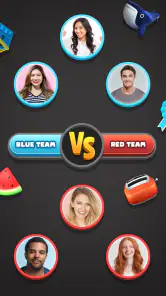
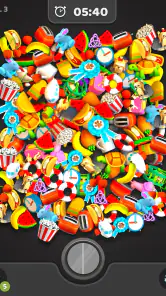
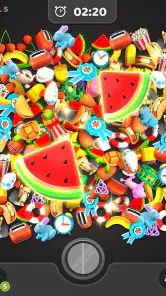
Analysis by Reviewed
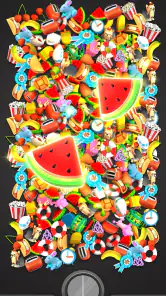
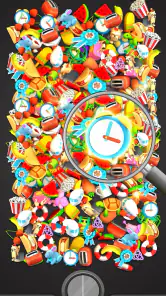
I went into Match 3D -Matching Puzzle Game expecting a simple sorting distraction, and that is mostly what I found: a calm puzzle game built around spotting identical three-dimensional objects and pairing them. Its appeal is immediate because the basic action needs almost no explanation. You look through a crowded play area, find two matching items, and clear them. That makes it easy to start during a short break, while the growing visual clutter gives the otherwise gentle format a reason to hold your attention.
This is a free puzzle game from Lion Studios Plus, aimed at Everyone and available for devices running Android 8.1 or later. Its broad audience makes sense: there is no complicated story to learn, no specialist knowledge required, and the central challenge is visual recognition rather than fast reflexes. The game has reached over 50 million installs, with a 4.5 average from around 567 thousand ratings and roughly 75 thousand written reviews. Those numbers suggest that its straightforward format has found a large audience, although popularity alone does not tell you whether its pacing will suit you.
How the first goals make the game easy to enter
The opening experience works because the first objective is obvious. I do not have to study a rulebook or decide which strategy to use before playing. The board presents a collection of objects, and my job is to identify pairs that belong together. Each successful match gives the session a small sense of completion, while every cleared object makes the remaining search more manageable.
That early clarity is important for a mobile puzzle. If I have only a few minutes, I can start playing almost immediately instead of spending that time learning menus, characters, or a long chain of mechanics. The visual nature of the task also makes it suitable for players who prefer a quiet activity rather than a competitive one. It feels closer to tidying a messy table by categories than to solving a traditional word or number puzzle.
The first goals are also useful for showing what kind of attention the game demands. This is not mainly about remembering a sequence or calculating a move several turns ahead. I need to scan the whole area, notice shape and color, and avoid selecting an object simply because it looks vaguely similar to another. That distinction becomes more important as the board gets busier.
One practical tip helped me more than I expected: I stopped searching randomly and worked through the board in sections. Looking at the upper-left area, then moving across in a consistent pattern, reduced the chance of repeatedly checking the same objects. It also made the game feel less frantic when several similar items were visible. Players who treat each round as a visual sweep rather than a race may find the experience more relaxing.
The simple start does have a trade-off. Anyone looking for an elaborate puzzle system may find the early play almost too gentle. There is no need to build a deck, manage resources, or plan a long chain of actions. The attraction comes from the small satisfaction of finding pairs, so the game has to rely on presentation, board arrangement, and increasing visual pressure rather than a large collection of rules.
What progress feels like during ordinary play
The clearest progress signal is the board itself. Every successful pair removes visual noise, and that change is instantly understandable. I never need a separate explanation to know that I am moving forward; the crowded arrangement becomes cleaner in front of me. This is a modest form of progression, but it works well for short sessions because the reward arrives repeatedly instead of only at the end.
That visible clearing also creates a useful rhythm. At the start of a round, I spend more time surveying the available objects. After several matches, the remaining choices become easier to isolate, but the pressure can rise if I have overlooked a pair. The game therefore alternates between recognition and confirmation: spot a likely match, select it, and then reassess the board.
I found that the most satisfying moments were not necessarily the fastest ones. A pair that had been hidden among similar shapes could feel more rewarding than an obvious match. This is where the three-dimensional presentation matters. Objects are not just flat colored tiles, so I have to pay attention to their overall appearance rather than rely on a single visual feature.
For a parent looking for a light, age-appropriate activity, the Everyone rating and uncomplicated premise are reassuring starting points. I would still treat it as a casual game rather than an educational memory tool. The store summary presents it as a way to train memory and relax, but in practice I see the memory element as informal: I am remembering where I noticed an object and comparing visual details, not following a structured training program.
Another useful habit is to leave distinctive objects until later when possible. If one item has an unusual silhouette, it is easier to recognize after the board has been reduced. By contrast, similar-looking objects deserve attention earlier, while there are fewer distractions around them. This is not a complicated strategy, but it changes the experience from blind tapping into deliberate scanning.
Where the challenge begins to matter
The difficulty curve is most effective when the board asks me to distinguish between objects that share broad characteristics. A casual glance may suggest that two items match, yet a closer look can reveal a different shape or detail. That creates challenge without requiring rapid controls. My eyes do most of the work, and mistakes come from rushing, poor scanning, or assuming that similar means identical.
As the visual field becomes more demanding, the game tests concentration in a way that is easy to underestimate. A player can understand the rule perfectly and still struggle because the relevant pair is buried in a busy arrangement. This is a good fit for someone who enjoys observation puzzles, but less suitable for anyone who becomes frustrated by searching through repeated visual patterns.
The pacing benefits from short, repeatable rounds. I can play one session while waiting for an appointment, or continue for longer when I want a more absorbing distraction. That flexibility is one of the strongest reasons to choose this over a puzzle game that requires a quiet half-hour. The cost of stopping is low because the basic loop is self-contained.
Still, the same structure can become repetitive. Once I understand the matching process, the novelty depends on the objects, layouts, and the way the challenge is presented. Players who need a story, a changing set of rules, or deep strategic consequences may eventually feel that they are doing variations of the same visual task. In that situation, a traditional logic puzzle, word game, or match-three title with planning and cascading effects would probably offer more variety.
I also recommend playing with a clean screen and enough brightness to distinguish small details. That sounds obvious, but this is a game where visual clarity directly affects difficulty. Reflections, a dim display, or playing while distracted can make a fair search feel unnecessarily awkward. Using a consistent scan pattern is more helpful than tapping quickly, especially when several objects have related colors or silhouettes.
Relaxation, pressure, and the cost of continuing
The game’s relaxing side comes from its predictable action. I am not dealing with opponents, complicated controls, or a story demanding emotional attention. Pairing objects can become a small mental reset, particularly when I approach it slowly and focus on one part of the board at a time. The satisfaction is tactile and visual rather than dramatic.
That calm feeling is not guaranteed in every session. A crowded board can turn the search into a concentration test, and the desire to finish a round may encourage hurried selections. This is where the game’s retention design deserves a realistic look. The loop makes it easy to say “one more round” because each cleared collection leaves a partly finished board or a new objective to pursue. That is effective motivation, but it can also make a supposedly relaxing break longer than planned.
Because the game is free, players should also expect the usual commercial context of a free mobile title. Optional in-app purchases range from $0.99 to $199.99 per item. That is a very wide span, so I would approach any purchase screen carefully and avoid treating a paid option as necessary simply because it appears during play. The sensible way to evaluate the game is to enjoy the free core first and decide whether any optional spending genuinely adds value for your own habits.
For children, I would not rely on the Everyone label as a substitute for supervision around purchases. The age rating describes the content audience, not a family’s preferred spending controls. If a child uses the device, I would make sure the device-level purchase protections are configured before handing it over. That is practical advice for this game because its free entry makes it easy to install, while optional items can still be offered inside the experience.
Players who dislike interruptions or monetized progression may prefer a paid puzzle with a simpler purchase model. On the other hand, someone who wants to sample a game without paying upfront may appreciate being able to test the matching loop first. The important distinction is that the game’s strongest value is in its basic visual activity, not in assuming that every optional continuation is worth buying.
How it compares with familiar puzzle alternatives
Compared with classic match-three games, this title asks for a different kind of thinking. A conventional match-three board usually rewards planning moves, creating combinations, and anticipating what falls into place. Here, I am searching for identical objects in a three-dimensional arrangement. There is less emphasis on chain reactions and more on visual memory, object recognition, and methodical scanning.
It also differs from hidden-object games. The goal is not simply to locate one unusual item in a scene; I need to find two objects that belong together and make a correct selection. That repeated pairing gives the game a clearer routine, which is helpful for casual play but may feel less varied than a game built around changing scenes and clues.
Compared with memory-card games, the challenge is less formal. I am not turning cards over in a fixed grid and memorizing exact positions. Instead, I am remembering visual impressions from a busy field while checking whether objects match. That makes the experience more fluid, though players seeking measurable memory exercises may prefer a dedicated brain-training app with structured tests and performance tracking.
Its best comparison is therefore not “the deepest puzzle game,” but “a low-friction visual sorting break.” I would recommend it to someone who likes clearing clutter, spotting differences, and working through a board at a comfortable pace. I would steer a strategy-focused player elsewhere, especially if they want decisions that permanently shape later turns or a progression system with meaningful customization.
Who will enjoy it and who should skip it
I think it is a strong fit for casual players who want to start quickly, enjoy visual detail, and like small goals that can be completed in short bursts. It also suits people who find traditional timed action games tiring but still want something that keeps their attention. The straightforward format makes it approachable for a wide age range, and the Everyone rating reflects that accessible presentation.
A realistic everyday use case would be a commute with a few spare minutes, provided the player is not driving or otherwise responsible for immediate surroundings. I might play a round while waiting for a friend, use it as a short transition between tasks, or return to it after a busy day when I want a quiet activity without learning new rules. The board-clearing feedback gives enough momentum to feel productive without demanding a major commitment.
I would skip it if repetition quickly bothers you, if you want a strong narrative, or if visual searching is uncomfortable on a smaller screen. It is also not my first choice for someone asking for a serious memory curriculum, competitive multiplayer, or complex logic. In those cases, a dedicated brain-training app, a strategic match-three game, or a classic logic-puzzle collection would be a better match.
Device compatibility is reasonably broad because the listed minimum is Android 8.1, but the quality of the experience still depends on screen size and visibility. On a larger display, separating similar objects feels more comfortable. On a small phone, I would slow down and avoid playing when tired, since eye strain can turn the central activity into work rather than relaxation.
My verdict on the progression and pacing
Match 3D succeeds when it keeps its promise of a simple, calming pairing activity while adding enough visual pressure to make each board worth solving. Its early goals are clear, its progress is visible through the objects that disappear, and its challenge comes from increasingly careful observation rather than complicated rules. That is a coherent progression model for a casual puzzle.
My reservation is that the long-term pull depends heavily on how much I enjoy repeating that loop. The game can hold attention through the satisfaction of clearing a board and the temptation to continue, but it does not automatically solve the repetition problem for players who need constant novelty. I also think the broad range of optional purchase prices makes it wise to set spending boundaries before playing regularly.
The current version is 1246.1.0, and the game was released on April 9, 2020, so it has had time to establish its identity as a focused matching experience. I would not choose it for deep strategy, formal cognitive training, or story-driven progression. I would choose it when I want an immediately understandable visual puzzle that can fill a short pause and sometimes stretch into a longer session.
Overall, Lion Studios Plus has made a pleasant, accessible game whose best feature is its low barrier to entry. If you enjoy turning visual clutter into order, start with the free experience and judge it by how satisfying the basic clearing loop feels before spending anything. For the right player, that is enough to make it a dependable casual companion; for everyone else, the same simplicity may be the clearest reason to look for a more varied puzzle alternative.
Pros
- Simple matching mechanics are easy to learn for players of all ages.
- Short levels make it convenient for quick breaks or casual play.
- 3D objects are colorful and generally easy to distinguish.
- Progressive challenges help keep the gameplay from feeling repetitive.
- Offline play is useful when you have limited or no internet access.
Cons
- Later levels can feel difficult without careful observation and planning.
- Timed stages may feel stressful rather than relaxing for some players.
- Repeated object themes can reduce variety during longer play sessions.
- Hints and extra time may be limited unless you watch ads or use rewards.
- The game can become repetitive if you prefer deeper puzzle mechanics.

- Category
- Puzzle
- Version
- 1246.1.0