Mahjong
- 75.54K
- 4.8
- Installs
- 10.00M
- Price
- Free
Screenshots
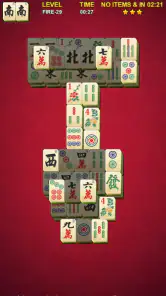
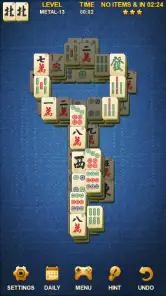
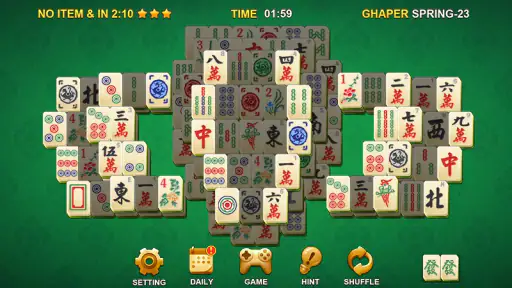
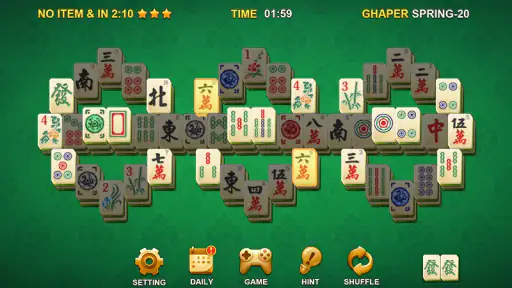
Analysis by Reviewed
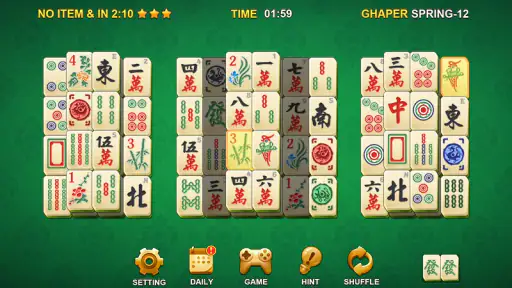
I spent time with Mahjong as a straightforward puzzle game, and its appeal became clear quickly: it gives me a quiet, focused way to fill a few minutes without asking me to learn a complicated system first. This is the traditional tile-matching style commonly called Mahjong Solitaire, presented as a free Android game from CanaryDroid. The basic idea is familiar, but the experience depends heavily on how quickly I can read the board, recognize useful matches, and avoid removing tiles that are keeping deeper pieces accessible.
That simplicity is important. I do not open this game expecting a story campaign, competitive action, or a large collection of unrelated modes. I open it when I want a visual puzzle that can begin almost immediately and stop whenever my attention is needed elsewhere. For that purpose, it is easy to understand and pleasantly low-pressure. At the same time, anyone looking for a constantly changing challenge or a richer puzzle system may find the format repetitive after extended sessions.
How Mahjong feels in everyday use
Quick starts and the pace of a typical board
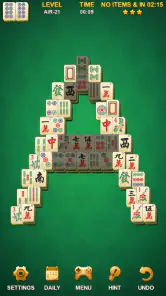
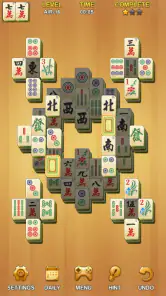
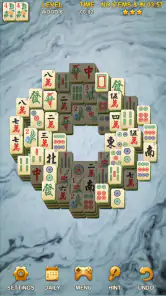
The strongest part of the experience is the directness of the opening. A Mahjong Solitaire board communicates its goal visually: find matching exposed tiles and clear them in pairs. I do not need a long tutorial to understand what to do, and that makes the game suitable for short breaks. A few minutes while waiting for an appointment, a quiet pause after lunch, or a relaxed session before bed all fit the format naturally.
The perceived speed comes less from complex animation and more from the lack of friction between decisions. I can inspect the arrangement, choose a pair, and continue thinking about the next move. That rhythm makes the game feel calmer than many puzzle alternatives that rely on countdowns, constant effects, or rapidly changing boards. It is a good match for players who prefer deliberate choices over reflexes.
There is also a useful difference between the speed of starting a board and the speed of solving one. Starting is immediate in spirit, while solving can slow down considerably once the obvious pairs disappear. That slowdown is not necessarily a technical problem; it is where the puzzle earns its value. The game asks me to pause and examine which tiles are genuinely free and which move will reveal the most useful options.
One practical habit improved my sessions: I stopped matching the first attractive pair I noticed. Instead, I scan the upper layers and the edges first, looking for moves that open more of the layout. This prevents the common mistake of clearing easy pairs while leaving a blocked section untouched. It is a small change, but it makes the game feel more strategic without adding rules.
What happens during longer or heavier play
Short sessions are where this game feels most convincing. During a longer run, the central question becomes whether the board variety continues to hold my attention. The familiar tile arrangement remains readable, which is helpful, but the same visual language can also make extended play feel less fresh than a puzzle game built around constantly changing mechanics.
Heavy use, in this case, usually means playing several boards in one sitting rather than handling a demanding three-dimensional world or a resource-intensive simulation. The game’s core activity is visually contained: I am examining tiles, selecting pairs, and watching the layout change. That makes it naturally more restrained than games filled with elaborate scenes and continuous motion. I would still avoid judging resource demand solely by the calm appearance of the board, because actual battery and memory behavior can vary between devices and software setups.
My best approach for longer sessions is to treat each board as a separate mental exercise. If I rush through several layouts, I start making careless matches and the game becomes frustrating. If I pause after each important removal and reassess the newly exposed area, the same basic format stays more engaging. The game rewards attention more than speed, so playing it like an arcade title works against its design.
A less obvious trade-off is that visual clarity matters more as the board becomes crowded. On a smaller screen, similar-looking symbols may take longer to distinguish, especially when I am trying to compare several possible pairs. That can make a board feel harder for reasons unrelated to its actual logic. Increasing the phone’s display readability or playing in a comfortable position can help, but this is still a title that benefits from a screen large enough for careful inspection.
Stability and recovering from interruptions
For a puzzle game built around individual boards, reliability is closely tied to how safely I can pause and return. The most convenient use case is a short, interruptible session: I can begin a board, make a few decisions, and put the phone down when something else demands attention. That makes it more practical than a game that expects an uninterrupted match or a fixed time commitment.
I would nevertheless treat interruption recovery as something to test on my own phone rather than assume universally. Android devices differ in how aggressively they manage background applications, and the game’s behavior can depend on the operating system and available memory. If a board matters to me, I prefer to finish a natural section before switching to another demanding application instead of relying entirely on background retention.
The game’s age range also supports its approachable character. It is marked for Everyone, which fits the absence of an intimidating premise and the easy-to-grasp matching concept. That does not mean every player will find it equally comfortable: younger users may need help recognizing tile patterns, while older players may appreciate the slower visual reasoning but prefer a larger display for reading symbols.
With a current version of 1.7.2 and a minimum requirement of Android 6.0, it remains accessible to a broad range of Android phones that are not running the newest software. I see that as useful for people who keep an older device as a spare or want a simple game on a less powerful handset. It is not a promise that every older phone will feel identical, but the operating-system requirement is comparatively accommodating.
Device limits that affect the experience
The main device constraint is not the puzzle’s concept; it is the relationship between board density and screen comfort. On a modern phone with a clear display, matching tiles is usually an easy visual task. On a compact or lower-resolution screen, I may need to look more carefully, and that extra effort can turn a relaxing board into eye strain. Tablets or larger phones should be especially appealing to players who enjoy examining the whole layout at once.
Older hardware may also change the perceived smoothness of transitions or the time it takes to resume after the game has been left in the background. I would not install it expecting demanding graphics, but I would still keep realistic expectations about any Android game used on aging hardware. Closing several background apps before a long session is a sensible step if the phone is already struggling with everyday tasks.
Storage is another practical consideration, although the game’s tile-based presentation does not suggest the kind of visual workload associated with large 3D releases. I think of it as a modest companion game rather than an app that should dominate a device. That makes it suitable for a secondary phone, a family device, or a handset reserved for casual entertainment.
Players who need precise accessibility controls should think carefully before choosing it. The core interaction depends on seeing and selecting individual tiles, so personal comfort with small symbols and touch targets matters. Someone who finds visual matching tiring may be better served by a puzzle with larger controls, stronger contrast options, or an interface designed specifically around accessibility preferences.
How the game compares with other puzzle choices
Compared with match-three games, Mahjong Solitaire is slower and more contemplative. There is no need to scan for cascading combinations under immediate pressure; I can study the structure and plan around blocked tiles. That makes it better for quiet concentration, but less satisfying if I want constant movement, chain reactions, or a dramatic sense of momentum.
Compared with crossword or word puzzles, it removes vocabulary from the equation. I am solving through position, visibility, and pattern recognition rather than recalling facts or finding language. This is useful when I want a mental workout that does not depend on my mood or subject knowledge. On the other hand, players who enjoy discovering clues or building answers may find the tile format too narrow.
Compared with modern puzzle games that introduce many mechanics, this one is easier to pick up but offers a smaller strategic vocabulary. That is both its strength and its limitation. I can recommend it to a friend who wants a familiar board puzzle without a long learning curve, but I would point a player seeking deep progression toward a game with more varied systems and goals.
The free price also changes the decision. There is no purchase barrier to trying it, which suits casual players who are unsure whether Mahjong Solitaire will hold their attention. Free does not automatically mean frictionless, though, and I would evaluate the actual in-game presentation on the target device rather than assume that every part of the experience will feel equally unobtrusive.
Small strategies that make boards easier
The first useful strategy is to count opportunities rather than simply search for identical symbols. When several pairs are available, I prioritize the move that exposes the greatest number of previously covered tiles. This is more reliable than clearing the most visually obvious pair, because a short-term match can leave the important part of the board trapped.
The second is to protect flexibility. If one tile has several possible partners but another tile has only one, I try not to remove the flexible option too early. Keeping choices open gives me more ways to recover when the board becomes awkward. This is particularly helpful near the middle of a puzzle, when a careless sequence can leave many visible tiles but very few legal moves.
The third is to inspect the board after every structural change. A newly exposed tile can alter the best plan, so I avoid deciding on a full chain of moves in advance. This habit also reduces mistakes caused by remembering a tile’s position incorrectly. In a game this visual, a brief re-scan is often more valuable than moving quickly.
Finally, I use the game as a reset rather than a test of endurance. If I notice that I am tapping impulsively, I stop after the current decision and return later. The format works best when I am willing to think. Forcing a tired session does not produce better results, and it can make a simple puzzle feel needlessly difficult.
Who should play it and who should skip it
I would recommend this game to someone who enjoys traditional board puzzles, wants a low-pressure activity, or needs something that can fit into irregular pockets of time. It is also a sensible choice for players who prefer learning through immediate interaction instead of reading instructions. The Everyone rating and familiar matching structure make it approachable for a wide audience.
It is less suitable for someone who needs a strong sense of progression, narrative context, or competitive variety. If your ideal puzzle game changes rules frequently, rewards fast reactions, or provides a rich sequence of unlocks, this may feel too focused on one central activity. Players who dislike visual repetition should also try it with modest expectations, because the appeal depends on enjoying the board-solving process itself.
Its scale is reflected in its audience: the game has reached over ten million installs, while its average rating is 4.8 from around 480 thousand ratings and about 76 thousand written reviews. Those figures show broad interest, but they do not replace personal fit. A popular casual puzzle can still be the wrong choice for someone who wants more variety or a different type of mental challenge.
My performance verdict
After using it as a quick-break game and as a longer concentration exercise, I see Mahjong as a focused, accessible example of the Mahjong Solitaire format. Its perceived performance benefits from a simple visual task and a calm pace, while its real strengths are the quick learning curve, the interruptible nature of board play, and the amount of thought hidden inside apparently simple matching.
I would install it on an Android phone running at least Android 6.0 if I wanted a free puzzle for quiet moments, especially on a device with a comfortable screen. I would not choose it as my only puzzle game if I needed constant novelty, elaborate progression, or high-energy action. The developer, CanaryDroid, has kept the central experience easy to approach, but that focus means the game’s longevity depends on how much I enjoy repeating and refining the same kind of visual reasoning.
My honest recommendation is to treat Mahjong as a dependable short-session puzzle, not an all-purpose entertainment package. It is at its best when I slow down, look for moves that open the board, and let each layout provide a compact mental break. If that sounds more appealing than chasing scores or mastering a large ruleset, the free download is an easy one to try. If you need richer variety or more demanding device-level performance, another puzzle category will probably serve you better.
Released in September 2018, it has had time to establish a familiar identity, and the current 1.7.2 version keeps the game relevant for compatible Android users. I come away viewing it as a practical, uncomplicated choice: not revolutionary, but useful precisely because it does not make a small puzzle session feel like a major commitment.
Pros
- Easy to learn
- with familiar tile-matching rules for new players.
- Relaxing gameplay makes it suitable for short breaks or casual sessions.
- Multiple layouts provide variety beyond the standard board.
- Offline play is useful when traveling or without an internet connection.
- Clear visual tiles help players quickly recognize available matches.
Cons
- Some layouts may become repetitive after extended play.
- Hints can reduce the challenge for experienced Mahjong players.
- Small tiles may be difficult to read on compact phone screens.
- Difficulty can vary noticeably between different board layouts.
- Ads may interrupt the experience in the free version.
- Category
- Puzzle
- Version
- 1.7.2