Galaxy Attack: Shooting Game
- 151.27K
- 4.7
- Installs
- 100.00M
- Price
- Free

Screenshots
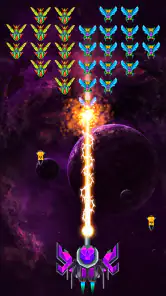
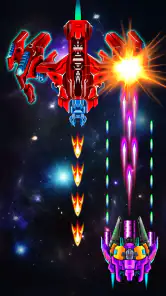
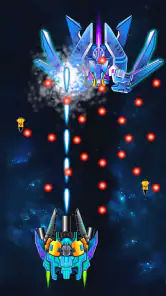
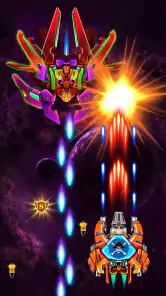
Analysis by Reviewed
I turn to Galaxy Attack: Shooting Game when I want a space shooter built around a simple, satisfying loop: move a ship, meet an oncoming alien assault, and keep firing. Its arcade focus makes it easy to pick up without a long tutorial, though surviving for long takes more than holding your finger in one place. I find it most enjoyable when I treat each run as a test of timing and positioning rather than expecting a deep story or a slow, exploratory adventure.
That focused approach is the game’s main appeal. Developed by 1SOFT, this free arcade game has a 4.7 average from around 2.5 million ratings and more than 100 million installs. It is rated for Everyone, and version 64.5 supports devices running Android 7.0 or later. Those figures suggest broad reach, but the practical question is whether its fast, screen-focused action suits the way you like to play.
Why the arcade-shooter loop works
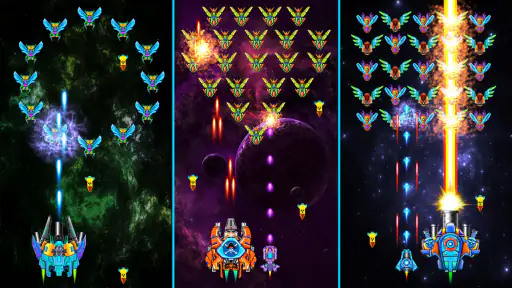
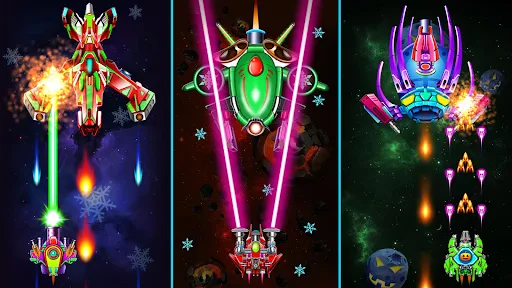
From the moment you launch Galaxy Attack: Shooting Game, you’re greeted with a wave of nostalgia. The retro-inspired graphics and sound effects harken back to the golden age of arcade games. Yet, don’t be fooled by its vintage charm; this game is packed with features that cater to both the casual player and the seasoned gamer.
Articles Related to Galaxy Attack: Shooting Game
Gameplay that Keeps You on Your Toes
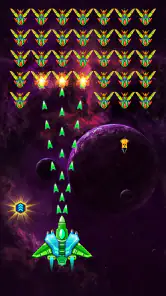
In this game, you’re tasked with defending the galaxy from an alien invasion, and trust me, it’s no walk in the park. The controls are intuitive, allowing you to maneuver your spaceship with ease. As you progress through the levels, the game ramps up the difficulty, throwing more challenging enemies your way. But fear not! You can upgrade your spaceship and weapons, adding layers of strategy to the gameplay. It’s all about finding that perfect balance between offense and defense.
In practice, I’d use short sessions to learn enemy movement and get comfortable shifting the ship while keeping my attention on incoming threats. A useful habit is to watch the whole screen, not just the area directly above the ship: that makes it easier to notice where danger is building and avoid drifting into a bad position. When a run goes wrong, I try to identify whether I moved too late or chased an attack opportunity too aggressively. That small adjustment can make a repeat attempt feel more deliberate.
Power-Ups and Upgrades
One of the standout features of this game is the variety of power-ups and upgrades available. There’s nothing quite like the thrill of collecting power-ups in the heat of battle, turning the tide in your favor. Whether it’s a powerful laser or a shield to protect your ship, these upgrades can be the difference between victory and defeat.
The trade-off is that collecting a useful item can tempt you to move into danger. I would not treat every power-up as worth pursuing: if reaching it means crossing a crowded part of the screen, staying alive may be the better choice. Upgrades also give repeat play a small planning angle, but they do not change the core appeal into a slower strategy game. If you want a shooter where careful positioning matters more than chasing every reward, that restraint is part of the learning curve.
You May Like

EA SPORTS FC™ Mobile Soccer: Redefining Mobile Sports Gaming

How Microsoft OneDrive Became a Mobile Productivity Giant

How Google Translate Breaks Language Barriers Effortlessly

Why Google Sheets Is the Ultimate Mobile Productivity Tool

Unveiling the Dynamic World of My Talking Tom Friends

Free Fire MAX: Dominating the Battle Royale Arena
Multiplayer Mayhem
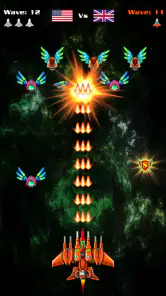
If you’re someone who enjoys a bit of friendly competition, the multiplayer mode will be right up your alley. You can team up with friends or challenge players from around the world. The multiplayer battles are intense and exhilarating, testing your skills and strategy to the max.
A good fit for short breaks, with a few caveats
For an everyday use case, I can imagine opening it while waiting for a meal or winding down between tasks: the arcade premise is immediately clear, and a quick attempt does not require settling into a lengthy narrative. Compared with puzzle games, it asks for faster reactions; compared with more elaborate action games, it puts less emphasis on exploration and more on staying alert as the screen fills with threats. That makes it a better choice for someone who wants direct shooting action than for a player seeking a campaign-led experience or a quiet game to play while distracted.
One practical question is whether it is free to start. It is free to download, with optional in-app purchases ranging from $0.99 to $199.99 per item, so I’d check purchase controls before handing the phone to a child, even though the game’s age rating is Everyone. Another is device compatibility: the listed Android minimum is 7.0, which is a useful first check before installing. The rating and large audience may reassure newcomers, but neither guarantees that the pace or purchase options will suit every household.
I would also choose a stable moment to play rather than starting a run when I expect interruptions. A brief distraction can make a shooter feel harsher than it is, because attention and movement are central to avoiding attacks. If that kind of concentration is not what you want, a turn-based game is likely a more comfortable alternative. Likewise, anyone who dislikes repeated attempts or gradual difficulty increases may prefer an arcade title with gentler pacing. The best way to approach this one is to give it a few focused tries and decide whether its rhythm feels rewarding rather than frustrating.
Making each attempt more useful
One way I get more out of a short session is to give each run a small purpose instead of measuring it only by whether I reach the end. I might focus on staying out of corners, keeping room to move, or noticing which incoming patterns make me panic. That turns a failed attempt into useful practice rather than a reason to immediately repeat the same moves. It also helps separate a genuine improvement in play from a lucky run.
Movement is the central decision, but it helps to avoid treating it as constant motion. Sweeping back and forth without looking ahead can leave the ship in a poor place when danger arrives. I prefer to make deliberate adjustments, leaving myself an escape route instead of hugging one edge or chasing a target across the screen. This is especially useful when I’m still learning a level: preserving space gives me more options than trying to maximize every shot.
That approach also makes the upgrade loop easier to judge. A stronger weapon can be satisfying, but the practical value of a pickup depends on what I have to risk to reach it and how much of the run remains. I’d pay attention to whether a reward actually makes the next stretch easier, rather than assuming that every upgrade is automatically the best choice. The useful skill is not collecting everything; it is recognizing when a safer position is worth more than a brief boost.
When the pace fits—and when it doesn’t
The game is best suited to moments when I can give the screen my attention for a few minutes. A realistic example is waiting for a friend who is running late: I can start a focused attempt, pause my other plans mentally, and put the phone away when they arrive. It is less suitable for a commute where I need to keep looking up, or for a waiting room visit when I may be called at any moment. The action is simple to understand, but that does not mean it is forgiving of divided attention.
For younger players, the Everyone rating makes the general age suitability easy to understand, but I would still think about how purchases are handled on the device. The purchase range stretches from $0.99 to $199.99 per item, so the sensible step is to use the device’s purchase safeguards and make expectations clear before letting a child play. The game can be free to begin, but “free” does not mean every optional purchase is small, and families may prefer to set boundaries in advance.
Another common question is whether someone new to arcade shooters can enjoy it. I think so, provided they are comfortable learning by trying again. The controls are approachable, and the basic objective does not demand that a newcomer absorb a complicated story or a large set of rules first. The tougher part is building the habit of reading the screen while moving. Someone who wants an easy win on the first attempt may find that learning curve irritating; a player who enjoys improving through small corrections is more likely to stick with it.
How it compares with other arcade choices
Against a puzzle game, this is a much more reactive choice: there is less time to study a move, and more value in spotting danger early. Against a side-scrolling action game with exploration, Galaxy Attack feels more direct, because the pleasure comes from handling a wave of threats rather than wandering through a world. That makes it a useful pick when I want immediate action and a clear objective, but not when I’m looking for a story, calm problem-solving, or a game that tolerates frequent interruptions.
It also has a different appeal from an arcade game built mainly around chasing a score. Here, survival and the decisions around ship movement, power-ups, and upgrades give repeat attempts a modest sense of progression. I would not recommend it to someone who wants deep tactical planning, though: the moment-to-moment pressure is the point, and the strategic choices sit inside that fast loop rather than replacing it. If you prefer studying a board at your own pace, a turn-based or puzzle alternative will probably serve you better.
Players who already enjoy classic shooters should find the format familiar, while newcomers can use the straightforward objective as an entry point. The trade-off is that familiarity can also make the loop feel repetitive if you need frequent changes in pace or a strong narrative reason to continue. I’d try it for the pleasure of sharpening reactions and reading enemy movement, not because I expect every run to introduce a new kind of experience.
Choosing it for the right reasons
I would recommend it to someone who enjoys quick, active play and is happy to improve through repeated attempts. It is also a decent option for a player who wants a game that is easy to understand at a glance but still asks for attention once the screen gets busy. The multiplayer option may appeal if shared competition is part of the draw, while the ship and weapon upgrades give solo play something to work toward beyond simply surviving the next attack.
I’d suggest skipping it if you dislike reflex-based play, find retries discouraging, or mostly use your phone in situations where you cannot concentrate. Someone looking for a calm game to play while listening for a call may be happier with a low-pressure puzzle or turn-based option. Likewise, a player who wants extensive exploration or a story-led campaign should choose a different kind of action game. Those are not flaws in the shooter’s central idea, but they are important limits on who is likely to enjoy it.
Before installing, I’d check that the device runs Android 7.0 or later, then consider whether the purchase options fit how the phone is used. The game is free, rated Everyone, and has a 4.7 average across around 2.5 million ratings, with more than 100 million installs. Those details show that it has found a broad audience, but the best test for an individual player is still whether the pace feels energizing or stressful after a few focused runs.
I also like that the basic action is clear enough to share with a friend without explaining a complicated setup: move, watch the screen, and respond to what is coming. But the advice I would give is to let them learn the rhythm rather than immediately telling them to chase every pickup or move constantly. A small amount of restraint makes the game feel more controlled and gives a new player a better chance to understand why a run succeeds or falls apart.
Overall, Galaxy Attack: Shooting Game delivers an engaging and immersive experience for fans of the genre. Its blend of classic arcade elements and modern features make it a must-play. Whether you’re aiming for a high score or just looking to unwind, this game has something to offer. So, gear up, pilot your spaceship, and get ready to save the galaxy!
Galaxy Attack: Shooting Game Frequently Asked Questions
What kind of game is Galaxy Attack: Shooting Game?
Galaxy Attack: Shooting Game is a space-themed arcade shooter in which you pilot a spaceship and battle alien invaders. Its focus is on shooting, avoiding attacks, and working through missions, with spacecraft upgrades adding a layer of progression. If you enjoy classic-style shoot-’em-ups and action that asks for quick reactions, its central premise is easy to understand.
Is Galaxy Attack: Shooting Game suitable for casual players?
Galaxy Attack: Shooting Game is an arcade shooter built around quick, action-focused play, so it can suit players looking for a straightforward game to pick up for a short session. Its alien battles and spacecraft upgrades also give you goals to work toward as you play. The pace may feel demanding when enemies fill the screen, but learning to move carefully and react to attacks is part of the challenge.
What is Galaxy Attack: Shooting Game about?
Galaxy Attack: Shooting Game is an exhilarating space shooter game where players take control of a spaceship to protect the galaxy from alien invaders. The game features thrilling missions, challenging enemies, and the opportunity to upgrade your spacecraft with powerful weapons and abilities. It's a fast-paced, action-packed game that tests your shooting skills and strategic thinking.
Is Galaxy Attack: Shooting Game free to play?
Yes, Galaxy Attack: Shooting Game is free to download and play. However, it does offer in-app purchases, priced from $0.99 to $199.99 per item, that allow players to buy items such as special weapons, upgrades, and other enhancements to improve their gaming experience. While these purchases are optional, they can provide a significant advantage in progressing through tougher levels in the game.
What are the system requirements for Galaxy Attack: Shooting Game?
Galaxy Attack: Shooting Game requires Android 7.0 or later. The game is optimized for smartphones and tablets, offering gameplay across different screen sizes. Players should ensure their device has sufficient storage space for the game. It is rated Everyone, making it suitable for a broad audience.
Pros
- Engaging space shooter gameplay.
- Variety of challenging levels.
- Stunning graphics and effects.
- Easy to learn controls.
- Regular updates with new content.
Cons
- In-app purchases can be pricey.
- Requires an internet connection.
- Ads can be intrusive at times.
- Some levels can be repetitious.
- Battery consumption is high.
- Category
- Arcade
- Version
- 64.5