Temple Run
- 339.47K
- 4.2
- Installs
- 500.00M
- Price
- Free

Screenshots


Analysis by Reviewed
When I have a few minutes to spare, I like games that get going without asking me to learn a long set of rules. Temple Run is built around that kind of quick decision: start moving, react to what is ahead, and see how long you can keep going. It is a free arcade game from Imangi Studios, released on March 26, 2012, and it still makes sense as a simple pick-up-and-play option.
Starting free, spending carefully
The game is free to download, with in-app purchases listed from $0.99 to $19.99 per item. That gives me a clear baseline for cost, but not enough detail to judge exactly what each purchase offers or how much it changes a run. I would treat spending as optional until I had a specific reason to buy something, rather than assuming a purchase is needed to enjoy the basic chase.
That distinction matters in a game built around repeated attempts. A short session can feel complete on its own, so I can recommend trying it without committing money first. If you are deciding whether to make a purchase, check the item and its price in the store before confirming; the listed range alone does not explain the contents of individual items.
Reads About Temple Run
The Thrill of the Chase
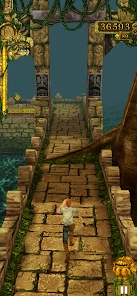
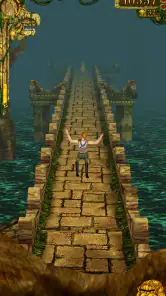
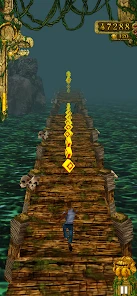
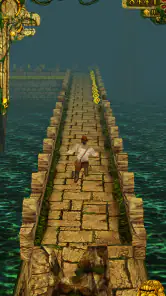
Temple Run throws you into a suspenseful world, where you find yourself running for dear life from some seriously creepy demon monkeys. The premise is simple yet highly engaging: you’ve "borrowed" a sacred idol from a temple, and now you must dash away to avoid getting caught. This endless runner game keeps you on your toes as you navigate through ancient ruins, dodging obstacles, jumping over tree roots, and sliding under broken branches.
How the controls shape each run
The controls are super intuitive. All you need to do is swipe your finger across the screen to turn, jump, and slide. Tilting your device helps you collect coins and power-ups, adding a layer of strategy to the wild sprint. Trust me, once you start collecting those coins, you’ll be hooked!
One of the coolest features of the game is its randomly generated levels. No two runs are the same, so you're constantly challenged and never bored. Plus, the graphics are pretty neat, bringing the jungle and temple to life in vivid detail. The sound effects, like the eerie monkey screeches chasing you, add an extra thrill.
A small practical tip: treat turning, jumping, and sliding as separate decisions instead of swiping in a rush whenever the path gets busy. When I concentrate on the next obstacle first, I make fewer panicked moves and can judge whether a coin line is worth following. Tilt is useful when I can hold the phone steadily, but it is not a reason to chase every pickup; staying on course matters more than a greedy detour.
More From Our News Desk

Weather by Xiaomi Review: Clear at a Glance, Less Clear Up Close

X Under Pressure: Can It Recover When Posting Goes Wrong?

Clash of Clans Is Won Between the Battles

Android Auto Makes the Case for Quieter Car Software

MobiOffice: Transforming Mobile Productivity with Seamless Integration

EA SPORTS FC™ Mobile Soccer: Redefining Mobile Sports Gaming
Progress, pressure, and practical play
The pressure comes from having to read the path quickly, not from a complicated control scheme. A useful habit is to keep your thumb ready for the next turn rather than focusing only on collecting coins. Coins can be tempting, but a risky line is not worth it when your immediate goal is simply to stay on the path. I find that treating each run as practice for reacting cleanly makes failure less frustrating.
For an everyday example, this is a good fit for a bus ride when I want something active but can pause mentally between attempts. It also works in a waiting room, provided I can look at the screen and use swipe and tilt controls comfortably. If I am walking, carrying something, or trying to pay attention to another task, I would save it for later: the quick reactions are the point, and divided attention makes that harder.
It is also handy when I have time for one focused attempt rather than a long gaming session. I can start a run, see how well I react, and stop when I reach my limit without needing to remember a complicated plot or a chain of objectives. That makes it easier to fit into a short break than an arcade game built around fixed stages, where I may prefer to finish a level before putting the phone away.
Compared with arcade games that use short fixed stages, the endless-run format puts the focus on repeating a route under increasing pressure and improving your own result. That is satisfying if I enjoy chasing a personal best, but less suitable if I want a clear ending, a story campaign, or a relaxed pace. The changing layouts help keep runs from feeling identical, though the central activity remains a chase, so anyone who tires of repeating the same kind of challenge may prefer a different arcade game.
The trade-off is that variety in the path does not turn the core loop into a different kind of game. If I am in the mood for varied objectives or a sense of finishing a chapter, Temple Run is not a substitute for a stage-based platformer. I would choose it when I want immediate movement and quick decisions, and choose a game with discrete levels when I want a clearer stopping point or a different rhythm.
Competition without assuming too much
If you're someone who loves a good challenge, Temple Run is your jam. The game tests your reflexes and decision-making skills in a fun and engaging way. Each run is a new adventure, and there's always a new high score to beat. The leaderboard feature lets you compete with friends, which, let's be real, adds another layer of excitement. Who doesn’t love a bit of friendly competition?
That competitive angle is best enjoyed as a personal or friendly contest, rather than as proof that every player has identical circumstances. The game’s purchase range is known, but the effect of purchases on leaderboard outcomes is not clear from that fact alone, so I would not make a strong claim about competitive balance. If fair comparison matters to you, agree with friends on what counts as a satisfying score and keep the fun in the rivalry instead of treating it like a formal tournament.
For a casual challenge, I find personal bests more useful than obsessing over a leaderboard. A score gives me a simple way to notice whether I am handling turns more confidently, while a friend’s result is only fun if we are both treating it as a lighthearted contest. If you want a tightly controlled competitive game where everyone’s conditions are known, this is not the one I would pick based only on the information available about purchases.
It is an easy recommendation for someone who likes reflex challenges, quick retries, and improving through practice. The age rating is Everyone, and the current version is 1.30.2; it requires Android 5.1 or later. It has a 4.2 average rating from around 5.3 million ratings, with over 500 million installs. Those figures show that it has reached a broad audience, but they cannot tell you whether its pace or repeated-run structure will suit your own taste.
Who will enjoy it—and who may not
I would point a friend toward it if they enjoy testing their reactions in short bursts and do not mind beginning again after a mistake. It is particularly suited to someone who wants a game they can understand quickly, then gradually get better at through attention and practice. The Everyone age rating also makes it broadly approachable, though the fast pace may still be a poor fit for anyone who prefers calmer play.
I would steer away from it if the main appeal of a game for you is exploration at your own speed, a story with a definite conclusion, or strategic choices that unfold slowly. The chase keeps asking for immediate responses, and repeating runs is central rather than an occasional activity. Someone who finds that loop tiring will probably get more from an arcade title with varied tasks or clear stage endings.
Making short sessions work
And hey, if you ever find yourself stuck in a waiting room or riding the bus, this is the perfect game to kill time. It’s easy to pick up, play a quick session, and put down, which is perfect for our busy lives.
One practical trade-off is that tilt controls ask you to move the device while also watching the path. If that feels awkward in a crowded seat or with one hand occupied, focus on the swipe actions and avoid chasing every coin; a less ambitious run can be more enjoyable than constantly correcting your device position. The same choice helps when you are still learning to react to turns and obstacles.
For a first try, I would play somewhere I can hold the device comfortably and give the screen my attention. That lets me learn how swipes and tilting feel without the distractions of a crowded commute. Once I know whether tilt suits me, I can decide if collecting coins is worth the extra hand movement or if a simpler focus on the path makes each attempt more comfortable.
The game is not the right choice if you want calm play, a finite level to finish, or a detailed explanation of purchase value before you begin. The confirmed purchase range tells me what the lowest and highest listed item prices are, but not what any particular item contains. I would install it for the free arcade challenge, play a few runs, and decide from that experience whether I want to explore purchases at all.
What the purchase details can and cannot settle
The purchase range answers one practical question: there are optional items at different price points. It does not tell me which item is useful for my style of play, whether any item affects a score comparison, or whether spending would make a run more enjoyable. Those are decisions I would make only after seeing the exact offer in the game, not by guessing from the range.
In particular, I would avoid buying something simply because a run ended badly. The game’s appeal is built around trying again and improving reactions, so a purchase should have a clear purpose for me rather than being an impulse response to frustration. If I cannot tell what an item does or why I want it, there is no need to rush into paying for it.
Final Thoughts
In a nutshell, Temple Run is a classic that has stood the test of time. It’s fun, it’s addictive, and it’s a great way to unwind. Whether you’re a casual gamer or someone who loves a heart-pounding challenge, this game is a must-try. So, what are you waiting for? Grab that idol and start running!
My trust verdict is straightforward: the price to get started is clear, and the game’s appeal is easy to understand from its immediate chase-and-react loop. I would try it without spending, then make any purchase only after checking exactly what is offered at the point of sale. If you want an accessible arcade game that rewards quick attention, it is worth a look; if you dislike repeated score-chasing or want certainty about how purchases affect competition, another style of game may be a better fit.
Temple Run Frequently Asked Questions
Does Temple Run require an internet connection to play?
Temple Run is an arcade game built around individual endless-running attempts, so its central challenge is guiding a character through hazards and trying to keep the run going. If offline access is important to you, check how the game behaves on your device before relying on it without a connection. The core format is focused on personal runs rather than multiplayer matches.
Is Temple Run suitable for children?
Temple Run has an Everyone content rating and uses a straightforward arcade premise: running, dodging obstacles, and collecting coins during a chase. Its fast pace asks players to react quickly, which parents may want to consider when deciding whether it suits a particular child. Parents can also review device purchase controls, since optional in-app purchases are available.
Can Temple Run be played on a tablet as well as a phone?
Temple Run is a mobile game, and its touchscreen controls are based on quick actions such as jumping, sliding, and turning. Those controls may feel different on a larger tablet screen than on a phone, so comfort can depend on how you hold and use your device. Check your app store’s compatibility information before downloading.
Is Temple Run a good choice for players who enjoy endless runners?
Temple Run is described as the original endless runner, and its gameplay centers on keeping a run alive as long as possible. Rather than moving through a conventional story campaign, players react to hazards, collect coins, and try to improve their performance from one attempt to the next. It is suited to people who enjoy repeatable arcade challenges.
Does Temple Run include optional purchases?
Temple Run is free to download and play, with optional in-app purchases available. These purchases can include items intended to enhance gameplay, but they are not required to start a run or enjoy the central endless-running challenge. Players who prefer not to spend can concentrate on learning the controls, avoiding obstacles, and collecting coins during play.
Pros
- Engaging and fast-paced gameplay
- Simple controls for intuitive play
- Variety of power-ups to enhance experience
- Regular updates with new features
- Compatible with most devices
Cons
- Repetitive level design
- In-app purchases can be costly
- Graphics are not very high-end
- Connectivity issues in multiplayer mode
- Ads can interrupt gameplay
- Category
- Arcade
- Version
- 1.30.2