 About MP3 Downloader - Music Player
MP3 Downloader - Music Player Makes Offline Listening Easy, With Limits
Some music apps win by owning the catalog. MP3 Downloader - Music Player takes a different route: it puts the promise of finding, keeping, and playing music in one familiar pocket-sized routine. That practical pitch explains its appeal better than any claim of musical discovery. The app’s strength is not that it makes listening feel new; it is that it makes the next listen feel close at hand.
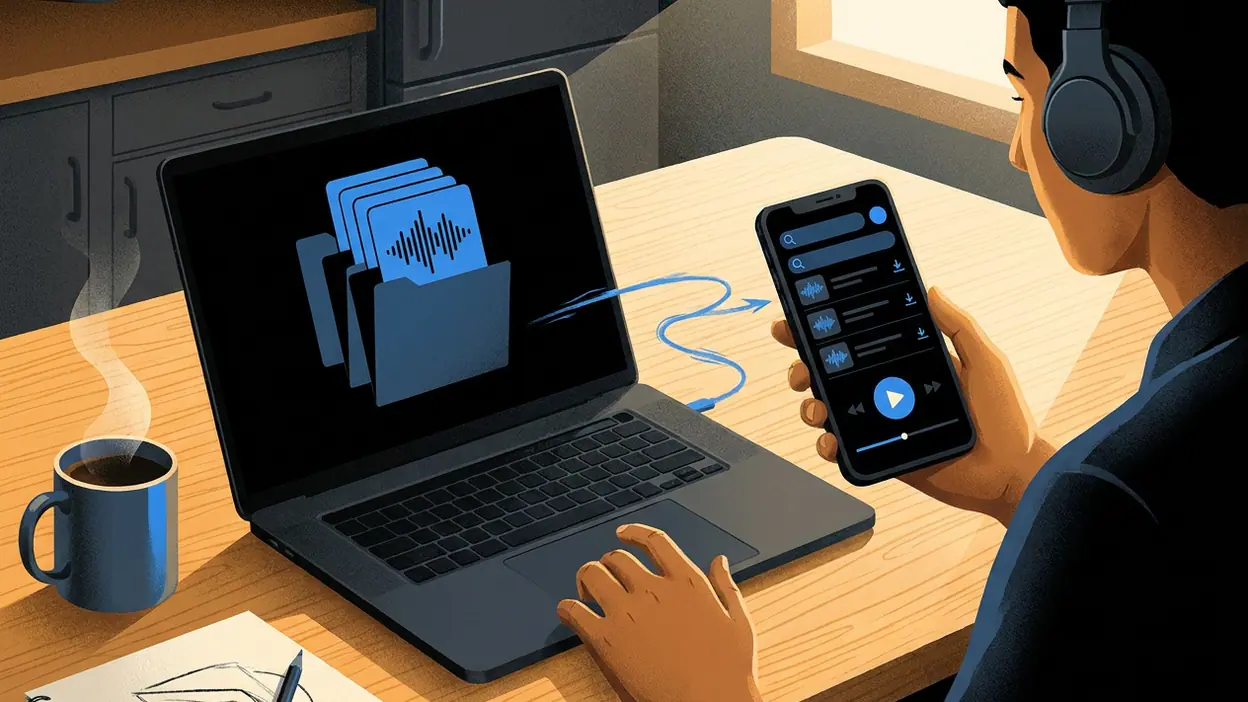
That distinction matters. Streaming services ask users to trust a library they do not own and a connection that may not always be available. A downloader-and-player app appeals to people who would rather manage audio files directly, collect tracks for offline use, and press play without building a whole account-based listening life around the task. The trade-off is equally clear: convenience depends on what the app can actually find, access, and play, and those parts do not always fit together as neatly as the name suggests.
How a simple music routine becomes a habit
Why it got this big
The app addresses a durable need, not a passing trend. People still have music scattered across device storage, downloads, folders, and services with different rules. A dedicated MP3 tool suggests a shortcut through that clutter: locate audio, keep it available, then play it from the same place. For listeners with older collections or unreliable mobile data, that straightforward promise can feel more useful than a polished streaming interface full of recommendations.
It also benefits from low effort at the moment of decision. Someone who wants a particular track does not necessarily want to compare playlists, sign into another service, or wait for a library to sync. The downloader framing gives the app an immediate job. Even users who only open it occasionally can understand why it exists, and that clarity is a powerful acquisition tool.


There is a broader appeal in the sense of control. Offline files feel tangible: they are there when the signal drops, and users can arrange a personal collection around their own habits. That does not make the app a replacement for every streaming service. It does make it legible to people who value direct access over an endless catalog.
What it does better than rivals
Its most persuasive advantage is the combination of discovery-oriented tools and local playback in one app. A conventional music player such as Lark Player is primarily useful once audio is already on the device. JioSaavn centers streaming, playlists, and a hosted catalog. StarMaker turns listening into a performance activity, while Drum Pad Machine is built for making beats. MP3 Downloader sits in a more utilitarian lane: it aims to help users get audio into reach and then listen.
That narrowness is an advantage when the user’s goal is equally narrow. There is less conceptual overhead than in a karaoke app or a beat-making studio. The app does not need to convince listeners to sing, create, or follow an elaborate recommendation trail. Its appeal rests on a direct sequence: search or browse, choose audio, return to the player. When that sequence works, it feels satisfyingly economical.
Latest News


But the distinction should not be overstated. It is not automatically better at music discovery than services with licensed catalogs, editorial playlists, and detailed artist pages. Nor does the downloader label guarantee that every desired song is available or that every source behaves consistently. Its advantage is convenience for a particular kind of listening, not a universal edge over music apps.
Where the design feels sticky
The sticky part is the handoff between wanting a track and having something ready to play. A user who has already searched, saved, or organized audio has a reason to come back: the collection becomes more useful with each addition. That accumulated personal library creates a modest switching cost. Starting again elsewhere means rebuilding access, sorting files, or accepting a different model of ownership.
There is also a small but effective loop in the player itself. Open the app to choose something, listen, then leave it ready for the next commute, workout, or quiet stretch at home. The app’s routine fits into moments that do not need a lot of attention. It does not have to produce a fresh surprise every time; it has to reduce friction enough that returning feels easier than hunting through folders.
That kind of stickiness is practical rather than social. Unlike StarMaker, it is not built around an audience, singing challenges, or the feedback of other users. Its habit comes from personal utility and accumulated convenience. For some listeners, that is less exciting, but more dependable.
How it earns repeat opens
Repeat use comes from predictable needs. Music is often a background choice, and listeners do not want to make a project of it. A player that remembers a collection and gets them back to listening quickly has a chance to become part of the daily rhythm. The app can also serve distinct contexts: a downloaded mix for a trip, a familiar album during work, or a few saved tracks when the network is weak.
That is a quieter kind of retention than streaks, social feeds, or constant personalized prompts. The user comes back because their music is there, not because the app has manufactured a new obligation. This restraint is a genuine strength, provided the core tasks remain reliable. If search is confusing or playback takes too many steps, the habit breaks quickly; there is little social momentum to pull the user back.
The best version of the experience is nearly invisible. The app gets out of the way, the music starts, and the listener remembers it later when the same need returns. In a category crowded with features, simply respecting the listener’s time can be a meaningful retention strategy.
What users forgive
People are often willing to forgive a plain interface if it delivers the practical result they came for. A downloader does not need the visual polish of a major streaming service to justify itself to someone who values offline playback. A few extra taps, modest artwork, or limited recommendation features may seem acceptable when a track is easy to reach and plays without a data connection.
They may also tolerate a less refined library experience if the app supports the way they already think about music: as files and playlists they control, rather than a feed that constantly rearranges itself. That tolerance has a boundary, though. Users will forgive simple design more readily than unclear permissions, inconsistent results, intrusive interruptions, or uncertainty about where audio comes from.
In other words, simplicity is a credit, not a blank cheque. The app earns patience when it saves effort. It spends that patience whenever the user has to guess what a feature does or repeat a task that should have worked once.
Where the cracks show
The biggest risk sits in the gap between the broad promise of downloading music and the realities of availability, rights, and source quality. A tool can make the process feel easy without controlling whether a particular track can be found or whether the file is complete and well tagged. Search results and audio sources can also vary, which makes reliability harder to maintain than a player that only scans a known local library.
That uncertainty affects trust. Listeners want to know whether they are playing a file already stored on the device, streaming a result, or saving something new. If those states are not obvious, a simple utility can start to feel murky. A clean presentation cannot compensate for unclear sourcing or inconsistent playback, particularly when users expect their personal library to remain dependable.
There is a ceiling to the experience, too. Compared with JioSaavn, it is not positioned around a large, curated streaming ecosystem. Compared with Lark Player, a dedicated local player may offer a more straightforward focus on existing files. And it cannot match Drum Pad Machine as a creative tool or StarMaker as a social music experience. Those are different products, but the contrasts show that MP3 Downloader’s value depends on staying good at its particular job.
Who benefits most
The best fit is a listener who wants a compact way to manage accessible audio and play it offline, especially someone with uneven connectivity or a collection that does not live neatly inside one streaming service. It may suit people who prefer straightforward control to algorithmic discovery and who are comfortable taking some responsibility for organizing their music.
It is a weaker fit for anyone expecting a comprehensive, fully curated catalog with dependable artist metadata, exclusive releases, and sophisticated recommendations. Those listeners are better served by a streaming service whose licensing and editorial infrastructure is central to the product. Likewise, aspiring singers and casual beat makers will get more from apps built around participation or creation than from a downloader-player utility.
What keeps competitors behind
The app’s defensive edge is not a feature rivals cannot copy. It is the focused promise and the routine built around it. Streaming services can add offline downloads, and local players can improve file management, but each may ask users to accept a broader ecosystem or a different set of priorities. A purpose-built utility can feel more direct to someone who does not want those extras.
Still, this is a soft moat. Convenience can be copied, and a large catalog or stronger player may win the moment a user’s needs change. The app must keep the everyday path clear: finding audio, understanding what is available, and getting to playback without confusion. If a competitor makes that same path more reliable, loyalty based mostly on habit may not last.
Does the dominance last?
Its staying power depends less on novelty than on trust. The need for offline listening and personal music collections is unlikely to vanish, but users will not keep returning simply because an app claims to cover both downloading and playback. They need predictable search, transparent handling of audio, stable playback, and a library that remains easy to use as it grows.
That gives the product a durable niche, though not an unassailable position. Its practical identity can keep it relevant among people who want a simple tool rather than another streaming destination. But the category is unforgiving: if the app adds clutter, makes access less clear, or fails to keep pace with basic expectations, users can switch to a local player or a streaming service without losing much.
The final judgment
MP3 Downloader - Music Player makes its case through a familiar, useful promise: bring music access and playback closer together, then let listeners get on with their day. Its habit loop is built on reduced friction, offline usefulness, and a collection that becomes more valuable through use. That is not the same as owning the music conversation, and it does not make the app a substitute for a deep streaming catalog.
The editorial verdict is favorable but measured. This is a compelling choice for people who want direct control over accessible audio and a simple route back to listening; it is less convincing for anyone expecting polished discovery or guaranteed coverage of every song. The app’s popularity makes sense because the job is easy to understand. Its future depends on doing that job clearly, consistently, and without asking users to trust more than the experience can prove.