Fruit Ninja®
- 221.25K
- 4.5
- Installs
- 500.00M
- Price
- Free

Screenshots


Analysis by Reviewed
I come back to Fruit Ninja® for the same reason I reach for a quick puzzle or arcade game: I can start playing almost immediately, but a good run still takes focus. The simple swipe is easy to understand, while the timing involved in catching fruit and avoiding bombs gives each attempt a little tension. It works especially well when I have a short break and want something active rather than a game that asks me to follow a long story or manage a complicated setup.
Small goals make each run matter
The early appeal is clear: slice fruit, avoid mistakes, and try to improve on your last effort. Those goals are easy to grasp, but the game’s modes give them different flavors. Classic puts more weight on careful play, Arcade adds a race against the clock, and Zen gives me room to focus on the slicing without the same pressure. I like having that choice because my mood can change from one session to the next.
A useful habit is to decide what kind of run I want before starting. If I’m trying to beat a personal score, I pay attention to clean, controlled swipes instead of chasing every fruit in a crowded cluster. If I only have a minute, a faster mode suits me better. That small distinction makes the game feel less like repeating the same action and more like choosing a specific challenge.
Reads About Fruit Ninja®
Making short sessions work
A practical reason I recommend the game is that it fits small gaps in the day without asking me to remember a quest or resume a complicated task. Waiting for a friend, sitting through a short pause between errands, or taking a quick break from a longer job are natural moments for a run. I can choose a mode, focus on the screen, and stop when I need to. That convenience depends on actually having a spare moment, though: it is not a good game to play while walking, carrying something, or trying to hold a conversation that deserves attention.
For a very brief break, I would choose the mode that matches my energy rather than treating every session as a high-score attempt. Zen is the calmer option when I want to practise the gesture without the same pressure, while Arcade suits a deliberate burst of speed. Classic is the better choice when I want each decision to feel consequential. Thinking this way helps me get a satisfying session even when I do not have time to chase a personal best.
Progress without losing the arcade feel
The dojo adds a longer-term reason to return through unlockable blades and dojos with different effects. I enjoy that layer, but it doesn’t replace the basic skill test: reading what is on screen and swiping with care. For me, that is the right balance. Unlocks give a run context beyond its score, while the familiar fruit-slicing action stays at the center.
Fruit Ninja is a free arcade game from Halfbrick Studios, rated for Everyone, and it has grown into a familiar name among mobile players. It was released on July 20, 2011, and version 3.80.1 supports Android 5.1 and later. The game has a 4.5 average from around 5.5 million ratings, with over 500 million installs. In-app purchases range from $0.99 to $179.99 per item, so I’d treat optional spending thoughtfully rather than assuming every unlock needs to be bought.
More From Our News Desk

X Under Pressure: Can It Recover When Posting Goes Wrong?

Clash of Clans Is Won Between the Battles

Android Auto Makes the Case for Quieter Car Software

MobiOffice: Transforming Mobile Productivity with Seamless Integration

EA SPORTS FC™ Mobile Soccer: Redefining Mobile Sports Gaming

How Microsoft OneDrive Became a Mobile Productivity Giant
What unlocks do—and do not—change
The dojo is most appealing when I treat its blades and dojos as extra variety around a familiar skill, rather than expecting each unlock to create a completely different game. Their effects can alter the feel of a run, which gives me a reason to experiment, but my attention still goes to the same basic questions: where is the fruit, where is the danger, and how can I make a clean swipe? That continuity is a strength for someone who likes polishing a simple skill. It may be a disappointment if the main reward you want is a new campaign or a major change in how the game plays.
I also find it helpful to separate progress from spending. The free starting point makes it easy to try the core experience before deciding whether it has staying power for me. With optional purchases spanning a wide range, I would not browse the purchase options just because I have hit a score wall or want an immediate shortcut to a new goal. First I’d see whether practising and returning to the modes is enjoyable on its own; if it is not, buying something is unlikely to fix the underlying mismatch.
Where the challenge can frustrate
The swipe controls are immediately approachable, but that doesn’t mean every session feels fair or relaxed. When fruit and bombs appear close together, a broad gesture can be risky; a shorter, more deliberate swipe is often the safer choice. The game rewards attention, so it is less suitable when I’m distracted, walking, or looking for something entirely passive. It also isn’t the best fit if I want a deep campaign, a persistent narrative, or a highly strategic arcade game.
Compared with many mobile arcade alternatives, Fruit Ninja’s strength is how directly it turns touch into the main skill. There is little to learn before the first run, and the changing pace between modes gives me more variety than a single-score loop. The trade-off is that its core action remains familiar: players who quickly tire of reflex challenges may find that new goals and unlocks do not change the basic feel enough.
Choosing it over other arcade games
When I compare it with the usual mobile arcade choices, I look at how much time and attention each one asks from me. Some arcade games lean on repeated taps, increasingly complex controls, or longer stages that make stopping awkward. Fruit Ninja is more immediate: the central gesture is clear, and each run puts my timing and judgement in the foreground. That makes it particularly handy when I want to play with the phone in one hand and do not want to spend the first few minutes learning a new control scheme.
The same focus is also the reason I would choose another game in certain situations. If I want a sequence of levels with a sense of place, a story to follow, or a strategic system that changes as I progress, this is not the strongest fit. Its modes add different pressures to the same slicing action rather than turning it into a broad adventure. I would pick Fruit Ninja for direct, repeatable arcade play and a different kind of game for a longer evening session built around discovery or planning.
The Slice of Life
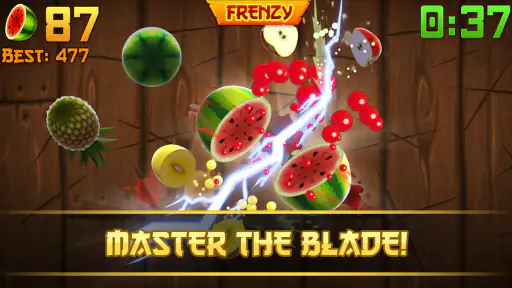
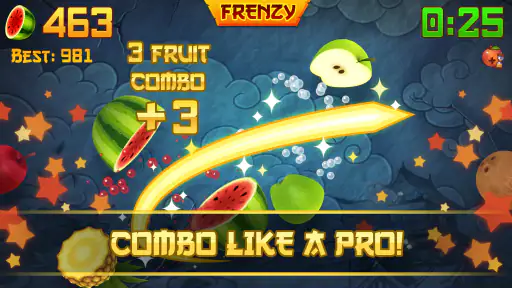
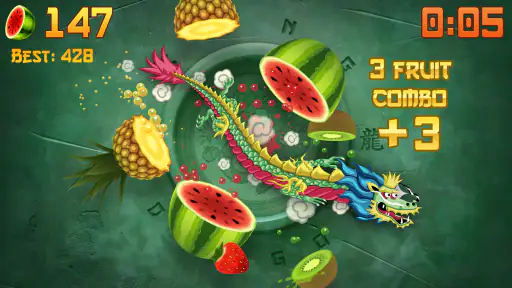
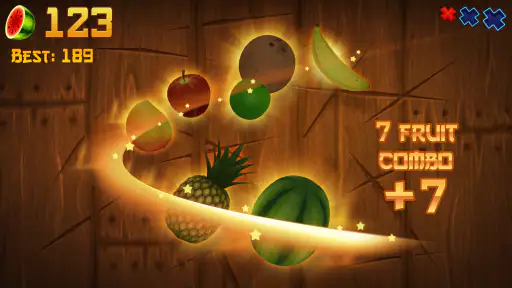
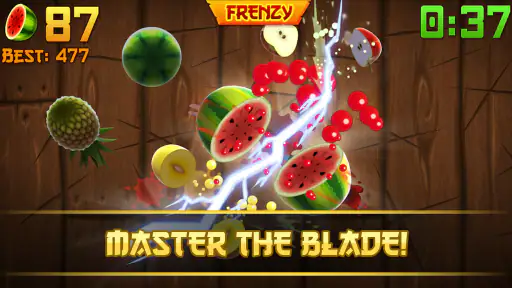
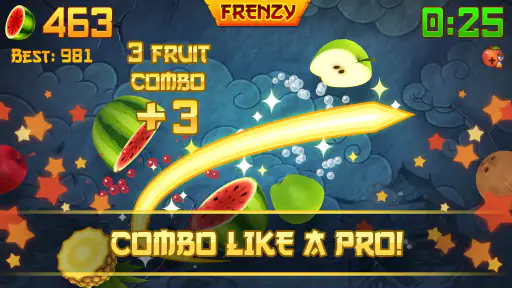
As soon as you fire up Fruit Ninja®, you’re greeted with a simple yet delightful interface. The game’s charm lies in its simplicity – just swipe your finger across the screen to slice through flying fruits. Sounds easy, right? Well, it’s not just about slicing and dicing. There are bombs thrown into the mix to keep you on your toes, and missing fruits can cost you precious points. It’s a perfect blend of challenge and fun that keeps you coming back for more.
The Juicy Details
One of the things I absolutely love about this game is its variety of game modes. Whether you’re in the mood for a quick Classic mode session, want to beat the clock in Arcade mode, or feel like chilling with some Zen mode, there’s something for everyone. Plus, with regular updates, there’s always something new to explore, keeping the gameplay fresh and exciting.
Another cool feature is the dojo. Here, you can unlock and upgrade blades and dojos, each with unique effects that can enhance your slicing experience. It’s those little touches that add depth to the game, making it more than just a simple arcade app.
What a good session looks like
For a realistic everyday use, I’d reach for it during a short wait: choose a mode that fits the time, play one focused run, and put the phone away when the moment is over. That works better than opening it while crossing a street or trying to listen closely to someone; swiping is simple, but bomb placement still needs your eyes. If you’re sharing a device with a younger player, the Everyone rating is reassuring, though I’d still keep an eye on optional purchases rather than treating every in-game unlock as something to buy.
It also makes a useful alternative to arcade games built around long stages or layered controls. Here, the first few seconds are enough to understand the basic task, so it suits people who want quick attempts rather than a commitment to a campaign. The trade-off is equally clear: if you prefer collecting a detailed story, planning a build, or making progress through a world map, the focused swipe loop may feel thin. I’d choose a more involved game for that kind of evening.
Graphics and Sound
The vibrant graphics are definitely a feast for the eyes. The fruits look so juicy and real that you might find yourself getting a bit hungry while playing. Coupled with the satisfying sound effects of slicing through fruits, the game provides a sensory experience that’s both engaging and entertaining.
The soundtrack is upbeat and complements the game’s energetic pace, keeping you in the zone as you aim for those high scores. It’s a harmonious blend that enhances the overall gaming experience.
Small choices that improve a run
One practical adjustment is to leave a little space between swipes instead of drawing one huge line through everything on screen. That makes it easier to react when a bomb is near fruit, and it helps me avoid turning a promising run into a careless miss. In Classic, I’m more selective; in the timed Arcade mode, I accept that speed matters more. Treating those modes as different skills is more useful than expecting one swipe style to work everywhere.
The dojo’s unlocks can make returning feel worthwhile, but I’d view them as a side goal rather than a promise that the game transforms into something new. If you’re deciding whether to spend, first see whether the core gesture and score-chasing are satisfying on their own. The game is free to start, while optional purchases range from $0.99 to $179.99 per item; I would set a personal spending limit before browsing them, especially if the appeal is simply getting back to another quick run.
Who will enjoy the rhythm—and who may not
I’d recommend it to someone who likes short bursts of reflex play, wants controls that make sense without a tutorial, or enjoys trying to improve a score through better timing. It can also suit casual players who want a game that doesn’t demand a long uninterrupted session. The modes help with pacing: choose the calmer option when you want less pressure, or pick the clock-based challenge when you’re in the mood to move quickly.
I’d skip it if repeated score attempts feel more like a chore than a satisfying challenge, or if you need substantial new mechanics to stay interested. The central action remains swiping at fruit while avoiding hazards, so unlocks and mode variations can add reasons to return without changing that foundation. Its 4.5 average from around 5.5 million ratings and more than 500 million installs speak to its broad appeal, but those figures don’t mean the compact loop will suit every player.
Conclusion: A Sweet Delight
In conclusion, Fruit Ninja® is a delightful game that’s perfect for both casual players and those looking for a quick adrenaline rush. Its charming graphics, simple yet engaging gameplay, and variety of modes make it a must-try. So, grab your virtual sword and start slicing – you won’t regret it!
Whether you’re a seasoned gamer or just looking for a fun way to pass the time, this game is sure to keep you entertained. Happy slicing!
My progression verdict
For me, its strongest progression choice is restraint: early goals are understandable, later unlocks give a reason to revisit, and the main test stays readable rather than buried under systems. That is also its limit. The loop rewards sharper attention more than long-term strategy, so I’d install it for quick, tactile arcade sessions, not as a substitute for a deeper game. If that sounds like the kind of break you want, it remains an easy one to pick up and put down.
Fruit Ninja® Frequently Asked Questions
Does Fruit Ninja® work well on a tablet as well as a phone?
Fruit Ninja® is a touch-based arcade game, so its central action is swiping across the screen to slice fruit and avoid bombs. That simple interaction can suit either a phone or a tablet. Before downloading, check that your device meets the operating-system requirement and has enough available storage for the game and any updates.
Is Fruit Ninja® appropriate for someone who wants a simple arcade game without a complicated story?
Yes. Fruit Ninja® focuses on an immediately understandable arcade activity: fruit appears on screen, and you swipe to slice it while avoiding bombs. The appeal is in reacting quickly and improving your accuracy rather than following a complicated story. That makes it easy to start playing when you want a direct, action-focused mobile game.
Can I play Fruit Ninja® with one hand?
The core control is a swipe across the screen, rather than a series of buttons or commands. That makes the basic action easy to understand on a touchscreen, though how comfortable one-handed play feels depends on your device and how you hold it. The main thing to keep in mind is reacting to fruit and avoiding bombs as they appear.
Does Fruit Ninja® offer more than one way to play?
Yes. Fruit Ninja® includes several modes that give the fruit-slicing action different kinds of challenges. Classic focuses on slicing fruit while avoiding bombs, Arcade adds power-ups and special bananas, and Zen offers a more relaxed way to concentrate on precision. These options provide variety while keeping the familiar swipe-based controls at the center of the game.
Can I improve at Fruit Ninja® over time?
Yes. Fruit Ninja® is built around reflexes and precision, so becoming more familiar with the timing and placement of your swipes can help you perform better. Fruit appears on screen and you choose when and where to slice, while avoiding bombs. Its straightforward controls make it easy to practice, but accuracy and attention still matter.
Pros
- Addictive gameplay with simple mechanics.
- Vibrant and colorful graphics.
- Quick and easy sessions for on-the-go play.
- Multiple game modes for varied experiences.
- Regular updates with new content.
Cons
- In-app purchases can be expensive.
- Repetitive gameplay over time.
- Requires internet for some features.
- Ads can be intrusive.
- Limited depth in strategic gameplay.
- Category
- Arcade
- Version
- 3.80.1