Dopples World
- 139.00
- 4.2
- Installs
- 1.00M
- Price
- Free

Screenshots
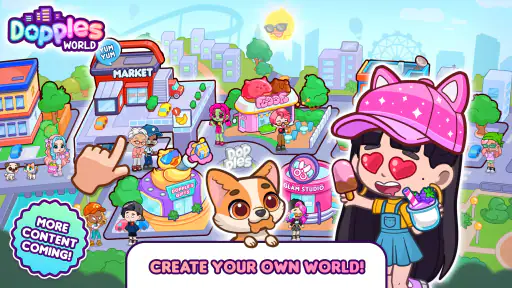

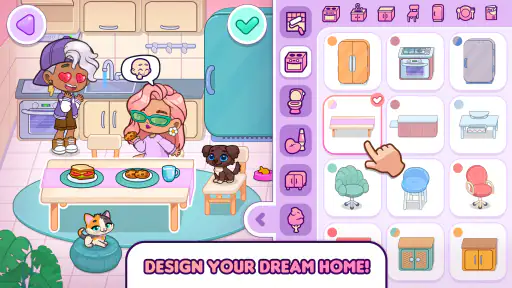
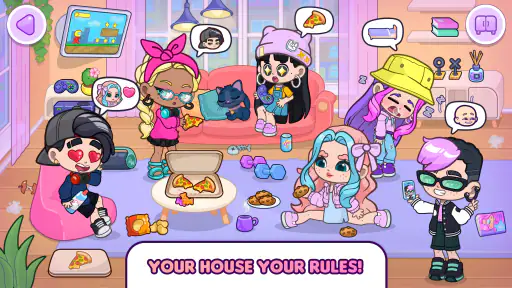
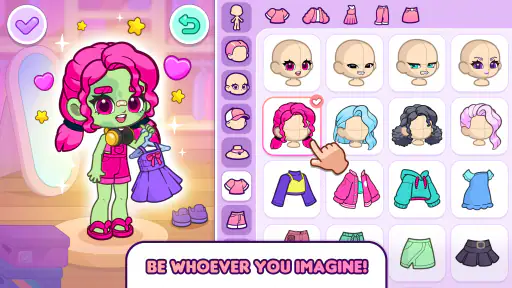
Analysis by Reviewed
I tend to judge a child-friendly game by whether its world gives a child something to do beyond tapping through bright screens. Dopples World is an educational game from TutoTOONS built around making an avatar and inventing stories. That creative premise gives it a gentler, more open-ended feel than a game focused on scores or winning. It is free to start, rated for Everyone, and has optional in-app purchases, so I’d still look at the purchase settings before handing a device to a young player.
Why the first visit feels different
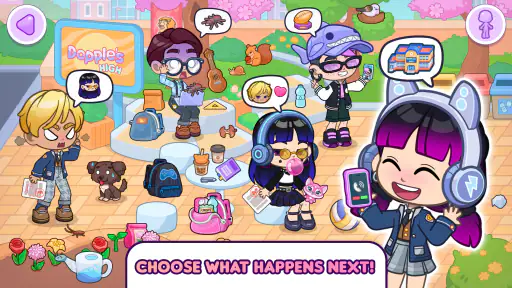
The appeal here is not a race toward a high score. It is the chance to treat a character and a colorful setting as the start of a story. I see that as a useful distinction for families: a child can approach the game with an idea of who their avatar is, then make up what happens next, rather than needing to master a particular challenge before play feels worthwhile.
That freedom can also make the first session a little less obvious. A child who expects a sequence of levels may wonder what they are meant to do, while a child who already enjoys pretend play can supply their own purpose. I’d introduce it by asking the player to choose a character or imagine a small goal for the visit, such as deciding where the character is going. The suggestion provides a starting point without turning play into a lesson.
As an educational game, its value is best understood through imaginative activity, not as a substitute for practice in a specific school subject. It can give children room to make choices and explain a story in their own words. If I wanted a game for targeted spelling, arithmetic, or a measurable learning routine, I would choose one designed around that purpose instead.
Step into the World of Wonders
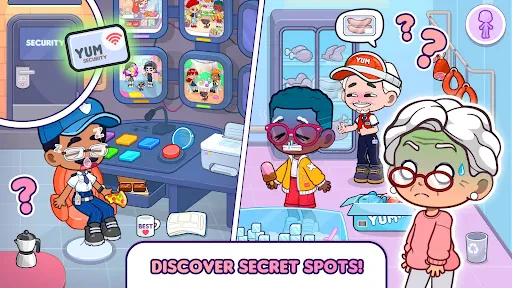
As you dive into Dopples World, you’re met with a blend of vibrant graphics and an enchanting storyline. The game starts with you, the player, navigating through a mystical land filled with charming creatures and hidden secrets. The developers have done a fantastic job crafting an environment that feels both magical and mysterious. Every corner of the game is designed to captivate, making exploration a delightful experience.
That fantasy framing is best approached as a prompt for make-believe, rather than as a tightly plotted adventure. The central appeal is having a character to place in a world and using that setup to make up little scenarios. For a child who likes pretend play, that can turn a short visit into a new story each time. For someone who wants explicit lessons, a sequence of puzzles, or a clear finish line, the open-ended style may feel less satisfying.
How the setting supports make-believe
A useful way to judge the world is to notice what a child does with it. Does the player simply move from one bright scene to another, or do they start assigning motives and relationships to the characters? The second response is where the setting earns its keep. An adult can encourage it with an open question—“What is your avatar looking for?”—rather than explaining what the story should be.
This also makes the game easier to share. A child can narrate their decisions aloud while an adult listens, or two siblings can take turns adding a line to the same imaginary adventure. That kind of play does not require a parent to know a set of rules in advance. It does require patience: if the child wants to explore at their own pace, interrupting to direct every choice can flatten the imaginative part that makes the game distinctive.
Gameplay Mechanics
Let's talk about the gameplay. Dopples World offers a seamless blend of adventure and puzzle-solving. The controls are intuitive, making it easy for anyone to pick up and start playing. Whether you’re a seasoned gamer or a newbie, you’ll find the mechanics easy to grasp yet challenging enough to keep you on your toes. The puzzles are cleverly designed, requiring you to think outside the box without being overly complex or frustrating.
In practical use, I’d treat it as a brief creative break rather than promise a long, structured session. A useful routine is to ask the child to choose one character idea before opening the game, then tell you what that character is doing afterward. This gives play a simple beginning and ending without imposing rules the game may not provide. It also helps a parent tell whether the child is enjoying the storytelling side or mainly wants a different kind of activity.
Compared with many educational games that present a fixed task and reward, this one leans toward imaginative play. That is a real distinction, but it is also a trade-off: children who enjoy choosing their own direction may thrive, while those who need clear objectives can lose interest. I would pick a more structured learning game when the goal is practicing a specific skill, and choose this when the goal is letting a child invent a character and a scene.
A practical way to fit it into the day
For a realistic everyday use, I can imagine opening it during a quiet wait at home, when dinner is nearly ready and a child wants something to do for a few minutes. Before handing over the device, I’d agree on a simple stopping point, such as finishing the current bit of play and then describing the character’s latest adventure. The endpoint comes from the family routine, not from assuming the game has a particular session timer or a defined finish.
That approach is especially helpful for children who can happily keep inventing stories long after an adult needs the device back. It turns the end of play into part of the activity rather than an abrupt interruption: the child gets to tell what happened, and the adult has a natural moment to wrap things up. If transitions are already difficult, though, a game with clearly marked short rounds may be easier to manage.
The same open-ended quality can be a drawback on a small screen in a busy setting. A child who needs frequent help or reassurance may find it less satisfying if an adult is occupied, while a more self-directed player may settle into their own ideas. I would use it where there is time for unhurried play, not as my first choice when I need a child to complete a specific task independently and quickly.
Characters and Storyline
The storyline is where Dopples World truly shines. You’ll meet a cast of quirky characters, each with their own unique personalities and backstories. These characters are not just there for show; they play an integral role in the unfolding narrative. The dialogues are witty and engaging, drawing you deeper into the game’s lore. As you progress, you’ll uncover hidden layers of the story, making every discovery feel rewarding.
The most useful way to get more from that setup is to let the child lead instead of supplying a plot for them. Ask what their avatar wants, or invite them to explain why a character is in a particular place. That small change can make a casual play session feel more like shared storytelling, and it reveals whether the game’s cast is sparking ideas. If the child prefers to follow a detailed narrative written for them, this looser approach may not be the best match.
Why the sound and pacing matter
The visual style and sound work best when they leave room for a child to linger rather than pushing every moment toward a quick reward. That slower, imaginative rhythm can suit a calm break better than an energetic arcade game, where the main attraction is constant action. It is a mood choice as much as a gameplay choice: I would reach for this when a child wants to invent something, not when they are asking for a fast challenge.
For a shared room or a quiet part of the day, I’d check the volume before play begins. That is a small practical step, but it helps keep the game’s atmosphere from taking over the room. If a child is using it in a setting where sound would be distracting, the device’s ordinary volume controls are worth considering before the session, rather than waiting until the game is already underway.
Visuals and Soundtrack
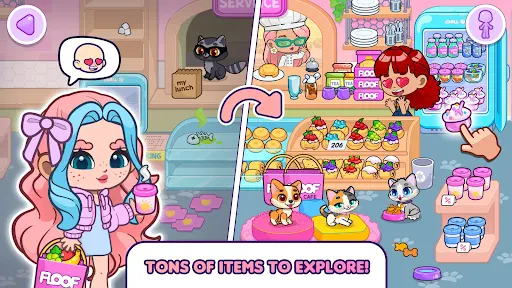
Visually, the game is a treat for the eyes. The art style is vibrant and colorful, breathing life into the game world. Each scene is meticulously crafted, with attention to detail that brings the environment to life. Complementing the visuals is the game’s soundtrack, a melodious blend of tunes that perfectly sets the mood for your adventure. Whether you’re exploring a serene forest or battling a fierce enemy, the music enhances the overall experience, making it truly immersive.
The visual style and sound work best as a welcoming backdrop for play, not as a reason to expect demanding action or a fast pace. That makes it easier to imagine using it during a quiet stretch at home, such as while waiting for dinner, when a child wants something more creative than a quick arcade round. If the device is being used in a shared or quiet space, checking the volume first is sensible; the atmosphere should support the moment rather than compete with it.
For families weighing whether to try it, the practical details are straightforward: it is free, its age rating is Everyone, and purchases are available within the game. The current version is 6.1.25 and it requires Android 6.0 or later. It has an average rating of 4.2 from around 8,600 ratings, with over one million installs. Those figures suggest it has reached a sizable audience, but they can’t tell you whether its open-ended style suits a particular child. I’d try a short session together before deciding whether it belongs in the regular rotation.
Who will enjoy it, and who may want another kind of game
I’d put it on the shortlist for a child who likes customizing an avatar, assigning personalities to characters, and making up dialogue or little scenes. It can also suit a parent who wants an easy prompt for conversation: rather than quizzing a child about what they learned, you can ask what happened in the story and listen to how they explain it. The play is most rewarding when the child is willing to bring some imagination of their own.
On the other hand, I would skip it if the main need is a clear educational target, a tightly guided sequence, or a strong competitive challenge. Some children feel more confident when each screen tells them exactly what to do and rewards completion. A structured puzzle or subject-focused learning game will usually be a better fit for that preference. This is not a flaw so much as a matter of choosing the right kind of play for the child and the moment.
It is also worth separating “educational” from “teaches a lesson.” In this case, I would look for value in storytelling, choice, and the chance to put ideas into words, rather than expecting the game to take the place of a workbook or a teacher-led activity. If a child does not naturally engage with make-believe, playing together once can help you see whether a small prompt unlocks their interest. If it still feels like wandering without purpose, there is little reason to make it a regular choice.
Practical checks before handing over the device
Because the game is free to start and has optional purchases, I’d check purchase settings before a young player uses it alone. That is a sensible step for any family managing app spending, and it avoids making a child responsible for decisions about paid options. The available items range from $0.99 to $3.99 each, so it is better to settle expectations in advance than to discover a purchase prompt in the middle of play.
The game is from TutoTOONS, a developer associated here with a child-friendly creative experience, but the age label should not replace a parent’s own judgement. I would still consider whether the child is comfortable navigating an open-ended game and whether the device is being shared. A quick first session together answers practical questions that a broad age rating cannot: whether the controls make sense to this child, whether the atmosphere appeals to them, and whether they can stop when asked.
On Android, the listed minimum is version 6.0, which gives families a straightforward compatibility check before installing. The version number is 6.1.25. I would not use the rating or install count as a substitute for trying it: those figures describe broad reception, while the real decision depends on whether this child enjoys avatar-led storytelling. A short trial is a better test than assuming popularity guarantees a match.
There are a couple of sensible limits to keep in mind. The free entry point does not mean every option is necessarily included, so a parent should check what is offered before approving purchases. And because the appeal rests on creating stories rather than completing a clear curriculum, I wouldn’t use it as a substitute for a focused educational activity. Its best role is creative downtime, especially for children who enjoy dressing up an avatar, imagining characters, and narrating what happens next.
In conclusion, Dopples World is more than just a game; it’s an adventure waiting to be explored. Its combination of engaging gameplay, a captivating storyline, and stunning visuals make it a must-play for any gaming enthusiast. So, if you’re in the mood for a game that offers both excitement and a touch of magic, give it a try. Trust me, you won’t regret it!
Dopples World Frequently Asked Questions
Is Dopples World free to download and play?
Dopples World is free to download, so you can try its avatar-building and storytelling experience without paying upfront. It also offers optional in-app purchases, priced from $0.99 to $3.99 per item. If you are downloading it for a child, it is worth checking purchase settings on the device so any spending is intentional.
What is Dopples World and what makes it unique?
Dopples World is an innovative mobile app designed to provide users with an immersive augmented reality (AR) experience. What sets it apart is its unique blend of virtual elements and real-world environments, allowing users to interact with 3D objects in their surroundings. This app combines gaming, exploration, and creativity, offering a distinctive AR experience that stands out in the market. It is an educational game from TutoTOONS, with a focus on building an avatar life and creating stories.
Is Dopples World available for both Android and iOS devices?
Yes, Dopples World is available for download on both Android and iOS platforms. Users can find the app on Google Play Store for Android devices and the Apple App Store for iOS devices. It is designed to be compatible with a wide range of smartphones and tablets, ensuring a broad user base can enjoy its features. On Android, the listed minimum requirement is version 6.0 or later.
Are there any age restrictions for using Dopples World?
Dopples World is suitable for users aged 12 and above. The app's content is designed to be family-friendly, but it does feature some interactive elements that may require parental guidance for younger users. This ensures that the app provides an enjoyable and safe experience for all age groups, particularly teenagers and adults. Its content rating is Everyone, making it broadly suitable for families, though parents can still review the game together with younger children.
Does Dopples World require an internet connection to function?
While Dopples World can be used offline for certain features, having an internet connection is recommended to fully enjoy its capabilities. Online connectivity allows users to access updates, multiplayer modes, and community features, ensuring a richer and more interactive experience. Offline mode may limit some functionalities, but basic AR interactions remain available.
Pros
- Engaging multiplayer gameplay.
- Vibrant and immersive graphics.
- User-friendly interface.
- Regular updates with new features.
- Cross-platform compatibility.
Cons
- In-app purchases can be costly.
- Requires a stable internet connection.
- Occasional server lags.
- Limited offline features.
- Large app size may need space.

- Category
- Educational
- Version
- 6.1.25