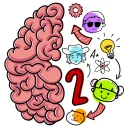
Brain Test 2: Tricky Stories
- 15.58K
- 4.8
- Installs
- 100.00M
- Price
- Free
Screenshots
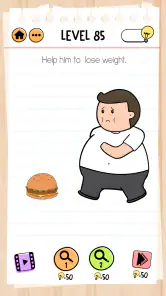
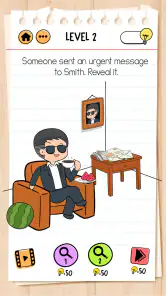
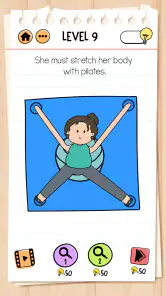
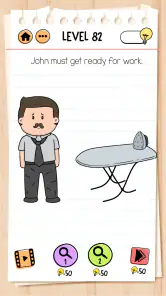
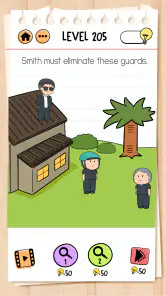
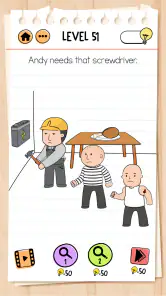
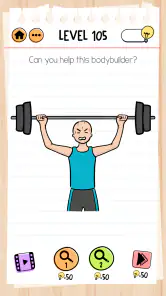
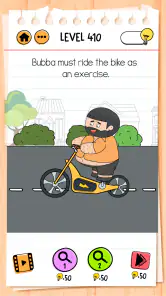
Analysis by Reviewed
A shared phone or tablet can turn a few spare minutes into a small group challenge, and that is where I find Brain Test 2: Tricky Stories especially easy to enjoy. One person can read a puzzle aloud while someone else suggests a solution, then the device can pass to whoever wants to try it. The playful, story-led format gives everyone something to react to, even when only one person is tapping the screen.
A handy fit for short shared breaks
I would reach for it during a quiet moment at home: perhaps while waiting for dinner, or when a couple of people have finished an activity at different times. A level offers a clear little problem to discuss, so it can work better for casual company than a game that demands a long uninterrupted session. It is also easy to stop after a puzzle and pick things up again when there is another lull.
That shared approach has a trade-off. The game is still designed around individual progress on a device, not around a formal group mode. If several people take turns on one screen, it helps to agree whose turn it is and whether the group will solve together or let the player holding the phone decide. Otherwise, the quickest person can end up doing all the tapping while everyone else only watches.
Reads About Brain Test 2: Tricky Stories
Keep progress and expectations clear
On a household device, I would settle a few simple boundaries before starting: who is using the device, whether younger players can continue without an adult nearby, and whether optional purchases are off limits. The game is free to download, but it includes in-app purchases, so “free” does not mean every possible purchase is automatically ruled out. I would check the device’s purchase settings rather than relying on a child to make that distinction alone.
There is also a practical reason to keep turns deliberate: a person who solves a puzzle may move the shared game forward, leaving the next player with a different point in the story. If everyone wants their own independent progress, separate devices or separate play sessions are a cleaner arrangement than passing one device around. If the goal is simply to talk through riddles together, shared play can be the more enjoyable choice.
Age context and the kind of challenge it offers
The game is rated Everyone 10+, a useful reminder that its cheerful appearance does not make it the same fit for every age or every child. I would treat that rating as a starting point, then consider whether a younger player is comfortable with the puzzle situations and the way the stories are presented. Playing together at first is a sensible way to judge that, without assuming that a cartoon style alone tells you everything.
As a trivia-style brain game, it sits in a different lane from a conventional quiz that tests recalled facts or a logic puzzle built around one consistent set of rules. Its appeal is the surprise of interpreting a scene in an unexpected way. That makes it a good pick for people who enjoy playful lateral thinking, but less suitable for anyone who wants structured trivia, a serious strategy challenge, or puzzles with answers that always follow a predictable logic.
More From Our News Desk

Clash of Clans Is Won Between the Battles

Android Auto Makes the Case for Quieter Car Software

MobiOffice: Transforming Mobile Productivity with Seamless Integration

How Microsoft OneDrive Became a Mobile Productivity Giant

How Google Translate Breaks Language Barriers Effortlessly

Why Google Sheets Is the Ultimate Mobile Productivity Tool
Challenging Puzzles with a Twist
One of the first things that caught my attention with Brain Test 2: Tricky Stories is how it takes traditional puzzle-solving and flips it on its head. The game isn't about finding the obvious solutions but rather thinking outside the box. You'll encounter various levels that require you to use logic, creativity, and sometimes just plain old guessing.
For instance, there's a level where you need to help a cat escape from a dog. Naturally, you might think about barriers or distractions, but what if the solution involves something as simple as a yarn ball? The unpredictability is what keeps the game fresh and engaging.
Storylines That Keep You Hooked
Each level in the game isn't just a standalone puzzle but part of an overarching storyline. You might be helping a farmer harvest crops in one chapter and assisting a detective in solving mysteries in another. This narrative approach adds depth to the game and keeps you coming back for more. It's like reading a book, where each puzzle serves as a chapter that you can't wait to finish.
What I love about these stories is how they make you care about the characters. You'll find yourself rooting for their success, which adds an emotional layer to the challenges. It's a clever way to make a puzzle game feel more personalized and interactive.
Graphics and User Experience
Let's talk about the visuals for a moment. The graphics are simple yet effective, with a cartoonish charm that complements the light-hearted nature of the game. It's colorful, inviting, and perfect for players of all ages.
Navigation is a breeze, with intuitive controls that let you focus on the puzzles rather than fiddling with the interface. Whether you're playing on a coffee break or during a longer commute, the game fits seamlessly into your schedule.
Getting unstuck without spoiling the fun
The trickiest moments are often less about missing a fact and more about overlooking an object or taking a scene too literally. When I hit a wall, I find it useful to pause and inspect what is actually on screen before tapping at random. I also try to say my interpretation out loud: “What is this character trying to do, and what could I change?” That turns a frustrating guess into a more deliberate experiment.
For a shared session, it is worth letting the current player have a quiet moment to think before the group starts proposing solutions. The game’s surprise is part of the pleasure, and a rapid chorus of guesses can accidentally spoil it. If a puzzle stops being fun, taking a break is better than turning every level into a test of patience; this style of brain teaser is meant to reward flexible thinking, but not every answer will feel equally satisfying.
Who will enjoy it, and who may prefer another game
I would recommend it to people who like short, visual riddles and do not mind being nudged away from the most obvious answer. It is particularly suited to casual players who want a light mental diversion rather than a long campaign to manage. Unico Studio is the developer, and the game has a 4.8 average from around 1.6 million ratings, with over 100 million installs. Those figures suggest a broad audience, though popularity cannot guarantee that its humor or puzzle style will suit everyone.
If you mainly want factual questions, a traditional trivia quiz is a better fit. If you prefer puzzles where each clue follows a strict, consistent rule, a conventional logic game may feel fairer. Brain Test 2 is more about playful interpretation, so a solution can feel delightfully clever to one person and arbitrary to another. That difference is the central trade-off I would consider before downloading it.
Making a shared session work smoothly
A useful household routine is to separate solving from tapping. Let the person holding the device describe what they see, then give everyone else a short chance to suggest an action before anyone touches the screen. This keeps the puzzle visible to the group and reduces accidental progress made by someone tapping quickly. It also makes the game more welcoming for a quieter player who may have spotted something but needs a moment to explain it.
For a busy evening, I would choose a natural stopping point rather than promising to finish a whole story. One person can take the next turn later, while the rest of the group avoids feeling that they have to wait through a long session. The small, self-contained challenge makes that approach practical, though shared play works best when everyone agrees that the person advancing the game is not claiming permanent ownership of it.
Choosing the right way to play
There are two sensible ways to use a shared device: treat it as a cooperative conversation, or treat it as one player’s game with occasional suggestions from others. Mixing those expectations without discussing them is where friction tends to arise. If one person cares about following a story in order and another wants to experiment freely, give the story-focused player control and let the group offer ideas before each move.
When several household members want private progress, I would avoid making one save point the family’s common project. A shared run can be entertaining, but it also means one player’s decisions determine what the next person sees. Separate play sessions, when possible, are a better fit for people who want to solve at their own pace or keep surprises intact. There is no need to turn casual entertainment into a complicated schedule; a simple agreement about whose turn it is usually solves the problem.
Why its puzzles feel different from quiz apps
The trivia label can set the wrong expectation if you picture rounds of questions about history, sport, or general knowledge. Here, the challenge is more visual and interpretive: look at a situation, question the obvious assumption, and try an unusual interaction. Compared with a standard quiz, that can be easier to enjoy with someone who does not share your knowledge of facts, since the scene itself gives everyone a common starting point.
The trade-off is that an unexpected answer may not feel as objectively fair as a fact-based question or a formal logic puzzle. If you want to practise recall, measure knowledge, or work through a carefully defined deduction, another kind of game will suit you better. I would pick this one when the aim is a quick laugh and a change of perspective, not when I want a consistent test with a single transparent rule set.
Small habits that make the puzzles less frustrating
Before trying a solution, I look for what the scene lets me interact with and consider whether the instruction is asking for an outcome rather than a conventional action. That distinction helps because the first sensible-looking move is not always the intended one. I also avoid rapid repeated tapping: it can turn a puzzle into trial and error without helping me understand why an answer works.
If playing with children or a group, I would offer a hint as a question rather than giving away the answer. “What has not changed in this scene?” or “Is there an object we have not considered?” keeps the other person involved. This is a particularly useful compromise when one player is stuck and another already knows the trick: the hint gives them a route back into the puzzle without removing the moment of discovery.
Graphics and User Experience
Let's talk about the visuals for a moment. The graphics are simple yet effective, with a cartoonish charm that complements the light-hearted nature of the game. It's colorful, inviting, and perfect for players of all ages.
Navigation is a breeze, with intuitive controls that let you focus on the puzzles rather than fiddling with the interface. Whether you're playing on a coffee break or during a longer commute, the game fits seamlessly into your schedule.
Getting unstuck without spoiling the fun
The trickiest moments are often less about missing a fact and more about overlooking an object or taking a scene too literally. When I hit a wall, I find it useful to pause and inspect what is actually on screen before tapping at random. I also try to say my interpretation out loud: “What is this character trying to do, and what could I change?” That turns a frustrating guess into a more deliberate experiment.
For a shared session, it is worth letting the current player have a quiet moment to think before the group starts proposing solutions. The game’s surprise is part of the pleasure, and a rapid chorus of guesses can accidentally spoil it. If a puzzle stops being fun, taking a break is better than turning every level into a test of patience; this style of brain teaser is meant to reward flexible thinking, but not every answer will feel equally satisfying.
Who will enjoy it, and who may prefer another game
I would recommend it to people who like short, visual riddles and do not mind being nudged away from the most obvious answer. It is particularly suited to casual players who want a light mental diversion rather than a long campaign to manage. Unico Studio is the developer, and the game has a 4.8 average from around 1.6 million ratings, with over 100 million installs. Those figures suggest a broad audience, though popularity cannot guarantee that its humor or puzzle style will suit everyone.
If you mainly want factual questions, a traditional trivia quiz is a better fit. If you prefer puzzles where each clue follows a strict, consistent rule, a conventional logic game may feel fairer. Brain Test 2 is more about playful interpretation, so a solution can feel delightfully clever to one person and arbitrary to another. That difference is the central trade-off I would consider before downloading it.
Practical details before you play
The game is free, rated Everyone 10+, and its current version is 1.20.27; it requires Android 7.0 or later. It also offers in-app purchases priced from $1.99 to $8.99 per item. I would check that the device has a compatible operating system and review purchase controls before handing it to a child or using it on a shared family device. Those small checks make the first session smoother and help everyone know what to expect.
Final Thoughts
In the sea of mobile games available today, Brain Test 2: Tricky Stories stands out with its unique blend of challenging puzzles and engaging narratives. It's a game that doesn't just test your brain but also entertains it. If you're looking for a game that offers more than just mindless tapping, this might be your perfect match.
So, next time you're in need of a mental workout combined with some laughter, give this app a try. Who knows, you might just find yourself addicted to its tricky charm!
Brain Test 2: Tricky Stories Frequently Asked Questions
How much space does Brain Test 2: Tricky Stories need on my device?
The game is available for Android devices running version 7.0 or later, so it is worth checking your device’s software before downloading. The required storage space can vary with the device and app updates. If your phone or tablet is low on space, freeing some room first can help the installation proceed smoothly.
Who developed Brain Test 2: Tricky Stories, and is it free to download?
Brain Test 2: Tricky Stories is developed by Unico Studio and is free to download. It is a trivia-style puzzle game built around riddles and story challenges, so it may appeal to players who enjoy short problems that call for creative thinking. Optional in-app purchases are available, but downloading the game does not require an upfront purchase.
What is Brain Test 2: Tricky Stories?
Brain Test 2: Tricky Stories is a puzzle game that challenges players with a series of tricky and mind-bending puzzles. It builds on the success of the original Brain Test game by introducing new characters and storylines, providing a fresh and engaging experience for players who enjoy testing their mental acuity and problem-solving skills.
How does Brain Test 2 differ from the original Brain Test game?
Brain Test 2: Tricky Stories offers new story-based challenges that are not present in the original Brain Test game. This sequel introduces various storylines and characters, allowing players to solve puzzles in a more narrative-driven context. The game maintains the same quirky and humorous style but enhances the experience with more interactive elements and scenarios.
Is Brain Test 2 suitable for all ages?
Yes, Brain Test 2 is designed to be family-friendly and suitable for all age groups. Its puzzles are crafted to be both entertaining and educational, making it a great choice for children, teenagers, and adults who enjoy challenging their brains. However, younger children may require some assistance to understand the more complex puzzles. The game has an Everyone 10+ age rating, so families may want to consider that guidance when deciding whether it is appropriate for a child.
Pros
- Engaging puzzles and storylines.
- Improves problem-solving skills.
- Free to download and play.
- Contains diverse characters.
- Regular updates with new challenges.
Cons
- Contains ads between levels.
- In-app purchases are available.
- Requires internet connection.
- May be too easy for some players.
- Limited hints without purchase.
- Category
- Trivia
- Version
- 1.20.27