Brain Test 3: Tricky Quests
- 2.00K
- 4.7
- Installs
- 10.00M
- Price
- Free
Screenshots


Analysis by Reviewed
When I want a quick puzzle break that asks me to look beyond the obvious, Brain Test 3: Tricky Quests is an easy game to reach for. Its playful presentation keeps the mood light, while the puzzles invite me to test assumptions rather than simply recall facts. That mix makes it a better fit for spare moments than for anyone looking for a long, continuous story or a formal brain-training routine.
Why it suits short breaks
I find this game easiest to enjoy when I treat it as a handful of small challenges rather than a session I need to complete in one sitting. A level gives me a clear problem to focus on, and I can stop when I need to return to whatever I was doing. That makes it a practical choice for a commute, a waiting room, or a quiet pause between tasks, provided I have a moment to pay attention to the screen.
There is a small trade-off to that convenience: a puzzle can be simple to start but surprisingly absorbing once I begin testing ideas. If I only have a few seconds, I may prefer to leave a tricky level for later instead of rushing through it. I get more from the game when I can look carefully and enjoy the odd logic, rather than tapping quickly just to fill time.
Engaging Puzzles That Keep You Hooked
Right off the bat, Brain Test 3: Tricky Quests does an excellent job of drawing you into its world of quirky puzzles and entertaining challenges. Each level presents a unique problem that requires you to think outside the box. Forget about the conventional solutions because this game is all about creativity and lateral thinking.
One of the things I absolutely loved is how the game keeps evolving. Just when you think you’ve got the hang of it, a new twist is introduced, keeping the gameplay fresh and exciting. I found myself saying, "Just one more level," only to realize hours had flown by!
A visual style that tells you how to play
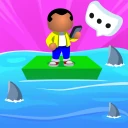
The scenes are more than decoration: their clear, cartoon-like look makes it easier to inspect a puzzle and decide what might be relevant. I find it useful to scan the whole screen before tapping, then check whether an object, character, or detail seems out of place. That small pause helps me avoid random guesses and makes the game’s playful visual language part of the challenge.
That habit also helps when a clue is easy to overlook. Rather than focusing only on the most prominent object, I take in the whole scene, including the relationship between the prompt and what is shown. If a first idea fails, I look for a different interpretation of the wording before trying a string of unrelated actions. It is a simple way to make the visual puzzles feel more like observation and less like trial and error.
More From Our News Desk

Weather by Xiaomi Review: Clear at a Glance, Less Clear Up Close

X Under Pressure: Can It Recover When Posting Goes Wrong?

Clash of Clans Is Won Between the Battles

Android Auto Makes the Case for Quieter Car Software

MobiOffice: Transforming Mobile Productivity with Seamless Integration

EA SPORTS FC™ Mobile Soccer: Redefining Mobile Sports Gaming
Visuals and Sound That Complement the Experience
Another aspect where Brain Test 3 shines is its delightful visuals and sound design. The graphics are simple yet charming, perfectly capturing the whimsical nature of the game. The sound effects and background music add an extra layer of immersion without becoming distracting or repetitive. It’s like having a friendly companion cheering you on as you tackle each tricky quest.
That gentle tone is useful in ordinary settings: I can play a level while waiting for a drink or taking a short break, without needing to settle into a complicated game world first. The sound supports the mood, but the puzzles remain the focus. If I’m somewhere quiet, I can also turn the volume down and still follow the visual clues; I don’t rely on music to understand what a puzzle is asking.
For me, the sound works best as atmosphere, not as a reason to keep playing. I can enjoy the light feedback while I solve a puzzle, but I would not pick this over a music-led game if I wanted a more immersive audio experience. The art and effects set a friendly tone, then leave room for the puzzle itself to hold my attention.
Challenges That Make You Feel Like a Genius
There’s nothing quite like the feeling of solving a particularly tricky puzzle, and Brain Test 3 delivers this in spades. The game offers a wide range of difficulty levels, ensuring that both beginners and seasoned puzzle solvers find something to challenge them. Whether you’re deciphering riddles or unraveling logic puzzles, each solved level gives you a well-deserved sense of accomplishment.
But don't worry if you get stuck – the game provides hints to nudge you in the right direction. However, I’d recommend trying to solve each puzzle on your own first; the satisfaction of cracking it solo is unbeatable.
How I approach a stubborn level
My best advice is to treat a level as a small experiment. Read the prompt again, inspect every visible detail, and try one deliberate action at a time instead of tapping everything in quick succession. If I’m still stuck, I step away and return later; a fresh look can reveal a clue I missed. I save hints for when I have tested a couple of sensible ideas, because using one too early can take away the pleasure of working out the trick.
This approach is especially helpful if I am sharing the game with someone else. We can take turns proposing a single move, then check what happens before moving on to another theory. It keeps the screen from becoming a guessing contest and makes even a wrong attempt useful: we learn which interpretation did not fit, then reconsider the clue. On my own, I use the same one-action-at-a-time rhythm to keep a frustrating level from turning into frantic tapping.
The hint option is best treated as a nudge rather than the default route through a puzzle. I would use it when I have genuinely inspected the scene and tried a few plausible interpretations, especially if I am ready to move on rather than spend a long time stuck. If I am enjoying the challenge, I wait; if I am playing casually and the puzzle has stopped being fun, a hint can restore the pace. That choice is part of making the game work for different moods.
This is also where the game differs from trivia quizzes and standard logic grids. Those alternatives often reward stored knowledge or orderly deduction, while these puzzles can hinge on noticing an unexpected interaction or interpreting a prompt differently. I enjoy that surprise, but it also means the solution may feel less satisfying if I wanted a purely logical chain. Players who prefer predictable rules or steady difficulty may be happier with a conventional quiz or a structured puzzle collection.
What to expect from the format
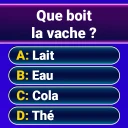
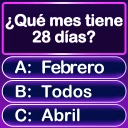
Despite its trivia label, I would not approach this as a test of general knowledge. The appeal is more about working out what a particular scene is asking me to notice, and being willing to question the most obvious reading. That makes it a different kind of mental break from a quiz app, where recalling facts or answering a fixed question is usually the main event.
Compared with a classic logic-puzzle collection, the experience feels looser and more playful. A formal puzzle tends to give me a stable set of rules and ask me to reason within them; here, a solution can depend on spotting a visual cue or changing how I interpret a prompt. I like that variety when I want a surprise, but it is not my first recommendation for someone who finds satisfaction in proofs, grids, or one consistent puzzle system.
A Perfect Game for All Ages
What’s great about Brain Test 3 is its universal appeal. Whether you’re a kid or just a kid at heart, this game has something for everyone. It’s family-friendly, so you can enjoy it with your little ones or challenge your friends to see who’s the puzzle master.
For a shared play session, I’d let everyone suggest an idea before someone taps the screen. That keeps the puzzle-solving collaborative and stops one confident player from taking over immediately. The game is rated Everyone, and I can see its approachable tone working for families, though younger players may still appreciate a little help when a trick depends on reading the wording carefully.
A useful family routine is to have one person read the prompt aloud while the others inspect the picture. That gives younger players time to notice details without having to be the one operating the device, and it makes the wording part of the group discussion. I would still keep an eye on purchase prompts if a child is using the game, since optional in-app purchases are available; the game is free to start, but free does not mean every part of the experience is automatically purchase-free.
Who will enjoy it—and who may want another kind of game
I’d recommend it to casual players who like visual riddles, quick rounds, and the occasional “I should have noticed that” moment. It also works for someone who wants a low-pressure activity to share with a friend or child. If you mainly want a timed competition, deep strategy, a continuous narrative, or puzzles with consistently formal rules, this is not the game I’d choose first; a quiz, strategy game, or classic logic puzzle may suit that mood better.
It is also a sensible pick for someone who wants a game that does not ask for a large commitment before the first puzzle. I would be less likely to recommend it to a player who dislikes solutions that hinge on an unexpected interpretation, or who wants a clearly escalating course in a single formal skill. Its charm depends on that willingness to experiment, so a person who sees unconventional answers as arbitrary may leave more irritated than entertained.
For a realistic everyday example, I might open it while waiting for an appointment, solve a level or two, and put the phone away when my name is called. If a puzzle catches me, I can pause the attempt mentally and return to it later rather than needing to preserve a complicated game state in my head. On the other hand, if I am looking for something to play while my attention is divided by conversation or a busy task, I would choose a game that needs less visual concentration.
Brain Test 3 is a free trivia game from Unico Studio, with a 4.7 average from around 350,000 ratings and over 10 million installs. It first arrived on April 14, 2021, and version 1.75.5 runs on Android 7.0 or later. Optional in-app purchases range from $0.99 to $6.99 per item, so I’d treat the game as free to start and check purchase prompts carefully if a child is playing. That is a practical trade-off to keep in mind rather than a reason to avoid it.
Those practical details make it easy to decide whether it fits the device and household: it is listed for Android 7.0 or later, and its Everyone rating reflects an accessible tone. The developer is Unico Studio, and the current version is 1.75.5. I would still think about the kind of play I want more than the headline figures: the important question for me is whether I enjoy visual trick questions enough to return for another one.
A light, coherent mood with a few caveats
The art, sound, and puzzle style work together to make the experience feel cheerful rather than stressful. Its strongest moments come when a small visual clue and an odd prompt combine into a solution that feels surprising but fair. The main limitation is that this kind of lateral puzzle can sometimes feel like guessing what the designer expects, especially if I approach it as a conventional logic problem. Taking a breath, looking carefully, and using a hint only after a genuine attempt makes that friction easier to handle.
The mood is a real part of why I keep it in mind for casual play. The cheerful presentation softens the sting of a wrong guess, while the short puzzle format gives me a natural stopping point. It does not turn every moment into a dramatic event, and that restraint suits its purpose: I can dip in, focus on a small visual problem, and leave without needing to follow a complex plot or remember a long sequence of events.
My main advice is to match the game to your attention and expectations. Give each prompt a careful read, inspect the entire scene, and make deliberate attempts rather than treating the screen like a button-mashing test. If the puzzle is still enjoyable, keep working; if it starts to feel like blind guessing, step away or use a hint. That is the line between the game’s playful surprises and its occasional friction for me.
In conclusion, if you’re in the market for a game that’s both entertaining and intellectually stimulating, Brain Test 3: Tricky Quests is a fantastic pick. It’s a game that not only entertains but also gives your brain a workout, making it a win-win in my book. So why not download it today and see how many tricky quests you can conquer?
Brain Test 3: Tricky Quests Frequently Asked Questions
Is Brain Test 3: Tricky Quests a good choice for someone new to the Brain Test games?
Yes. Brain Test 3: Tricky Quests is presented as a return to the Brain Test world, but its focus on individual puzzles and quests makes it approachable for players who simply want a playful brain-teaser game. You can come for the tricky challenges and humorous tone without needing to know the earlier games. It may especially appeal to anyone who likes trying unexpected solutions.
What is the age rating for Brain Test 3: Tricky Quests?
Brain Test 3: Tricky Quests has an Everyone content rating, making it suitable for a broad audience, including children and families. Its puzzle-focused format centers on observation, logic, and creative thinking. As with any game, parents may want to consider whether its particular style of challenges is a good fit for their child, but the age classification makes it accessible to players of different ages.
What kind of puzzles and gameplay can I expect?
Brain Test 3: Tricky Quests is a puzzle game that challenges players with a series of tricky and mind-bending quests. It combines humor and logic puzzles to create a fun and engaging experience. Players need to think outside the box to solve each level, making it a great choice for those who enjoy testing their problem-solving skills. The game’s trivia category makes it a fit for players who like solving questions through observation and creative thinking.
Who developed Brain Test 3: Tricky Quests, and is it part of a larger series?
Unico Studio developed Brain Test 3: Tricky Quests. Its store summary invites players to return to the world of Brain Test for a long and tricky adventure, so it is presented as another entry in that puzzle-game series. If you enjoy playful brain teasers, this title offers a way to revisit that familiar style while taking on a new adventure.
What is Brain Test 3: Tricky Quests about?
Brain Test 3: Tricky Quests is a puzzle game that challenges players with a series of tricky and mind-bending quests. It combines humor and logic puzzles to create a fun and engaging experience. Players need to think outside the box to solve each level, making it a great choice for those who enjoy testing their problem-solving skills.
Pros
- Challenging puzzles to stimulate your mind
- Engaging storyline keeps players hooked
- Variety of levels with unique challenges
- Colorful graphics enhance the gaming experience
- Frequent updates with new content
Cons
- In-app purchases can be expensive
- Some levels are extremely difficult
- Advertisements may interrupt gameplay
- Limited hints available for hard puzzles
- May require internet connection to play
- Category
- Trivia
- Version
- 1.75.5