 About WEBTOON: Manga, Comics, Manhwa
WEBTOON Shows How the Phone Changed the Shape of Comics
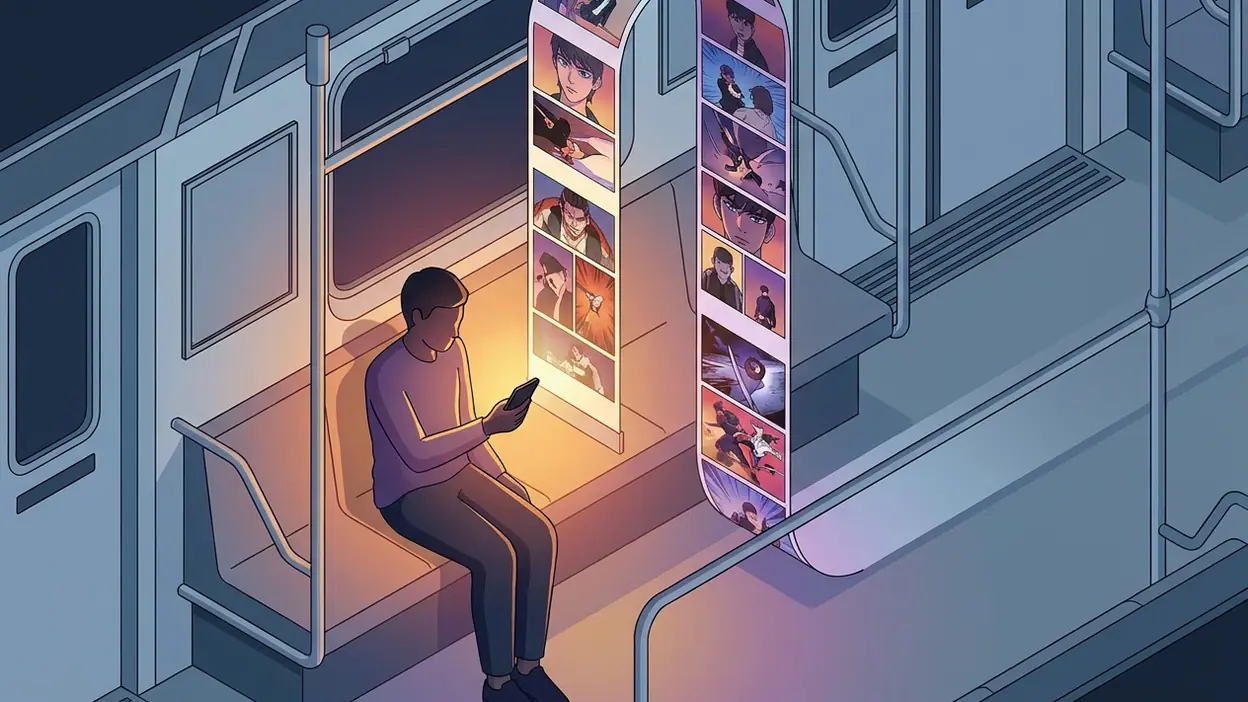
On WEBTOON, a comic is not simply a page shrunk to fit a phone. The scroll sets the pace, the gaps between panels become dramatic pauses, and a reader can move from a quiet conversation to a cliffhanger with one thumb. That design choice points to the category’s central shift: mobile comics are no longer judged only by the stories they carry, but by how well their format earns a place in the small intervals of everyday life. WEBTOON: Manga, Comics, Manhwa makes that shift unusually clear.
The app’s importance is not that it has made comics digital; comics have been read on screens for years. Its stronger argument is that a digital comics service should feel built for reading on a phone, while still giving stories room to become habits, communities, and long-running creative projects. WEBTOON gets much of that right. It also shows how the category’s best-known conventions can turn into friction when convenience, discovery, and reader support are treated as separate problems.
The phone is becoming the page
The current baseline for a mobile comics app is demanding. Readers expect a catalogue broad enough to reward browsing, an interface that gets out of the story’s way, and a reliable path back to an ongoing series. They want new installments to be easy to find, older episodes to remain accessible, and reading to work in short bursts without losing its emotional thread. A beautiful library cannot compensate for clumsy navigation; a huge catalogue is little use if a reader cannot tell what to try next.
WEBTOON’s vertical feed meets the format halfway. Instead of forcing a reader to pinch, zoom, or turn a conventional page sideways, it presents episodes as a continuous downward movement. The result feels natural on a phone, especially for scenes designed around reveals: a panel can appear after a stretch of blank space, or a character’s expression can land at the exact point where the reader’s thumb pauses. The scroll is not just a delivery method. In a well-paced episode, it becomes part of the storytelling.


That does not mean every comic benefits equally. Dense dialogue and intricate page compositions can lose their intended balance when rearranged into a narrow column. But WEBTOON has helped establish a clear expectation: mobile comics should consider the screen’s shape from the beginning, not treat it as an awkward container for work made elsewhere.
A catalogue that wants to become a routine
The app’s strongest signal is its combination of serialized reading and regular return. A reader may arrive for one series, follow its updates, and gradually build a small schedule around it. That is a different kind of stickiness from a game’s daily challenge or a language app’s lesson streak. It comes from anticipation: the next episode is not merely another item to consume, but the continuation of a story whose characters and conflicts have accumulated weight.
That routine depends on simple, unglamorous details. Series pages need to explain what a story is about; reading history must make it easy to pick up where the reader left off; and episode lists should make a long run feel navigable rather than intimidating. WEBTOON’s familiar combination of discovery surfaces, series pages, and ongoing episodes supports that loop. The experience is strongest when browsing quickly turns into a deliberate choice and the app remembers enough to make returning feel effortless.
Latest News

There is a trade-off. A feed that helps readers discover a lot can also make the catalogue feel endless and uneven. Recommendations are useful only when they lead to work that suits a person’s taste, and popular titles can dominate attention even when the service contains more varied voices. Discovery is not solved by placing more covers on a screen. It requires enough context to help someone understand why a series might be worth their time.
The conventions WEBTOON keeps—and the one it unsettles
WEBTOON follows several familiar rules of digital publishing: episodes arrive in sequence, readers follow series, and the service’s catalogue acts as both shop window and library. Those conventions work because they preserve the basic pleasure of comics: returning to a world, watching relationships change, and having a new chapter waiting. The app does not need to replace the comic with a social network or a game to make reading feel active.
The convention it challenges is the assumption that a comic’s basic unit must be the printed page. On a phone, the scroll can control timing more precisely than a sequence of fixed panels. A long vertical composition can stretch suspense, and a reader’s movement down the screen can become a small act of participation. This is a meaningful change in form, not just a portrait-oriented layout. It asks artists to think about how much space a moment needs and how a reader encounters it in time.
That challenge is not a universal solution. The format can encourage work that is easy to consume vertically at the expense of compositions that reward a wider view. It can also make pacing feel mechanical if a creator uses blank space as a substitute for tension. The strongest digital comic design uses the scroll with restraint; the weakest makes the reader do extra swiping without giving each pause a purpose.
What other mobile habits reveal
Related apps sharpen the point without serving as direct competitors. Subway Surfers understands that a short mobile session needs a clear rhythm and an immediate reason to continue. Duolingo: Language Lessons makes progress legible, so users can see that a small daily action contributes to a longer goal. WEBTOON borrows neither app’s mechanics, nor should it. But readers increasingly expect the same clarity: a satisfying session, a visible route back, and a reason to return that feels connected to what they care about.
Foodpanda: food & groceries offers a different lesson. Its utility depends on helping people move from browsing to a decision without burying the useful information. Comics discovery has a similar challenge, even if choosing a story is not the same as ordering dinner. A cover catches the eye; a concise premise, clear genre signals, and a sense of tone help a reader commit. Word Search Quest - Puzzles and Dominoes, meanwhile, underline how established mobile categories can feel interchangeable when their core loop is familiar but their presentation does little to establish character. For comics, the equivalent risk is a catalogue that treats stories as interchangeable tiles.
Across these products, the emerging standard is not simply “more personalization” or “more content.” It is frictionless entry with a meaningful reason to return. A mobile service needs to make the first worthwhile action obvious, then make continued use feel earned. WEBTOON’s episode structure already supplies a strong reason to come back; its next challenge is ensuring that readers can find the right story and understand the shape of their commitment before they begin.
Where the category still lags
Mobile comics still struggle with the economics and discoverability of long-form reading. A reader may be able to start a series quickly and yet remain unsure how much of it is available, how its release rhythm works, or which access options apply. Any system that puts meaningful episodes behind payment or waiting requirements needs to explain those terms clearly. Uncertainty at the point of commitment can break the very reading habit the service is trying to build.
There is also an editorial problem. Popularity can make a catalogue easier to browse, but it does not automatically surface the best match for a particular reader. Genre labels and trending lists are blunt tools; a romance, fantasy, or thriller can vary wildly in tone, pacing, and audience. Better discovery would describe what a story actually feels like, while making room for series that are less established. This matters especially in comics, where a reader often has to invest in multiple episodes before the work’s full appeal becomes clear.
Finally, reading on a phone is not automatically comfortable. Long sessions can mean eye strain, interruptions, and a loss of the quiet focus that a printed book encourages. A continuous feed makes entry easy, but it can also make it hard to tell when a natural stopping point has arrived. Good reading tools should support both immersion and control: clear episode boundaries, dependable progress tracking, and ways to return without turning every pause into a lost place.
The cost of getting the standard wrong
For users, these design choices determine whether mobile comics become a lasting reading habit or a stack of half-started series. When the app respects time and makes stories easy to resume, a spare few minutes can become a satisfying chapter. When discovery is noisy, access rules are unclear, or every episode ends by pushing the next action, the same convenience can feel like pressure. The difference is not the length of a session; it is whether readers feel they are choosing their pace.
Creators face the other side of that bargain. A phone-native format can give a story a distinctive rhythm and bring it to readers who may not browse a comic shop or buy print collections. But the platform’s conventions also shape what feels viable: episode length, release cadence, and the visual language of the scroll all influence how a series is made. A healthy category should make room for that craft without rewarding only the fastest hook or the most predictable update schedule.
WEBTOON remains a persuasive example of where digital comics are headed because its core idea is both practical and artistic: let the screen’s vertical movement serve the story. The next stage should not be a louder feed or an even longer catalogue. It should be clearer discovery, transparent access, better support for deliberate reading, and greater visibility for work outside the obvious hits. The category’s old measure was whether comics could fit on a phone. Its new measure is whether the phone can help comics feel like themselves.
WEBTOON: Manga, Comics, Manhwa shows that the format can do more than deliver panels between notifications. It can turn reading into a portable, serialized ritual and make the act of scrolling part of a creator’s toolkit. But the category will mature only when convenience stops being the whole pitch. The strongest mobile comics service will pair phone-native storytelling with thoughtful discovery and respect for the reader’s time; that is the standard WEBTOON helped make possible, and the one it still has to meet consistently.