Brain Test 4: Tricky Friends
- 2.27K
- 4.7
- Installs
- 10.00M
- Price
- Free

Screenshots




Analysis by Reviewed
I judge a casual puzzle game less by how impressive its first few levels feel than by whether I still want to open it once the surprise settles. Brain Test 4: Tricky Friends makes a good first impression with short, playful challenges, but its best use is more modest than a game built around a daily routine: it gives me something to puzzle over when I have a few spare minutes.
Who will enjoy the early puzzles
The game is a natural fit for anyone who likes lateral-thinking questions and solutions that may depend on noticing an overlooked detail. It is also easy to share: one person can hold the phone while another suggests what to try, making a short wait feel like a small group activity. I would recommend it to families who enjoy talking through a puzzle together, though I would not assume that every child will solve each level without help.
It is less suitable if you want a conventional quiz based on facts, a steady sequence of increasingly difficult logic problems, or a game whose appeal comes from long-term planning. The fun here is in testing an interpretation of the situation, not building a strategy across many sessions. That distinction is useful before downloading: the game may be called a brain teaser, but it is not a substitute for every kind of thinking game.
Making short sessions feel worthwhile
A practical way to play is to treat a tricky level as a brief observation exercise. Before tapping around, I look at what is actually on screen, read the prompt carefully, and ask whether I am assuming that an object or character has only one possible role. That pause can make a surprising answer feel earned rather than random. If I am still stuck, I prefer to put the phone down and return later instead of repeating guesses without a plan.
That approach also makes the game easier to fit into ordinary life. I might play while waiting for an appointment or during a quiet break, then stop after a level rather than letting a short diversion turn into an unwanted time sink. It works best when I have enough attention to examine a puzzle; if I am distracted, tired, or rushing, the same trickiness that makes a solution satisfying can feel like friction.
What changes after the novelty
Once the initial surprise wears off, the reason to return is the chance of encountering another puzzle that makes me rethink what I first assumed. That offers a different kind of recurring value from a word game built around a familiar daily format or a trivia app that rewards recalling facts. I would choose those alternatives when I want a predictable routine or knowledge practice. I reach for this one when I want a compact challenge whose answer may come from looking at the scene another way.
I would not make it a scheduled habit just to justify keeping it installed. A casual game can earn its space through occasional, enjoyable use, and this one is at its best when I open it because I actually want a playful problem. If I find myself tapping impatiently or treating every level as a test I must pass, it is probably time to take a break rather than push through.
More From Our News Desk

Weather by Xiaomi Review: Clear at a Glance, Less Clear Up Close

X Under Pressure: Can It Recover When Posting Goes Wrong?

Clash of Clans Is Won Between the Battles

Android Auto Makes the Case for Quieter Car Software

MobiOffice: Transforming Mobile Productivity with Seamless Integration

EA SPORTS FC™ Mobile Soccer: Redefining Mobile Sports Gaming
The character-led presentation gives the puzzles a lighter tone and can make them more inviting to play with another person. Still, the characters and humor will not matter equally to everyone. Players who care most about clean, abstract logic may prefer a puzzle app that puts mechanics first, while those who enjoy a bit of personality alongside the challenge are more likely to appreciate this style.
Small habits that reduce frustration
I get more out of a difficult level by describing what I see before deciding what to do. In a shared session, asking another person to explain their first interpretation is often more useful than taking turns making random taps: a different assumption can reveal the intended angle. When playing alone, I try to identify what the prompt does not explicitly require, rather than inventing extra rules for myself. These are simple habits, but they make the puzzle-solving feel more deliberate.
There is a trade-off, though. Some people enjoy a puzzle most when its rules are consistent and its difficulty rises in a clear sequence. A trick question can instead depend on surprise, and that surprise may feel delightful one moment and arbitrary the next. If that distinction is a deal-breaker for you, a conventional logic-grid game or a structured brain-training app is likely a better fit.
Why the opening sessions click
My first impression is that this works best as a small, focused distraction rather than a game I need to settle in for. A level gives me one compact problem to turn over in my head, so I can pick it up during a quiet break and put it down when I’m done. That quick rhythm is the main reason the early puzzles feel inviting: I can try an idea, notice what I overlooked, and get an “aha” moment without committing a long stretch of time.
Meet Your New Brain Teaser Buddy
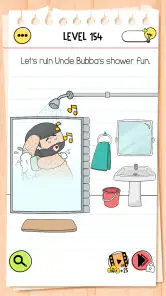
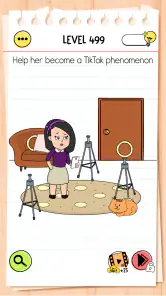
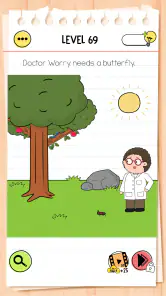
So, let’s get started. Brain Test 4: Tricky Friends is not your typical puzzle game. It’s like having a conversation with a friend who’s always one step ahead, throwing curveballs that test your logic and creativity. The game’s interface is super friendly, with vibrant graphics that grab your attention right from the start. You’ll find yourself lost in a series of brilliantly designed puzzles, each more intriguing than the last.
Gameplay That Keeps You Guessing
The beauty of this game lies in its simplicity and depth. Each level presents a unique challenge, with solutions that require you to think outside the box. You might find yourself questioning everything you know about logic and problem-solving. The developers have done an incredible job crafting puzzles that are not only fun but also educational. They’ve struck a perfect balance between difficulty and enjoyment, ensuring that you’re never too frustrated to keep playing.
How I’d use it beyond the first week
For a real everyday use, I’d keep it in mind for a bus ride, a waiting room, or a short pause between chores, rather than making it part of a strict daily routine. When a level catches me out, stepping away and returning later is more useful than repeatedly tapping at random: the point is to change my angle of thought, not simply to spend longer on the same guess. If I’m playing with someone else, saying our assumptions aloud can make a puzzle a quick shared activity without turning it into a serious competition.
That also helps answer whether it has lasting value. Its appeal depends on how much I enjoy being surprised by the wording and logic of individual puzzles. It is not the same kind of long-term commitment as a strategy game with plans to build over time, nor does it replace a trivia quiz focused on recalling facts. Compared with familiar puzzle apps built around repeating a single format, the attraction here is the expectation that a level may ask me to look at a situation differently. If I want steady mastery of one mechanic, I’d choose a more narrowly focused puzzle instead.
Characters That Bring the Game to Life
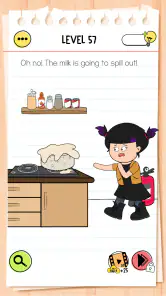
One of the standout features of Brain Test 4: Tricky Friends is its cast of quirky characters. Each one has a distinct personality that adds a layer of charm to the game. These characters aren’t just there for show; they’re integral to the puzzles and often hold the key to finding the solution. Their amusing dialogues and interactions make the game feel like a storybook adventure you’re part of. It’s these little details that make the game so engaging and addictive.
A Game for All Ages
What’s great about Brain Test 4: Tricky Friends is its universal appeal. Whether you’re a kid or an adult, there’s something in it for everyone. The puzzles are crafted to cater to a wide audience, making it a perfect family game. You can easily spend hours playing together, sharing laughs and aha moments.
That said, “for all ages” does not mean every puzzle will suit every player equally. It is rated Everyone, and the playful presentation makes it approachable, but a younger player may still need a hint from an older one when a solution depends on spotting a misleading assumption. I’d treat that as part of the fun when playing together, while someone looking for formal lessons or a structured brain-training course should choose something designed for that purpose.
What to expect from regular play
After the novelty fades, the practical question is whether I’ll keep opening it. The strongest reason to return is the changing puzzle challenge and the light character-led tone; the weaker reason would be expecting a habit tracker, a deep personal progression system, or a demanding daily routine. I’d use it when I genuinely want a playful problem, not as an obligation. That distinction matters: a casual game can earn a place on my phone through occasional enjoyable sessions without becoming something I play every day.
There is also a trade-off in how I approach a difficult level. Guessing quickly may get me unstuck, but it can make the solution feel arbitrary; pausing to inspect the scene and question the wording gives the puzzle a fairer chance to land. If I’m tired or impatient, I’m more likely to find the trick irritating than clever, so this is not my first pick when I want a calm, predictable game. Its surprises are the draw, but they are also the source of possible fatigue.
Moreover, the game doesn’t rely on in-app purchases to progress, which is refreshing in today’s mobile gaming market. You can enjoy the full experience without feeling pressured to spend extra money, making it a budget-friendly entertainment option.
Final Thoughts
In a world where mobile games can often feel repetitive and uninspired, Brain Test 4: Tricky Friends stands out as a beacon of creativity and fun. It challenges your mind, keeps you entertained, and offers a delightful escape from the mundane. If you’re ready for a mental workout that’s packed with surprises, this game is definitely worth a download. So, why wait? Dive into the world of tricky friends and see how sharp your brain really is!
My recommendation is for people who enjoy lateral-thinking puzzles, playful characters, and short sessions that can fit around the day. Unico Studio is the developer, and the game is free to download, with optional in-app purchases priced from $0.99 to $24.99 per item. It has a 4.7 average from around 175,000 ratings and more than 10 million installs, which suggests it has reached a broad audience, though popularity alone cannot guarantee every puzzle will suit your taste. Version 1.24.1 requires Android 6.0 or later, and the game was released on February 9, 2023.
I’d skip it if I mainly want factual trivia, a highly predictable difficulty curve, or a game that rewards long strategic sessions. For everyone else, it is an easy one to keep available for those spare minutes when I feel like testing an assumption and sharing a laugh over a stubborn answer. Its lasting place on my phone would come from returning when that mood strikes, not from forcing myself to play on a schedule.
Brain Test 4: Tricky Friends Frequently Asked Questions
Who developed Brain Test 4: Tricky Friends?
Brain Test 4: Tricky Friends is developed by Unico Studio. It is a trivia game built around tricky puzzles and brain teasers, so it may appeal if you enjoy playful challenges that ask you to think beyond the obvious answer. The game’s short description is “Brain Test 4,” while its puzzles and humorous style give the experience its character.
What kind of puzzles should I expect in Brain Test 4: Tricky Friends?
The game focuses on brain teasers and tricky questions rather than straightforward trivia recall. Its puzzles are designed to make you look carefully at a situation and consider unexpected solutions, giving the experience a light, playful feel. If you like testing your reasoning and trying different approaches when an answer is not immediately obvious, this style may suit you.
Is Brain Test 4: Tricky Friends free to download?
Yes, Brain Test 4: Tricky Friends is free to download, so you can try its puzzles without paying upfront. The game also offers optional in-app purchases, with items priced from $0.99 to $24.99. You can decide whether those extras suit you as you play; they are separate from the free download.
What is Brain Test 4: Tricky Friends about?
Brain Test 4: Tricky Friends is a mobile puzzle game that challenges players with a variety of brain teasers and tricky questions. It follows the same quirky and humorous style as its predecessors, offering new characters and puzzles to solve. The game is designed to entertain while also providing a mental workout for players of all ages.
Do I need an internet connection to play Brain Test 4?
No, Brain Test 4: Tricky Friends can be played offline. While an internet connection is required for downloading updates and accessing certain features, such as hints and online leaderboards, the core gameplay is fully accessible without an internet connection. This makes it convenient for users who want to play on-the-go without worrying about data usage.
Pros
- Challenging puzzles enhance problem-solving.
- Colorful graphics make gameplay enjoyable.
- Regular updates with new levels.
- User-friendly interface for easy navigation.
- Offline play supported.
Cons
- Some ads can be intrusive.
- Limited hints might frustrate users.
- Repetitive puzzles for some players.
- Requires frequent internet for updates.
- In-app purchases for hints.
- Category
- Trivia
- Version
- 1.24.1