Baby Panda: Dental Care
- 129.00
- 4.2
- Installs
- 10.00M
- Price
- Free
Screenshots
Analysis by Reviewed
I see Baby Panda: Dental Care as a small, focused way to make dental care less abstract for young children. Its best use is not teaching a perfect brushing technique or replacing a parent’s guidance; it is giving a child a friendly pretend-play setting where teeth and dentists feel familiar. That distinction matters. If you want a playful starting point for a conversation about oral care, it has a clear purpose. If you need a precise brushing coach or a deep, long-lasting game, you may want something else.
A gentle bridge from play to routine
What makes this game useful at home is the chance to talk about dental routines while a child is already paying attention. I’d treat it as a gentle conversation starter rather than a lesson that has to be memorized: after a play session, ask what the panda needed and connect that to brushing before bed. That small bridge from screen to bathroom is more valuable than simply handing over a phone and hoping a habit appears.
For example, on a busy evening when a child is reluctant to stop playing, a short turn with the dental-care activities can offer a calmer lead-in to brushing. I would still keep the real toothbrush routine separate and supervised where appropriate. A cartoon dentist can make the subject feel less intimidating, but it cannot demonstrate the sensations or practical technique of cleaning a real mouth.
What the play experience offers
When I first downloaded Baby Panda: Dental Care, I was immediately charmed by its colorful and inviting interface. The app is designed for young children, and it shows in the bright, cheerful graphics and the friendly, encouraging voice that guides users through each activity. It’s like stepping into a vibrant, animated world where dental care is not just important, it’s a blast!
Playing dentist, not following a timer
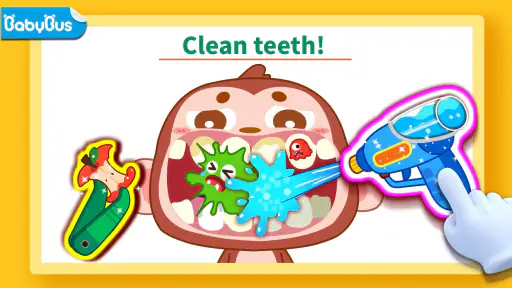
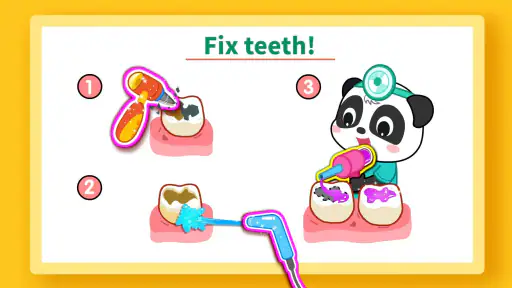
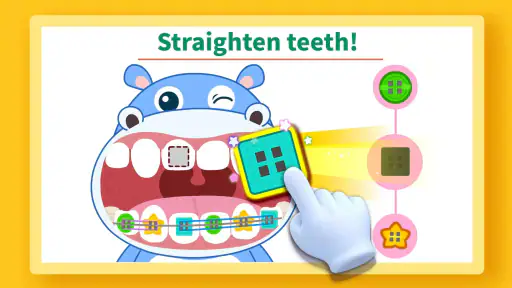
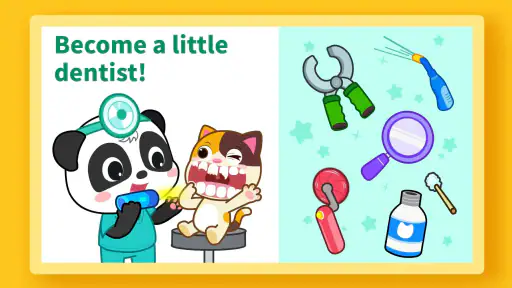
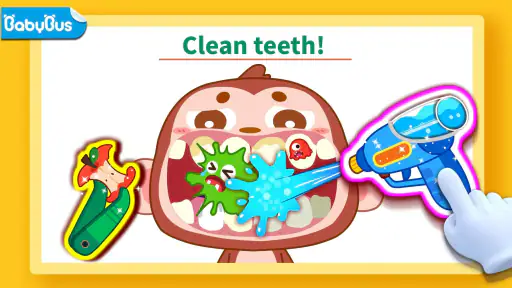
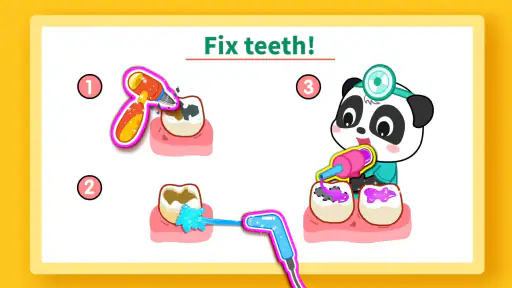
One of the things I loved most about this app is how it seamlessly combines education with entertainment. The main feature of the game involves helping cute panda characters maintain their oral hygiene by brushing their teeth, fighting off cavities, and learning the importance of regular dental check-ups. Kids get to play dentist, using a variety of tools to clean and care for their virtual patients’ teeth.
The app is intuitive to navigate, which is a big win for parents who want their kids to play independently. The instructions are clear and simple, ensuring that even the youngest users can follow along without a hitch. Plus, there’s a sense of achievement that comes with each completed task, motivating kids to keep going.
Who will get the most from it
I’d recommend it most to preschool and early-primary-age children who enjoy pretend play, especially those who are curious about dental visits or uneasy about the idea of someone checking their teeth. Playing the dentist at home gives them a low-pressure way to encounter the topic. It can also suit a parent looking for a brief, child-friendly activity during a wait or a quiet moment, rather than a game intended to occupy a whole afternoon.
More From Our News Desk

Clash of Clans Is Won Between the Battles

Android Auto Makes the Case for Quieter Car Software

MobiOffice: Transforming Mobile Productivity with Seamless Integration

EA SPORTS FC™ Mobile Soccer: Redefining Mobile Sports Gaming

How Microsoft OneDrive Became a Mobile Productivity Giant

How Google Translate Breaks Language Barriers Effortlessly
Compared with a basic brushing timer, this game offers more imaginative context: children care for characters instead of simply watching seconds pass. Compared with a broad educational game, its focus is narrower and easier to connect to one everyday routine. That focus is a strength when teeth are the subject, but a limitation if a child wants varied puzzles, open-ended building, or a wider range of lessons.
What children can take away
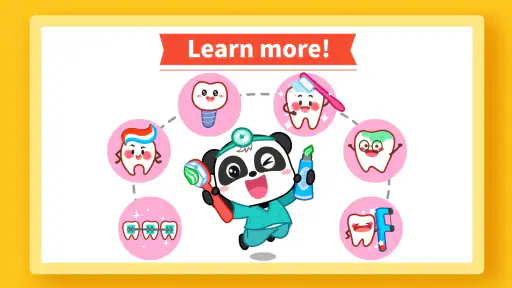
Beyond its fun factor, this educational game is a great tool for teaching kids about the importance of dental hygiene. The app introduces children to basic dental care routines and explains why they matter in a way that’s easy to understand. It’s not just about brushing and flossing; the game also covers topics like healthy eating and its impact on teeth, making it a comprehensive educational experience.
One practical way to use it is to let a child explain a choice in the game: what should happen next, or which foods are kinder to teeth? Asking them to put the idea in their own words turns passive tapping into a small bit of recall. I would avoid presenting the game as a substitute for advice from a dentist, though. It introduces child-level ideas; individual dental concerns still belong in a conversation with a qualified professional.
Everyday ways to make it useful
A short session can work well before an appointment, when a child is asking questions about what a dentist does. I’d let the child lead the pretend visit, then answer only what they ask rather than turning the game into a lecture. That keeps the tone playful and gives a parent a chance to notice which part feels confusing or worrying. It can also be a useful waiting-room distraction, provided the device is available and the child is comfortable using it.
At home, I’d avoid using the game as a bargaining chip for brushing: “play only if you brush” can make the screen feel like the reward and the real routine like a chore. A better sequence is to play briefly at a calm time, then refer back to one idea later when brushing is already part of the evening. The distinction is subtle, but it keeps the game as a prompt rather than a replacement for parental support.
Parents wondering whether children can use it alone should consider the child’s age and familiarity with touchscreens. The simple navigation may support independent play, but a first session together is still useful. It lets an adult explain that caring for virtual teeth is pretend, show how to exit when playtime ends, and notice whether the child understands the activity or is simply tapping through it.
Where it sits among children’s games
Its narrow dental-care theme is also what separates it from general preschool games. A broad collection may offer more variety for a child who quickly tires of one subject, while a toothbrushing timer is usually the more direct choice when the only goal is keeping track of brushing time. This game sits between those options: it gives dental care a story-like, hands-on feel, but it should not be mistaken for a practical timer or a full curriculum.
That makes the choice easy in some households. If a child already likes role-play and needs a friendlier introduction to dental visits, the pretend-care format is likely more appealing than a plain countdown. If the child dislikes dentist themes, prefers fast action, or expects a new challenge every time, the same focus may feel repetitive. I’d try it as a short activity and let the child’s reaction decide whether it earns a place in the routine.
Things parents should weigh
The cheerful presentation and simple tasks are also part of the trade-off. Children who want a demanding game or a large variety of challenges may lose interest, and adults hoping for a detailed brushing tutorial may find the pretend-care approach too light. I’d use it in short sessions and watch whether the child stays engaged, rather than making it a required daily reward. If the goal is practicing actual brushing motions, a parent-led demonstration or a dedicated timer may be a better fit.
BabyBus makes this educational game, which is free to download and rated Everyone. It has an average rating of 4.2 from around 27,000 ratings, and over 10 million installs. Optional in-app purchases cost $2.49 per item, so I’d check the purchase prompts with a child before handing over the device and use the relevant device-level purchase controls if needed. It was released on April 27, 2020, and version 8.70.00.01 requires Android 5.0 or later. Those details make it accessible to many Android users, while the purchase option is worth keeping in mind for families who want play to remain free.
For families weighing the cost, the game is free to download, while optional purchases are priced at $2.49 per item. I’d review purchase settings before giving a young child unsupervised access, particularly if they are used to tapping through prompts in other games. The Everyone age rating makes the intended audience broad, but it does not remove the need for an adult to decide what screen habits and spending boundaries work at home.
The Android requirement is version 5.0 or later, and the current version is 8.70.00.01. That is useful to check before installing on an older device; it also helps avoid the frustration of setting up an activity only to find the phone or tablet is incompatible. The game has been available since April 27, 2020, and its average rating is 4.2 from around 27,000 ratings, with over 10 million installs. I see those figures as signs of a widely used option, not a guarantee that every child will enjoy its particular pace and subject.
My final take
In a world where getting children to care about their dental health can be a real challenge, Baby Panda: Dental Care is a breath of fresh air. It’s engaging, educational, and just plain fun. Whether you’re a parent looking to instill good habits early or simply someone who wants to provide their child with an entertaining yet informative app, this one is definitely worth checking out.
So, next time you’re searching for an app that combines learning and play, give it a try. It might just be the secret weapon you need to make dental hygiene a highlight of your child’s day!
Baby Panda: Dental Care Frequently Asked Questions
What is Baby Panda: Dental Care, and what is the game about?
Baby Panda: Dental Care is an educational game from BabyBus built around running a dental salon. Its central theme is cleaning and caring for teeth, giving children a playful way to explore dental-care routines. It may be a useful introduction to the subject, while real brushing and advice from a dental professional remain important parts of oral care.
Is Baby Panda: Dental Care free to download?
Yes, Baby Panda: Dental Care is free to download. The game also offers optional in-app purchases, priced at $2.49 per item. Parents who share a device with a child may want to review purchase settings in advance, so a young player does not buy anything unintentionally. The free download makes it possible to try the game before deciding whether its activities suit your family.
What age rating does Baby Panda: Dental Care have?
Baby Panda: Dental Care has a content rating of Everyone, and its child-friendly dental theme is likely to appeal most to younger players. Parents can consider whether the activities, instructions, and play style are a good match for their child. Playing together can also give adults a chance to connect the game’s ideas with everyday dental-care habits.
What devices and operating systems can run Baby Panda: Dental Care?
Baby Panda: Dental Care is available for Android devices running Android 5.0 or later. Before downloading, check your device’s operating system version and make sure you have enough available storage for the installation. The game is free to download, though it includes optional in-app purchases priced at $2.49 per item.
What is the primary objective of Baby Panda: Dental Care?
Baby Panda: Dental Care is an educational app aimed at teaching children the importance of dental hygiene in a fun and engaging way. Through interactive games and activities, kids learn how to brush their teeth properly, understand the significance of oral health, and develop good habits that are crucial for their overall well-being.
Pros
- Engaging and educational for children.
- Colorful graphics and animations.
- Teaches dental hygiene effectively.
- Interactive gameplay for learning.
- Suitable for preschoolers.
Cons
- Limited content variety.
- In-app purchases present.
- Requires internet connection.
- Ads can be intrusive.
- May not engage older kids.
- Category
- Educational
- Version
- 8.70.00.01