Sports Card Value Identifier
- 459.00
- 4.5
- Installs
- 100.00K
- Price
- Free

Screenshots
Analysis by Reviewed
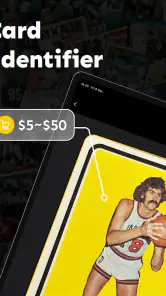
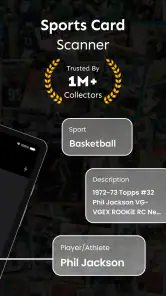
I found Sports Card Value Identifier most useful as a quick first check when I wanted to understand a sports card without immediately opening several marketplace pages. It is a free sports app from Identifier Studio that focuses on scanning a card, identifying its details, and showing an estimated price and rarity. My overall view is positive: it can make the first step of researching a collection much less tedious, but I would treat its results as a starting point rather than a final buying or selling decision.
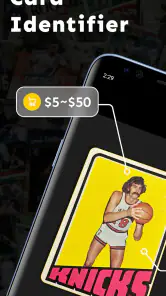
The app has a clear purpose, and that matters. Instead of asking me to type every player name, set detail, or card number manually, it is built around using the phone camera to begin the lookup. When the scan works well, the experience feels much more practical than searching through general web results. Its real strength is reducing the time between finding a card and knowing what deserves closer attention.
How Sports Card Value Identifier fits into real collecting
In everyday use, I would reach for Sports Card Value Identifier while sorting a mixed box, checking cards inherited from a family member, or deciding which cards are worth researching individually. A large collection often contains many ordinary cards and a smaller number that may deserve careful inspection. The app helps create that first separation without requiring me to be an expert in every league, season, and card release.
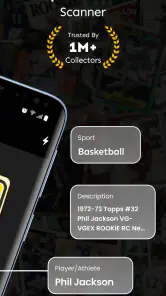
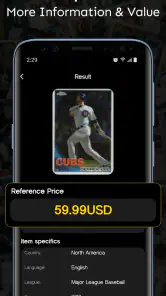
The store summary describes a card scanner that provides details, pricing, and rarity in seconds. I would interpret that promise sensibly. The app is best at giving me an initial lead: this card appears to match a particular issue, this one may be more interesting than the others, and this group deserves a closer look. It is not a replacement for examining condition, confirming the exact variation, or checking what comparable cards are actually selling for.
That distinction is especially important with sports cards because two cards featuring the same athlete can have very different values. Condition, print variation, numbering, autograph status, parallel design, and grading can all change the result. A scanner may recognize the broad identity correctly while still leaving important questions for the collector. I found that the most useful workflow is to scan first, then manually verify the physical card before treating the displayed information as meaningful.
The app is rated for Everyone, which makes it approachable for younger collectors and families sorting cards together. It is also available as a free download, although optional in-app purchases range from around five dollars to around fifty dollars per item. That makes it easy to try before spending anything, but I would pay attention to what an optional purchase unlocks before committing. A free starting point is valuable here because not every collection contains cards worth paying to analyze.
What the scanning approach does well
The camera-first approach is more useful than it may sound. Manual searching is slow when I have a stack of cards, and it is easy to mistype a player name or confuse a regular issue with a special version. Scanning turns the process into a visual sorting task. I can move through a group, note which cards deserve attention, and reserve deeper research for the promising ones.
You May Like

Clash of Clans Is Won Between the Battles

Android Auto Makes the Case for Quieter Car Software

MobiOffice: Transforming Mobile Productivity with Seamless Integration

EA SPORTS FC™ Mobile Soccer: Redefining Mobile Sports Gaming

How Microsoft OneDrive Became a Mobile Productivity Giant

How Google Translate Breaks Language Barriers Effortlessly
One practical tip is to use the app as a triage tool rather than scanning randomly. I would first separate cards by sport, then by player or team when that is obvious, and keep visibly damaged cards in their own group. This gives the results more context and prevents a long list of scans from becoming difficult to interpret later. It also helps me compare similar-looking cards without mixing unrelated issues.
Another useful habit is to scan the front, then inspect the back before making any decision. The front may be enough for recognition, but the back often contains the information needed to distinguish a release, card number, or special version. Even when the app supplies a promising match, I would compare the displayed details with the physical card. That extra step is where a casual scan becomes responsible research.
I also like the possibility of using it during a quick in-person check. Imagine finding a small box at a garage sale or looking through a relative’s old collection before deciding whether to take it home. A rapid scan can help identify cards that deserve further investigation. It cannot prove that a card is authentic or accurately priced, but it can prevent me from overlooking something because I did not recognize the set.
Price information needs a collector’s judgment
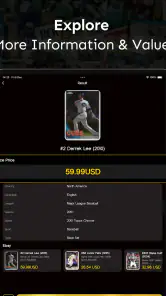
The pricing feature is attractive, but it is also the area where expectations need the most control. A displayed value should not be confused with guaranteed cash in hand. Asking prices, completed sales, regional demand, condition, grading, and timing can all affect what a buyer will actually pay. I would use the app’s price information to decide where to focus, not to announce a firm selling price.
For example, if a scan suggests that one card is more valuable than the rest, I would check whether the card has the same year, set, number, and variation as the physical copy. Then I would examine corners, edges, surface, centering, and any writing or damage. A card that looks valuable in a general database may be worth considerably less in poor condition. This is not a flaw unique to the app; it is a basic limitation of trying to estimate collectibles through a phone.
The rarity label should be handled in the same way. Rarity can be a useful signal, but it does not automatically equal strong demand. A scarce card of an unpopular player may attract less interest than a more common card featuring a widely collected athlete. I would combine the rarity information with player popularity, card condition, and recent market activity before deciding whether authentication, grading, or a sale makes sense.
This is one of the app’s most important trade-offs. It is faster than researching every card from scratch, but the speed comes from giving me an initial interpretation rather than a complete appraisal. If I already understand the hobby, that shortcut is helpful. If I am completely new, the confidence of seeing a price on screen could be misleading unless I remember that the number requires verification.
Where the experience can become frustrating
The biggest weakness is the dependence on recognition quality and the card itself. Glare, curved sleeves, low light, worn printing, unusual layouts, or partially hidden details can make a scan less useful. I would not expect every card in a messy storage box to produce a clean result on the first attempt. Preparing the card and the lighting is part of getting value from the app.
There is also a natural limit to what a general scanner can understand from one image. Modern sports cards may have parallels, short prints, inserts, serial numbering, autographs, memorabilia pieces, or subtle design differences. If those distinctions are not visible or are not captured correctly, the first match may be too broad. That is why I would never rely on one scan alone when a card could have meaningful financial value.
Another point of friction is the gap between identification and action. The app can help me notice a potentially interesting card, but it does not remove the work involved in deciding whether to sell, grade, insure, or keep it. A serious collector may still prefer specialist databases, auction histories, grading references, and direct marketplace comparisons. Those alternatives are slower, but they can offer more context for a high-stakes decision.
The purchase range also deserves a cautious approach. Because the app is free to start but includes optional purchases from around five dollars to around fifty dollars per item, I would avoid paying until I understood how the paid option fits my collection. A person with a few cards may get enough value from the basic experience, while someone processing a large collection may judge the paid tools differently. The right choice depends on how often I scan and how much detail I actually need.
Tips for getting more dependable results
I would begin with a clean, flat card outside a reflective sleeve whenever it is safe to do so. Soft, even light is preferable to a harsh lamp that creates a bright reflection across the player image or printed text. Keeping the phone steady also matters because a rushed image can make small details harder to recognize. These are simple changes, but they can save repeated attempts.
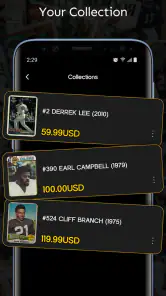
After a scan, I would record the card’s physical clues separately: the player, team, year if visible, card number, set name, special markings, and condition. This creates a useful cross-check instead of allowing the app’s first result to become the entire record. For a collection, a basic note beside each scanned card can also prevent me from scanning the same item repeatedly later.
A less obvious benefit is prioritization. I would not spend equal time on every result. Cards with a strong combination of recognizable identity, unusual rarity, good condition, and collector interest should move to the top of the research pile. Cards with obvious wear or uncertain identification can wait. This makes the app more valuable as a collection-management shortcut than as a one-click valuation service.
I would also be careful with cards that look almost identical. If two versions share the same photograph, I would compare borders, logos, foil treatment, numbering, and the reverse side before grouping them together. A fast scan is helpful, but visual similarity is exactly where a collector can accidentally assume that two separate issues are the same.
Who should use it, and who should choose another method?
Sports Card Value Identifier is a good fit for casual collectors, families, beginners, and anyone facing an unsorted group of sports cards. It is particularly useful when the main problem is not advanced valuation but knowing where to begin. The free entry point lowers the risk of trying it, and the Everyone rating makes it suitable for a broad audience.
I would also recommend it to a collector who already knows the basics and wants a faster first pass. Experienced users can understand the difference between an app-generated lead and a confirmed market conclusion. For them, the scanner may save repetitive typing while leaving specialist research for the cards that matter most.
I would skip it as the only tool if I were preparing a valuable collection for sale, evaluating a rare autograph, or making a grading decision based on a displayed price. In those situations, a specialist marketplace search, a professional appraisal, or direct guidance from a reputable grading service would be more appropriate. The app can still help organize the initial candidates, but it should not be the final authority.
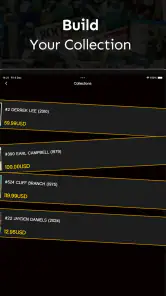
It may also be a poor fit for someone who wants a complete collection database with extensive inventory controls, detailed sales history, or advanced portfolio reporting. Its appeal is focused and practical: scan, identify, review the likely details, and decide what deserves more attention. Collectors wanting a full management system may prefer a dedicated inventory solution, even if that means giving up the convenience of a quick visual lookup.
My verdict after using it as a research shortcut
Sports Card Value Identifier succeeds when I use it for what it does best: turning an intimidating pile of cards into a manageable research list. Its combination of scanning, card details, pricing guidance, and rarity information is more convenient than starting every search from a blank browser page. The app’s average rating is 4.5 from around nine thousand ratings, and it has passed one hundred thousand installs, which fits its appeal as an accessible tool for people exploring the hobby.
Identifier Studio has kept the concept focused, and the current version, 2.2, supports that straightforward role on devices running iOS 11 or later. I appreciate that I can begin without paying, but the optional purchase range means I would evaluate the extra value carefully rather than assuming every collector needs it.
My final recommendation is clear: try it if you want a fast first opinion on cards, especially when sorting a mixed collection or checking an unfamiliar find. Use good lighting, verify the physical details, and treat prices and rarity as clues rather than promises. If you need a defensible appraisal or a complete long-term collection system, pair it with a more specialized alternative. Used with that realistic expectation, this sports app is a helpful first filter and a sensible companion for everyday card research.
Sports Card Value Identifier Frequently Asked Questions
Is Sports Card Value Identifier free to download, and are there in-app purchases?
Sports Card Value Identifier is free to download, so you can try its card-scanning and value lookup features without paying upfront. The app also offers in-app purchases, with items ranging from about $4.99 to $49.99. Review the purchase details shown in the app before confirming anything, especially if you are only looking for a basic way to identify cards.
Which devices can run Sports Card Value Identifier?
The app is available for mobile devices running Android or iOS, and it requires at least version 11 of the operating system. Before downloading, check your device’s software version and make sure you have enough room for another app. Keeping your operating system up to date can also help you get a smoother experience when using the camera to scan cards.
What is Sports Card Value Identifier, and how does it work?
Sports Card Value Identifier is an app designed to help collectors recognize sports trading cards and estimate their potential market value. After taking or uploading a photo, the app analyzes visible details such as the player, team, year, brand, and card design. Results can depend heavily on image quality, lighting, and whether the card is correctly identified.
Can Sports Card Value Identifier provide an accurate price for every card?
The app can offer a useful starting estimate, but its valuation should not be treated as a guaranteed selling price. Card values change frequently according to demand, condition, grading, rarity, recent sales, and marketplace trends. A card may also be misidentified if the image is unclear or several versions look similar, so checking comparable listings and completed sales is recommended.
How should I photograph a card for the best identification results?
Place the card on a flat, uncluttered surface in bright, even lighting and avoid reflections from protective sleeves or top loaders. Keep the entire front of the card visible, hold your phone steadily, and make sure the text and player image are in focus. If the app supports additional images, photographing the back can help distinguish variations and confirm important details.
Pros
- Quickly estimates sports card values using image-based identification.
- Supports convenient scanning
- saving time compared with manual searches.
- Useful for spotting potentially valuable cards in a large collection.
- Helps beginners understand market prices and card details.
- Mobile access makes checking cards easy while buying or trading.
Cons
- Estimated prices may differ from recent sales or actual card condition.
- Image recognition can struggle with rare
- damaged
- or poorly lit cards.
- Some features or detailed pricing data may require a subscription.
- Market values can change quickly
- making older estimates less reliable.
- Not a substitute for professional grading or an expert appraisal.

- Category
- Sports
- Version
- 2.2