Instacart: Earn money to shop
- 56.51K
- 4.2
- Installs
- 5.00M
- Price
- Free

Screenshots

Analysis by Reviewed
I’d judge Instacart: Earn money to shop less by the novelty of turning a grocery run into paid work and more by whether the routine still feels worthwhile after the first few trips. The appeal is easy to understand: you shop for other people and deliver their groceries, with room to fit the work around other parts of your day. The harder question is whether the practical effort—travel, navigating a store, making careful choices, and completing the delivery—fits your life often enough to earn a lasting place in it.
Where the first-week appeal comes from
The first few shopping trips are a useful reality check. Grocery orders ask for more than quick movement through familiar aisles: you need to compare options, keep an eye on the list, and handle substitutions thoughtfully when a product is unavailable. I’d treat the opening week as a chance to learn the rhythm rather than assume every order will feel effortless. A store you know well can make a meaningful difference, especially while you’re getting used to shopping with a customer’s needs in mind.
Before accepting work, I’d also think through the whole trip, not just the time spent inside the store. Travel to the store, parking, checkout, and getting groceries to the right door all take effort. A nearby order in a familiar shop may suit a short window of free time better than a larger trip that leaves you rushing. The app is free, but the work still has practical costs in time and transportation, so flexibility is most useful when you can choose carefully.
How the shopper routine works
Imagine this: you’re out shopping, but instead of spending money, you’re actually making it. That's the whole premise of Instacart: Earn money to shop. The app connects you with customers who need groceries, and you do the shopping and deliver the goods. It’s like being a personal shopper, minus the high-end fashion and with a healthy dose of everyday essentials.
Getting oriented in the app
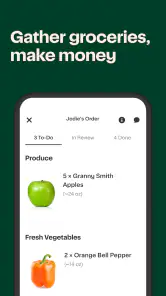
Getting started is a breeze. You download the app, set up a profile, and voila, you’re ready to start accepting orders. The app's interface is sleek, intuitive, and doesn’t leave you scratching your head in confusion. Each order you accept comes with a shopping list, and the app even helps you navigate the aisles with aisle info for major stores. It’s like having a virtual shopping assistant guiding you through the process.
One practical habit I’d build early is checking the list before you start moving through the store. Grouping items mentally by section can save backtracking, while pausing to confirm a close alternative can prevent a rushed choice that disappoints the customer. A list is helpful, but it doesn’t remove the judgment involved in picking produce, recognizing package differences, or deciding how to handle an unavailable item. The best workflow balances speed with care.
I’d also use the first few orders to learn which parts of a shop slow me down. A list with many different sections can mean more walking than its item count suggests, while a familiar store layout makes it easier to spot a sensible route. That is a useful distinction when comparing opportunities: the apparent size of an order does not tell the whole story about how demanding it will feel. Building that local knowledge is one of the more valuable skills the app cannot supply for you.
More From Our News Desk

Weather by Xiaomi Review: Clear at a Glance, Less Clear Up Close

X Under Pressure: Can It Recover When Posting Goes Wrong?

Clash of Clans Is Won Between the Battles

Android Auto Makes the Case for Quieter Car Software

MobiOffice: Transforming Mobile Productivity with Seamless Integration

EA SPORTS FC™ Mobile Soccer: Redefining Mobile Sports Gaming
Choosing work without overcommitting
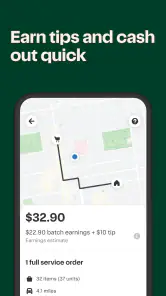
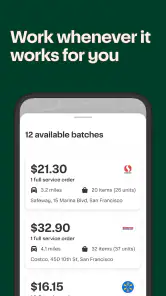
One of the biggest perks of using Instacart is the flexibility it offers. You choose when you want to work, and the more you shop, the more you earn. Earnings vary based on order size and delivery distance, but there's potential to make a decent chunk of change, especially during peak shopping hours. And let’s be real, who doesn’t like the sound of earning money on their own schedule?
For a realistic use case, imagine finishing a class or a shift with a couple of hours free and deciding whether to take a nearby grocery order. That can fit better than committing to a fixed shift, but it only makes sense if the trip’s full route and workload suit your available time. I wouldn’t plan essential bills around an assumed hourly return: order size and distance affect the work, and a quiet period may not match a busy one. The flexibility is real, but predictable income is a different promise.
Compared with conventional store work, this can offer more control over when you try to earn, while a scheduled job may provide a steadier routine. Compared with passenger or restaurant delivery gigs, the central task is grocery shopping and bringing those goods to customers, which may appeal if you prefer handling a list to transporting people. It is not automatically easier: groceries can be bulky, substitutions require care, and the delivery portion still matters.
A useful way to decide whether a particular run fits is to consider the entire chain of tasks before you commit: getting to the store, finding each item, checking out, and completing the drop-off. If you only have a narrow break, a job that looks manageable on the screen can still be awkward once travel and carrying are included. I’d keep a realistic buffer rather than count on every part going smoothly. This is especially important if you have another obligation immediately afterward.
What keeps it useful from month to month
After the novelty wears off, the app’s value depends on whether shopping fits naturally into your week. If you already know local stores and can set aside time without disrupting other responsibilities, it may remain a useful way to pick up flexible work. If every session requires a long drive or leaves you stressed about finishing, the convenience of choosing your hours may not compensate for the effort. I’d judge it by how well it fits a repeatable routine, not by one unusually smooth trip.
The ongoing burden is less about maintaining the app and more about being prepared for the work. Keep your phone usable, plan for carrying orders, and leave enough time to navigate the store and reach the delivery location. Those small choices can make a run feel manageable rather than frantic. For shoppers new to gig work, it’s also worth checking that the current app version works with their device: the listed release is version 4.465.7-p and requires Android 8.0 or later.
That preparation matters because the routine can compete with ordinary errands rather than neatly replace them. If you already need to visit a nearby store, being comfortable with the area can make a shopping shift feel more natural. But I wouldn’t assume that personal shopping and customer orders are interchangeable: the latter require attention to someone else’s requested items and a delivery afterward. The recurring value comes from the fit between the work and your schedule, not simply from being near a supermarket.
For the same reason, I’d avoid measuring success by whether every session feels exciting. Familiarity can make the process more efficient, but it can also make the work feel like another list of chores. A sustainable pattern is one where you can choose suitable opportunities, finish without derailing the rest of your day, and still feel that the effort was worthwhile. If that balance is missing for several weeks, the app may be better kept as an occasional option than treated as a regular commitment.
Where friction and fatigue can build
Instacart doesn’t just toss you into the deep end. There's a strong community of shoppers who share tips and tricks, and the support team is just a message away if you need help. Whether it's a question about an order or navigating a tricky delivery spot, you're never alone on this journey. The app offers a sense of camaraderie that's rare in the gig economy.
That support can be reassuring, but it doesn’t make every awkward situation disappear. A delayed customer response, a hard-to-find entrance, or a product that is not on the shelf can interrupt an otherwise straightforward shop. I’d approach the community as a place to learn practical habits, not as a guarantee that every order will be smooth. Thinking ahead about how you’ll communicate and allowing a little breathing room can reduce pressure when plans change.
The fatigue I’d watch for is cumulative: small interruptions can make an apparently simple order feel demanding when they arrive together. A substitute decision, an aisle you do not know, and a delivery location that takes extra effort each ask you to adjust your plan. If you prefer work that stays predictable from start to finish, that uncertainty may wear on you more than the walking itself. Taking fewer, better-fitting trips can be a smarter approach than accepting every opportunity just to stay busy.
There is also a difference between liking grocery shopping for yourself and liking it as a service task. When you shop for your own household, you can change your mind, skip an item, or take your time without needing to consider another person’s preferences. Here, careful attention is part of the job. If you enjoy making thoughtful choices and keeping track of details, that can be satisfying; if you find those decisions stressful, the customer-facing aspect may become the main drawback.
Who is likely to keep using it?
This is most appealing if you like grocery shopping, know the stores in your area, and want work you can fit around another commitment. It may be a poor match if you dislike navigating busy shops, cannot comfortably transport groceries, or need a fixed schedule and reliably consistent earnings. Someone who prefers a predictable shift may be better served by conventional retail work; someone who already enjoys errands may find the shopper role a more natural fit than other delivery work.
Instacart is a shopping app from Instacart, rated for Everyone, and it is free to download. It has a 4.2 average from around 171,000 ratings, with over 5 million installs. Those figures suggest it has reached a broad audience, but they cannot tell you whether the local orders and routes will suit your own routine. I’d make that decision based on the practical demands of shopping and delivery in the places you can actually work.
Instacart is developed by Instacart, and its broad reach makes it a familiar name in shopping-related gig work. Still, I’d separate popularity from personal fit: a busy service does not automatically mean the work will be convenient where you live or at the times you are free. The app is free, which lowers the barrier to trying it, but your time and transportation remain meaningful considerations. The audience rating is Everyone, and the Android minimum is version 8.0, so device compatibility is worth checking before planning around it.
For someone deciding between this and a regular retail role, the key trade-off is control versus routine. Instacart’s appeal is choosing when to look for work and taking on shopping and delivery rather than standing through a fixed shift. A conventional job can be a better choice if a dependable schedule matters more than flexibility. Against other delivery work, this is the more natural option for someone who would rather work through a grocery list than focus on meals or passengers, but it still involves carrying items and completing a route.
My long-term verdict
In a world where flexibility and side hustles are increasingly important, Instacart: Earn money to shop stands out as a reliable option. It's not just about making money; it's about being part of a community that helps others in a tangible way. Whether you're a college student, a stay-at-home parent, or someone looking to supplement their income, this app offers a unique opportunity to earn while doing something essential.
My lasting impression is that the app is best viewed as a tool for selective, practical work, rather than a guaranteed routine or effortless source of money. Its strongest recurring value is the ability to decide whether a shopping opportunity fits the day you have. Its main source of fatigue is the combination of time pressure, store navigation, customer needs, and delivery logistics. A careful shopper who can choose suitable trips may appreciate that trade-off; anyone who needs certainty or dislikes those tasks should look elsewhere.
If you're looking for a side gig that's rewarding both financially and personally, give Instacart a whirl. You might just find that shopping for others is your new favorite pastime!
Instacart: Earn money to shop Frequently Asked Questions
What devices can run Instacart: Earn money to shop?
Instacart: Earn money to shop is a shopping app for people interested in working as shoppers. It runs on Android devices with version 8.0 or later, so it is worth checking your device’s operating system before downloading. The app is free to install, and its main purpose is to help shoppers take on grocery-shopping and delivery work for customers.
Who developed Instacart: Earn money to shop?
Instacart developed the app, which is designed for people who want to shop for customers and earn money through that work. It is distinct from a general grocery-shopping tool for placing orders for yourself: the focus here is on the shopper role. If you are considering joining, think about whether shopping and delivering customer orders fits your circumstances.
Do I need to pay to download Instacart: Earn money to shop?
The app is free to download, so you can install it without paying for the app itself. It is a shopping app from Instacart, aimed at people interested in shopping for customers and earning money through that work. Downloading it is only the first step, though; you will need to consider whether the shopper role and its requirements fit your circumstances.
What kind of work does Instacart: Earn money to shop offer?
Instacart’s shopper work centers on grocery shopping and delivery. The app’s purpose is to help people take customer orders, shop for the requested items, and deliver them. It is not simply a grocery-shopping app for personal use: it is intended for people who want to earn money by completing shopping tasks. Whether the work suits you depends on your availability and ability to handle those tasks.
What is Instacart and how does it work for shoppers?
Instacart is a platform that allows individuals to earn money by shopping for and delivering groceries to customers. As a shopper, you receive orders through the app, shop for the items at local stores, and then deliver them to the customer's doorstep. It's a flexible way to earn income, as you can choose your working hours and accept orders that fit your schedule.
Pros
- Flexible work hours for shoppers.
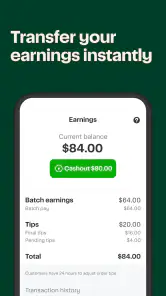
- Instant cash out available.
- User-friendly shopper app interface.
- Supportive customer service team.
- In-app navigation for efficient shopping.
Cons
- Earnings depend on order volume.
- No guaranteed hourly wage.
- App glitches can cause delays.
- Peak hours can be stressful.
- Limited shopper availability in some areas.
- Category
- Shopping
- Version
- 4.465.7-p