HoYoLAB
- 2.12K
- 3.4
- Installs
- 10.00M
- Price
- Free

Screenshots




Analysis by Reviewed
I think the clearest way to judge HoYoLAB is as a game-focused community you can dip into for a specific reason: to follow discussion, see what other players are making, or get a clearer picture of something you encountered in a game. That focus is its strongest point. It is also the main reason it will not suit everyone. If you want a broad social network or a tool that stays entirely out of the way, this may feel like more than you need.
A community built around games, not every interest
Unlike a general social feed, HoYoLAB gives players a shared place to encounter game-related posts and conversation. I find that useful when I already know the subject I want to explore: a question about a game, a strategy I want to compare, or an announcement I would rather not miss. The narrower focus can make browsing feel relevant more quickly, although it also means the app’s appeal depends on whether its community matches the games you care about.
That distinction matters when deciding whether to install it. A general network is better for keeping up with friends across different interests, while a search engine or focused guide may be faster if all you need is one answer. HoYoLAB sits between those options: it offers a social setting for gaming material, where advice and fan-created posts can appear alongside updates. I would use it when I want context from other players, not as my only source for every game question.
Make a visit purposeful
My most practical tip is to open the app with a small goal. I might want to check whether other players have discussed a challenge, browse a few fan posts, or see what has changed in the community. Once I find what I came for, I can leave rather than treating the feed as something I have to exhaust. That approach makes the app feel like a helpful companion instead of another endless scroll.
A second useful habit is to separate reading from deciding. Community posts can give me ideas to test, but another player’s preferred strategy may not match my play style or what I have unlocked. I treat advice as a starting point, compare a couple of perspectives when the choice matters, and then try what seems appropriate in the game itself. That keeps social browsing useful without assuming every post is authoritative.
For someone new to the community, I would begin by observing before posting. A little browsing helps reveal what kinds of conversations are active and what context other players expect. If I do contribute, a specific question or a clear description of what I am trying to do is more useful than a vague request for help. This is a small but worthwhile trade-off: taking a moment to understand the conversation can make participation more rewarding, even if it slows down the first visit.
Where it fits in an ordinary day
Imagine I finish a short game session during a break and remember that I was unsure how other players approach a particular task. I can check the community, read a few relevant posts, and return to the game with an idea to try. If I instead wanted a private conversation with one friend, I would switch to a messaging app; if I needed a quick factual answer with no discussion, a focused reference may be more efficient. The useful choice depends on whether I want people’s perspectives or just a result.
More From Our News Desk

Clash of Clans Is Won Between the Battles

Android Auto Makes the Case for Quieter Car Software

MobiOffice: Transforming Mobile Productivity with Seamless Integration

EA SPORTS FC™ Mobile Soccer: Redefining Mobile Sports Gaming

How Microsoft OneDrive Became a Mobile Productivity Giant

How Google Translate Breaks Language Barriers Effortlessly
It can also work as a low-pressure way to keep a connection with a game when I am not playing. Reading player-made posts or following discussion lets me stay engaged without opening the game client. That is a pleasant option for fans who enjoy the culture around a title, but it can be a poor fit when I am trying to spend less time on screens. I would decide in advance whether I am checking one topic or browsing for fun, especially when I only have a few minutes.
When several games or topics compete for attention, I find it sensible to focus on the one that matters right now rather than trying to follow everything. A publisher-centered community can feel lively, but activity is not the same as relevance to me. Choosing a narrow reason to visit helps keep posts from becoming background noise and makes it easier to notice the discussions that actually answer a question or spark an idea.
Getting Started with HoYoLAB
Upon launching the app, I was greeted with a sleek and intuitive interface. It wasn't long before I realized that HoYoLAB is more than just a simple companion app—it's a vibrant community hub. The app serves as a dedicated platform for miHoYo's games, including popular titles like Genshin Impact and Honkai Impact 3rd. Signing up was a breeze, and within minutes, I was part of a bustling community of fellow gamers.
For a social app, its value is fairly specific: it is developed by COGNOSPHERE PTE. LTD. and centers on the publisher’s gaming community rather than trying to connect every kind of interest. It is free, rated Teen, and has reached over ten million installs. Its average rating is 3.4 from around 167,000 ratings, so I would treat it as a useful community option, not assume every player finds the experience equally smooth or engaging.
Features that Stand Out
One of the first things I noticed was the plethora of features designed to enhance your gaming experience. The app boasts a comprehensive news section that keeps you updated with the latest announcements, patch notes, and events. As someone who hates missing out on limited-time events, this feature is a godsend.
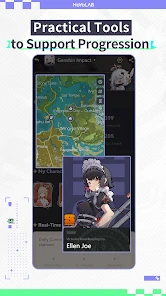
Another highlight is the interactive map for Genshin Impact, which is a lifesaver for treasure hunters and completionists like myself. It’s detailed and user-friendly, allowing you to track your progress with ease. The community section is equally impressive, filled with user-generated content ranging from fan art to strategy guides. This not only showcases the creativity within the community but also provides valuable tips and tricks.
In practice, I get the most from the map when I use it to answer a specific question rather than browse it without a goal. If I have a short session and want to check an area for something I have missed, tracking progress makes the search feel more organized. I would still keep my own priorities in mind: a map can help me plan what to look for, but it does not decide whether collecting every item is worth my time. That small distinction keeps a completion tool from turning a relaxed game into another checklist.
Community and Interaction
What truly sets HoYoLAB apart is its emphasis on community interaction. You can join discussions, participate in challenges, and even contribute your own content. The app does a fantastic job of fostering a sense of belonging among its users. I found myself spending hours browsing through posts, engaging with others, and even making a few gaming buddies along the way.
A realistic use for me is checking in after a game session: I can look for a discussion about something I have just encountered, compare approaches in player posts, then leave the app when I have the answer. That is a better fit than opening a broad social network and hoping a relevant conversation appears in the feed. On the other hand, if I mainly want private chats with friends, a messaging app is the more direct choice; HoYoLAB’s appeal is the shared community around its games, not a general-purpose inbox.
Because user posts are central to the experience, I would browse with a little intention. Search or look through relevant discussions when I have a question, and be selective about how long I spend scrolling when I do not. This is a practical trade-off: community activity can surface creative ideas and useful strategies, but an open-ended feed can also pull attention away from the game or the task that brought me in. Readers who dislike social feeds, public discussion, or user-generated material may prefer official announcements and focused guides elsewhere.
The app also includes a rewards system, where you can earn points through participation. These points can be redeemed for in-game items, which adds an extra layer of motivation to stay active within the community.
I see rewards as a small extra, not a reason to turn every visit into a routine. If I am already reading or contributing, points can make that activity feel more worthwhile; if I am not interested in the conversation, chasing rewards would not make the app a better fit. A useful habit is to check whether a reward is relevant to the way I already play, instead of letting it dictate how much time I spend in the community.
Who Gets the Most from It
HoYoLAB is most compelling for players who enjoy more than the game client itself: people who follow announcements, like comparing strategies, or want to see the creativity of other fans. It can also suit a player who dips in briefly for a targeted lookup, then returns to the game. If you only play occasionally and rarely seek community discussion, a publisher-focused social app may feel like one more feed to maintain rather than a necessary companion.
The app is free and its current version is 4.2.0, with Android support from version 8.0. It is listed for Teen audiences, so I would still use ordinary judgment around community content and conversations, particularly if a younger player is using it. Its social nature is part of the draw, but it also means the app works best when you choose what to follow and how actively to participate.
Final Thoughts
Overall, my experience with HoYoLAB has been nothing short of delightful. It's a well-rounded app that not only enhances gameplay but also enriches the social aspect of gaming. While it primarily caters to fans of miHoYo’s titles, the level of community engagement and the wealth of information available make it a must-have for any gamer in the ecosystem.
If you're a fan of miHoYo's games and want to stay in the loop while connecting with like-minded individuals, HoYoLAB is definitely worth checking out. It's more than just an app; it's a community where gamers can thrive together.
A few practical boundaries
The interactive map is particularly useful for players who like visible progress, but that same strength can change how a game feels. I would use it selectively: mark the areas or collectibles I genuinely care about, then stop when the remaining search starts feeling like unpaid admin. For a first playthrough, exploring without a checklist may be more enjoyable; for a later cleanup session, a progress view can save repeated wandering. The right approach depends on whether discovery or completion is the fun part for you.
There is also a difference between checking community advice and relying on it. A post can be insightful without being current or suitable for my situation, so I would pay attention to the context and look for explanations rather than copying a recommendation blindly. If an answer affects a decision I care about, comparing it with another discussion or an official announcement is a sensible next step. That modest bit of judgment protects the app’s best quality—player perspective—from becoming a source of avoidable confusion.
People often wonder whether a community app is useful if they do not want to post. In my view, it can be: reading, following discussion, and using the map are meaningful ways to benefit without making public contributions. Posting is an option, not the test of whether the app has value. Still, if even browsing other players’ content holds no appeal, the experience will likely feel thin compared with a direct guide or the game itself.
Another question is whether it can replace other gaming resources. I would not treat it as a universal replacement. Its advantage is bringing community material and game-related activity into a focused environment; a dedicated reference can be quicker for a narrow lookup, and a general social platform may be better for keeping up with friends across many subjects. I would choose based on the kind of help I want, rather than expecting one app to do all three jobs equally well.
Who should pass, and who should try it
I would recommend giving it a try if you already spend time with the games it serves and enjoy seeing how other players approach them. It is especially suitable for fans who want both practical browsing—such as checking a map or reading about an event—and a place to encounter fan creativity. You do not need to be a frequent poster to get something from it, but a genuine interest in the community is important.
I would skip it if I wanted a quiet, single-purpose companion with no social feed, or if I mainly needed private communication. It may also be unnecessary for someone who plays casually and already gets all the information they want from the game or a trusted guide. In those cases, installing another community app adds attention cost without solving a real problem. That is the main decision I would make before downloading: do I want a shared space around these games, or simply the game itself?
My recommendation in context
HoYoLAB works best when I treat it as an optional layer around play, not a required part of it. A quick visit can help me catch up, get another player’s perspective, or make a collecting session more organized; an unplanned visit can just as easily become extra scrolling. The app’s specific focus is an advantage for fans and a limitation for everyone else, and neither side of that trade-off needs to be hidden.
With a 3.4 average across roughly 167,000 ratings, reactions are mixed enough that I would approach it with realistic expectations rather than assume it will become essential. It is free to try, and its Teen rating is a useful reminder that this is a social space where a younger user may benefit from sensible guidance. For players who enjoy the surrounding community as much as the games, I think it is worth exploring; for those who only want to play, a simpler route may be better.
HoYoLAB Frequently Asked Questions
Do I need a HoYoverse game to get value from HoYoLAB?
Not necessarily. HoYoLAB is a community forum for people interested in HoYoverse games, so you can browse posts, guides, and fan content even if you are not currently playing one. It is likely to feel most useful when you follow one or more of the games represented in its communities, but the app can also help newcomers get a sense of what players are discussing.
Is HoYoLAB a game, or is it mainly for community content?
HoYoLAB is a social app rather than a game to play. Its main purpose is to bring together community posts and conversations related to HoYoverse titles. You can use it to read game-related updates, explore guides, and see fan-created content. If you are looking for gameplay itself, you will need the relevant game separately; HoYoLAB is centered on community interaction.
Does HoYoLAB require an account, and can I browse before signing in?
HoYoLAB is a community app for following game-related posts and joining conversations. Some activities, such as posting or interacting with other community members, are tied to an account, so signing in is useful if you want the full social experience. If you mainly want to read community content, the app can still be useful as a place to explore what players are discussing.
Which games and community content can I find on HoYoLAB?
HoYoLAB is focused on communities around HoYoverse games, including Genshin Impact, Honkai Impact 3rd, and Tears of Themis. Its community forum brings together game news, updates, event information, guides, tips, and fan art. It is most relevant if you enjoy following these games and want a place to browse posts or share your own interests with other players.
What is HoYoLAB and what can I do with it?
HoYoLAB is a companion app designed for miHoYo games such as Genshin Impact, Honkai Impact 3rd, and Tears of Themis. Users can access official game news, updates, and events. Additionally, the app offers forums to engage with other players, share fan art, and access game guides and tips. It's a hub for community interaction and game-related content.
Pros
- User-friendly interface with intuitive navigation.
- Comprehensive guides and tips for gamers.
- Frequent updates with new features.
- Cross-platform accessibility for diverse users.
- Active community for immediate support.
Cons
- Occasional bugs disrupt user experience.
- Requires stable internet for optimal use.
- Limited offline features available.
- Advertisements may be intrusive at times.
- Resource-intensive on older devices.

- Category
- Social
- Version
- 4.2.0