Breaking Local News
- 30.00
- 4.7
- Installs
- 500.00K
- Price
- Free

Screenshots


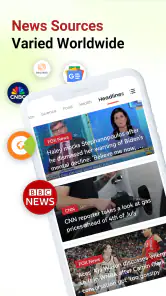


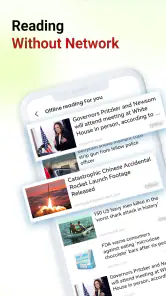
Analysis by Reviewed
When I want a quick sense of what is happening around me, I usually do not need a long national-news homepage. I need something more immediate: nearby headlines, urgent updates, and a weather check before I leave home. Breaking Local News is built around that simple routine, and after spending time with it, I found it most useful as a lightweight local-news companion rather than a complete replacement for every news source I already use.
The app belongs to the News & Magazines category and is developed by YING LIANG HK LIMITED. It is free to use, carries an Everyone 10+ content rating, and has reached over 500 thousand installs. Its average rating sits at 4.7 from around 2.4 thousand ratings, which suggests that its focused approach appeals to people who want local information without too much setup.
That focus is also the key to understanding the experience. This is not an app I would open expecting deep investigations, long-form analysis, or a carefully organized archive of every major story. I see it more as a practical first stop: open it, scan what matters nearby, check the forecast, and decide whether a headline deserves a deeper read elsewhere.
How I use it in an ordinary day
My most reliable routine starts in the morning. Before heading out, I check the local news area for anything that could affect my plans, then look at the weather forecast around me. That combination is more useful than it sounds. A weather change may alter my commute, while a local incident can explain delays or suggest that I should take another route. I do not need to search several unrelated apps to make that first decision.
Later in the day, I tend to return when I want a quick update rather than a long reading session. The app works best in short visits. I scan the headlines, identify the items that are genuinely relevant to my area, and leave the rest alone. That habit keeps the experience from becoming another endless feed competing for attention.
For a person who has recently moved to a new town, this workflow can be especially practical. Local news is often difficult to follow through national outlets because the important details are too specific to receive much attention. A focused local-news app can help a newcomer understand what is happening nearby, notice recurring community concerns, and become familiar with the rhythm of the area.
I also think it suits households where different people need different amounts of information. One person may want breaking updates, another may mainly care about weather, and someone else may open the app only when a local headline appears relevant. Because the central purpose is clear, it is easier to use casually than a broad news service filled with unrelated sections.
You May Like

Clash of Clans Is Won Between the Battles

Android Auto Makes the Case for Quieter Car Software

MobiOffice: Transforming Mobile Productivity with Seamless Integration

EA SPORTS FC™ Mobile Soccer: Redefining Mobile Sports Gaming

How Microsoft OneDrive Became a Mobile Productivity Giant

How Google Translate Breaks Language Barriers Effortlessly
What I check before trusting a headline
A useful habit is to treat the first scan as a filter, not as the entire news-reading process. A short headline can tell me that something has happened, but it may not provide enough context to understand why it matters. I look for the location, the timing, and whether the item is genuinely local before deciding how much attention to give it.
This matters particularly with breaking news. Speed is valuable when a situation is changing, but early reports can be incomplete. I would use the app to notice a developing story, then read the available details carefully and compare important claims with a trusted source when the subject involves safety, travel, or a serious community event. The app is helpful at the discovery stage; it should not encourage rushed conclusions.
That distinction is one of the most important practical lessons from using it. The convenience of local updates is not the same as complete reporting. I appreciate the quick awareness, but I still decide whether a headline is enough for my needs or whether I should investigate further.
Settings and habits that make the app easier to live with
I recommend spending a moment reviewing the app’s available settings when you first install it. The purpose is not to change every option immediately, but to make sure the way information reaches you matches your attention span. News apps become irritating when they interrupt constantly, and they become less useful when important updates are too easy to overlook.
I prefer a deliberate approach: keep the app available for intentional checks, and be selective about interruptions. If an alert feels relevant, I open it and read the surrounding context instead of reacting only to the first line. If an alert is not useful, I adjust my routine rather than allowing every update to dictate when I look at my phone.
The weather side deserves its own check. A forecast is most useful when it reflects the place I actually care about, especially if my day involves commuting between areas. I make a habit of checking the location shown in the app before relying on the result. That small step prevents a common mistake: assuming that a general nearby forecast describes the exact conditions at the place where I am heading.
Another worthwhile habit is to decide what “local” means for you. Some readers want only their immediate neighborhood. Others need a wider regional view because they travel for work or follow events across several nearby communities. I would use the app consistently with that personal definition rather than expecting one broad feed to be equally useful for every situation.
Because the application is free, it is easy to try without making a financial commitment. That makes experimentation simple: use it for several days, notice which parts of the news and weather information actually help, and then build a routine around those parts. If it does not fit the way you consume news, uninstalling it does not leave you tied to a subscription.
A repeatable scan instead of endless scrolling
My preferred pattern is a three-pass scan. First, I look for anything urgent or directly connected to my plans. Second, I check the weather if I am deciding what to wear, how to travel, or whether an outdoor plan makes sense. Third, I return to one or two headlines that deserve more attention. This keeps the app useful without turning a quick check into a long distraction.
I also avoid opening every headline immediately. I read the wording, identify the location, and ask whether the story affects me or simply happens to be nearby. That sounds obvious, but it makes a real difference in a local feed, where a headline can be geographically close while still being irrelevant to my day.
For families, I would suggest agreeing on a simple rule: use the app for awareness, and verify anything that changes a child’s travel, school plans, or safety decisions. The Everyone 10+ rating makes it broadly approachable, but an age rating is not a substitute for adult judgment about how breaking information should be interpreted.
Faster patterns for busy users
The fastest way to benefit from local news updates is to connect the app to moments that already exist in your day. I check it before leaving home, during a planned break, and when I return in the evening. I do not keep it open continuously. Those fixed moments give me the advantages of awareness without creating a habit of refreshing news every few minutes.
Commuters can use the same pattern differently. Before leaving, I look for local incidents and then check the weather. If something appears important, I decide whether it is worth consulting a navigation tool or another source for a more precise travel decision. In this workflow, the app acts as an early warning layer rather than pretending to be a complete traffic-management solution.
People who work from home may find the local angle useful in another way. A quick midday check can reveal community events, changing conditions, or developing stories that would otherwise be invisible in a national feed. The benefit is not necessarily reading more; it is gaining a better sense of the place where I actually live.
One less obvious advantage is that the app can serve as a prompt for better information discipline. Instead of collecting many news apps, I can use this one for local awareness and reserve a separate source for national or international reporting. That division reduces duplication. I know where to go for each type of information, and I am less likely to confuse a local alert with a complete account of a larger story.
There is also a trade-off. A focused app may feel calmer than a general news platform, but it may not satisfy someone who wants every topic in one place. If your normal reading includes business, science, sports, culture, and international reporting, you will probably still need another service. I would not regard that as a flaw so much as a boundary of the app’s purpose.
When another option is the better choice
I would choose a traditional newspaper app when I want editorial depth, detailed background, and a strong sense of how a story developed. I would choose a weather-focused app when precise forecasting tools are the main reason I am opening my phone. I would choose a broader news aggregator when I want to compare many publishers or follow national and international events in the same session.
Breaking Local News makes more sense when the question is narrower: what is happening around me right now, and what does the weather look like nearby? Its value comes from reducing the distance between the information and my immediate plans.
That means the right audience is not simply “everyone interested in news.” It is people who care about local awareness and prefer a quick, accessible starting point. If you dislike short updates, want extensive source comparison inside one app, or expect every headline to include deep context, this may feel too limited.
Limits I noticed after using it regularly
The biggest limitation is the natural tension between speed and completeness. Breaking information often arrives in a compact form, while understanding an event requires time, context, and sometimes multiple sources. I found the app most reliable as a way to notice what deserves attention, not as the only place I would go for a high-stakes conclusion.
The local focus can also create uneven usefulness depending on where you live and how much nearby reporting matters to you. Someone who spends most of the week in one area may find it immediately relevant. Someone who travels across several regions may need to check whether the app’s current location emphasis matches the places that matter during the day.
Weather has a similar limitation. A nearby forecast is useful for general planning, but local conditions can vary over short distances. I would not use a simple forecast check as a replacement for careful planning during severe weather or an outdoor activity where conditions matter greatly. The app helps me make ordinary decisions; it is not a reason to ignore official warnings or more specialized information.
I also think users should be realistic about notifications. An alert can be convenient, but it can also turn a focused tool into a source of distraction. My advice is to make notifications serve a clear purpose. If every update pulls you into the app, the convenience of instant awareness may cost more attention than it saves.
The current version is 14.1.2254.83653, and the app supports devices running Android 6.0 or later. That broad compatibility makes it accessible to people using older Android hardware, although the experience will still depend on the phone itself, its screen, and how comfortably it handles current apps.
The developer, YING LIANG HK LIMITED, has positioned the product around a straightforward need rather than an overloaded news dashboard. I like that clarity, but it also means I judge the app by whether it makes local checking easier, not by whether it replaces every other information source. Keeping that expectation in mind makes the strengths more visible and the limits less frustrating.
My verdict after building a routine around it
Breaking Local News is a sensible choice for readers who want a fast local-news check combined with nearby weather information. I found it most effective when used in short, repeatable sessions: scan before leaving, check again when plans change, and open the most relevant headline only when it deserves more attention.
Its strongest quality is focus. It does not need to become my entire news world to be useful. It can sit alongside a newspaper app, a weather specialist, or a national news source and handle the local-awareness job efficiently. That separation is valuable because it prevents one app from trying to do everything badly.
I would recommend it to someone who has recently moved, commutes regularly, wants a quick morning briefing, or simply feels disconnected from nearby events. I would be more cautious about recommending it as a sole news source to a reader who expects extensive reporting, detailed verification, or broad international coverage.
My final advice is to use it with a small amount of structure. Review the settings, make the weather location relevant, keep alerts intentional, and treat breaking headlines as starting points when the subject is important. With those habits, the free app becomes a practical daily tool rather than another noisy feed. For local awareness on an Android device, it is worth trying, especially if your priority is knowing what is happening close to home before deciding where to look next.
Breaking Local News Frequently Asked Questions
What devices and operating systems can run Breaking Local News?
Breaking Local News is a mobile news app for Android and iOS users. On Android, it requires version 6.0 or later, so checking your device’s software version before downloading can help avoid compatibility surprises. The app is published by YING LIANG HK LIMITED and is intended for readers who want local headlines, breaking updates, and weather information on a phone or tablet.
What is Breaking Local News, and what does the app offer?
Breaking Local News is designed to help users follow current events happening in their city, region, or surrounding communities. After exploring the app, its main purpose is to bring together local headlines, breaking updates, weather-related information, public safety reports, and community stories in one place. The exact content available may depend on your location and the news sources supported in your area.
Can I customize the local news and alerts I receive?
The app generally allows users to make their news experience more relevant by selecting a location, choosing topics, or following particular areas and sources. Notifications may also be used for urgent headlines and breaking events. Before enabling every alert, it is worth reviewing the notification settings, because frequent updates can become distracting. Availability of customization options may vary depending on the app version and region.
Does Breaking Local News require access to my location?
Location access may be requested so the app can identify nearby news, weather conditions, traffic incidents, or emergency reports. You may usually choose whether to grant precise location access, approximate location access, or no access at all. If you deny permission, the app may still work when you manually enter a city or region, although automatic local recommendations could be less accurate.
Is the information in Breaking Local News reliable and updated in real time?
The app can be useful for discovering developing stories quickly, but users should remember that breaking news may change as more facts become available. Updates are normally collected from participating publishers, public sources, or local reporting partners, so speed and accuracy can differ between stories. For emergencies or important decisions, compare major reports and official local authorities rather than relying on one notification.
Pros
- Fast access to breaking stories from nearby areas.
- Covers local events that national news apps often overlook.
- Useful location-based updates for your community.
- Simple layout makes headlines easy to scan.
- Can help users stay informed during local emergencies.
Cons
- Coverage quality may vary depending on your location.
- Some alerts can feel repetitive or overly frequent.
- Articles may provide limited background or context.
- Location permissions may be needed for local recommendations.
- Content availability can depend on active local contributors.

- Category
- News & Magazines
- Version
- 14.1.2254.83653