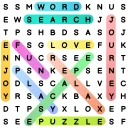
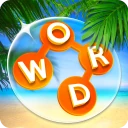
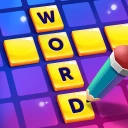
Word Weekend Letters & Worlds
- 214.00
- 4.9
- Installs
- 5.00M
- Price
- Free
Screenshots
Analysis by Reviewed
I spent time with Word Weekend Letters & Worlds as a casual word game, and my first impression was easy to understand: it is built for people who want to guess words without committing to a long, complicated session. The central promise is simple, but that simplicity is also the reason to look closely before deciding whether it deserves a place on your phone.
This is a free game in the word category from Brightika, Inc. It is available for a general audience, supports devices running Android 7.0 or later, and its current version is 1.3.5. The game has been around since December 19, 2017, and its strong store presence—an average rating of 4.9 from around 64 thousand ratings and over 5 million installs—suggests that its basic format has found a sizable audience.
How the free word-game experience works in everyday use
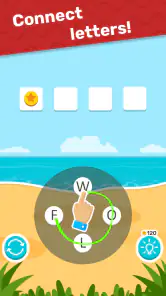
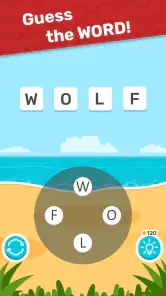
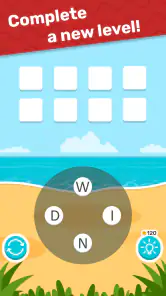
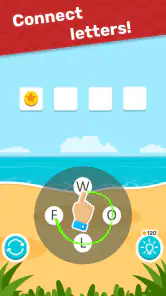
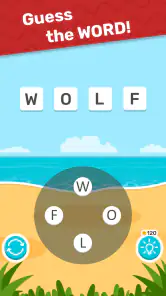
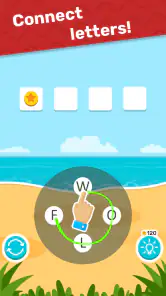
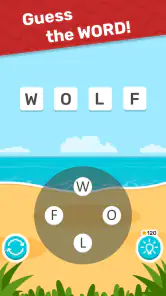
The appeal is immediate: you open the game, look at the available letters, and try to form the words the puzzle expects. I like this kind of design when I have only a few minutes available because there is no need to learn a large rule set before starting. The short description, “Word Weekend,” gives the right impression of a relaxed, lightweight activity rather than a demanding competitive word tool.
In practice, that makes it a good companion for small gaps in the day. I can imagine using it while waiting for an appointment, taking a short break from work, or winding down before bed. It asks for attention, but not the kind of sustained concentration required by a long strategy game. The best sessions are the ones where I want a little mental movement without opening social media or starting something that will take an hour.
The word-guessing format also creates a pleasant balance between recognition and experimentation. Sometimes the answer comes quickly because the letters point toward a familiar word. Other times, the useful move is to stop staring at the obvious combination and test shorter or less expected possibilities. That small change in perspective is where much of the satisfaction comes from.
I would not describe it as a language-learning course. It may encourage you to notice spelling patterns and recall vocabulary, but its main purpose is entertainment. If you need definitions, pronunciation support, structured lessons, or progress designed around learning a new language, a dedicated educational app will be a better match. Here, the reward is solving the puzzle, not studying a curriculum.
What the free download really means
The download itself is free, which lowers the barrier to trying it. That matters for this type of game because word puzzles are highly personal: one player may enjoy the rhythm for weeks, while another may find the format repetitive after a few sessions. You can test that fit without paying at the start.
More From Our News Desk

Weather by Xiaomi Review: Clear at a Glance, Less Clear Up Close

X Under Pressure: Can It Recover When Posting Goes Wrong?

Clash of Clans Is Won Between the Battles

Android Auto Makes the Case for Quieter Car Software

MobiOffice: Transforming Mobile Productivity with Seamless Integration

EA SPORTS FC™ Mobile Soccer: Redefining Mobile Sports Gaming
There are in-app purchases ranging from $1.99 to $48.99 per item. I would therefore treat the free version as an opportunity to evaluate the game, not as proof that every part of the experience is permanently cost-free. The purchase range shows that optional spending can vary considerably, so I would avoid buying anything impulsively until I knew how often I would return to the game and what the purchase changes for my own use.
That distinction is important: the verified cost information confirms free access and paid items, but it does not establish that a purchase is necessary for ordinary play or that every player will receive the same value from one. My practical advice is to begin with the free experience, decide whether the core word puzzles hold your attention, and only then consider spending. For a casual game, that is a more sensible order than treating optional purchases as part of the entry price.
The age classification is Everyone, so the game is positioned as suitable for a broad audience. That makes it easier to recommend as a simple family-friendly puzzle, although an adult looking for advanced vocabulary training may find the experience too light. A general audience label tells me about suitability, not about difficulty or educational depth.
Where the game earns its value
The strongest value here is convenience. A word puzzle can fill a short break cleanly because it does not require a group, a physical board, or a scheduled session. Compared with a crossword book, the phone is easier to carry and quicker to start. Compared with a full word-processing or language app, the game is less demanding and more immediately playful.
I also appreciate the low commitment. If I solve one puzzle and stop, the session still feels complete. That is different from games that push me toward a long chain of missions or make a brief visit feel unfinished. Word Weekend Letters & Worlds works best when I treat it as a pocket-sized mental snack rather than a hobby that must dominate my free time.
Another useful quality is the way guessing encourages active recall. I am not simply matching a picture or tapping a highlighted answer. I have to rearrange letters mentally, reject weak ideas, and notice possible word shapes. Even when the puzzle is easy, that process feels more engaging than passive scrolling. It is a modest benefit, but it is a real reason to choose a word game over a purely visual time-killer.
There is also value in its broad accessibility. Because the concept is familiar, a new player can understand the objective quickly. Someone who already enjoys anagrams, casual crosswords, or short vocabulary challenges will probably know within minutes whether the format suits them. That quick test is especially helpful when deciding whether optional spending would be worthwhile.
Three ways I would get more from each session
My first tip is to use a two-pass approach. On the first pass, I would enter the words that appear immediately, without trying to force a solution. On the second, I would look at the remaining letters from a different angle: change the starting letter, search for a shorter construction, and say the possible word quietly rather than only viewing it. This prevents the familiar “stare at the same arrangement” problem.
Second, I would use the game as a deliberate transition between tasks rather than as an automatic filler. A short puzzle after work can create a clearer break than repeatedly checking notifications. The useful trade-off is that the game occupies my mind just enough to reset my attention, but I would stop before the activity becomes another source of distraction.
Third, I would keep a personal note of words that repeatedly slow me down. Not a formal score log—just a small list of spelling patterns or vocabulary gaps. If I notice that I often miss a certain type of word, I can treat future puzzles as targeted practice. This turns a casual game into a slightly more thoughtful routine without pretending that it replaces a real vocabulary program.
A fourth habit is to decide on a spending rule before making any purchase. For example, I would wait until I had returned to the game several times and could explain exactly what I wanted from the paid item. Since the available purchase range reaches from a small amount to a much larger one, having that boundary in mind protects the game’s casual role. The free entry point is valuable precisely because it lets me make that decision slowly.
The trade-offs that matter before installing
The biggest limitation is repetition. Word games depend on a familiar loop, and familiarity can become routine. If you want constant visual novelty, a story, character development, or a changing set of mechanics, this is unlikely to satisfy you for long. Its strength is focused simplicity, so it naturally gives up some variety.
It may also be a poor choice for players who dislike guessing without enough context. Some people enjoy discovering an answer through trial and error; others prefer clues, definitions, or a clearly themed crossword structure. If you belong to the second group, a traditional crossword or a clue-based word app may feel more rewarding because the path to the answer is more explicit.
The free-to-start model deserves attention as well. Even if the core game is enjoyable without spending, the presence of optional purchases can change how comfortable the experience feels for someone who prefers a completely paid-once product. I would choose a premium word game instead if avoiding all purchase prompts is more important to me than trying this particular format.
There is a difference between a high rating and a personal guarantee. The 4.9 average and large audience are encouraging signs, but they cannot predict whether I will enjoy the pace, vocabulary, or repetition. I see those figures as evidence that many people respond well to the game, not as a reason to ignore my own preferences.
Device compatibility is another practical checkpoint. The minimum requirement of Android 7.0 or later covers many older devices, which is helpful if I am not using a recent phone. Still, I would check the operating system before planning an installation, especially on an older handset. Compatibility can be more important than the game’s file size or visual style when a family member wants to play on a spare device.
Who will get the most from it
I would recommend this game to someone who enjoys anagrams and wants a quick, approachable activity. It is particularly suitable for people who prefer self-contained sessions: commuters, casual puzzle fans, and anyone who wants to replace a few minutes of aimless browsing with a task that requires at least some thought.
It can also work well for a household with different ages because the Everyone rating and straightforward concept make the entry point broad. I would not assume that every player will find the same puzzles equally easy, though. A child, a casual adult player, and a dedicated word enthusiast may all approach the same letter set differently, which is part of the fun but also part of the uncertainty.
The game is less suitable for a player who wants competitive multiplayer, a rich narrative, or a structured educational path. It is also not my first recommendation for someone who needs accessibility details or advanced learning tools before choosing a word app; in that situation, I would compare dedicated alternatives carefully rather than selecting this one only because its rating is high.
For value-conscious users, the best fit is someone happy to play free first and make a later purchase decision only if the experience becomes a regular habit. If I expect to play once and delete it, paying near the upper end of the purchase range would make little sense. If I return often and the optional content genuinely improves my sessions, the calculation becomes more personal—but it should still be based on actual use, not on the assumption that a higher-priced item automatically offers better value.
My buy-or-skip verdict
I would install Word Weekend Letters & Worlds if I wanted a free, uncomplicated word game for short sessions. The combination of familiar guessing, broad age suitability, and a low-cost way to try it makes the decision easy at the beginning. I would start without spending, play long enough to see whether the puzzle rhythm stays enjoyable, and pay only if I could identify a clear reason.
I would skip it in favor of a crossword app, language-learning tool, or premium word game if I needed clues, lessons, a one-time purchase model, or deeper variety. Those alternatives are better when the format itself is the problem, not when the issue is simply finding a good first word.
My final view is positive but measured. Brightika, Inc. has a straightforward casual word game that can fit neatly into everyday breaks, and its broad audience and strong rating indicate substantial appeal. Its value comes from easy access and repeatable mental play, while its weaknesses are the predictable repetition of the format and the need to think carefully about optional spending. Try the free experience first; treat any purchase as a deliberate choice, not a requirement for discovering whether the game belongs in your routine.
Word Weekend Letters & Worlds Frequently Asked Questions
How much space should I have available before installing Word Weekend Letters & Worlds?
It is sensible to check your device’s available storage before installing Word Weekend Letters & Worlds, as with any game. The amount of space needed can vary by device and may change as the app is updated. If storage is limited, removing unused files or apps first can help the download and installation go smoothly. Also make sure your device meets the operating-system requirement.
Can I play Word Weekend Letters & Worlds without creating an account?
Word Weekend Letters & Worlds is a word game focused on solving puzzles, so you can approach it as a casual game without needing to treat it like a social or competitive platform. Account-related features, if used, may depend on the version and device. Before downloading, consider whether you want progress connected across devices, and review the app’s current settings and store information for the options available to you.
Does Word Weekend Letters & Worlds work on older phones and tablets?
The game is available for devices running Android 7.0 or later, so it can suit some older Android phones and tablets as well as newer ones. Before downloading, check your device’s operating system version and make sure you have enough available storage for the installation. Compatibility and performance can differ between devices, so keeping the operating system and game updated can help.
Who develops Word Weekend Letters & Worlds, and how popular is it?
Word Weekend Letters & Worlds is a word game from Brightika, Inc. It has an average rating of 4.9 from around 64,000 ratings, with over 5 million installs. Those figures suggest that many players have tried it and that the game has received a strong overall response. Individual experiences can still differ depending on how you enjoy word puzzles and the way you play.
What is Word Weekend Letters & Worlds?
Word Weekend Letters & Worlds is a relaxing word puzzle game centered on finding hidden words from a selection of letters. It combines crossword-style challenges with a travel-inspired progression system, allowing you to complete levels, discover new locations, and expand your vocabulary. The difficulty generally increases gradually, making it suitable for casual players as well as people who enjoy longer word-game sessions.
Pros
- Relaxing word puzzles suitable for short daily play sessions.
- Large variety of levels helps keep the gameplay feeling fresh.
- Simple controls make it accessible for casual players of all ages.
- Offline play is convenient when traveling or away from a connection.
- Progression and rewards provide extra motivation to complete puzzles.
Cons
- Some puzzles may feel repetitive after extended play sessions.
- Hints can reduce the challenge for players seeking a pure brain workout.
- Difficulty progression may feel uneven across certain level groups.
- Ads can interrupt the experience
- especially between completed puzzles.
- Limited social features may disappoint players who enjoy competitive play.
- Category
- Word
- Version
- 1.3.5