Will it Crush? Grinding games
- 8.17K
- 4.3
- Installs
- 10.00M
- Price
- Free

Screenshots
Analysis by Reviewed
I like the idea behind Will it Crush? most when I want a game that asks for very little attention: machinery grinds, progress ticks along, and I can decide whether to watch or leave it alone for a while. That simplicity is the appeal, but it also means the game is best judged as a light idle diversion rather than a deep simulation. If you enjoy watching a process build momentum, it can make a short break feel pleasantly occupied; if you need a demanding goal or a steady stream of decisions, it may not hold you for long.
What spending does—and does not—tell you
The game is free to download, with in-app purchases listed from $1.99 to $99.99 per item. That gives you a clear reason to check your spending settings before handing your phone to a child or tapping through purchase prompts. The age rating is Everyone, but that does not make optional purchases irrelevant for family use. I would treat the free entry point as a chance to see whether the basic loop suits you before paying for anything.
Brightika, Inc. released the game on May 8, 2018, and its current version is 1.8.2. It has an average rating of 4.3 from around 88,000 ratings, with over 10 million installs. Those figures suggest that the straightforward premise has found a sizable audience, though popularity alone cannot tell you whether its pace or purchase options will fit your preferences. I would make that call by trying the core loop, not by assuming that a large player base guarantees a particular experience.
Progress without turning it into a chore
The idle framing is useful if you want to check in between everyday tasks rather than devote a whole session to a game. For example, I can imagine opening it during a quiet coffee break, watching the crusher for a little while, then closing it when work resumes. The best way to approach that kind of play is to set a small personal limit: choose one upgrade goal, make a few decisions, and stop when the game starts to feel like waiting rather than playing.
That distinction matters because idle games can blur the line between a relaxing background activity and a loop that nudges you to return repeatedly. Here, the pleasure comes from seeing the machine do its thing, not from mastering a complicated system. If you find yourself checking in out of habit but no longer enjoying the crushing, taking a break is likely better than treating every bit of progress as something you must collect.
Who will enjoy it, and who may not
I would recommend this to players who like simple visual feedback, low-pressure sessions, and the familiar appeal of watching a machine become more effective. It is also an easy fit when you want something you can pick up without remembering a story or learning a set of intricate controls. On the other hand, players who want a simulation built around realistic machinery, detailed construction choices, or hands-on control should look for a more involved game. This one is about the compact pleasure of crushing, not engineering a complex production line.
Compared with more active arcade games, the rhythm here is slower and more observational; compared with management sims, the decisions are deliberately modest. That is a trade-off rather than a flaw, but it sets expectations. I would not choose it for a long commute if I wanted a game that demands attention throughout, and I would skip it if repetitive visual action quickly loses its charm for me.
More From Our News Desk

Weather by Xiaomi Review: Clear at a Glance, Less Clear Up Close

X Under Pressure: Can It Recover When Posting Goes Wrong?

Clash of Clans Is Won Between the Battles

Android Auto Makes the Case for Quieter Car Software

MobiOffice: Transforming Mobile Productivity with Seamless Integration

EA SPORTS FC™ Mobile Soccer: Redefining Mobile Sports Gaming
Ever found yourself staring at the screen, mesmerized by the simple yet satisfying concept of crushing things? If you haven't, well, let me introduce you to the addictive world of Will it Crush?. This game is all about one thing: crushing stuff. It's exactly what it sounds like, and trust me, it's more entertaining than you might think!
What is Will it Crush?
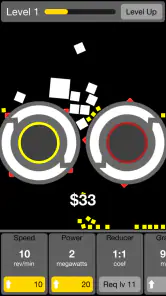
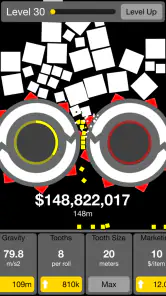
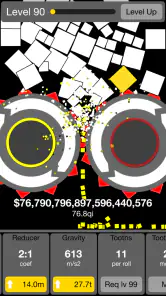
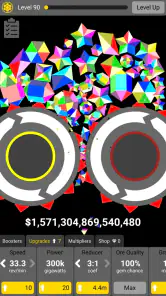
Imagine this: a pair of giant rotating teeth, waiting to crunch through everything in their path. That's the essence of Will it Crush?. You're in charge of these teeth, and your mission is to grind through various objects to earn points. Sounds simple, right? Well, simplicity is the charm here. It's a classic idle game where you can watch things get destroyed while upgrading your machinery to crush even harder and faster.
The Gameplay Experience
Jumping into the game, you're immediately greeted by a minimalistic design. There's no complex storyline or intricate mechanics to learn. You just tap to start crushing and watch as the pieces fall into place. The sound effects are oddly satisfying, making you feel like you're right there in the action. As you progress, the materials get tougher, challenging you to upgrade your teeth and gears to keep up with the increasing difficulty.
One of the best parts about the game is its idle feature. You don't have to be glued to your phone to make progress. Leave the game running, and you'll continue to earn points, which can be used to enhance your crushing abilities. It's the perfect game to have running in the background while you tackle other tasks.
Upgrades and Challenges
As you might expect, the game offers a range of upgrades to keep things fresh. From increasing the speed and power of your crushing machine to unlocking new materials to grind, there's always something to aim for. These upgrades are crucial because, as you advance, the materials become more resistant, requiring more power to crush effectively.
There's also an element of strategy involved. Do you invest in more power or faster speeds? Each decision affects how quickly you can progress through the levels. This strategic aspect keeps you engaged, as you're constantly looking for the best ways to optimize your crushing machine.
Choosing upgrades with a purpose
That speed-or-power choice is easiest to evaluate when I treat it as a short experiment rather than a permanent build decision. I would make one upgrade, watch how the machine handles the tougher material, and then decide whether the change solved the problem I noticed. This keeps the modest strategy meaningful: instead of tapping every available option automatically, I can connect each purchase of in-game progress to something visible in the crushing loop.
There is a small but useful distinction between an upgrade that makes the animation feel more energetic and one that helps me move through resistance more effectively. If I am only checking in for a minute, the faster-looking result may be more immediately satisfying. If I plan to leave the game alone and return later, I would care more about whether the machine keeps progressing. That is not a complicated optimization puzzle, but noticing which kind of payoff I want makes the choices feel less arbitrary.
I would also avoid treating every available improvement as an obligation. In a game built around incremental progress, there is always another number or next step to chase, and that can make a simple diversion feel like a checklist. Picking a single target before opening the game—such as improving the crusher once, then putting the phone away—helps preserve the casual appeal. If the next goal does not sound fun, there is no reason to invent a reason to keep playing.
Why It's Worth a Try
So, why should you give Will it Crush? a shot? For starters, it's a fantastic stress reliever. There's something incredibly therapeutic about watching objects get pulverized into tiny pieces. Plus, the game doesn't demand constant attention, making it perfect for those moments when you just want to unwind without getting too involved.
Whether you're a fan of idle games or just looking for something new to pass the time, Will it Crush? offers a simple yet engaging experience that's sure to captivate you. It's one of those games that you can pick up and play anytime, without the pressure of complex missions or deadlines.
How it fits into a real day
Picture a short wait before an appointment: I have a few minutes, do not want to start a story-heavy game, and would rather not risk losing track of a complicated objective. This is the kind of moment when the crusher makes sense. I can open it, watch a little progress, make a small upgrade choice if one feels worthwhile, and leave when my name is called. The attraction is not that it fills every spare minute; it is that it does not ask me to plan those minutes in advance.
At home, I would use it differently. Rather than keeping it open beside a task, I would check in when I am genuinely taking a break. That avoids the awkward trade-off of splitting attention between the game and something that needs focus. The idle design can make leaving it running sound like the obvious approach, but the game is still optional entertainment, not a background tool. Closing it when I return to work keeps its role clear.
For someone deciding whether it suits a child, the Everyone age rating is a helpful starting point, but it is not a substitute for an adult checking device purchase controls. The listed optional purchases span a wide range, so I would make sure accidental taps cannot lead to unwanted spending before handing over a phone. For an adult who wants to try it, the same common-sense approach applies: play for free first and decide based on whether the basic crushing loop actually feels enjoyable.
Where this sits among other games
Against a conventional arcade game, this one trades reflexes and continuous input for watching a machine work and making occasional upgrade choices. That makes it less suitable when I want a test of timing or a session that keeps my hands busy. Against a fuller management or factory simulation, it strips away the layered planning and detailed systems. I would choose those alternatives when I want to design, organize, or solve a chain of problems; I would choose this when the appeal is the crusher itself and I want the lightest possible commitment.
It also differs from idle games that build their appeal around a large collection of systems to juggle. Here, the central image and action do most of the work. That focus is a strength if you want the same clear activity each time you return, but it can become a weakness if you need frequent changes of pace. A player who gets bored by repetition should not expect the machinery theme alone to turn a compact loop into a varied simulation.
That comparison helps answer a practical question: is it a good choice for someone new to idle games? I think so, if they are curious about the format and want a straightforward example of progress that continues without constant input. It is a less convincing introduction for someone who expects a long-term management challenge, because the appeal is deliberately narrow. The best match is a player who finds simple mechanical feedback relaxing, not someone looking for the most complex game in the category.
In conclusion, if you're in the mood for something light, fun, and oddly satisfying, give Will it Crush? a try. It might just become one of your go-to games when you need a quick break from reality.
Fairness, expectations, and a sensible verdict
For competitive fairness, the key question is whether paid options affect performance against other players. I cannot assess that from the purchase range alone, so I would not assume either that purchases are required to progress or that everyone competes on equal terms. The game is best approached as a personal, low-pressure idle experience; if your enjoyment depends on ranked competition or a clearly level playing field, choose a game whose competitive rules are explicit.
A practical tip is to judge upgrades by what changes on screen, rather than buying simply because a prompt appears. Try the free play first and notice whether choosing between speed and power feels meaningful to you. If it does, the upgrade loop may be enough to keep the game engaging without spending. If progress begins to feel like a pause between purchases, that is a useful signal to stop rather than pay to force the pace.
One other trade-off is how you use the idle element. Leaving a game open while doing something else may sound convenient, but it can also turn a break into extra screen time or drain attention from the task at hand. I prefer treating it as a quick check-in: open it when I genuinely want the visual feedback, then close it instead of keeping it running by default. That makes the low-effort design work for me rather than becoming another background obligation.
If you are wondering whether it is suitable for a younger player, the Everyone rating makes it broadly accessible, while the listed purchase range is a reason for an adult to review purchase controls on the device. If you are wondering whether it is a serious machinery simulator, the answer is no in spirit: the crusher theme gives the game its identity, but the appeal is casual progression and satisfying destruction, not technical realism. And if you are deciding whether to pay, I would first spend time with the free version and only consider an optional purchase if you already know what it adds to your own enjoyment.
My trust verdict is modest but positive: Will it Crush? is clear about being a free-to-start idle crushing game, and its audience size suggests that the simple loop has broad appeal. The purchase range deserves attention, and players looking for deep simulation or competitive certainty should be cautious about expecting those things here. For short, relaxed sessions built around watching a crusher improve, I think it is worth trying without spending first.
Will it Crush? Grinding games Frequently Asked Questions
How much storage space does Will it Crush? need on my phone?
Will it Crush? is a mobile simulation game built around a compact, repeatable crushing loop, so it may appeal to players looking for a straightforward game to keep on a phone. The amount of storage it uses can vary with the device and app updates. Before downloading, check the available space shown by your device’s app store and make sure you have room for installation.
Will it Crush? work on an older Android device?
The Android version requires Android 6.0 or later, so a device running that version or a newer one meets the stated minimum operating-system requirement. If your phone is close to the minimum, performance can still depend on the device itself and its available resources. Checking your Android version before downloading is a simple way to avoid an installation mismatch.
Is Will it Crush? suitable for a quick, casual gaming session?
Yes. Will it Crush? is a casual grinding game built around starting a machine, crushing blocks, and improving its gears as you progress. Its straightforward tap-and-upgrade loop makes it easy to pick up without needing to learn complex controls. It can suit short breaks, while the gradual upgrades also give you a reason to return and keep building your crushing machine.
What kind of game is Will it Crush?, and who develops it?
Will it Crush? is a simulation game focused on a gear-powered crushing machine. You watch bricks and blocks pass through the grinder, then work on improving the machine to boost its output. Brightika, Inc. develops the game. Its simple premise is aimed at players who enjoy idle-style progress and mechanical destruction rather than a story-driven adventure or a complicated strategy experience.
What is the main objective of 'Will it Crush?' and how do you play it?
'Will it Crush?' is a simple yet addictive grinding game where the primary objective is to generate as many points as possible by crushing various objects with rotating gears. Players need to strategically upgrade their gears to increase efficiency and earn more points. The game involves tapping to start the crushing process, managing gear upgrades, and balancing the speed and power of your crushing machine to maximize output and progress through levels.
Pros
- Simple and intuitive gameplay.
- Satisfying crushing mechanics.
- Relaxing and stress-relieving.
- Doesn't require internet connection.
- No complex controls needed.
Cons
- Repetitive gameplay over time.
- Limited features and content.
- Ads can be intrusive.
- Lacks storyline or missions.
- Can drain battery quickly.
- Category
- Simulation
- Version
- 1.8.2