Word Tiles - Relaxing Puzzle
- 536.00
- 4.9
- Installs
- 100.00K
- Price
- Free
Screenshots
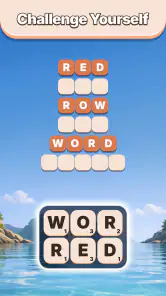
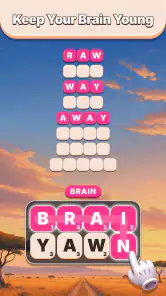
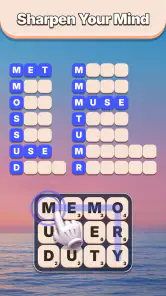
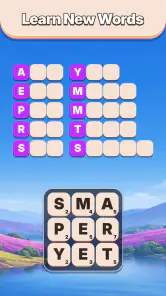
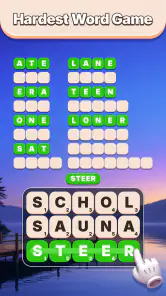
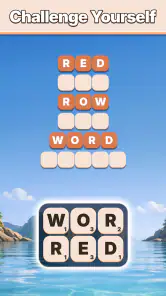
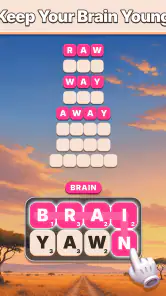
Analysis by Reviewed
Word Tiles - Relaxing Puzzle is best approached as a small, focused word game rather than a sprawling puzzle collection. I like that kind of restraint: it gives a spare moment a clear purpose without asking me to learn a complicated system. The central appeal is simple—work with word tiles and enjoy the satisfaction of solving a puzzle—but that simplicity also sets expectations. If you want a calm mental nudge, this looks like a natural fit; if you need deep strategy, a long campaign, or a steady stream of elaborate new mechanics, you may find it too modest.
Why a short session can be enough
A realistic use for this game is the gap between finishing lunch and returning to work: I could open it, give a puzzle my attention, and put my phone away when the break ends. That kind of moment is where a compact word challenge can be more satisfying than opening a social feed, yet less demanding than starting a story-driven game. I would not treat it as a timer or a productivity tool; its value is simply giving a brief pause one focused activity.
If I were playing with someone else nearby, I would keep the session casual. We could each suggest a way to read the tiles, then compare ideas without turning it into a contest. That works best with a person who enjoys wordplay and is happy to think aloud; it is less suitable if one player wants to race ahead or if the group would rather talk than concentrate. The game’s quiet format makes shared attention possible, but the fun still depends on the people involved.
Where the tile format works best
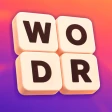
Word puzzles can be relaxing without being mindless, and the tile format offers a useful middle ground. Instead of facing a blank page and having to invent a word from scratch, I can focus on how the available pieces might fit together. That makes the first step feel approachable, while still leaving room for the little moment of discovery when a pattern becomes obvious.
That distinction matters in everyday use. I would reach for Word Tiles - Relaxing Puzzle when I have a few spare minutes and want to pay attention to something more engaging than scrolling, but not something that demands a long commitment. A short puzzle can work as a mental reset between tasks, during a quiet break, or while waiting for an appointment. The key is that the game’s word-based premise gives the pause a specific focus.
Agave Games has placed it in the puzzle category, and that feels more accurate than treating it as a vocabulary course. The enjoyment comes from solving, not from studying a lesson plan. If you already enjoy spotting word patterns, you should understand the basic appeal quickly. If word games usually feel like tests of obscure vocabulary, the tile framing may feel more inviting, though it is still a word puzzle at heart.
The game’s public reception is encouraging: it holds a 4.9 average from around 17,000 ratings, with more than 100,000 installs. Those figures suggest that many players have found the idea appealing, but they do not guarantee that its style will suit everyone. I would treat them as a reason to take a closer look, not as a substitute for asking whether a compact word puzzle is what you actually want.
You May Like

Clash of Clans Is Won Between the Battles

Android Auto Makes the Case for Quieter Car Software

MobiOffice: Transforming Mobile Productivity with Seamless Integration

EA SPORTS FC™ Mobile Soccer: Redefining Mobile Sports Gaming

How Microsoft OneDrive Became a Mobile Productivity Giant

How Google Translate Breaks Language Barriers Effortlessly
A useful kind of low-pressure play
For me, the strongest case for a relaxing puzzle is not that every moment has to feel effortless. It is that I can choose how much attention to give it. With a tile-based word challenge, I can scan what is in front of me, try a few combinations, and pause to reconsider. That makes it easier to play at my own pace than a game built around fast reactions or constant competition.
One practical tip is to use a puzzle as a deliberate break rather than opening the game automatically whenever you have a spare second. Give yourself a small window, focus on the tiles, and stop when the break is over. That approach suits this kind of compact mental activity: it can refresh attention without turning a brief pause into an unplanned stretch of screen time.
Another helpful habit is to change your approach when you get stuck. Rather than repeating the same guesses, look at the available tiles as a group and consider alternate word patterns. In word games, a fixed first impression can make a simple answer hard to see. Stepping away for a moment and returning with fresh eyes is often more useful than forcing a solution.
What the format cannot replace
The same focus that makes a word-tile puzzle easy to approach can also limit its appeal. If you want an intricate logic game with several interacting systems, this is unlikely to provide that level of depth. It is better suited to a single, understandable mental task than to players looking for a complex world, character progression, or a broad catalogue of puzzle styles.
It is also not the right pick for someone who wants a formal vocabulary-building tool. Solving word puzzles may encourage you to notice spelling and letter patterns, but that is different from structured instruction. If your goal is to learn definitions, practice a language methodically, or track measurable study progress, a dedicated learning app would be a more direct choice.
There is a trade-off between calm simplicity and lasting variety. The concept is clear, but players who tire quickly of one central style of challenge may want a game that changes its rules more often. I would not choose this as my only puzzle game if I needed a wide range of activities to stay interested. Its strength is having a clear identity; that same identity asks you to enjoy the core activity rather than expect constant reinvention.
It is worth being realistic about the business model, too. The game is free to download, and it offers in-app purchases ranging from $1.99 to $49.99 per item. That means the initial decision to try it is straightforward, but spending is a separate choice. I would start with the free experience and decide whether the game earns more of my time before considering any purchase. If you prefer games with no optional spending at all, that detail may affect your choice.
Who is likely to enjoy it
I can see this working well for players who already like word searches, anagram-style challenges, or other short vocabulary puzzles, but who want a more hands-on tile presentation. It may also suit someone who likes a quiet game to keep within reach for brief breaks. The Everyone content rating makes it suitable for a broad audience, although individual comfort with word challenges will naturally vary.
It is less compelling for people who want competitive matches, extensive narrative, or a puzzle that keeps introducing new systems. It may also be a poor match if you find word games stressful, dislike searching for letter patterns, or need a game that can be enjoyed without much reading. In those cases, a visual logic puzzle or a casual game based on matching shapes may feel more comfortable.
For a shared moment, I would use it as a simple prompt rather than assume it is a full multiplayer activity: two people can look at the same puzzle and suggest possibilities, taking turns thinking aloud. That turns the word search into a relaxed conversation, especially for family members who enjoy language games. It is an informal way to enjoy the puzzle together, not a claim that the game has a dedicated co-op mode.
Device support is another practical check before installing. The current version is 1.5.0, and the minimum operating-system requirement is 10. If you are choosing a game for an older device, check that requirement first rather than assuming a lightweight puzzle will run on every phone. That small check can save time and frustration, particularly when recommending it to someone else.
How it compares with familiar alternatives
Compared with a crossword, a tile-based word puzzle generally puts more emphasis on arranging or recognizing available letters than on interpreting clues. That can make it a better fit when I want a direct visual task and do not feel like parsing a question. A crossword is the stronger choice if I enjoy trivia, definitions, and solving a larger grid through intersecting answers.
Compared with a word-search game, the difference is the kind of attention it encourages. Word searches reward scanning a field for words that are already hidden in it. Tile puzzles make the pieces themselves the starting point, so I am thinking about possible combinations instead. If I prefer spotting a complete word in a crowded grid, a conventional word search may be more satisfying; if I like turning a set of fragments into an answer, this format has the edge.
And compared with a large puzzle collection, the advantage is focus rather than breadth. A collection can be a better choice when I want to switch between number puzzles, visual problems, and word challenges in one sitting. Here, the appeal is narrower: one clear word-game idea that can fit into a small break. Neither approach is inherently better; it depends on whether I value a familiar, focused activity or constant variation.
My final recommendation
My verdict is positive, with a clear qualification: Word Tiles - Relaxing Puzzle is worth trying if you want a calm, accessible word challenge built around tiles, not if you expect a deep puzzle adventure or a complete learning program. The simple premise is its main strength, and the best use for it is a short, intentional break where letter patterns are enough to occupy your mind.
The game is free to start, while optional purchases are available, so I would try it before deciding whether it deserves a place in my regular routine. Its 4.9 average and broad install base are reassuring signs of interest, but personal fit matters more than popularity. If tile-based word solving is already your kind of pastime, Agave Games’ puzzle is an easy recommendation to test. If you want more variety or a more demanding challenge, I would look elsewhere instead.
A practical way to decide
If you are unsure whether this is the right kind of word game, I would judge it by the moment you expect to use it. For a quiet wait, a short break, or a low-key shared puzzle, its focused format makes sense. If you want a game that rewards long sessions with a changing set of systems, or one that teaches vocabulary in a structured way, I would choose a different option rather than hoping this compact premise will turn into something broader.
One useful trade-off to keep in mind is that tiles can make word solving feel more approachable, but they do not remove the need to recognize spelling patterns. When a solution does not come quickly, switching from guessing individual words to looking at the pieces as a whole can help; if that still feels frustrating, there is no reason to force it. The best fit is someone who enjoys that small act of rearranging possibilities, not someone who wants every puzzle to yield instantly.
Overall, I would recommend giving it a try if the appeal is a calm word challenge that slots into an ordinary day without demanding a big commitment. I would skip it if letter-based puzzles feel like work, or if variety and elaborate progression matter more to you than a clear, repeatable activity. That is the dividing line: it earns its place through focus, not breadth.
Word Tiles - Relaxing Puzzle Frequently Asked Questions
What is Word Tiles - Relaxing Puzzle?
Word Tiles - Relaxing Puzzle is a word game built around finding words from letter tiles and completing themed puzzles. It offers a calmer, less time-pressured style than many competitive word games, making it suitable for short sessions or a more leisurely challenge. The precise modes, puzzle themes, and available features can vary by version, so check the store listing and in-game information for the current details.
How do you play Word Tiles - Relaxing Puzzle?
Gameplay typically involves examining a set of letter tiles and arranging or selecting letters to form words that fit the puzzle. Solving the required words advances the level, while hints may be available when you get stuck. The exact controls and rules are best learned from the tutorial, since they can differ between versions. If a level feels difficult, try looking for common prefixes, suffixes, and shorter words first.
Is Word Tiles - Relaxing Puzzle free to download, and does it include ads or purchases?
The app may be offered as a free download, but that does not necessarily mean every feature is free to use. Mobile puzzle games commonly include advertising, optional purchases, or both; these may relate to hints, coins, or other in-game benefits. Availability and pricing can differ by platform, region, and app version. Review the Google Play or App Store listing, including its purchase information, before downloading.
Can I play Word Tiles - Relaxing Puzzle offline?
Whether the game works without an internet connection can depend on its version and on which features you want to use. Core puzzles may be available offline after installation, while ads, purchases, daily activities, or progress synchronization may require connectivity. To avoid surprises, open the game once while online, then test a level in airplane mode. Check the app’s current store description for any stated connection requirements.
Is Word Tiles - Relaxing Puzzle suitable for children, and what should I check before installing it?
Word puzzles can be a relaxing way for players to practise vocabulary, but suitability depends on the child’s age, reading ability, and the app’s current content. Before installing, check the age rating, privacy disclosures, advertising and in-app purchase details, and any parental-control options in the store listing. If a child will play, consider reviewing the app together and restricting purchases through the device’s settings.
Pros
- Easy-to-learn rules make it accessible to casual players.
- Short puzzles fit neatly into quick breaks.
- Word challenges offer a gentle way to exercise vocabulary.
- Relaxed pacing avoids the pressure of a countdown.
- A simple format makes it easy to pick up and play.
Cons
- Some puzzles may feel repetitive over longer sessions.
- Difficulty can vary
- so progress may not feel consistent.
- Players seeking fast-paced action may find it too slow.
- Word knowledge can affect how quickly you solve levels.
- Puzzle variety may not satisfy players looking for deeper modes.
- Category
- Puzzle
- Version
- 1.5.0