Word Solitaire Go
- 66.00
- 4.9
- Installs
- 100.00K
- Price
- Free
Screenshots





Analysis by Reviewed
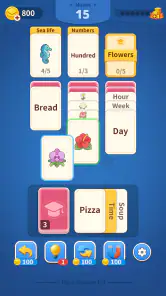
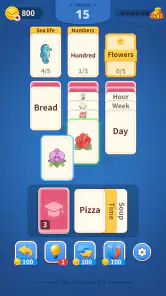
Word Solitaire Go is the kind of word game I reach for when I want something calmer than a timed challenge but more engaging than simply scrolling. It combines word sorting with group-solving and a solitaire-like rhythm, so each round asks me to notice patterns, make a choice, and then settle into the next small puzzle. That balance makes it easy to understand quickly, although the first few sessions can still feel less obvious than the short store description suggests.
Developed by Nebula Studio, this free word game is aimed at a broad audience and carries an Everyone age rating. I found its appeal strongest in short, quiet play sessions: a break between tasks, a few minutes on public transport, or a relaxed evening when I do not want a demanding strategy game. It is available for devices running Android 7.1 or later, and the current version is 1.1.0.
Getting past the first points of friction
The main place I expect new players to hesitate is not the basic idea, but the way the puzzle flow asks them to think. In a conventional word search, I look for a hidden answer. In a normal solitaire game, I focus on card order and legal moves. Here, I have to treat the visible words as pieces of a larger sorting problem while also paying attention to the order in which I clear them. That change of mindset matters more than the rules themselves.
My best early approach was to avoid tapping the first group that looked vaguely related. I scanned the whole board, searched for the most certain connection, and left words with several possible meanings alone until the surrounding choices became clearer. This is a useful habit because an attractive but incorrect group can make the remaining puzzle feel much harder than it really is.
The solitaire-style structure also creates a small but important tension. A move may look correct because it forms a recognizable group, yet it can expose a less useful arrangement for the next decision. I therefore treated each move as both an answer and a setup for what follows. That is one of the more interesting parts of the game, and it is also where players expecting a simple vocabulary quiz may initially feel stuck.
When a round seems confusing, I recommend separating the words into three mental piles: groups that are nearly certain, groups that are possible but broad, and words that do not yet have a clear home. The first pile gives me a safe starting point. The second helps me avoid premature guesses, while the third often becomes easier once one strong group has been removed.
What to check before blaming the game
Because Word Solitaire Go is free to download, it is tempting to open it immediately and assume every problem is a puzzle problem. In practice, I would first check the simple setup details. The device should meet the Android 7.1 minimum, the installation should have finished completely, and the game should be allowed to complete its first launch without being interrupted. A partial installation or an older operating system can look like a gameplay fault when it is really a compatibility issue.
More From Our News Desk

Weather by Xiaomi Review: Clear at a Glance, Less Clear Up Close

X Under Pressure: Can It Recover When Posting Goes Wrong?

Clash of Clans Is Won Between the Battles

Android Auto Makes the Case for Quieter Car Software

MobiOffice: Transforming Mobile Productivity with Seamless Integration

EA SPORTS FC™ Mobile Soccer: Redefining Mobile Sports Gaming
I also suggest closing other demanding apps before judging the first session. This is not specific to one particular phone model; it is simply a sensible way to give a new game a clean start. If the screen does not respond, I would leave the game, reopen it, and try the same action once more before repeatedly tapping. Repeated input can make it difficult to tell whether the game is slow or whether several commands were queued.
Another practical check is storage space. A device that is nearly full may behave unpredictably during installation or updates, even when the game itself is small enough to appear in the store normally. Clearing a little room and restarting the device is a more useful first step than immediately assuming the latest version is defective.
The release date is May 11, 2026, and the installed build is worth checking if the game behaves differently from what I expect. If an update is available, installing it through the normal app store process is the safest route. I would not recommend downloading an unofficial package simply to force a version change, particularly for a game that is already available free of charge through its regular distribution channel.
A calmer workflow when a puzzle goes wrong
My most reliable recovery method is to pause rather than rush into a chain of guesses. I look again for a group with a narrow, unmistakable relationship. For example, if several words could describe the same broad subject, I wait until another word reveals whether the connection is intended to be literal, functional, or based on a familiar phrase. This prevents one flexible word from steering the entire round in the wrong direction.
When I have already made a questionable move, I mentally reset the puzzle instead of trying to justify it. I ask which remaining words now have fewer possible partners. That question is more productive than staring at the group I just selected. In a sorting game, the most useful clue is often the word that has become isolated, not the group that looked most satisfying a moment earlier.
A second helpful routine is to change the scale of the session. If I am playing while tired, I do better with one careful round than with a long run of impatient attempts. The game’s relaxed format supports that use, but it does not remove the need for attention. A short break can restore pattern recognition, especially when several words share ordinary meanings.
I also recommend keeping the interface interaction deliberate. Tap only after identifying the complete group you intend to use, then give the game a moment to process the move. This is particularly useful on older devices that meet the minimum operating-system requirement but may not feel as immediate as a newer phone. It is a small workflow adjustment, yet it reduces uncertainty when a selection appears not to register.
Players may reasonably wonder whether they need a strong vocabulary to enjoy it. My experience is that vocabulary helps, but flexible thinking helps just as much. The game is not only testing whether I know obscure words; it is asking whether I can recognize relationships and postpone a tempting conclusion. Someone with an average everyday vocabulary can make progress by using elimination and patience rather than trying to solve every group instantly.
When the phone, connection, or expectations are the real issue
Not every frustrating session points to a fault in Word Solitaire Go. A phone with aggressive battery management may suspend a game when I switch away from it. A crowded device may make opening or updating slower. A temporary store problem can interrupt installation. In each case, restarting the app, checking available space, and confirming that the device is supported are sensible first actions.
I would also separate a genuine loading issue from a puzzle that simply feels difficult. If the board appears and accepts input, the problem is probably not setup. At that point, changing my solving method is more useful than reinstalling. I look for the strongest relationship, avoid broad categories, and give myself permission to stop for a while.
The game is not the right choice for every word-game fan. If I want a strict dictionary exercise, a crossword with longer clues may offer more depth. If I want a traditional card experience with familiar suits and ranks, a dedicated solitaire title will be clearer. If I prefer fast competition, a timed multiplayer word game is likely to provide more pressure. Word Solitaire Go sits between those options: it uses word recognition, but its solitaire-style pacing makes it gentler and more reflective.
That positioning is useful for households with different gaming habits. One person can enjoy it as a quiet vocabulary-and-pattern activity, while another may see it as a light puzzle rather than a serious word challenge. The Everyone rating also makes it approachable for a wide range of players, although younger users may still need help understanding why a plausible group is not always the intended one.
Free access and the purchase question
The game is free, which makes trying it low-risk. There are in-app purchases ranging from $0.99 to $99.99 per item, so I would pay attention to the purchase screen and keep device purchase controls in mind if children use the phone. The presence of optional spending does not change the basic appeal of testing the game without paying, but it is still an important part of deciding whether it fits a shared device or a tightly managed budget.
I would not treat a purchase as a substitute for learning the puzzle rhythm. The biggest improvement in my play came from scanning for certainty and managing ambiguity, not from trying to move faster. Anyone considering an in-game purchase should first decide whether the core sorting loop itself remains enjoyable after several sessions. If the basic loop is not satisfying, spending more is unlikely to solve that mismatch.
The rating is a strong 4.9 average from around 2.6 thousand ratings, and the game has passed 100 thousand installs. Those figures suggest that the concept has connected with many players, but they do not replace personal testing. A highly rated word game can still be a poor fit for someone who dislikes grouping, indirect clues, or a slower solitaire-like pace.
How it fits into an everyday routine
My favorite use case is a deliberately small one. I open it during a coffee break, play until I complete a satisfying group or round, and then put the phone away rather than turning the session into an automatic hour of play. The format works well here because each decision has a clear boundary. I can engage with the puzzle without needing to remember a large story, manage a team, or prepare for a competitive match.
It can also work as a gentle transition between tasks. After finishing work, I may want something that occupies my attention without demanding the emotional energy of an action game. Sorting words gives me a concrete focus, while the solitaire-style structure keeps the pace measured. The trade-off is that it may feel too restrained during a commute when I specifically want excitement or social interaction.
For players trying to improve their results, I suggest treating mistakes as information. A failed group often reveals which words are deliberately broad or misleading. On the next puzzle, I become more cautious with similar patterns and start looking for a tighter connection first. This turns the game into a small exercise in decision-making rather than a test of instant recall.
Another non-obvious strength is its usefulness for mixed attention levels. I can play carefully when I am alert, but I can also stop after a single decision when I am tired. That flexibility is more valuable than a large feature list for me. The weakness is the same: anyone seeking a deep progression system, a strong narrative, or a sense of long-term achievement may find the experience modest.
My practical verdict after settling into the rhythm
After getting past the initial adjustment, I found Word Solitaire Go easy to recommend to people who enjoy word associations but do not want the intensity of a competitive word app. Its best quality is the way it turns familiar language into a sequence of careful choices. I like that I can approach a puzzle through vocabulary, elimination, or simple patience, rather than needing one narrow skill.
Its limitations are worth keeping in view. The game can feel ambiguous when several words share a broad connection, and that ambiguity may frustrate players who expect every answer to be immediately obvious. The solitaire influence also means that the experience is more about controlled progress than dramatic surprises. Players who need speed, multiplayer rivalry, or extensive customization should look elsewhere.
For everyone else, the setup is straightforward: use a supported Android device, let the installation and first launch finish cleanly, and begin with a slower scanning method instead of guessing quickly. If input or loading feels unusual, restart the app, check storage and updates, and distinguish device behavior from puzzle difficulty before taking stronger action.
My final recommendation is simple: choose Word Solitaire Go if you want a free, low-pressure word puzzle that rewards noticing relationships and making measured moves. I would skip it if the appeal of solitaire or word grouping does not sound enjoyable on its own. For the right player, Nebula Studio’s game makes a pleasant short-session companion, and its 4.9 average reflects why the central idea has proved attractive to so many people.
Word Solitaire Go Frequently Asked Questions
Who makes Word Solitaire Go, and what kind of game is it?
Word Solitaire Go is a word game from Nebula Studio, built around the idea of sorting words, solving groups, and relaxing with solitaire-style puzzles. That combination makes it a fit for players who enjoy both vocabulary challenges and the gradual clearing of a puzzle board. It is presented as a casual game, so it can suit a quick break as well as a longer puzzle session.
What devices and operating systems can run Word Solitaire Go?
Word Solitaire Go is available for Android devices running version 7.1 or later. Before downloading, check the operating system version on your device to make sure it meets that minimum. The game is also offered for iOS, so players can look for it in the appropriate app store for their device. Keeping your device’s software current can help with compatibility and normal app performance.
What is Word Solitaire Go, and how is it played?
Word Solitaire Go combines classic solitaire-style card mechanics with word puzzles. Instead of only arranging cards by suit, you form words from the available letters while clearing the board and completing each level. The game is designed for short sessions, with progressively more challenging layouts, limited moves, and objectives that encourage strategic thinking rather than simply making random word combinations.
Is Word Solitaire Go free to download and play?
Word Solitaire Go is free to download, so you can try the game without paying an upfront price. It also offers optional in-app purchases, with items priced from $0.99 to $99.99. Those purchases may appeal to players who want optional extras, but they are not the same as a required download fee. Check your device’s purchase controls if you share the device or want to prevent accidental spending.
Does Word Solitaire Go require an internet connection?
Many of the basic levels in Word Solitaire Go may be playable without a constant internet connection, which is convenient for travel or offline gaming. Nevertheless, an internet connection may be needed for advertisements, optional rewards, cloud synchronization, updates, leaderboards, or special events. Offline availability can vary by version and device, so users should test the game after installation if offline play is important.
Pros
- Simple solitaire rules make it easy for beginners to start playing.
- Word challenges add a refreshing twist to classic card gameplay.
- Short rounds are convenient for quick breaks or casual sessions.
- Progression and daily goals encourage regular play.
- Bright visuals and clear controls make the game comfortable to use.
Cons
- Some levels may feel repetitive after extended play sessions.
- Hints and extra moves may be limited without watching ads.
- Difficulty can vary noticeably between individual puzzles.
- The game may require an internet connection for certain features.
- Frequent advertisements can interrupt the flow of longer sessions.
- Category
- Word
- Version
- 1.1.0