Splash Buster
- 4.00
- 4.7
- Installs
- 10.00K
- Price
- Free
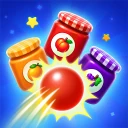
Screenshots
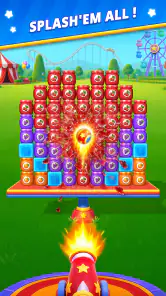
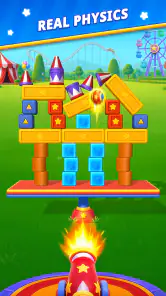
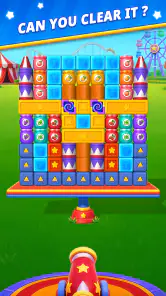
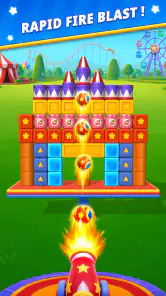
Analysis by Reviewed
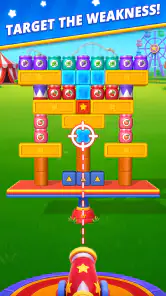
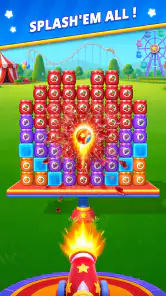
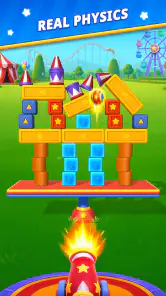
Some puzzle games win me over in the first few minutes and then disappear from my phone just as quickly. Splash Buster has a better chance than most of surviving that first burst of novelty because its central idea is easy to understand but leaves room for careful play: aim a cannon, set off connected reactions, and use the resulting physics to clear a three-dimensional puzzle. I found it immediately approachable, yet not completely mindless. The interesting part is not simply firing; it is deciding where one action should begin so the rest of the scene does more work for me.
That makes this a particularly friendly choice for short puzzle sessions. I can pick it up while waiting for an appointment, play a few attempts, and put it down without needing a long explanation or a complicated story to remember. At the same time, the physics-based setup gives each shot a little more personality than a standard matching board. The developer, Nebula Studio, has aimed at a broad audience, and the Everyone content rating fits the clean, accessible nature of the concept.
Why the first week feels so inviting
The opening appeal comes from the relationship between aiming and consequence. A conventional puzzle often asks me to identify a pattern and make a correct move. Here, I have to read a three-dimensional arrangement, choose a target, and anticipate how a chain reaction might travel through it. That extra layer makes even a simple attempt feel active. I am not only solving a board; I am setting up an event and watching whether the scene responds as expected.
I especially like the low barrier to entry. Someone who rarely plays puzzle games can understand the basic goal without studying a tutorial for a long time. The cannon gives the game a clear point of focus, while the chain-reaction idea supplies an obvious reason to think before acting. It is the sort of design I can explain to a friend in one sentence, then hand over the phone and let them learn through play.
During the first week, that clarity matters. Short sessions do not feel like wasted time because each attempt has a visible purpose. If a shot fails, I can usually identify the broad problem: I aimed at the wrong object, started the reaction from a poor angle, or expected the surrounding physics to behave differently. That sense of cause and effect is more satisfying than losing because of an obscure rule.
The three-dimensional presentation also helps separate it from flat puzzle alternatives. A match-style game may be better when I want a familiar rhythm and rapid repetition, while a word puzzle is stronger when I want to exercise vocabulary. This game occupies a different space. It asks for visual judgment and timing of decisions rather than memorization or word knowledge. For players who enjoy experimenting with objects and watching a plan unfold, that distinction is meaningful.
One useful early habit is to resist firing at the first obvious target. I get more from the game when I spend a moment tracing what might happen after contact. The most visible object is not always the best starting point. A less dramatic target can sometimes open a better route for the rest of the reaction. That small change in approach turns the game from quick tapping into a compact exercise in planning.
More From Our News Desk
Weather by Xiaomi Review: Clear at a Glance, Less Clear Up Close

X Under Pressure: Can It Recover When Posting Goes Wrong?

Clash of Clans Is Won Between the Battles

Android Auto Makes the Case for Quieter Car Software

MobiOffice: Transforming Mobile Productivity with Seamless Integration

EA SPORTS FC™ Mobile Soccer: Redefining Mobile Sports Gaming
Another practical tip is to treat failed attempts as information rather than simply wasted turns. I pay attention to which part of the scene moved first and which connection broke afterward. Even without writing anything down, that mental map makes the next attempt more deliberate. This is one of the less obvious strengths of the design: the physics can teach me how to look at the puzzle, not just whether I succeeded.
The free entry point is helpful for trying that learning process without committing money at the start. The game is free to download, although optional in-app purchases range from $0.99 to $99.99 per item. That wide range is worth keeping in mind before spending. I would approach purchases as optional convenience rather than part of the basic reason to install it, and I would decide on a personal limit before a difficult section encourages an impulse buy.
What makes the play feel satisfying
The best moments come from a clean setup where one action produces several consequences. I enjoy the brief pause before a shot, when I am comparing possible starting points, followed by the visual payoff of objects reacting in sequence. That payoff gives the puzzle an almost toy-like quality, but the need to choose a useful angle keeps it from being only decoration.
This also creates a good everyday use case. If I have ten minutes between errands, I can play without preparing a long session. If I am mentally tired after work, I can start with a straightforward attempt and gradually become more analytical. The game works as a small focus reset because it asks me to observe one contained space instead of juggling several tasks at once.
It is less suitable for someone seeking a deep narrative, a large character system, or a competitive multiplayer routine. Nothing about the core appeal suggests that it is trying to replace those genres. I would recommend it to a person who likes tactile puzzle solving and compact challenges, not to a player who needs constant social interaction or a large progression universe to stay interested.
Whether the idea has value after the novelty fades
The harder question is not whether the concept is enjoyable at first. It is whether I will still want to aim the cannon after the basic surprise of the physics has worn off. My answer is cautiously positive, but it depends on how much I enjoy refining solutions. The recurring value comes from improving my reading of each scene and finding more reliable ways to begin a chain reaction. If I only want a new visual effect every few minutes, the appeal may decline sooner.
Puzzle games usually survive through one of two strengths: endless mechanical variety or a strong satisfaction loop built around mastery. Splash Buster leans toward the second. Its lasting appeal is tied to the pleasure of making a better decision, not simply collecting a new item or moving through a story. That can be durable for patient players, but it also means the game has to keep presenting situations that feel meaningfully different rather than repeating the same shot with a new arrangement.
For month-to-month use, I would keep it as a secondary game rather than my only puzzle app. That is not an insult. A small physics puzzle is ideal for filling gaps in the day, but it may not provide enough variety for someone who plays for long stretches every evening. I can imagine returning regularly when I want a quick challenge, then switching to a logic, word, or number puzzle when I need a different kind of mental work.
The comparison with match-three games is useful here. Match-three titles often offer a smoother, more automatic routine: identify a combination, make a move, and enjoy a cascade. Splash Buster asks me to pause longer and consider spatial relationships. That makes it less immediately relaxing, but more rewarding when I solve a scene through observation rather than luck. A player who prefers constant motion may find the aiming phase slow; I see that pause as the main reason to come back.
Compared with physics sandbox games, it is more focused. A sandbox may let me experiment freely, while this game gives the experiment a puzzle purpose. That focus is convenient on a phone because I do not need to invent my own objective. The trade-off is that players who enjoy open-ended construction may want more freedom than a structured challenge can provide.
There is also a useful distinction between casual repetition and genuine practice. In the first few sessions, I might fire quickly because the scenes look inviting. Over time, the better routine is to inspect the whole arrangement before committing. I look for points where one reaction can influence several nearby elements, then consider whether the cannon’s position changes the safest or most effective approach. That workflow makes the game feel more like a visual planning tool than a reflex test.
Small routines that help it stay fresh
I would not try to force a daily habit with this game if I were no longer enjoying the decisions. Instead, I would use it in focused bursts: a few attempts when I want a spatial challenge, followed by a break before frustration turns the session into repetition. This approach protects the strongest part of the experience, because the game remains something I choose for its particular style rather than a task I feel obliged to complete.
A second routine is to alternate between speed and care. On one visit, I can make a quick attempt to understand the scene. On another, I can deliberately search for a more efficient opening. That change of mindset gives the same basic controls two different purposes. It also helps reveal whether I genuinely enjoy solving the puzzles or merely enjoy the first visual reaction.
I would also keep an eye on spending habits. Because the game is free but includes optional purchases, it is easy for a short, harmless session to become connected with the idea of buying help or convenience. My recommendation is simple: play enough to decide whether the core aiming and chain-reaction loop works for you before considering any purchase. If the basic loop is not satisfying, spending will not fix that underlying mismatch.
The current version is 1.0.4, so I would judge the game primarily as a focused puzzle experience rather than assume it has the breadth of a long-established platform. That matters for expectations. Players looking for a polished, narrow concept may be pleased, while people expecting a huge catalog of modes should approach it more cautiously. The install base is already over ten thousand, and the average rating is 4.7 from around fifty ratings, which suggests a promising early response, though I would still make my decision based on the gameplay style rather than the rating alone.
Where fatigue can begin
The same clarity that makes the game accessible can eventually become a limitation. Once I understand the main rhythm of aiming, triggering, and observing, the experience depends heavily on how much variation the puzzles provide. If several scenes ask for nearly identical decisions, the chain reaction may start to feel like a repeated visual reward rather than a fresh problem. This is the first place I would expect long-term fatigue to appear.
Physics can create another kind of friction. When a result feels surprising, that can be entertaining once or twice. If I cannot tell whether a failure came from my poor planning or from an unpredictable interaction, the learning loop becomes weaker. The game works best when I can build confidence in its cause and effect. Players who prefer perfectly deterministic logic may find physical behavior less comfortable than a grid with unambiguous rules.
The cannon format may also divide players. I like having a clear action to plan, but anyone who dislikes aiming mechanics could experience the central control as a chore. This is not the right recommendation for someone who wants purely abstract puzzles with no sense of trajectory or impact. A traditional Sudoku, word game, or number-placement title will be a better fit for quiet, rule-based deduction.
There is a potential session-length issue as well. The game is easy to start, but that does not automatically mean it will support extended play. I would watch for the moment when I am repeating attempts without learning anything new. At that point, closing the game is better than pushing through. Its strength is concentrated challenge, and treating it like a marathon could expose its limits faster.
Monetization is another consideration, especially for families. The Everyone rating makes the content broadly approachable, but adults should still decide how optional purchases are handled on a shared device. The price range reaches from a small amount to a much larger single-item purchase, so I would not leave spending entirely to chance. The game can be enjoyed as a free trial of its core idea, but a household should set expectations before anyone starts tapping through purchase screens.
I would also skip it if my main requirement is a game that rewards constant collection, social competition, or a large long-term identity. The appeal here is the puzzle itself. There is value in that simplicity, but it means the game will not satisfy every kind of mobile player. A more feature-heavy alternative is likely better for someone who wants a persistent hobby with several unrelated activities in one app.
My long-term verdict
After the novelty fades, Splash Buster earns a place as a compact puzzle game for players who enjoy visual planning and satisfying physical reactions. I like that it can be understood quickly while still rewarding a slower second look. The strongest sessions are not about firing as fast as possible; they are about identifying a useful starting point, predicting the chain, and learning from the result when the plan misses.
I would recommend it to a friend who wants a free, approachable game for short breaks and who enjoys experimenting with cause and effect. It is particularly suitable for someone moving from simple casual games toward more thoughtful puzzle play, because the controls remain friendly while the decisions gradually become more deliberate. The Everyone rating also makes its basic concept easy to share across a household, provided purchase settings are handled sensibly.
I would not call it an automatic long-term replacement for every other puzzle game. Players who need endless variety, story progression, competitive features, or completely predictable logic should look elsewhere. Even fans of the concept may get more value by rotating it with word, number, or matching games rather than demanding that one physics-focused idea provide every kind of mental stimulation.
My final judgment is that it has recurring value when used in moderation. The maintenance burden is low because I can return without relearning a complicated system, but the personal maintenance matters: I need to take breaks, avoid rushing, and resist treating optional purchases as a substitute for solving. If I keep those habits, the game remains a pleasant little challenge rather than a disposable first-week experiment.
For a free puzzle built around cannon aiming and chain reactions in three-dimensional scenes, that is a worthwhile result. I would install it for the tactile problem-solving, keep it available for short focus breaks, and recommend it honestly with one qualification: its lasting appeal depends on whether discovering a better setup continues to feel rewarding after the first spectacular reactions become familiar.
Splash Buster Frequently Asked Questions
Who developed Splash Buster, and what is its age rating?
Splash Buster is a puzzle game developed by Nebula Studio, with an Everyone age rating. That makes it broadly suitable for players of different ages, though families may still want to review how the game is played and manage any purchase settings on a shared device. Its puzzle format centers on aiming a cannon, triggering chain reactions, and smashing 3D physics puzzles.
What is Splash Buster and how does the game work?
Splash Buster is a casual action game focused on quick reactions, colorful visuals, and splash-based challenges. After installing it, players generally progress through short levels or encounters by tapping, aiming, or timing actions correctly. The gameplay is easy to understand at first, but later stages may require faster responses and better control of power-ups or special abilities.
Is Splash Buster free to download and play?
Splash Buster is free to download, and it offers in-app purchases ranging from $0.99 to $99.99 per item. The purchase range is worth considering before you begin, especially if children use your device or you prefer to avoid optional spending. Check your device’s purchase controls and settings before playing so you can decide whether in-app transactions are appropriate for you.
Does Splash Buster require an internet connection?
Some parts of Splash Buster may work without a constant internet connection, particularly basic gameplay that has already been downloaded. However, online access may still be required for advertisements, cloud saving, updates, events, rankings, or restoring purchases. If you plan to play while traveling or with limited data, test offline functionality first because features can change between versions.
Is Splash Buster suitable for children?
Splash Buster is generally approachable for younger players because its controls and objective are designed to be simple, while the bright presentation makes the game easy to follow. Nevertheless, parents should review the age rating, advertising, in-app purchase settings, and privacy information before allowing children to play. Using parental controls is recommended if the device is shared.
Pros
- Fast
- simple gameplay that is easy to understand from the first round.
- Bright visuals and playful effects make the experience feel lively.
- Short sessions work well for quick breaks or casual play.
- Responsive controls make aiming and bursting targets feel satisfying.
- Lighthearted design is suitable for a broad range of players.
Cons
- Gameplay can become repetitive after extended play sessions.
- Increasing difficulty may feel abrupt for some players.
- Limited strategic depth may not satisfy experienced gamers.
- Frequent effects can make busy scenes harder to follow.
- Progression may feel modest without many long-term goals.
- Category
- Puzzle
- Version
- 1.0.4