GOGO! Blast
- 242.00
- 4.9
- Installs
- 1.00M
- Price
- Free

Screenshots
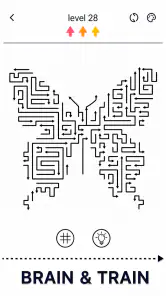
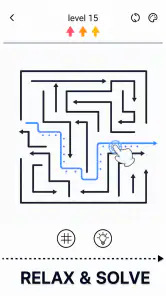
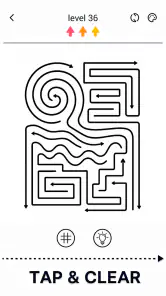
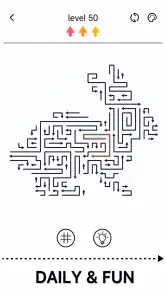
Analysis by Reviewed
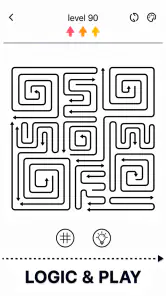
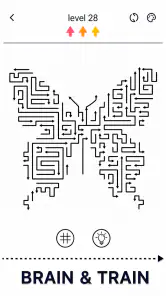
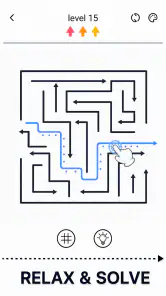
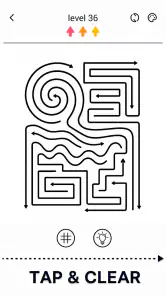
Picture a small pause at home: dinner is nearly ready, someone is waiting for a call to end, and a phone is free for a few minutes. That is where I can see GOGO! Blast fitting naturally. It is a puzzle game built around taps and clearing a board, so a person can get the basic idea without a lengthy explanation. In a shared household, that makes it an easy activity to offer—provided everyone understands that taking turns is a household arrangement, not a promise of a built-in group mode.
A quick trial before it becomes a routine
I would begin with a short solo try, then invite someone else to take a turn. That gives each person a chance to discover how the board responds before the group starts suggesting moves. It also answers a practical question: does the game feel pleasantly focused to the people who will actually use it, or does its pace leave them wanting a different kind of puzzle?
For a shared device, I’d keep the first session deliberately simple: decide who starts, agree on a natural stopping point, and return the phone to its usual owner when the break is over. That small routine is more useful than assuming that a game will manage household boundaries for you. If the device is also needed for a call, schoolwork, or messages, the person waiting for it should have priority over one more turn.
Why the same puzzle can suit one person and not another
The appeal here is accessibility, not a guarantee that every player will enjoy the same challenge. Someone who likes seeing a board, making a move, and checking its effect may find the format satisfying in a short window. A player who wants a puzzle to unfold through a long chain of increasingly demanding rules may feel that this is too light. I’d use the first few turns to judge that difference instead of trying to persuade a reluctant player to keep going.
It can also help to decide whether the group wants to collaborate or simply take turns. If people are keen to talk through possible taps, let them discuss a move before the active player makes it. If someone would rather solve the board independently, give them room to do that without a running commentary. Asking first keeps a casual game from turning into unwanted coaching.
I’d also pay attention to who is holding the device. A phone passed around while someone is touching the board can lead to accidental taps or a clumsy handoff, so I’d pause between turns and place the device on a steady surface if several people are watching. That is a small practical detail, but it helps keep the focus on the puzzle rather than on juggling the screen.
A puzzle that fits shared moments
The basic idea is easy to grasp: make deliberate taps and work toward clearing the board. That simplicity makes GOGO! Blast less intimidating than puzzle games that begin with a long tutorial, a complicated rule set, or a story you have to remember. If a family member hands over the device, the next person can understand the general aim quickly instead of needing a full briefing.
More From Our News Desk
Weather by Xiaomi Review: Clear at a Glance, Less Clear Up Close

X Under Pressure: Can It Recover When Posting Goes Wrong?

Clash of Clans Is Won Between the Battles

Android Auto Makes the Case for Quieter Car Software

MobiOffice: Transforming Mobile Productivity with Seamless Integration

EA SPORTS FC™ Mobile Soccer: Redefining Mobile Sports Gaming
That easy handoff is useful, but it is not the same as a built-in shared-play mode. I would treat it as a game people can take turns with, not as a game that automatically coordinates multiple players. The household version works best when everyone agrees on a simple routine: one person plays, then passes the device along. That keeps the experience friendly and avoids assumptions about accounts, saved progress, or separate profiles.
For a realistic everyday example, I can imagine a parent waiting for food to finish cooking while a child watches nearby. One person can make a short attempt, then let the other try. The puzzle gives the moment a little structure, and the family can talk about choices without needing to compete over a complex score system. If a device is also used for messages, work, or school, though, I would keep turns brief and make sure the next person is ready before handing it over.
Why the simple format works—and where it stops
Many puzzle games ask for either calm repetition or careful long-term planning. GOGO! Blast sounds suited to the lighter end of that range: an accessible board-clearing challenge that can make a short break feel purposeful. I find that a useful middle ground for people who want something more engaging than tapping through idle animations, but do not want to commit to a deep strategy game every time they open their phone.
The trade-off is that players who need a strong narrative, elaborate progression, or a broad collection of mechanics may find the format too slight. The short description and core premise point toward a focused puzzle rather than a sprawling game. If I wanted a demanding logic challenge to work through over many sessions, I would choose a title built around deeper systems. If I wanted an easy-to-explain activity for a few spare minutes, this is a more plausible fit.
Set expectations before sharing a device
On a shared phone or tablet, the most useful setup is often social rather than technical. I would agree in advance on whose turn it is and whether the device is being used for one quick round or a longer break. That small boundary can prevent a casual puzzle from becoming an argument about who gets to keep the screen. It also helps when a device belongs to an adult but is occasionally used by a younger relative.
I would not assume that sharing the app means sharing a single, clearly separated game history. The available details do not establish how progress is organized, so I would avoid promising that each person can maintain an independent run. If preserving separate progress matters to your household, check the game’s behavior on the device before making it part of a family routine. For casual turns where personal records are not important, that uncertainty matters much less.
A practical approach is to treat the game as one shared activity on one device, not as a family account system. That distinction is easy to overlook because many modern games include profiles, cloud saves, or social features. Those features should not be presumed here. If everyone wants independent goals and uninterrupted progress, separate devices or a game explicitly designed around profiles would be a better match.
Taking turns without turning it into a contest
GOGO! Blast can be used as a small coordination exercise: one player explains why they are tapping in a particular place, and the next person tries a different approach. That is a more interesting way to share a puzzle than simply passing the screen without conversation. I would keep the tone exploratory—“what happens if we try this?”—rather than making every turn a test of who is better at the game.
There is also a useful pacing choice in a shared setting. A person who is waiting for a turn can watch the board and think ahead, but that can make the active player feel coached. I would ask before offering suggestions, especially with children. Letting the player make their own move preserves the satisfying part of a puzzle: choosing, tapping, and seeing the result. For a more collaborative mood, the group can discuss options first and then let one person carry out the agreed move.
Because this is a tap-based puzzle, I would also be mindful of how a device is physically passed around. A stable surface is better than passing a phone while someone is mid-action, and a larger screen can make turns easier for people who prefer not to hold a compact phone. These are ordinary shared-device considerations, but they matter more in a game where the main interaction is directly touching the board.
Age context and trust
The game is rated Everyone, which makes it easier to consider for a mixed-age household than a title aimed at mature players. That label is useful context, not a substitute for a parent’s judgment about screen time or a child’s readiness to use a shared device. I would still introduce it with the same boundaries I use for any phone game: where it can be played, when the device must be returned, and whether play is appropriate during homework or meals.
Nebula Studio is the developer, and the game is free. Its average rating is 4.9 from around 37,000 ratings, with more than 1 million installs. Those figures suggest that many people have tried it and responded positively, but I would use them as a starting point rather than proof that it will suit every player. A popular, highly rated puzzle can still feel too repetitive for someone who wants lots of variety or too casual for someone who prefers a serious brainteaser.
For an adult deciding whether to let a child try it, I would focus on the child’s habits and the device’s normal rules, rather than treating the age label as a complete answer. I would also make the first session a shared one. Watching how quickly the child understands the board, whether they can stop when asked, and whether the game keeps their attention in a comfortable way tells you more than a rating alone.
What I would check before making it a household regular
The current version is 1.3.5, and the minimum operating-system requirement is 7.1. Those details are worth checking against an older shared device before planning around the game. If the device cannot run it, the simplest solution is not to rebuild a household routine around it; choose a puzzle that works on the available hardware instead.
I would also try a short session before promising that it will be a reliable waiting-room or travel activity. A puzzle that feels calming to one person can feel repetitive to another, and a shared screen magnifies those differences. Notice whether players enjoy discussing their choices or mainly want to tap quickly and move on. That tells you whether the game works best as a quiet solo break or as a small group activity.
One non-obvious benefit of trying it in short sessions is that the household can find a natural stopping point without turning the game into a long event. Agreeing to play for one brief turn each is often easier than negotiating after someone has already become absorbed. I would not frame that as a special game feature; it is simply a way to use a straightforward puzzle responsibly on a device that belongs to everyone.
Who should choose it, and who should pass
I would recommend GOGO! Blast to someone who enjoys quick board puzzles, wants rules that are easy to explain, and is happy to play without a large narrative wrapper. It makes sense for a casual player looking for a calm distraction, or for a household that likes taking turns on one device without expecting a full multiplayer experience. Being free also makes it straightforward to try without committing to a purchase.
I would skip it if your main priority is a competitive game with clearly defined multiplayer, individual family profiles, or substantial long-term progression. I would also look elsewhere if you prefer puzzles that reward extended planning and gradually introduce more demanding systems. In those cases, a dedicated strategy or logic title is likely to give you more depth, while a game built specifically for local multiplayer would make turn-taking and shared goals clearer.
Compared with the usual puzzle alternatives, the main reason to choose this one is its approachable, tap-led format rather than a promise of complexity. Match-style games may be more familiar to some players, while logic games often ask for more patience and deliberate reasoning. GOGO! Blast sits closer to a quick, accessible board challenge. That makes it easier to offer to different ages, but it also means the game may not provide the variety that keeps a dedicated puzzle fan engaged for long stretches.
My household verdict
For me, GOGO! Blast is best treated as a modest shared-device option: something to try during a quiet pause, pass around for short turns, and put away when the break is over. Its accessible puzzle premise and Everyone rating make it easy to introduce, while the free price lowers the barrier to seeing whether the family actually enjoys it. I would keep expectations centered on simple play rather than assuming it offers family profiles, a formal multiplayer mode, or deep progression.
The deciding question is whether your household values an easy activity more than a feature-rich one. If a few people can enjoy discussing taps and handing the device along, this game has a practical place in the routine. If separate accounts, coordinated multiplayer, or increasingly complex puzzles are essential, another option will serve you better. My recommendation is to try it as a short shared break, set clear turn-taking expectations, and let the players’ response—not its popularity alone—decide whether it earns a regular spot.
GOGO! Blast Frequently Asked Questions
What is GOGO! Blast?
GOGO! Blast is a casual puzzle game built around clearing colorful blocks and progressing through a series of levels. Its pick-up-and-play format makes it suitable for short sessions, while new stages and changing board layouts provide a reason to keep playing. The exact mechanics and available features can vary by version, so check the current store listing and in-game instructions before downloading.
Is GOGO! Blast free to download and play?
The game may be available to download for free, but that does not necessarily mean every feature or item is free. Some versions of mobile puzzle games include optional in-app purchases, such as extra moves, boosters, or other conveniences, and may also show advertisements. Review the Google Play or App Store listing for current pricing and purchase details, and use device-level purchase controls if children may play.
Can I play GOGO! Blast offline?
Whether GOGO! Blast works without an internet connection can depend on the version and on which feature you want to use. Basic gameplay may be available offline in some releases, while ads, online events, cloud saves, or other connected features typically require a connection. If offline access matters to you, check the game’s store description and test it in airplane mode before relying on it during travel.
Is GOGO! Blast suitable for children?
GOGO! Blast’s puzzle-focused format may appeal to younger players, but suitability depends on the content, advertising, and purchase options in the version available in your region. Check the age rating and privacy information on the relevant app store, and review any permissions requested by the game. Parents may also want to enable purchase authentication and screen-time controls before letting children play.
How can I fix GOGO! Blast if it crashes or fails to load?
First, confirm that your device meets the game’s listed requirements and has enough free storage, then install any available game and operating-system updates. Restarting the device and checking your internet connection can also help, particularly if the issue involves online features. Avoid deleting the app until you know whether progress is backed up, since removing it may erase local saves; contact the developer through the store listing if problems continue.
Pros
- Quick rounds make it easy to play in short breaks.
- Simple tap controls are approachable for new players.
- Colorful visuals give the puzzle boards a lively look.
- Matching pieces can create satisfying chain reactions.
- Progressive stages provide a clear sense of advancement.
Cons
- Later levels may feel repetitive if you prefer varied gameplay.
- Some puzzles can become difficult without careful planning.
- Frequent effects may feel visually busy during chain reactions.
- Progress depends on completing levels rather than free exploration.
- Players looking for a story or deeper strategy may find it light.
- Category
- Puzzle
- Version
- 1.3.5