Magic Hop : Jump with Beats
- 778.00
- 4.2
- Installs
- 50.00M
- Price
- Free

Screenshots



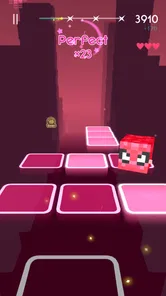
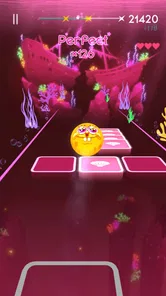
Analysis by Reviewed
For a rhythm game, Magic Hop gets its appeal from a simple idea that asks for more precision than it first seems: follow the music while guiding a bouncing ball across a path of tiles. I like that it is easy to understand without being entirely automatic to play. The bright presentation and beat-led movement make it a lively choice for short breaks, though players looking for deep musical controls or a more substantial campaign may want something different.
A game built around listening and steering
What makes the format click for me is the connection between hearing the beat and choosing where the ball goes. Rather than treating music as background decoration, the game asks me to use it as part of the moment-to-moment challenge. That gives a short attempt a clear purpose: listen, react, and see whether I can keep the ball on course.
It is also a useful distinction when deciding what to download. If I want a game that lets me engage with a song without learning a complicated control scheme, this is an approachable option. If I want to study a track, work through carefully charted notes, or build a longer progression over many sessions, I would look elsewhere. The appeal here is the immediate loop, not a promise of musical instruction or a sprawling adventure.
Getting into the Groove
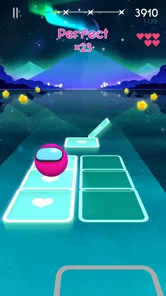
First things first, Magic Hop is all about rhythm and timing. If you're a fan of tapping to the beat, this game will definitely strike a chord with you. The concept is fairly simple: you guide a ball to hop on tiles that are perfectly synchronized with the music. It sounds easy, but trust me, it can get pretty intense!
Visuals and Soundtrack
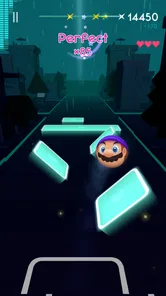
Let’s talk about the visuals. The game is a visual treat with vibrant, neon-colored landscapes that change as you progress. It’s almost hypnotic! The combination of these visuals with a diverse soundtrack makes the experience truly immersive. From pop and EDM to classics and even some indie tracks, the music selection is quite impressive and keeps you on your toes. You might find yourself dancing along as you play!
The visuals do more than decorate the playfield: they help give each run a distinct mood, while the changing scenery can make repeating a song feel less samey. I find that the sound matters more than the scenery, though. If you play with the volume low or in a noisy place, it can be harder to settle into the rhythm, so headphones are a sensible choice when you can use them safely. The neon effects may also be a lot to look at during a quick commute, especially if you prefer calmer, less animated games.
Making the most of a short session
A practical way to fit the game into a busy day is to treat each attempt as a focused break rather than something to play while multitasking. For example, if I have a few minutes before an appointment, I can choose a challenge, give it my attention, and stop when it is time to go in. That is a better match for the game than trying to play while carrying on a conversation or keeping track of several other things.
More From Our News Desk

Weather by Xiaomi Review: Clear at a Glance, Less Clear Up Close

X Under Pressure: Can It Recover When Posting Goes Wrong?

Clash of Clans Is Won Between the Battles

Android Auto Makes the Case for Quieter Car Software

MobiOffice: Transforming Mobile Productivity with Seamless Integration

EA SPORTS FC™ Mobile Soccer: Redefining Mobile Sports Gaming
Sound is part of that decision. In a quiet place, listening closely can help me pick up the pulse; in a shared space, lowering the volume may be more considerate, but it can make timing feel less natural. I would not use headphones when I need to hear announcements or stay aware of people and traffic around me. The game is most enjoyable when I can give it a little concentration without losing track of my surroundings.
Gameplay Mechanics
The mechanics are straightforward, yet they require precision. As the music plays, you need to tap and hold your screen to control the ball's movements. The challenge escalates with the tempo, so you’ll find yourself glued to your screen, trying not to miss a beat. It’s a perfect blend of fun and challenge that keeps you coming back for more.
That rising pressure is where the game works best: I can focus on one short attempt, notice where my timing slips, then try again with a clearer sense of the beat. A practical tip is to watch the route and listen for the pulse rather than staring only at the ball; splitting your attention between both cues takes practice, but it can make corrections feel less frantic. If you want a forgiving experience where a missed input barely matters, this is not the right kind of rhythm game. Its fun depends on being willing to retry and improve.
How I approach a difficult run
When I start missing a section, my first instinct is not to tap more aggressively. I try to settle into the song’s pulse and pay attention to how the path is changing, because rushing can turn one uncertain moment into a string of late reactions. A calmer attempt gives me a better chance to tell whether I lost the beat or simply failed to read the route.
This is a small but useful trade-off: the game rewards focus, yet repeating a section can become tiring if I keep making the same mistake without changing my approach. Taking a short pause can help more than immediately launching another attempt. It also makes the game easier to enjoy casually; I do not have to turn every session into a score challenge or keep playing after the rhythm stops feeling fun.
Challenges and Levels
One of the things that caught my attention is the variety of levels and challenges. Each level brings something new, either in terms of the song or the complexity of the tile patterns. It’s great for those who love to push their limits and aim for high scores. Plus, there are daily challenges and rewards that add an extra layer of excitement.
Those daily goals suit a small routine better than a long sit-down session: I could use a spare moment while waiting for a ride to play a challenge, then leave the longer score-chasing for when I have time to concentrate. For a fair comparison, many music games put the emphasis on tapping notes as they arrive; this one makes the path and the ball’s movement central, so it feels more like steering to a beat than playing a traditional instrument. That difference is the main reason to choose it over a standard note-lane game, but players who want to practice exact song charts may prefer those alternatives.
Choosing between rhythm-game styles
Compared with a conventional note-lane game, the visual route here gives me a more spatial task: I am following movement as well as listening for timing. That can make the experience feel more playful and less like reading a sequence of symbols. It is a good fit if I enjoy reacting to a moving scene, but it is not automatically better for every rhythm fan. Someone who likes precise note patterns and wants each input to represent a particular musical part may get more from a chart-based alternative.
It also sits apart from music games that focus mostly on building a collection or customizing an avatar. The ball skins add a personal touch, but the main reason I would return is still the timing challenge. If I am choosing between this and a music player, the decision is simpler: this asks me to play actively, while a music app is better when I just want to listen without watching the screen or making repeated attempts.
Personal Touches and Practical Fit
Another cool feature is the customization option. You can unlock new skins for your ball, which is a neat way to personalize your gaming experience. It doesn’t affect gameplay, but it adds a fun element to the visuals.
I appreciate that the skins are visual rather than a reason to grind for a competitive advantage. Still, cosmetic unlocks are a bonus, not a substitute for new musical variety, so they may not hold the attention of someone who quickly tires of a game’s core loop. If you are deciding whether to spend, remember that the game is free to start and offers optional in-app purchases from $0.99 to $19.99 per item. I would first see whether the basic rhythm-and-steering loop keeps you interested before paying for anything.
What to consider before spending
Because the core attraction is the way the ball follows the beat, I would use the free download as a test of the gameplay rather than assume optional purchases are necessary. First see whether you enjoy the steering, the music-led timing, and the repeated attempts. If those parts are already working for you, cosmetic unlocks may be a pleasant extra; if they are not, spending is unlikely to change the basic feel of a run.
This is particularly worth keeping in mind for players who are drawn to collecting visual items. A new look can make a familiar ball feel more personal, but it does not solve the main drawback for someone who finds the rhythm loop repetitive. I would set a simple boundary: decide what you enjoy about playing before considering an optional purchase, and do not treat unlocks as a substitute for the kind of musical variety or progression you may be seeking.
Who Will Enjoy the Beat?
Magic Hop is published by BADSNOWBALL HONGKONG LIMITED and has an average rating of 4.2 from around 45,000 ratings, with more than 50 million installs. It is rated Everyone, runs on Android 5.1 or later, and its current version is 3.1.0. It is a music game released on April 5, 2021, and is free to download. Those details make it easy to try, but the best fit is still a player who enjoys quick retries, music-led movement, and chasing a cleaner run rather than collecting a large set of complex modes.
I’d recommend it to casual players who want an active little game between errands, and to rhythm fans curious about steering rather than simply hitting notes. I’d skip it if you dislike repeated attempts, prefer a quiet visual style, or want music practice with strict, instrument-like feedback. For a realistic use case, it fits a few minutes before a class or while waiting for a friend: keep the sound at a comfortable level, play one challenge, and stop if you need your attention elsewhere. It is less suitable when you need to stay alert to traffic, conversations, or other surroundings.
Who may want another kind of game
I would be more cautious about recommending it to someone who wants a game that can be played almost automatically while their attention is elsewhere. The route and rhythm both matter, so glancing away or treating the soundtrack as background can make an attempt harder to follow. It is also a weaker choice for a player who mainly wants a quiet, low-stimulation break: the vivid presentation is part of its character, but it will not suit everyone’s idea of relaxing.
For younger players, the Everyone rating is reassuring as a broad content classification, but I would still make the usual practical choices about screen time and sound level. The game is better enjoyed in a safe place where the player can focus on the screen, not while crossing a street or moving through a crowded area. That advice is especially relevant to a game whose challenge depends on watching the path and responding to the music.
Final Thoughts
In conclusion, Magic Hop is a fantastic game for music lovers and rhythm game enthusiasts. It’s one of those games that you can pick up for a quick session or lose yourself in for hours. The combination of stunning visuals, a killer soundtrack, and engaging gameplay makes it a standout in its genre.
So, if you’re looking for a game that’s both entertaining and challenging, give Magic Hop a try. It’s available on both Android and iOS, and I promise, it’s worth a download. Get ready to hop to the beat!
My verdict is that its strongest quality is the way it turns listening into movement: the ball, tile route, and soundtrack work together to make each attempt feel active rather than like a passive music playlist. Its limitations are equally clear. The same timing loop can become repetitive, and the bright visuals or need to focus on the beat may not suit every setting. Since it costs nothing to download, I’d try it for a handful of sessions and decide based on whether improving your timing feels satisfying. If it does, this is an easy game to keep nearby; if not, a note-focused rhythm game or a music app will be a better match.
My recommendation in practice
For me, the best way to judge it is to try a few focused sessions in different moods: one when I can listen closely, and another when I only have a brief pause. If the movement and soundtrack make me want to improve, that is a strong sign the game suits me. If I find myself wishing for deeper song charts, a quieter screen, or more varied long-term goals, I would take that as a good reason to choose a different music game instead.
That leaves a clear recommendation rather than a universal one. I would keep it in mind for a short, hands-on rhythm break, especially if the idea of guiding a ball along a musical route sounds more appealing than tapping notes in lanes. I would pass if I wanted a calmer experience, serious practice, or progression beyond repeating challenges. Its free entry makes it easy to sample, but the right reason to stay is simple: I enjoy listening, steering, and trying to make the next run cleaner.
Magic Hop : Jump with Beats Frequently Asked Questions
How much storage space should I set aside for Magic Hop?
Before downloading, it is sensible to check that your device has room for another game and its updates. Magic Hop is a music game focused on hopping along with beats, so the main appeal is its rhythm-based play rather than a complicated setup. Keeping some free space available can also help avoid installation or update interruptions.
Can I adjust the game’s sound or play without disturbing people nearby?
Magic Hop’s gameplay is closely tied to music, so sound is an important part of the experience. You can lower your device’s volume or mute it when you need to play quietly, though listening to the beat can make it easier to follow the rhythm. Headphones are another practical choice when you want to hear the music without playing it aloud.
Is Magic Hop suitable for quick play sessions?
Magic Hop is built around hopping on tiles in time with music, making it a straightforward choice when you want a music-focused game. Its beat-based challenge can fit into a short break, while players who enjoy improving their timing may prefer to keep playing for longer. The experience centers on following the rhythm rather than learning a complex control scheme.
Can I play Magic Hop with headphones, and does timing matter?
Magic Hop is a music game built around hopping on tiles in time with the beat, so listening closely can help you follow the rhythm and make each run more engaging. Headphones are a natural option for hearing the music clearly, while the central challenge remains coordinating your hops with the beats. It suits players who enjoy rhythm-focused gameplay.
What should I know about compatibility and the game’s age rating before downloading?
Magic Hop is available for Android and iOS, and the Android version requires Android 5.1 or later. Its content rating is Everyone, making it suitable for a broad audience. The game is free to download, and it has been available since April 5, 2021. Checking that your device meets the operating-system requirement is a sensible step before installing.
Pros
- Engaging rhythm-based gameplay.
- Wide variety of music tracks.
- Intuitive controls and interface.
- Visually appealing graphics.
- Regular updates with new content.
Cons
- Requires stable internet connection.
- Contains in-app purchases.
- Ads can be intrusive.
- Limited offline functionality.
- Consumes significant battery life.