Beat Fire - Edm Gun Music Game
- 6.83K
- 4.1
- Installs
- 50.00M
- Price
- Free

Screenshots

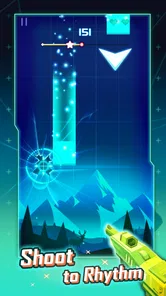

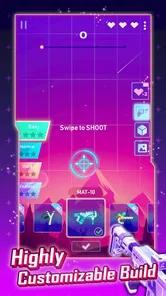
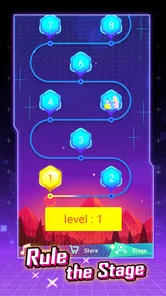
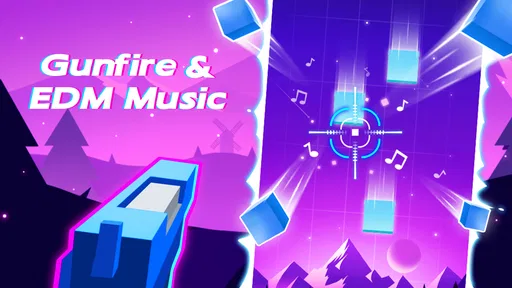

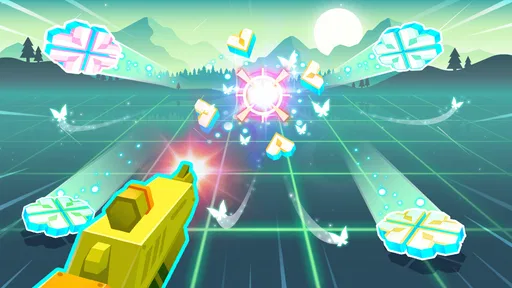
Analysis by Reviewed
I usually approach mobile rhythm games with one question: does the tapping feel connected to the music, or am I just chasing things on a screen? Beat Fire - Edm Gun Music Game gives that familiar format a shooting-themed twist, asking me to hit falling tiles in time with EDM tracks. The idea is immediately readable, which makes it easy to try during a spare moment, though keeping a clean rhythm is another matter once the pace picks up.
What the purchase details mean in practice
Beat Fire is a free music game from Adaric Music, with optional in-app purchases priced from $0.99 to $19.99 per item. That tells me spending is possible, not that it is necessary to enjoy a session. I found the free play adequate for trying the core rhythm loop; I would treat purchases as optional rather than assume they are needed to progress. The game is rated Teen, has a 4.1 average from around 325,000 ratings, and has passed 50 million installs. Those figures suggest a widely tried game, but popularity alone can’t tell you whether its timing style suits your hands.
What a normal play break looks like
Beat Fire makes the most sense when I treat it as a focused few minutes rather than background entertainment. For example, while waiting for a ride or taking a short break, I can choose a track, concentrate on its falling targets, and stop after a run without needing to manage a long story or a complicated setup. That compact format is useful, but it also means the game asks for attention: trying to play while reading messages or walking around is likely to make timing harder and can take the fun out of a song.
Headphones can help me pick out the pulse, but they are not a substitute for watching the targets. I find it useful to listen for the regular beat while keeping my eyes on the next part of the pattern, rather than staring only at the point where I expect to tap. This balances sound and screen cues. If the music is loud or the display feels visually busy, lowering the volume or taking a break is a sensible adjustment; the aim is to make the timing clearer, not to force a perfect run at any cost.
How to get more from a short session
A useful way to approach the difficulty is to replay a song after a demanding run rather than immediately jumping to another track. The same musical passage gives you a clearer chance to notice whether missed tiles come from rushing, losing the beat, or simply needing a slower difficulty. I’d also start with a comfortable grip and keep the phone steady: when the action gets brisk, extra hand movement can make taps less deliberate. These are small adjustments, but they make practice feel more purposeful than repeatedly tapping through songs at random.
There is a trade-off between chasing a high score and learning a pattern. If I focus only on the score, a missed target can throw off the next few taps because I start reacting in a hurry. On a replay, I try to reset my attention at the next musical phrase instead of treating one mistake as a failed run. That approach is especially useful for a game whose challenge is built around keeping time through a sequence, rather than solving a puzzle or making a tactical decision.
Who will enjoy the rhythm-shooter format
This is a good fit if you like EDM and want an active alternative to listening passively, or if you enjoy rhythm games but want their notes presented as targets. It is less suitable if you want a calm music player, a realistic shooting game, or a strict instrument-training tool. Compared with a conventional lane-based rhythm game, Beat Fire makes the action feel more like aiming at a beat; that visual framing is a fun change, though players who prefer reading note lanes may find the targets less familiar. For a quick break between errands, I can see the appeal: one song gives you a compact challenge without asking you to settle in for a long session.
More From Our News Desk

Weather by Xiaomi Review: Clear at a Glance, Less Clear Up Close

X Under Pressure: Can It Recover When Posting Goes Wrong?

Clash of Clans Is Won Between the Battles

Android Auto Makes the Case for Quieter Car Software

MobiOffice: Transforming Mobile Productivity with Seamless Integration

EA SPORTS FC™ Mobile Soccer: Redefining Mobile Sports Gaming
I would also steer away from it if your main goal is to discover unfamiliar music in a relaxed way. The songs here function as the structure for a reflex challenge, so attention goes to timing and targets rather than to browsing or listening closely to an album. Someone who wants a virtual instrument, musical notation, or lessons on keeping time will get more from an app designed for those tasks. Beat Fire can make rhythm practice playful, but I would not treat it as a replacement for deliberate musical training.
Gameplay That Hits the Right Notes
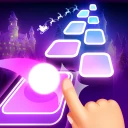
In Beat Fire, the gameplay is as simple as it is addictive. You tap to shoot the tiles that fall in time with the music. The catch? You have to hit them precisely to keep the beat going. It’s like your fingers are the DJ, remixing tracks on the fly. The more tiles you hit, the higher your score. It’s a satisfying loop that kept me coming back for more. The game features a vast library of EDM tracks, so whether you're a fan of bass-thumping beats or trance-inducing melodies, there’s something here for everyone.
Visuals and Sound That Pop
A game like this lives and dies by its visuals and sound, and Beat Fire doesn’t disappoint. The graphics are simple yet colorful, making each session a feast for the eyes. As for the sound, the EDM tracks are top-notch, fully immersing you in the experience. I found myself bobbing my head along with the music more often than not. It’s the kind of game that makes you want to play with headphones on to get the full effect.
The visual presentation is part of the game’s identity, but it can also affect how comfortably you play. If you are sensitive to rapid movement or bright, changing imagery, I would try a brief session first and see how it feels rather than assuming every music game will be equally comfortable. A quieter, lane-based rhythm game may suit you better if you prefer stable note tracks and less action-themed presentation. Here, the visual targets help distinguish the experience, but they are not automatically an advantage for every player.
Challenges and Replayability
One of the things I love about Beat Fire is how it gradually ramps up the difficulty. It starts easy, lulling you into a false sense of security, and then bam! You’re in the thick of it, trying to keep up with the relentless pace. Each song has different difficulty levels, so you can challenge yourself as you get better. This adds a lot of replayability, as you’ll want to master each track.
And let’s not forget the satisfaction of nailing a particularly tricky section. It’s a feeling that never gets old, and it’s what keeps me coming back to the game again and again.
Progress without turning every run into a test
Difficulty selection is useful not only for making a track harder, but for deciding what kind of session you want. When I have little time or energy, an easier run lets me enjoy the music without turning every missed tap into a frustration. When I want a sharper challenge, a harder setting gives me a reason to return to a familiar song and pay closer attention. That flexibility is more welcoming than a game that assumes every player wants to push for maximum speed from the start.
It also helps to separate learning from performance. I would replay a song to understand where its rhythm changes, then choose a tougher run only when the basic pattern feels familiar. This is a practical way to avoid confusing a difficult section with poor timing overall. The game’s appeal is strongest when a miss teaches you what to adjust next time; it is weaker if you expect every attempt to feel like a clean, steadily improving climb.
Freemium Model
Like many mobile games, Beat Fire operates on a freemium model. You can play for free, but there are ads and in-app purchases available if you want to enhance your experience. Personally, I found that the free version offers enough without feeling the need to spend money, but it’s nice to have the option there if you want it.
For anyone weighing up the download, the game is currently at version 1.8.2 and runs on Android 4.4 or later. I’d keep that compatibility in mind on an older device, and remember that quick visual action can be tiring if you’re sensitive to busy screens. If you prefer music games built around learning melodies or following long note patterns, a more traditional rhythm title may be a better match. Beat Fire’s appeal is the immediate, compact challenge rather than musical instruction.
Because ads can break the flow, I would choose when to play with that possibility in mind. A short session between tasks is easier to pause than a planned stretch of uninterrupted listening. If you are deciding whether a purchase is worthwhile, first spend time with the free play and identify what, specifically, you want an item to improve. The listed price range is broad, and the cost alone does not explain what an individual purchase does, so I would not buy on the assumption that it removes a particular annoyance or unlocks a particular advantage.
Fairness, friction, and what I’d check
The purchase range gives a useful boundary for budgeting, but it doesn’t explain what each item unlocks or whether any purchase changes progression. I wouldn’t infer a competitive advantage from the existence of purchases alone. If you are cautious about spending, enjoy the free loop first and review each item in context before buying; the stated prices span from under a dollar to nearly twenty dollars per item. The game also includes ads, which can interrupt the feeling of a continuous music session. That trade-off matters most if you want uninterrupted play rather than short bursts.
For players who care about fairness, the sensible conclusion is a limited one: optional purchases exist, but their presence by itself does not show that results are pay-to-win or that spending improves performance. I would judge the rhythm challenge on the taps and difficulty available to me, while checking the details of any item before paying. If your enjoyment depends on knowing that every player has identical access to every song or progression path, you should verify those specifics in the game before investing time or money rather than rely on assumptions.
One practical tip is to use the easier difficulty as a timing check, not merely as a warm-up to rush through. If a beat feels awkward there, replaying it can help you learn the pattern before adding speed. Conversely, if you already read rhythm cues comfortably, moving up sooner keeps the game engaging. This makes the difficulty choice a tool for managing pressure, not a test of whether you are a “real” rhythm-game player.
Who should choose a different kind of music game
I would not recommend this as a first choice for someone who wants a quiet soundtrack companion, because the tapping and visual action demand attention. It is also not the best fit for players who want to practice an instrument, learn songs note by note, or compete through a clearly explained ranking system. A conventional rhythm title may be a better alternative if you enjoy reading lanes and following longer note sequences; a music-learning app is the better option if your priority is technique rather than a game score.
On the other hand, if you already enjoy EDM and like quick, repeatable challenges, the gun-and-target theme gives familiar rhythm play a different feel without asking you to learn a complicated control scheme. I would start with a track that feels comfortable, keep the phone still, and use a replay to work on one troublesome passage instead of jumping between songs whenever a run goes badly. That small change makes each session more deliberate and gives the game a clearer purpose beyond simply filling spare time.
My trust verdict
Adaric Music released the game on November 5, 2019, and its current version is 1.8.2. The combination of a free entry point and clearly stated optional purchase range makes the basic spending picture easy to understand, while the Teen rating helps families decide whether its presentation is appropriate. I’d recommend it to someone who wants a lively EDM tapping game and is comfortable with ads and optional purchases. I’d skip it if interruptions, rapid visual action, or the shooter framing are deal-breakers. For me, its strongest case is a quick, replayable rhythm challenge; its limits are the same things that make it distinctive, so the best choice depends on what you want from a music game.
In conclusion, if you're looking for a game that combines music and shooting in a way that’s both fun and challenging, Beat Fire - Edm Gun Music Game is definitely worth a download. It’s a game that’s easy to pick up but hard to put down, and it’s got the soundtrack to match. So, what are you waiting for? Give it a shot, and let the beats fire up your next gaming session.
Beat Fire - Edm Gun Music Game Frequently Asked Questions
Can I adjust the sound while playing Beat Fire?
Beat Fire is built around matching actions to music, so sound is an important part of the experience. If you prefer to play quietly or need to lower the volume, check the audio controls available on your device and within the game. Playing with sound can make it easier to follow the beat, while headphones may help you focus on the rhythm.
Does Beat Fire offer a comfortable experience for beginners?
Beat Fire’s central idea is easy to understand: follow the music and hit the tiles with a virtual gun. That makes it approachable for players who enjoy casual rhythm games, though keeping time accurately can take practice. New players can start by focusing on the beat rather than chasing a perfect score, then improve their timing as they become familiar with the gameplay.
Can I play Beat Fire without spending money?
Beat Fire is free to download and play, so you can try its rhythm gameplay without paying upfront. Optional in-app purchases are available, with prices ranging from $0.99 to $19.99 per item. These purchases may appeal to players who want additional content, but spending is not required to get started. Check purchase settings if a child will be playing.
Is Beat Fire - Edm Gun Music Game suitable for younger players?
Beat Fire has a Teen content rating, so it is aimed at teen players rather than very young children. Its central activity is rhythm gameplay in which a virtual gun is used to hit music tiles, as reflected in its description. Parents and players can use that rating to decide whether the game’s theme and style are a good fit before downloading.
Which devices can run Beat Fire - Edm Gun Music Game?
Beat Fire is available for Android and iOS, giving players on either mobile platform a way to try its music-focused gameplay. On Android, the listed minimum operating-system requirement is version 4.4, so it may run on devices using that version or a newer one. Check your device’s operating system and the relevant app store before installing.
Pros
- Engaging rhythm-based gameplay
- Vibrant graphics and effects
- Wide range of music tracks
- Simple
- intuitive controls
- Regular updates with new content
Cons
- Ads can be intrusive
- In-app purchases required for some features
- May drain battery quickly
- Limited offline functionality
- Repetitive gameplay over time