Veterinary Advisor: Dogs Cats
- 5.00
- 4.4
- Installs
- 10.00K
- Price
- Free

Screenshots
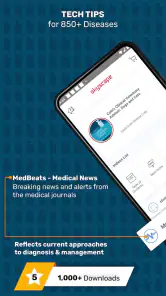
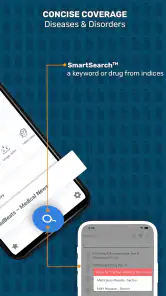

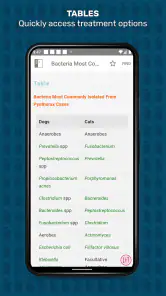
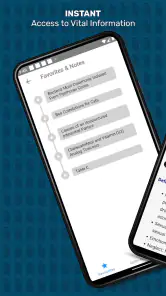


Analysis by Reviewed
When I need a quick clinical reference for dogs and cats, I want something more focused than a general medical search and less cumbersome than carrying a large veterinary textbook. Veterinary Advisor: Dogs Cats aims at that middle ground. It is a free medical app from Skyscape Medpresso Inc., built around the needs of small animal practitioners rather than pet owners looking for casual advice. After spending time with it, my view is clear: it is most useful as a compact point-of-care reference, but it should be treated as a support tool for professional judgment, not as a substitute for examination, diagnostics, or current local protocols.
The app has a practical appeal because its subject is deliberately narrow. Instead of trying to cover every animal or every branch of medicine, it concentrates on canine and feline care. That focus makes it easier to imagine using it during a busy consultation, while preparing a case, or when checking a familiar topic that has suddenly become less familiar. Its store summary calls it an indispensable resource for the busy small animal practitioner, and I would soften that slightly: it can become a useful part of a practitioner’s reference setup, especially when speed and portability matter.
How Veterinary Advisor: Dogs Cats works in real clinical routines
A focused reference rather than a general pet-care app
The first thing I noticed is that this is not designed like a lifestyle app for people who own pets. The wording, organization, and intended audience point toward veterinary work. That distinction matters. A pet owner may find the material too technical or may misunderstand a clinical discussion without the background needed to interpret it. A veterinary student, nurse, technician, or practicing clinician is far more likely to get practical value from the way the information is presented.
In a small animal setting, the most useful reference is often not the one with the most impressive breadth. It is the one that helps me move from a question to a sensible next step without pulling me away from the patient for too long. A dog with a confusing skin presentation, a cat with a change in appetite, or a patient whose signs do not fit the first impression can all create moments where a targeted reference is helpful. The app’s dog-and-cat scope makes those moments more relevant than they would be in a broad human-medical or all-species resource.
I also appreciate that its role is easy to understand. It is not trying to replace the practice-management system, a laboratory portal, a drug calculator, or a communication tool. It sits beside those resources as a clinical reading and checking aid. That narrower role is a strength, because it prevents the app from becoming cluttered with unrelated functions that I would not use during a consultation.
Where it earns its place on a busy day
A realistic use case would be a clinician seeing a series of appointments and encountering a case that needs a quick review before discussing options with the client. I would use the app after collecting the history and performing the examination, not before. The workflow is important: first establish the clinical picture, then use the reference to organize possibilities, identify topics worth reviewing, and prepare better questions for further investigation.
For example, if a cat presents with a combination of signs that could belong to several different systems, a focused reference can help me step back from the most obvious explanation. It may prompt me to review associated signs, relevant differentials, or points that deserve closer attention. The value is not that the app magically produces a diagnosis. The value is that it can reduce the chance of overlooking a familiar but less obvious line of thought when the appointment schedule is moving quickly.
More From Our News Desk

Clash of Clans Is Won Between the Battles

Android Auto Makes the Case for Quieter Car Software

MobiOffice: Transforming Mobile Productivity with Seamless Integration

EA SPORTS FC™ Mobile Soccer: Redefining Mobile Sports Gaming

How Microsoft OneDrive Became a Mobile Productivity Giant

How Google Translate Breaks Language Barriers Effortlessly
Another useful setting is case preparation. Before a discussion with a colleague, I can use a compact veterinary reference to refresh terminology and structure my thinking. This is especially helpful for students and newer professionals who may understand the general disease process but still need help connecting it to the way cases are approached in everyday practice. The app can support that transition from textbook learning to clinical reasoning.
Three practical ways to get more from it
My first tip is to use it as a pre-consultation refresher rather than opening it only when something goes wrong. If I know the day includes several cases in an area where I feel less confident, a short review beforehand can make the later consultation more efficient. This approach also reduces the temptation to search randomly while a client is waiting for an answer.
Second, I would use the app to build a personal list of topics that require deeper reading elsewhere. A quick reference is most valuable when it reveals the boundary of what it can answer. If a case involves an unusual presentation, a complicated medication decision, or a rapidly changing evidence base, the app should be the starting point for verification, not the final authority. That habit turns a short lookup into a safer, more deliberate workflow.
Third, I would separate educational use from prescribing use. A student can use the app to understand how a condition is framed and what questions matter. A clinician can use it to refresh a topic. But any treatment decision still needs to account for the individual patient, weight, age, comorbidities, current medications, diagnostic findings, and applicable professional guidance. The best use of this app is to sharpen clinical thinking, not to outsource it.
What the free download really means
Veterinary Advisor: Dogs Cats is free to install, which makes it easy to try without committing money at the outset. That is helpful for students, trainees, and practices evaluating whether the reference fits their workflow. However, the free entry point should not be confused with unlimited access to every part of the experience. In-app purchases range from $69.99 to $89.99 per item, so the financial decision becomes more significant if the material you need sits behind a paid purchase.
This pricing structure creates a trade-off. On one hand, a free installation lowers the barrier to testing navigation and deciding whether the app feels comfortable on your device. On the other hand, anyone expecting a completely free veterinary library may be disappointed. I would recommend checking what is available before planning to rely on it as the only reference in a practice. The right question is not simply whether the download costs anything; it is whether the accessible content justifies the cost of the additional material you actually need.
That distinction is particularly important for students. A student may benefit from trying the app during revision or clinical placement, but an expensive add-on may not make sense if the same subject is already covered by institutional resources. For a practicing professional, the calculation is different: if the app saves time during repeated small animal consultations and the content matches the cases seen regularly, a paid section may be easier to justify.
Strengths that matter more than flashy extras
The strongest quality here is specialization. A dog-and-cat reference is more immediately relevant to a small animal clinic than a broad resource that forces me to filter out horses, farm animals, exotic species, or unrelated medical disciplines. That focus can make a short break between appointments more productive, because I am not starting from an enormous information pool.
The app also benefits from portability. A phone or tablet is usually closer at hand than a shelf of reference books, and digital access is convenient when I need to revisit a topic away from my desk. This does not make printed books obsolete, but it does change which resource I reach for first. A book remains excellent for extended study; a mobile reference is better suited to a quick check or a focused refresher.
Its audience positioning is another advantage. Because it is aimed at the busy small animal practitioner, I would expect the material to be more useful for clinical work than a generic pet-information app. That does not mean every user will find every topic equally deep, but it does mean the app starts from the right professional context.
The rating is a positive signal without being a reason to stop evaluating the app for yourself: it holds a 4.4 average from around fifty-seven ratings. It has also passed the threshold of over ten thousand installs, which suggests that it has found a real audience without making it one of the enormous mainstream medical platforms. I see those figures as evidence of interest, not proof that it will suit every practice or every specialty.
The limitations I would take seriously
The biggest limitation is the risk of false confidence. A concise reference can make a complicated case feel more straightforward than it really is. When a patient has multiple conditions, an atypical presentation, or an uncertain history, a quick lookup may provide a useful framework but cannot supply the missing clinical information. I would be uncomfortable using any mobile reference as the sole basis for a high-risk decision.
There is also a difference between being easy to access and being easy to use under pressure. On a small screen, long clinical material can become tiring to scan. If I am standing in a treatment area or moving between rooms, reading dense content may be less comfortable than consulting a larger screen or a printed text. The app’s portability is therefore most valuable when the device and setting allow careful reading.
The paid content is another meaningful friction point. Since individual in-app purchases can reach $89.99, users should think about their expected frequency of use before spending. Someone who only occasionally sees dogs and cats may not receive enough value. A mixed-practice veterinarian may prefer a broader reference that covers the species seen most often, even if that means the small animal material is less specialized.
I would also avoid assuming that a mobile reference automatically replaces current professional resources. Clinical recommendations can change, and patient-specific decisions may depend on local regulations, formularies, resistance patterns, or specialist advice. The app can help me orient myself, but it should sit within a larger information system that includes current guidance and consultation with colleagues when needed.
Who should use it, and who should look elsewhere
This app makes the most sense for small animal veterinarians, veterinary students, veterinary nurses, and technicians who regularly work with dogs and cats. It is especially appealing to people who want a focused digital reference for quick review rather than a general-purpose animal encyclopedia. A student on clinical placement may find it useful for connecting classroom concepts with the cases encountered during the day.
It may also suit a practitioner who already owns larger references but wants something more convenient for brief checks. In that role, it works as a companion rather than a replacement. The best fit is someone who understands how to evaluate clinical information and is comfortable confirming important decisions through more than one source.
I would be cautious about recommending it to pet owners without a veterinary background. The Everyone content rating describes the permitted age range, not the level of medical understanding required. A general audience user could read a technical passage and draw an alarming or overly reassuring conclusion. For owners, a conversation with their veterinarian and reliable client-facing guidance will usually be safer and easier to interpret.
I would also look elsewhere if my main need were drug calculations, appointment management, patient records, telemedicine, or a comprehensive multi-species library. This is not the right tool simply because it belongs to the medical category. Its value depends on wanting a dog-and-cat clinical reference specifically. If my daily work centers on exotic animals or large animals, the narrow scope becomes a disadvantage rather than a benefit.
Compatibility and day-to-day expectations
The current version is 3.13.1, and the app supports devices running Android 7.0 or later. That makes it accessible to many older Android devices, although anyone using an aging phone should still consider screen size and overall responsiveness before making it part of a fast clinical routine. A reference can be clinically useful and still frustrating if the device makes reading awkward.
Because it is a medical reference, I would prepare for a different experience from a lightweight consumer app. The important test is not whether it feels entertaining or visually elaborate. The test is whether I can locate a relevant topic, understand the organization, and return to the material without losing too much time. I would spend a few minutes exploring it before a busy shift rather than discovering its navigation during a complicated appointment.
It is also worth deciding where the app fits in the practice’s information hierarchy. If the clinic already has a trusted digital library, the app should earn its place by being faster or more targeted for canine and feline cases. If there is no dedicated small animal reference, it may offer a useful starting layer, provided the team agrees on when additional verification is required.
My final assessment
Veterinary Advisor: Dogs Cats succeeds because it understands a specific professional need: a portable reference centered on the two companion-animal species many small animal practitioners see every day. I like its focused purpose, its suitability for quick refreshers, and the way it can support case preparation without pretending to be a complete clinical system. The free installation makes evaluation straightforward, while the paid items require a more careful decision about long-term value.
My recommendation is strongest for veterinary professionals and students who already know how to place reference material in context. I would suggest trying it if your work regularly involves dogs and cats and you want a compact companion to larger textbooks or current clinical guidance. I would skip it if you need a free, all-species resource, a client-friendly pet-care guide, or a tool that performs calculations and practice-management tasks.
In the end, I see this as a useful specialist reference with a sensible audience, not a universal answer machine. Its best contribution is helping me organize a question quickly and decide what deserves closer investigation. Used that way, it can earn a place in a small animal workflow. Used as the final word on a complex patient, it asks for more trust than any mobile reference should receive.
Veterinary Advisor: Dogs Cats was released on Sep 24, 2019, and remains a relevant option for its intended niche. It is free to begin using, rated for Everyone, and developed by Skyscape Medpresso Inc. Those details make it easy to test, but the real decision comes down to fit: whether a focused canine-and-feline reference improves the way you already study, consult, and verify information. For the right reader, I believe it can.
Veterinary Advisor: Dogs Cats Frequently Asked Questions
Who is Veterinary Advisor: Dogs Cats intended for?
Veterinary Advisor: Dogs Cats is a medical reference app aimed at people who want to learn more about canine and feline health. Its store summary describes it as an indispensable resource for the busy small animal practitioner, so veterinary professionals may also find its reference focus relevant. Pet owners should approach the material as background information and discuss health concerns and care decisions with a veterinarian.
Is Veterinary Advisor: Dogs Cats free to download, and are there in-app purchases?
The app is free to download, but it also offers in-app purchases priced from $69.99 to $89.99 per item. Those optional purchases are worth keeping in mind before installing, particularly if you expect to use more than the free offering. Check the purchase details shown in the app before confirming anything, and make sure they suit your needs and budget.
What is Veterinary Advisor: Dogs Cats used for?
Veterinary Advisor: Dogs Cats is designed as a reference tool for pet owners who want quick, organized information about common health conditions affecting dogs and cats. It can help you understand possible symptoms, general causes, and veterinary terminology before speaking with a professional. The app is best treated as an educational companion, not as a replacement for a physical examination, diagnosis, or treatment plan from a licensed veterinarian.
Can Veterinary Advisor: Dogs Cats diagnose my pet or recommend treatment?
No. Although the app may provide useful descriptions of illnesses, symptoms, and related veterinary information, it cannot examine your animal, interpret every symptom in context, or confirm a diagnosis. Do not use its content to choose medications, change dosages, or delay professional care. If your dog or cat appears seriously ill, has difficulty breathing, is bleeding, has been poisoned, or is in severe pain, contact a veterinarian or emergency clinic immediately.
Is Veterinary Advisor: Dogs Cats suitable for both dogs and cats?
Yes, the application focuses on health information for both dogs and cats, which makes it useful for households caring for more than one type of pet. However, information that applies to one species may not be safe or relevant for the other. Dogs and cats can react very differently to medicines, foods, and illnesses, so always check that the topic specifically concerns your pet and confirm any important decision with a veterinarian.
Pros
- Covers common dog and cat health concerns in a simple format.
- Useful for checking symptoms before contacting a veterinarian.
- Includes practical care advice for everyday pet owners.
- Lightweight app that is easy to browse on most phones.
- Helpful reference for new owners learning basic pet care.
Cons
- It cannot replace a professional veterinary examination or diagnosis.
- Some advice may not apply to every breed
- age
- or medical history.
- Emergency situations still require immediate contact with a vet.
- Content may not reflect the latest veterinary research or guidelines.
- The app’s usefulness depends on how detailed its topic coverage is.
- Category
- Medical
- Version
- 3.13.1