Saunders Comp Review NCLEX PN
- 206.00
- 4.6
- Installs
- 50.00K
- Price
- Free
Screenshots
Analysis by Reviewed
I found Saunders Comp Review NCLEX PN most useful when I treated it as a study routine rather than a question bank I opened only when I had spare time. It is a medical education app from Skyscape Medpresso Inc, built around practice questions, explanations, and supporting study material for people preparing for the NCLEX-PN. The app is free to install, rated for Everyone, and its store summary points to a substantial collection of questions with rationales. That combination makes it easy to begin, but the real value depends on how deliberately you use it.
My first impression was that this is a focused revision tool, not a broad nursing reference library. It is aimed at helping practical or vocational nursing students test their clinical reasoning, recognize weak areas, and become more comfortable with the style of licensing questions. I would not use it as a replacement for class notes, a full nursing textbook, or instructor feedback. I would use it alongside those resources, especially during the stage when I needed repeated practice deciding what mattered most in a clinical scenario.
How I built a dependable study workflow
The simplest way to start is with a short diagnostic session. Instead of immediately trying to complete every available question, I would answer a manageable group without checking notes between items. That gives a more honest picture of whether the problem is knowledge, wording, prioritization, or rushing. Afterward, I would spend more time reading the rationale than looking at the score. A correct answer reached by guessing is still a topic worth reviewing.
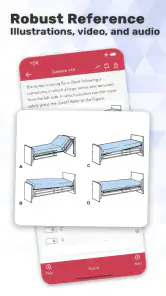
The app’s central strength is the relationship between each question and its explanation. A rationale can show why the best answer is safer or more complete, while also revealing why an attractive alternative is not appropriate in that situation. That distinction matters on NCLEX-PN preparation because many questions are not testing simple recall. They ask me to identify the priority, notice a risk, or apply a basic principle to a slightly unfamiliar case.
I found it helpful to keep a small error log outside the app. I would record the subject, the reason I missed the question, and the rule I should have applied. For example, “changed answer after overthinking” is a different problem from “did not recognize a sign of deterioration.” Those mistakes need different responses. The first calls for a calmer answering process; the second calls for content review. The app supplies the practice and rationale, but the learning becomes much stronger when I classify my mistakes.
A realistic everyday session might happen after a clinical day. I could complete a short set while the details of patient care are still fresh, then review only the questions that exposed uncertainty. If I encountered a medication, symptom, or safety principle that I had seen in practice, I would compare the app’s reasoning with my course material later rather than assuming that one question explains the entire topic. This keeps the app useful without turning it into a substitute for supervised clinical education.
Another effective habit is separating practice from assessment. During ordinary study, I would pause after a question and explain my reasoning before revealing the answer. On a later session, I would work under stricter conditions and avoid looking anything up until the set was complete. Mixing these modes can make progress difficult to judge. A relaxed learning session is excellent for understanding, while a closed-book session is better for checking readiness.
More From Our News Desk

Clash of Clans Is Won Between the Battles

Android Auto Makes the Case for Quieter Car Software

MobiOffice: Transforming Mobile Productivity with Seamless Integration

EA SPORTS FC™ Mobile Soccer: Redefining Mobile Sports Gaming

How Microsoft OneDrive Became a Mobile Productivity Giant

How Google Translate Breaks Language Barriers Effortlessly
What I would check before settling into daily use
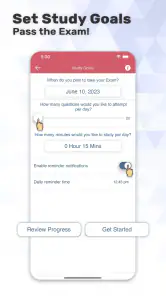
The first setting-related decision is not a complicated technical option; it is choosing how much of the app’s material fits the time available. A large question collection can create the illusion that progress means simply moving through more screens. I prefer a repeatable target, such as a short session on busy days and a longer review block when I can read rationales carefully. The exact number matters less than keeping the routine consistent enough to reveal patterns.
I would also check how questions are presented and whether the app lets me move through them in a way that suits my study style. Some learners want immediate feedback after every answer because the explanation is part of the lesson. Others prefer to finish a group first so that they can experience a more exam-like rhythm. If the available controls allow that choice, it is worth matching the mode to the goal rather than using one format for every session.
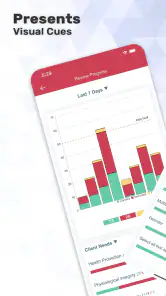
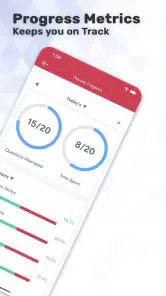
Navigation deserves attention too. On a small phone screen, repeatedly returning to a menu can make a focused study period feel fragmented. I would learn the quickest route from a question to its rationale and back, and I would use any visible review or progress controls consistently instead of changing methods every day. This is a modest improvement, but removing small interruptions makes it easier to concentrate on the clinical reasoning itself.
Because the app includes in-app purchases ranging from $24.99 to $49.99 per item, I would examine what is available before treating the free installation as a complete preparation package. The no-cost entry point is helpful for testing the interface and deciding whether the question-and-rationale format works for me. However, anyone planning a long study period should understand which material is accessible without payment and which optional items may require an additional purchase. That decision is best made after trying the workflow, not from the app’s name alone.
The technical requirements are fairly approachable for an older Android device: the listed minimum is Android 5.0. That can be useful for students using an inexpensive or older phone, although a larger screen may still be more comfortable for reading longer rationales. I would also make sure the device is charged before a long session and keep a separate written record of important notes. Study progress should not depend entirely on remembering where a particular question appeared.
The app is marked for Everyone, but that does not mean the material is suitable for every learner. The content is specialized medical exam preparation. A nursing student who has not yet covered the relevant fundamentals may find the questions discouraging, while a licensed professional seeking a general clinical reference may find the exam focus too narrow. The age label describes access suitability, not the level of knowledge needed to benefit from the material.
Faster patterns that improve review quality
One of my favorite ways to use a question bank is to read the stem twice, but for different reasons. On the first pass, I identify the patient, the immediate concern, and what the question is actually asking. On the second, I look for qualifiers such as “first,” “best,” or “needs further teaching.” This prevents me from choosing an answer that is medically reasonable but does not address the specific task. The app becomes more valuable when I practice reading precision, not just memorizing correct choices.
I would also answer before looking at the options too closely when the question allows it. First forming a rough expectation keeps the options from steering my thinking. Then I compare that expectation with the choices and ask which one is safest, most direct, and within the practical nurse’s role in the situation. This approach is especially useful when two answers sound plausible. The rationale can then confirm whether my decision process was sound, not merely whether my final selection matched.
A second efficient pattern is the three-pass review. In the first pass, I work normally and mark uncertainty mentally or in my notes. In the second, I revisit missed questions and explain the rationale in my own words. In the third, I return only to the concepts that caused repeated trouble. This is more efficient than rereading every explanation indefinitely. It also turns the app into a tool for identifying recurring weaknesses rather than a place to collect impressive-looking completion numbers.
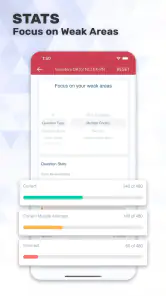
I would group mistakes by nursing concept instead of by question order. A series of errors involving infection control, delegation, therapeutic communication, or medication safety tells me more than a list of item numbers. Once I see a pattern, I can use my textbook or class resources to rebuild the underlying knowledge, then return to the app to test whether the correction holds. That loop—practice, diagnose, study elsewhere, and retest—is more dependable than relying on repeated exposure alone.
Another useful habit is to explain the wrong answers. For each distractor, I ask what would have to be true for it to become correct. Sometimes an option is wrong because it delays an urgent intervention; sometimes it is outside the nurse’s role; sometimes it addresses a secondary issue before the priority problem. Making that distinction explicit helps prevent memorizing a rigid rule that fails when the question changes its wording.
I would avoid doing every session while tired or distracted. Fast guessing can create a misleading sense of familiarity because the questions start to look recognizable even when the reasoning is not reliable. Shorter, attentive sessions are better than long stretches in which I tap through explanations without absorbing them. If I notice that I am choosing answers based on keywords alone, I would stop and resume later rather than treating that session as meaningful practice.
Where the app is strong—and where its limits matter
The strongest case for this app is focused repetition. It gives NCLEX-PN learners a convenient place to encounter many clinical scenarios and immediately examine the reasoning behind them. That is more practical than carrying a large review book everywhere, especially for quick sessions between classes, during a commute, or while waiting for an appointment. The free starting point also lowers the barrier to testing whether this style of preparation fits.
Its limitations come from the same focus. A question bank cannot observe how I perform a skill, correct my bedside communication, or tell me whether I truly understand a topic beyond the wording of a particular item. Even a well-written rationale is a compact explanation, not a complete lesson. When an answer exposes a gap in anatomy, pharmacology, mental health nursing, or fundamentals, I would leave the app and use a fuller learning source instead of trying to force the rationale to do that entire job.
I also would not assume that completing the available material guarantees readiness. Familiarity with an app’s question style can make later sessions feel easier without proving that knowledge has transferred to new cases. To counter that effect, I would alternate app practice with fresh questions from another source, class examinations, and verbal explanations of clinical decisions. A different resource is preferable when I need broader coverage or a more detailed lesson rather than another round of practice.
Compared with paper review books, the app is easier to carry and better suited to brief, repeated practice. A physical book may be better for writing extensive notes in the margins, comparing several pages at once, or studying without a phone nearby. Compared with video courses, this app demands more active decision-making but provides less guided teaching. Videos can be the better choice when I do not understand a topic at all; the app is stronger once I have enough foundation to analyze why an answer succeeds or fails.
Compared with a general nursing reference app, Saunders Comp Review NCLEX PN is more exam-oriented. A reference is usually better when I need to look up a condition, medication, or procedure quickly. This app is better when I want to be tested. I would keep those roles separate: reference material for building or checking knowledge, and this question-based tool for applying it under pressure.
The purchase structure is another practical consideration. Since optional items can cost between $24.99 and $49.99 each, I would not buy anything simply because a larger package sounds reassuring. I would first use the free portion, identify whether the explanations match my needs, and decide whether the additional material fills a real gap in my preparation. For a learner with access to a school-provided review system, paying may offer less value than it would for someone who needs a portable independent study tool.
Who will get the most from it
I think the app suits practical nursing students who already have basic coursework behind them and want regular application practice. It is also useful for learners returning to study after a break, because the questions can expose which topics have faded. Someone who studies well in short bursts may appreciate having a focused activity available on a phone rather than waiting for a long uninterrupted block.
It is less suitable for a person who wants a complete, instructor-led NCLEX-PN course in one place. If I were still confused about core concepts, I would choose a resource with structured lessons, diagrams, and teaching support before relying heavily on questions. I would also skip making it my only preparation method if I needed extensive accessibility adjustments, detailed personal tutoring, or a comprehensive clinical reference. Those needs call for a broader solution.
The developer, Skyscape Medpresso Inc, has kept the product centered on a recognizable review format rather than turning it into a general-purpose medical app. Its current version is 4.16.0, and the app has built a 4.6 average from over 800 ratings, with more than 200 written reviews. It has also passed the 50K+ install mark. Those figures suggest that it has found a real audience, but I would still judge it by the quality of the explanations and by whether its workflow matches my preparation stage.
My verdict after making it part of a routine
I would recommend Saunders Comp Review NCLEX PN to a learner who wants a portable, question-centered way to practice clinical judgment and review rationales. The best results come from using it with a plan: diagnose weak areas, read explanations actively, record recurring errors, and revisit concepts through fuller study material. Simply tapping through questions is much less valuable than using each mistake to change the next study decision.
For me, the app works best as the middle layer of preparation. It is more active than rereading notes, but not as comprehensive as a complete nursing course. It can sharpen test-taking habits, reveal gaps, and make short study periods productive. It cannot replace clinical teaching, hands-on practice, or a reliable reference when a topic needs depth.
The free installation makes trying the approach straightforward, while the optional purchases mean I would review the available content before committing money. If the explanations help me understand priorities and the interface supports a repeatable routine, it can earn a regular place in my study schedule. If I need extensive instruction from the beginning, I would choose a broader resource first and use this app later for targeted practice.
My final view is positive but practical: this is a focused NCLEX-PN companion, not a complete nursing education system. Used in short, deliberate sessions and paired with textbooks, class resources, and varied practice, it can turn spare moments into meaningful revision. Used alone or as a shortcut around foundational learning, it is unlikely to be enough. That distinction is what makes it worth recommending to the right student rather than to everyone.
Saunders Comp Review NCLEX PN Frequently Asked Questions
Can I use Saunders Comp Review NCLEX PN on my device?
Saunders Comp Review NCLEX PN is a medical study app for Android devices running version 5.0 or later. Before downloading, check that your device meets this requirement and has enough available storage for the app and any study materials you choose to access. The app is developed by Skyscape Medpresso Inc and is intended for NCLEX-PN review.
What is Saunders Comp Review NCLEX PN, and who is it designed for?
Saunders Comprehensive Review for the NCLEX-PN is a study app designed mainly for practical and vocational nursing students preparing for the NCLEX-PN examination. It combines review material with practice questions, rationales, and exam-focused guidance. The app is most useful for learners who want to revise nursing concepts on a phone or tablet, although it should supplement—not replace—class notes, clinical preparation, and a structured study plan.
What type of study content and practice questions does the app include?
The app generally focuses on core practical-nursing subjects and NCLEX-PN-style preparation, including areas such as fundamentals, pharmacology, medical-surgical nursing, maternal and newborn care, pediatrics, mental health, and management of care. Practice questions are accompanied by explanations, which is particularly helpful because the rationales explain why an option is correct or incorrect. Content availability and organization may vary by edition or app version. Its study material and question bank are intended to support review across nursing topics.
Does Saunders Comp Review NCLEX PN work without an internet connection?
Offline access depends on the specific edition, platform, and how the app handles downloaded study materials. Some features or question banks may require an initial sign-in, activation, or internet connection before they become available. If you plan to study during travel or in areas with limited connectivity, check the current store description and test the download process after installation. Online access may still be needed for updates, synchronization, or account verification.
Is the app enough to pass the NCLEX-PN by itself?
No single review app can guarantee an NCLEX-PN pass, and Saunders should not be treated as a complete replacement for nursing school preparation or instructor guidance. Its practice questions and rationales can help identify weak areas and improve clinical reasoning, but success also depends on understanding concepts, reviewing incorrect answers, practicing prioritization and safety questions, and following the current NCLEX test plan. Use the app as one part of a broader preparation strategy.
Pros
- Focused practice for the NCLEX-PN exam
- Includes review questions with detailed explanations
- Useful for checking progress during study sessions
- Covers key practical nursing topics
- Works well for short
- on-the-go revision
Cons
- Some content may require an additional purchase
- Question difficulty may not match the actual NCLEX
- Limited value without a consistent study plan
- Interface can feel basic compared with newer apps
- May not include the latest exam blueprint updates
- Category
- Medical
- Version
- 4.16.0