Board Review Series-Pathology
- 0.00
- 0.0
- Installs
- 10.00K
- Price
- Free

Screenshots
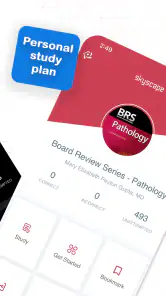

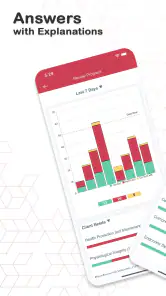
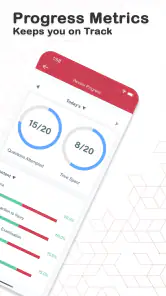

Analysis by Reviewed
I approached Board Review Series-Pathology as a study companion rather than a replacement for a full pathology textbook. It is a medical app from Skyscape Medpresso Inc, built around board-style practice and explanations. The basic download is free, and its content is suitable for Everyone, which makes it easy to try before deciding whether it belongs in your regular study routine.
My first impression was that the app makes the most sense when I already have a topic in mind. It is not designed to teach pathology from the ground up in the same way a long-form textbook or lecture course does. Instead, it gives me a focused way to test recognition, reasoning, and recall, then look back at the explanation when I miss something or hesitate.
How I would use it in a normal study week
The most reliable workflow is simple: choose a manageable group of questions, answer without immediately checking references, and treat the rationale as the real learning material. The question itself tells me whether I can identify the relevant pattern, but the explanation helps reveal whether I understood the mechanism or merely recognized a familiar phrase.
That distinction matters in pathology. I can sometimes guess a diagnosis from a memorable clue while still being weak on the underlying cellular process, clinical association, or differential diagnosis. Reviewing the rationale after both correct and incorrect answers helps expose that weakness. A correct answer reached by guessing should not receive the same treatment as a confident, well-reasoned answer.
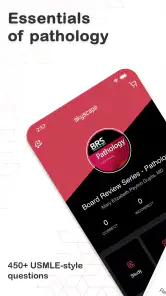
The app includes more than 450 USMLE-style questions, with answers and rationales placed at the end of the chapters. I found that structure useful for deliberate practice because it discourages me from looking at the explanation too early. I can commit to an answer first, then return to the chapter material and examine the reasoning in context.
For a realistic everyday scenario, I would use it after a lecture or reading session rather than before one. If I had just reviewed inflammation, neoplasia, or a particular organ system, I could work through the related questions while the material was still fresh. The results would then show whether I had learned a usable framework or only followed the wording of the lesson.
It also works well as a short review between larger tasks. A few questions during a commute, a break, or the final part of an evening session can be more productive than opening a large textbook without a clear target. I would not use that short session as my entire preparation, but I would use it to maintain contact with topics that are easy to forget.
More From Our News Desk

Clash of Clans Is Won Between the Battles

Android Auto Makes the Case for Quieter Car Software

MobiOffice: Transforming Mobile Productivity with Seamless Integration

EA SPORTS FC™ Mobile Soccer: Redefining Mobile Sports Gaming

How Microsoft OneDrive Became a Mobile Productivity Giant

How Google Translate Breaks Language Barriers Effortlessly
What I check before starting a session
I begin by deciding what the session is meant to accomplish. If the goal is diagnosis practice, I focus on answering carefully and explaining why the alternatives are wrong. If the goal is retention, I pay more attention to the rationale and write down the single fact or relationship that I failed to recall.
This small distinction prevents a common mistake: treating every question as a score-producing event. A practice question is more valuable when it changes what I will do next. Sometimes that means rereading a section. Sometimes it means making a comparison table in my own notes. Sometimes it means admitting that I knew the disease name but not the pathology behind it.
I also avoid beginning with an oversized session. A long run can create false confidence because familiar questions become easier through repetition, while difficult concepts remain untouched. Smaller groups make it easier to identify patterns in my mistakes and return to the relevant chapter without losing the thread.
Settings and study choices worth reviewing
The most important “settings” are the choices I make around the app, not imagined customizations. I decide whether I am working in a quiet, focused session or using the app for quick recall. I also decide when to read the answers. Since the explanations are located at the end of the chapters, I can preserve the testing effect by delaying that review until I have completed the question set.
On a first pass, I keep my pace steady and avoid searching for outside explanations after every item. That gives me a cleaner picture of what the app’s own rationale clarifies. On a second pass, I use external notes or a major reference only when the concept remains unclear or when I need a broader explanation than a question review can provide.
Another useful choice is how I mark uncertainty. I mentally separate three outcomes: confident and correct, uncertain but correct, and incorrect. The middle group deserves attention because it often represents fragile knowledge. If I only revisit wrong answers, I may overlook topics I can answer today but cannot reliably reproduce later.
Because the app is free to download but includes in-app purchases ranging from $29.99 to $44.99 per item, I would explore the available material before paying for anything. That approach is especially sensible for students who already own a preferred question bank. The right purchase depends on whether this specific chapter-based format fills a gap in the resources they already use.
Faster patterns that improve review quality
One pattern I like is the “answer, justify, verify” cycle. First, I choose the answer. Second, I state to myself why it is correct and why the closest alternative is not. Third, I read the rationale and compare it with my reasoning. This takes longer than simply checking the answer, but it turns passive reading into active diagnostic practice.
A second pattern is to keep a compact error log outside the app. I do not copy entire explanations. I record the trigger I missed, the mechanism I confused, or the distinction between two similar conditions. That makes later review much faster and avoids building a second, unwieldy textbook from copied text.
A third pattern is to revisit questions by concept rather than by memory of the answer. If I remember that an item’s correct choice was a particular disease, I ask myself whether I can still explain the pathology without relying on the wording I saw previously. Recalling the answer alone is weak evidence. Reconstructing the reasoning is a stronger test.
I also find it helpful to pair a question session with a visual review method from another resource. Pathology depends heavily on relationships among morphology, mechanism, and clinical presentation. The app can challenge my reasoning, while diagrams, annotated images, or textbook figures can supply the broader visual context. Neither format has to do every job.
When time is limited, I prioritize questions that expose uncertainty rather than questions that merely confirm familiar material. This is where the chapter organization becomes useful. I can stay within a topic long enough to notice whether my errors are isolated or part of a larger misunderstanding.
Where the app fits beside common alternatives
Compared with reading a conventional pathology textbook, this app is more active and easier to use for self-testing. A textbook is better when I need a complete explanation, a carefully developed sequence, or a reference I can consult from first principles. The app is better when I want to know whether the information can be retrieved under question pressure.
Compared with video lectures, it demands more effort from me. A lecture can make a difficult topic feel clear while I am watching, but questions reveal whether I can apply it independently. On the other hand, the app is less suitable when I am completely lost and need someone to build the concept slowly from the beginning.
Compared with a large general question bank, the chapter-based format can feel more focused. That focus is helpful during a pathology block or when I want to repair one subject area. A broader question bank may be better for mixed, exam-like practice, especially when I need to switch rapidly among disciplines and cannot predict which topic comes next.
I would also distinguish it from flashcards. Flashcards are efficient for isolated facts and spaced repetition, while these questions ask me to interpret information and connect it to a likely diagnosis or process. The trade-off is that the app does not replace a personal spaced-repetition system if long-term scheduling is my main priority.
Limits that experienced users should plan around
The biggest limitation is scope. A question-and-rationale app cannot substitute for comprehensive pathology instruction. If I have not learned the basic mechanisms, I may memorize answer patterns without understanding them. That can help briefly, but it is a weak strategy for unfamiliar questions.
The chapter-end placement of answers is useful for disciplined practice, yet it can also create friction. I need to move back and forth deliberately, and I must resist the temptation to treat the chapter as a quick-answer feed. Users who want instant feedback after every question may find this less convenient than a modern question bank built around immediate explanations.
Another limitation is the danger of overusing familiar items. Repeated exposure can make an answer feel obvious even when the underlying concept is not secure. I counter that by explaining the reasoning in fresh words and occasionally changing the order in which I review topics.
The app is also not the right choice for everyone. I would skip it as a primary resource if I needed extensive image interpretation, a full curriculum, detailed progress analytics, or an all-in-one exam platform. I would also hesitate to purchase additional content if my existing question bank already covers pathology thoroughly and offers explanations in a workflow I prefer.
Device compatibility is relatively approachable: the current version is 4.16.0 and requires Android 5.0 or later. That makes it practical for people using older compatible Android devices, although the experience still depends on whether reading chapter material on a phone feels comfortable. For long explanations, I personally prefer a larger screen or a quiet setting where I can concentrate.
Who will get the most from it
This medical study app is best suited to students who already have foundational pathology knowledge and want structured practice. It can also help learners preparing for USMLE-style reasoning who need to identify weak areas without committing to a full-length study block.
It is particularly useful for someone who studies in cycles: learn a topic, test it, review the rationale, then return later for retrieval. That habit turns the app into more than a collection of questions. It becomes a checkpoint inside a broader plan.
The developer, Skyscape Medpresso Inc, has positioned the product as a Board Review Series resource rather than a casual reference tool. I would keep that purpose in mind. The app rewards active study and honest self-assessment much more than occasional browsing.
Its free price makes the initial trial straightforward, while the optional purchases mean I would evaluate the included experience carefully before expanding it. The Everyone age rating is not a statement about academic difficulty; the material is still aimed at medical learners, and its value depends on having enough background to understand the explanations.
My verdict after building a repeatable habit
I see Board Review Series-Pathology as a focused practice tool with a clear role. It is strongest when I use it after learning a subject, answer before checking the chapter-end explanations, and turn uncertainty into a short list of concepts to revisit. It is weaker when I expect it to teach the entire discipline, replace visual resources, or provide the complete functionality of a large exam platform.
The most effective routine is not complicated: choose a narrow topic, complete a modest set, classify each answer by confidence, study the rationale, and return later without relying on recognition alone. That workflow makes the app more valuable than its store summary suggests because the learning comes from how I interrogate each explanation.
My recommendation is therefore conditional but positive. If you want a free starting point for USMLE-style pathology practice and already have a textbook or course for deeper teaching, this app is worth trying. If you need a comprehensive, highly interactive study environment, I would choose a broader alternative and use this only as a supplementary checkpoint. For the right learner, its focused format encourages a practical habit: test your reasoning, not just your memory.
Board Review Series-Pathology Frequently Asked Questions
How much does Board Review Series–Pathology cost, and are there in-app purchases?
Board Review Series–Pathology is free to download, so you can install it and explore its available features before deciding whether it fits your study routine. The app also offers in-app purchases, with individual items priced from about $30 to $45. Check the purchase options in the app before paying, and make sure the content you choose matches what you want to review.
What devices and operating systems can run the app?
Board Review Series–Pathology is an Android medical study app that requires Android 5.0 or later. Before downloading, check your device’s operating-system version and available storage so the installation can proceed smoothly. The app is developed by Skyscape Medpresso Inc. It is intended for a general audience, though its pathology material is most relevant to people studying medicine.
What is Board Review Series–Pathology, and who is it designed for?
Board Review Series–Pathology is a study resource focused on the pathology concepts commonly tested in medical examinations. It is primarily designed for medical students preparing for board-style exams, especially those reviewing systemic and general pathology. The app may also be useful for residents or international medical graduates who want a structured refresher, although it should be used alongside class notes, lectures, and more comprehensive reference materials.
What type of study material and questions does the app include?
The app generally presents high-yield pathology information in a concise review format, supported by practice questions that resemble board-examination scenarios. Its description highlights more than 450 USMLE-style questions, with answers and rationales at the ends of chapters. Topics may include mechanisms of disease, cellular injury, inflammation, neoplasia, organ-system pathology, and related clinical correlations. Explanations can help clarify why an answer is correct and why alternatives are less appropriate, rather than relying only on memorization.
Can I use Board Review Series–Pathology without an internet connection?
Offline availability depends on the specific version of the application and how its content is delivered. Some editions allow users to download or access previously loaded study material without a connection, while other features may require internet access for authentication, updates, progress synchronization, or additional content. Before traveling or studying offline, open the app while connected and check whether the chapters and question explanations remain accessible.
Pros
- Concise pathology coverage makes it useful for focused exam revision.
- High-yield summaries help reinforce key disease mechanisms and findings.
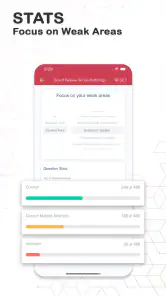
- Practice questions can reveal weak areas and support active recall.
- Portable format makes studying convenient during short breaks.
- Helpful for students preparing for pathology-heavy medical exams.
Cons
- Content may feel too condensed for learners needing detailed explanations.
- Some topics benefit from a standard textbook or lecture for added context.
- Question difficulty and wording may not match every exam format.
- Primarily exam-focused
- with limited depth for clinical decision-making.
- A paid purchase or in-app access may be required for full content.
- Category
- Medical
- Version
- 4.16.0