Tumblr: Social Media & Art
- 331.59K
- 3.8
- Installs
- 100.00M
- Price
- Free

Screenshots
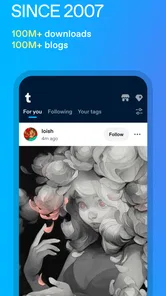
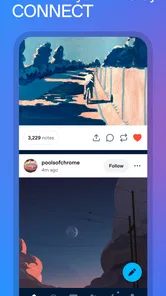
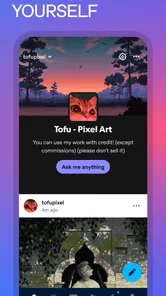
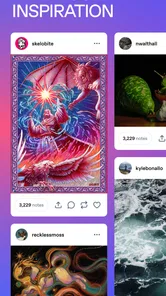
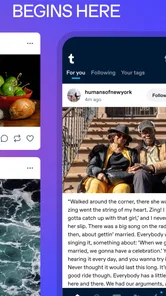
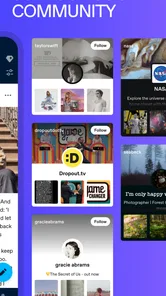
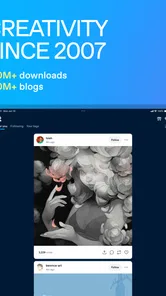
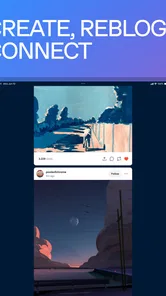
Analysis by Reviewed
I think Tumblr—Fandom, Art, Chaos makes the most sense when you treat it less like a polished social network and more like a set of overlapping communities. I use it for following artists, collecting ideas, and seeing how fans build on one another’s posts. It is a social app from Tumblr, Inc, and its appeal comes from that mix of personal blogs, reblogs, and niche interests rather than from trying to make every post fit one universal format.
What using Tumblr feels like now
The current version is 42.4.0.108, and the app remains a familiar home for fandom, art, and conversational posts. Tumblr has been around since Aug 14, 2010, so long-time users may recognize its basic rhythm: find blogs and tags, follow what interests you, then reblog posts to pass them along or add your own take. It is free to install, with in-app purchases ranging from $0.99 to $149.99 per item. The platform has a 3.9 average from around 3.7 million ratings and more than 100 million installs, which gives a sense of its broad reach without making it feel like every corner is aimed at everyone.
That reach is useful, but I would not expect the experience to be equally lively in every interest. A popular fandom or art topic can lead to a steady stream of posts, while a very specific niche may feel quieter. I’d start by searching for a few distinct tags and blogs rather than judging the whole app from the first screen. Tumblr is rated Mature 17+, so it is better suited to adults who are comfortable navigating a social space where topics and tone can vary.
The Ultimate Fandom Hub
Let’s start with what makes Tumblr a unique beast in the social media jungle. This isn’t your grandma’s Facebook. Nope, Tumblr is the place where fandoms reign supreme. Whether you’re into the latest TV series, classic literature, or even obscure indie bands, there’s a community waiting for you. Joining a fandom on Tumblr feels like coming home to a bunch of like-minded people who just get you. And trust me, the memes and fan theories are worth every second you spend scrolling.
Artistic Expression Unleashed
Are you an artist? Or maybe just someone who appreciates good art? Tumblr’s got a treasure trove of creativity. From digital illustrations to traditional paintings, artists from all over the world share their masterpieces here. The app’s user-friendly interface makes it easy to post your art, tag it for the right audience, and watch as the notes (Tumblr’s version of likes and reblogs) roll in. It’s an artist’s paradise where feedback comes not only in the form of appreciation but also in constructive criticism from fellow creators.
One practical habit I recommend is making tags specific enough to help the right people find a post, rather than relying on a broad label alone. If I’m saving inspiration for a project, I’ll follow a small set of tags and reblog useful references to a blog I can return to later. That turns the feed into a loose, searchable scrapbook. The trade-off is that reblogs can carry a post far beyond its original context, so I’d think twice before sharing personal work or a sensitive discussion without checking what I’m amplifying.
One of the coolest features is the ability to follow tags and blogs that cater specifically to your interests. Imagine a feed curated just for you, filled with art styles you love and topics you can’t get enough of. It’s like having your own personal gallery that’s constantly updating!
More From Our News Desk
 Instagram
’s Power Comes From Its Place in Your Phone
A close look at how Instagram turns Meta’s reach, recommendation systems and everyday camera habits into durable platform power—and what that costs users.

 Gmail
Gmail in a Busy Inbox: Who Benefits Most?
From first account to crowded workday, Gmail earns its place through dependable search and flexible sorting—but its best fit depends on how much inbox maintenance you can tolerate.

 Prime Video
Switching to Prime Video: What Changes in Your Viewing Routine
Prime Video can make a compelling second home for streaming, but switching means learning a different catalog, rental layer, and route from browsing to playback.

 Universal TV Remote Control
 Works Best as a Reliable Backup
A phone remote earns its place through quick setup and reliable habits. Here is how to get more from Universal TV Remote Control—and where its limits show.

 Weather - By Xiaomi
Weather by Xiaomi Review: Clear at a Glance, Less Clear Up Close
Xiaomi’s weather app makes everyday forecasts quick to scan, but its calm surface can leave useful details and recovery paths harder to find than they should be.

 X
X Under Pressure: Can It Recover When Posting Goes Wrong?
A resilience-focused review of X, examining setup, mistaken posts, interruptions, weak connections, and the gaps that matter when recovery needs to be dependable.
Latest News



Chaos? Yes, Please!
Now, let’s talk about the chaos. Tumblr is infamous for its wild, unpredictable nature. You’ll find yourself laughing at witty text posts one minute and pondering deep philosophical questions the next. The randomness is part of its charm, and if you’re someone who thrives on unpredictability, you’ll fit right in.
A realistic way I’d use it is during a commute or a quiet break: check a couple of followed tags, catch up on a favorite blog, and save a few posts by reblogging them to a personal page. That works better for me than endlessly scrolling with no plan, especially because the feed can jump between jokes, fan art, and heavier subjects. Reblogs are also part of the conversation here: they let an idea travel with commentary, though a long chain can make the original point harder to follow.
Compared with image-first networks, Tumblr feels more comfortable with a post that mixes writing, images, and the reactions of other users. Compared with fast-moving conversation apps, it gives posts a more blog-like afterlife: you can encounter an older idea through a tag or a reblog rather than only seeing it in the moment. That structure is a strength for fandom analysis and creative discovery, but it is less convenient if you mainly want a tidy stream of updates from close friends or a direct replacement for private messaging.
New users may wonder whether they need to publish immediately. I wouldn’t rush it. Following a few blogs and tags first helps reveal the local style of a community, and it gives you a chance to see how people label fan works or discuss sensitive subjects. You can enjoy Tumblr as a reader before becoming a regular poster; if you do share, a clear caption and thoughtful tags make it easier for others to understand the work and its context.
One limitation is that the open-endedness can make discovery feel messy. Tags are helpful, but they do not guarantee that every post will match your interests, and the same broad topic can contain very different tones. If you want strict chronological updates from a small group, tightly controlled recommendations, or a highly uniform interface, another social platform may suit you better. Tumblr rewards a bit of curiosity and tolerance for detours.
There are also paid in-app purchases, so I’d treat the free experience as the starting point and check the purchase details before spending. You do not need to pay simply to explore the communities that make the app worthwhile. For someone deciding whether to stay, I’d give it time to build a feed around a few genuine interests rather than expecting the first session to explain the whole culture.
But it’s not just aimless chaos. Many users leverage this platform to discuss important social issues, share personal stories, and rally for causes they believe in. It’s a space where serious conversations happen amidst the humor, giving it a depth not often found on other social platforms.
Finding a comfortable way to use it
One useful way to keep the experience manageable is to treat your followed blogs and your followed tags as two different tools. Blogs give you a sense of a particular creator’s voice and ongoing interests; tags are better for sampling a wider conversation or finding work beyond the accounts you already know. If a tag becomes too broad, narrow your searches and follow only the conversations that consistently feel worthwhile. I find this more effective than expecting one feed to sort every interest into a neat order.
Reblogging can also be used as a private-feeling organizing habit, even though a blog is a public-facing space. I’d make separate choices about what I want to share, what I want to keep for inspiration, and what I’d rather not circulate. Before reblogging a delicate post, I consider whether the added audience is appropriate and whether my own commentary changes its meaning. That small pause matters because sharing on Tumblr is not just a quick reaction; it can become part of a post’s continuing trail.
For an artist, the app can be a place to show finished pieces and let people discover them through tags, but it is not a guaranteed route to feedback or an audience. I would use it alongside a personal archive of original work rather than treating a social feed as the only copy. For a fan, meanwhile, reblogs make it easy to collect theories, jokes, and art around a shared interest. Those are related uses, but they call for different habits: creators may want careful context and attribution, while readers may mainly want a lively trail to follow.
Where it differs from other social apps
If your main goal is to keep up with friends’ everyday updates, a conventional network built around personal connections will probably feel more direct. Tumblr is less centered on a real-life contact list and more rewarding when you search by interest and follow people whose posts you want to see. That distinction can be freeing if you want a hobby-focused corner of the internet, but it may feel impersonal if you expect your existing friends to be the center of the experience.
It also differs from a short-form discussion app because posts can live on as blog entries and circulate through reblogs. That makes it easier to stumble onto older fan interpretations or a piece of art that has traveled through several communities. The cost is that context can become harder to track as posts gain additions and commentary. When a chain feels confusing, I look for the original post and read the surrounding notes before deciding what the later responses mean.
For browsing visual work, image-led services may offer a cleaner gallery feel. Tumblr is more mixed: an illustration can sit beside a long text post, a joke, or a conversation. I like that variety when I want to understand the culture around a fandom, not just collect polished images. If presentation and portfolio-style browsing are the priority, a more focused art platform may be a better home for that task, while Tumblr can still serve as a discovery and discussion space.
What long-time users may notice
The version number shows the app is still receiving versioned releases, while its core identity remains rooted in blogs, tags, and reblogging. I wouldn’t assume a new version means the culture or every familiar workflow has changed; the practical question for an existing user is whether the app still makes it easy to find the communities and creative work they care about. If you already have a network of followed blogs, that continuity is likely more important to your day-to-day experience than a version label on its own.
For people returning after a break, I’d start by checking the blogs and tags that once made the app feel personal, then add a few current interests rather than trying to rebuild everything at once. That gives you a clearer read on whether your corner is active and whether the present mix suits you. The wider platform may be familiar, but your feed depends heavily on whom and what you choose to follow.
That distinction also helps set expectations around product evolution. A current version tells me which release I’m looking at, not whether a particular community has changed its habits or whether an old favorite has become active again. I’d judge the experience by trying the tasks I actually care about: finding a tag, reading a reblog trail, or checking whether creators I enjoy are still posting. If one of those routines feels different, it may reflect the people and topics involved as much as the app itself.
Who will enjoy it—and who may not
I’d recommend Tumblr to someone who likes exploring a subject through many voices rather than following a single official account. It suits fandom readers who enjoy theories and fan-made work, artists who want another place to share and discuss projects, and curious browsers who don’t mind moving between humor and serious conversation. It can also be a useful inspiration shelf: reblog a reference with a short note about why it caught your eye, and you’ll have more context when you return to it later.
I would skip it, or use it only occasionally, if your idea of social media is a clean stream of updates from a fixed circle of friends. It is also not the best fit if unpredictable topics make browsing stressful, if you need every post to have a clear source and context at a glance, or if you want a purely private space for personal conversations. The Mature 17+ rating is a reminder to choose the app with care; families should not treat a social feed as automatically suitable for younger users.
For everyday use, I’d make a small routine instead of letting the app claim every idle moment. On a break, I might check a few tags related to a show I’m watching, read one blog I trust, and reblog a post worth revisiting. If the feed starts to feel noisy, I’d step back and adjust the accounts and tags I follow rather than trying to consume everything. Tumblr is at its best when I choose a purpose for opening it, even if the posts themselves take me somewhere unexpected.
Final Thoughts
In a nutshell, Tumblr—Fandom, Art, Chaos is more than just an app; it’s a community. It’s a place where you can be yourself, unapologetically weird and wonderfully creative. Whether you’re there to connect with fellow fans, showcase your latest artwork, or simply enjoy the ride through the internet’s most delightful chaos, Tumblr offers an experience like no other.
So, what are you waiting for? Dive into the world of Tumblr and let the adventure begin!
Tumblr: Social Media & Art Frequently Asked Questions
Do I need an account to use Tumblr?
Tumblr is built around creating and following blogs, so an account is useful for shaping a personal feed, connecting with communities, and sharing your own posts. The app’s social nature is central to the experience: it is designed for discovering and interacting with content rather than simply browsing a standalone collection. Consider whether you want that kind of participatory space before downloading.
What does Tumblr’s community experience feel like?
Tumblr brings together people with varied interests, especially around fandoms, art, and personal expression. The experience can feel lively and unpredictable because the posts you encounter depend on the blogs and topics you follow. You can explore different communities, reblog material, and share your own work or thoughts, making it a flexible social space rather than a single-purpose app.
What age rating should I consider before downloading Tumblr?
Tumblr is rated Mature 17+, so it is intended for adults and older teens rather than younger children. Its mix of fandom, art, personal posts, and social interaction can expose users to a wide range of viewpoints and material. If you are choosing the app for a teen, consider the age rating and whether its open-ended community experience is appropriate for them.
What is Tumblr and what can I do with it?
Tumblr is a microblogging and social networking platform that allows users to share multimedia content such as text, photos, quotes, links, music, and videos. Users can create their own blogs, follow others, and engage with a diverse community interested in a variety of topics ranging from fandoms and art to personal musings and chaos. It's a vibrant space for creative expression and connecting with like-minded individuals.
Is Tumblr free to use and what devices support it?
Yes, Tumblr is free to use. It is available as a mobile app on both Android and iOS devices, and can also be accessed via web browsers on desktops and laptops. While the app is free, users can make in-app purchases for additional features or to enhance their experience, such as customizing their blog's appearance. The listed purchase range runs from $0.99 to $149.99 per item, so review any purchase prompt before confirming.
Pros
- Diverse creative community
- Supports various media types
- Customizable user interface
- Strong privacy controls
- Frequent content updates
Cons
- Ads can be intrusive
- Mobile app can be slow
- Limited post scheduling
- Search function is clunky
- Can be overwhelming for newbies