TicorAgent ONE
- 23.00
- 4.4
- Installs
- 10.00K
- Price
- Free

Screenshots
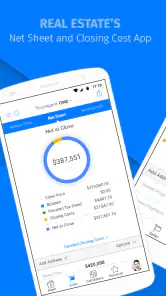
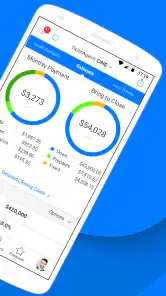
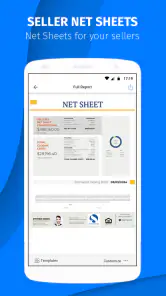


Analysis by Reviewed
When I first looked at TicorAgent ONE, I did not treat it like a general household money app. Its focus is much narrower and more practical: it is a finance app built for real estate professionals. That distinction matters if you are deciding whether it belongs on a shared phone, a work tablet, or a personal device used during property-related tasks.
In my experience, the app makes the most sense when one person in a household works in real estate and occasionally needs to use a second device for work. A partner might hand over a tablet while the agent is preparing for a meeting, or an agent might move between a personal phone and a work device during a busy day. In that situation, the value is not that everyone in the home can use it. The value is that the professional can keep a work-focused tool available without confusing it with everyday household finance software.
That is also why I would not recommend installing it simply because its category says Finance. Someone looking for budgeting, bill reminders, banking, expense splitting, or investment tracking will probably find the app too specialized. Its audience is the real estate professional, and the best experience comes from treating it as a work utility rather than a shared family finance center.
How TicorAgent ONE Fits Into a Shared Device
A practical household scenario
Imagine a real estate agent who uses a personal phone during showings but keeps a larger tablet at home for administrative work. The tablet is also used by a spouse to check email or by an older child for schoolwork. In that arrangement, I would place this app alongside other work tools and make the device boundary clear: the app belongs to the agent’s professional workflow, not to the household’s general financial life.
That simple separation prevents a common mistake. A finance-related app can look appropriate for everyone in the home, yet a professional real estate tool may contain work information or require decisions that only the agent should make. I would avoid handing the device to another person while the app is open, especially if the screen shows active work. Closing the app after use and keeping the device’s normal lock protection enabled are sensible habits, even when the device is shared casually.
The app is free to install, which removes an obvious barrier for trying it on a suitable Android device. It also carries an Everyone age rating, so the listing presents it as broadly suitable from an age-classification standpoint. That should not be confused with suitability for children or with permission to access an adult’s professional account. In a shared home, age labeling and account responsibility are two different questions.
What I would clarify before setup
Before installing it on a family tablet, I would decide whose work it represents. If two agents in the same household use the device, I would not assume that one installation automatically creates a clean separation between their work. I would establish a simple routine: one person uses the app, finishes the task, signs out or closes the session where appropriate, and returns the device in a neutral state.
More From Our News Desk

Clash of Clans Is Won Between the Battles

Android Auto Makes the Case for Quieter Car Software

MobiOffice: Transforming Mobile Productivity with Seamless Integration

EA SPORTS FC™ Mobile Soccer: Redefining Mobile Sports Gaming

How Microsoft OneDrive Became a Mobile Productivity Giant

How Google Translate Breaks Language Barriers Effortlessly
I would also avoid treating the app as a place for shared household records. A couple may share bills, property expenses, or a home purchase plan, but that does not make a professional real estate application the right collaborative ledger. Its purpose is connected to the agent’s work, so household coordination should happen through a separate method chosen for that purpose.
This is one of the less obvious trade-offs. A shared device can be convenient, but convenience increases the chance of mixing personal and professional context. If the agent needs quick access while another person is using the tablet, a dedicated work phone or separate user profile may be better than repeatedly passing the same screen around. That is not a special feature of the app; it is a practical decision about how to use a specialized tool safely.
Keeping accounts and responsibilities separate
I would think of the app as belonging to a person, not to a household. Even if the device belongs to the family, the professional account and the work decisions remain the agent’s responsibility. This matters when a partner helps with scheduling or a family member handles a device while the agent is driving. Assistance with the hardware is not the same as permission to inspect or change work information.
For a small real estate team, the same principle applies. If several people need access to a common workflow, they should agree on their account arrangement before relying on the app. I would not create informal sharing habits just because everyone works from the same office or lives under the same roof. Clear ownership is more important than making the app available on every device.
There is also a useful distinction between access and coordination. The app may be part of one agent’s working routine, while conversations, appointments, and handoffs may happen elsewhere. I would use the app for the professional task it supports and use an agreed communication channel for telling a partner or colleague what needs to happen next. That reduces the temptation to leave the app open as a substitute for a shared household dashboard.
Coordination during a busy day
Real estate work often involves moving quickly between calls, property visits, paperwork, and client conversations. A shared household can help with the surrounding logistics: someone may watch the children, collect keys, or remind the agent about a personal appointment. Still, I would keep those domestic arrangements separate from the app’s professional use.
A useful routine is to decide in advance when the agent will use the app. For example, the agent might review work on the tablet after returning home, then put the device away before the family begins using it. That creates a predictable boundary without pretending the app is a family organizer. It also makes it easier to notice when the device has been left in a work state.
Another practical tip is to avoid relying on memory when switching between devices. If the agent starts a task on a phone and continues on a household tablet, I would record the handoff in a safe, agreed place rather than leaving the first device unlocked. This is especially important when the second device is used by children or guests. The goal is not complicated technology; it is a repeatable habit that keeps work and home from bleeding into each other.
Age, trust, and the Everyone rating
The Everyone rating is reassuring for households that want to install the app on a broadly used device, but I would interpret it narrowly. It describes the app’s content classification, not the maturity needed to manage real estate work. A child may be able to open an app rated for everyone, yet still should not be given access to an adult’s professional activity.
For teenagers who help with device setup, I would let them assist with ordinary installation steps only while the agent remains present. I would not ask them to manage account details, review work information, or make decisions inside the app. That approach respects both the age rating and the difference between technical help and professional authority.
Trust also matters between adults. A partner may be completely trusted with household finances but still not need access to a real estate work account. Keeping those roles separate can actually make coordination easier because everyone knows which information belongs to the home and which belongs to the agent’s job. I found that this kind of clarity is more useful than assuming that a shared device should mean shared access.
What the app is like as a professional choice
PalmAgent is the developer behind this app, and the product has been available since October 2014. That gives it a long presence compared with many short-lived mobile tools. The current version is 4.8.5.1.5, and it requires Android 7.0 or later, so compatibility is worth checking before trying to place it on an older household device.
The app has an average rating of 4.4 from around 58 ratings, with roughly 23 written reviews, and it has passed the 10K-install mark. Those figures suggest a real user base, but they also show that this is a focused professional tool rather than a mass-market household finance app. I would read the rating as encouraging, not as proof that it will fit every real estate office or every device-sharing arrangement.
The free entry point is helpful for an agent who wants to evaluate the workflow without paying upfront. However, in-app purchases range from $0.99 to $9.99 per item, so I would review any purchase prompt carefully before approving it on a shared device. If a family member can use the tablet, the agent should make sure purchases cannot happen accidentally and that everyone understands which transactions are work-related.
Where it beats ordinary finance alternatives
Compared with a standard budgeting app, TicorAgent ONE has a much clearer professional identity. A budgeting tool is designed around household income, spending categories, recurring bills, and shared financial goals. This app is aimed at real estate professionals instead. If your main need is coordinating rent, groceries, savings, or utility payments with a partner, I would choose a household finance app instead.
Compared with a generic notes app, a specialized real estate tool can be a better fit when the agent wants work activity kept in a dedicated environment. A notes app is flexible, but that flexibility can become messy when property-related information, personal reminders, and family errands sit together. The trade-off is that a generic notes app may be easier for a whole household to understand and share.
Compared with a broad office suite, this app is likely to appeal to someone who prefers a focused mobile workflow over assembling several general-purpose tools. The downside is equally important: a broader suite may offer more familiar collaboration options for a team or family. I would choose TicorAgent ONE when the real estate professional’s priority is a purpose-built mobile experience, not when the priority is universal household collaboration.
Small workflow decisions that make a difference
One useful approach is to reserve the shared tablet for review and planning while keeping sensitive or time-critical work on the agent’s primary device. That reduces interruptions and makes the tablet less likely to become a permanent open window into the agent’s work. It is a simple division of labor: the personal work device handles immediate activity, while the shared screen supports calmer review when the agent is home.
A second tip is to use a visible household rule rather than relying on assumptions. I would tell everyone that the app is work-only and that the device should be handed back with the app closed. This is especially helpful in homes where children borrow devices freely. The rule is easy to remember and avoids awkward questions about what someone may or may not tap.
A third insight is that a free installation does not mean zero household cost. The real cost may be attention, account confusion, or accidental purchases when the app is placed on a shared device. I would test it first on the agent’s own phone, learn the workflow, and only then decide whether a second installation genuinely improves coordination. That sequence is safer than starting with the family tablet simply because it has a larger screen.
I would also keep the operating system requirement in mind when choosing an older spare device. Android 7.0 or newer is needed, so a device that has been sitting in a drawer may not be suitable. Even if it meets the requirement, its condition and security update situation should be considered before using it for professional information. The app’s compatibility is only one part of the device decision.
Who should use it, and who should skip it
I would recommend this app to an Android-using real estate professional who wants a dedicated mobile tool and is comfortable maintaining a clear boundary between work and home. It is also reasonable for an agent who occasionally uses a shared tablet, provided the household treats the app as one person’s professional workspace rather than a communal finance service.
I would be more cautious for a small team that needs extensive multi-user coordination, or for a household that wants one app to manage everyone’s money. In those cases, a team-oriented platform or a household budgeting tool may be a better primary choice. The app’s professional focus is its strength, but that same focus limits its usefulness outside real estate work.
I would also skip it if the intended user is not involved in real estate. The name and finance category might attract people who want ordinary money management, yet that is not the problem this app is designed to solve. Installing it for a child, a general household account, or a shared bill system would create expectations that the app is unlikely to meet.
My household verdict
After considering both professional use and shared-device habits, I see TicorAgent ONE as a specialized work app that can live in a household without becoming a household app. That difference is the key to using it well. Keep the agent’s account separate, make the device handoff routine explicit, and do not confuse an Everyone rating with open access to professional information.
I like the free starting point, the long-running presence of PalmAgent, and the fact that the app has attracted a meaningful group of users. I also appreciate that its purpose is specific instead of trying to become a catch-all finance tool. At the same time, the limited audience means I would not recommend it based on the finance label alone, and the in-app purchase range makes shared-device safeguards worth taking seriously.
My final recommendation is straightforward: if you are a real estate professional on a compatible Android device, try it first as your own work tool. If you later place it on a shared household device, establish account boundaries before anyone else uses that device. The best setup is not the one that gives the most people access; it is the one that keeps professional work clear, private, and easy to coordinate.
TicorAgent ONE Frequently Asked Questions
Is TicorAgent ONE suitable for someone who is not a real estate professional?
TicorAgent ONE is a finance app built for real estate professionals, so it is unlikely to be useful as a general finance tool for someone outside the industry. Its purpose is tied to professional real estate work, and some functions may require an eligible business account or organizational access. If you are downloading it for personal use, consider whether you have a professional reason to use it before installing.
Which devices and operating systems can run TicorAgent ONE?
TicorAgent ONE is available for devices running Android 7.0 or later. Before downloading, check the operating-system version on your phone or tablet and make sure you have enough available storage for the installation. Keeping your device and the app up to date can also help with compatibility and stability, particularly when using account-based features for work.
What is TicorAgent ONE used for?
TicorAgent ONE is designed to support real estate agents with tools for managing daily business activities in one place. Depending on the account and region, it may help users organize contacts, access transaction or listing information, communicate with clients, and keep track of important tasks. Its exact features can vary, so users should confirm what services are enabled for their brokerage before downloading.
Who can use TicorAgent ONE?
TicorAgent ONE is primarily intended for real estate professionals associated with Ticor Title or an affiliated organization. It may not function as a general-purpose app for consumers or independent users without an eligible account. During testing, access requirements were an important consideration because many features depend on business credentials, brokerage permissions, and the services available in the user’s local market.
Is TicorAgent ONE free to download and use?
The application is free to download, but that does not necessarily mean every feature is free for everyone. The app offers in-app purchases, and access can also depend on a professional account, an agreement with a brokerage, or services provided by Ticor Title. Users should check the app’s purchase options and ask their organization about eligibility, possible service fees, and whether mobile data or third-party charges may apply.
Pros
- Centralizes property listings
- leads
- and client follow-ups in one app.
- Mobile access helps agents stay productive while away from the office.
- Useful tools can reduce duplicate data entry and manual administrative work.
- Supports faster communication with prospects and team members.
- A unified workflow can improve visibility across ongoing real estate activities.
Cons
- Some features may require a TicorAgent account or company authorization.
- The app may feel overwhelming for new agents during the initial setup.
- Performance can depend on internet quality and server availability.
- Advanced tools may vary according to the user's role or subscription plan.
- Frequent notifications could become distracting without careful settings management.
- Category
- Finance
- Version
- 4.8.5.1.5