Pocket Prep Nursing 2026
- 84.00
- 4.6
- Installs
- 100.00K
- Price
- Free
Screenshots
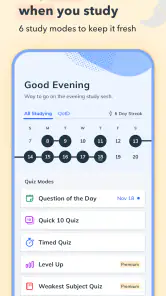
Analysis by Reviewed
Preparing for a nursing certification exam is different from simply reviewing class notes. You need to recognize question patterns, explain why an answer is correct, and keep working when your confidence drops. I spent time with Pocket Prep Nursing as an education app from Pocket Prep, Inc., and found that its strongest role is not replacing a textbook or instructor. It is giving you a practical way to turn spare minutes into focused exam practice.
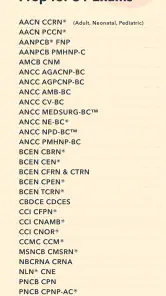
The app is built around nursing certification preparation, with practice questions and mock tests covering 36 certification exams. That makes it much broader than a single-course quiz tool. At the same time, that breadth means you need to choose your exam path carefully and avoid treating every question as equally relevant to your own goal.
It is free to install and suitable for Everyone, but the free experience should be viewed as an opportunity to test the method rather than as a complete substitute for paid preparation. In-app purchases range from $20.99 to $124.99 per item. I would not judge the app by the lowest possible price alone; the useful question is whether its explanations, question volume, and study workflow fit the exam you are actually taking.
How Pocket Prep Nursing fits into a serious study routine
A question-first approach rather than a textbook replacement
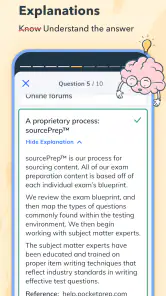
The central experience is active recall. Instead of reading a long chapter and hoping the information stays with you, you answer a question, commit to an option, and then inspect the reasoning. That small change matters. Nursing exams often test prioritization, safety, delegation, assessment, and clinical judgement, so recognizing a definition is not enough.
I found the app most useful when I treated each question as a short diagnostic. A correct answer showed me what I knew under pressure, while an incorrect answer exposed a gap that needed more than memorization. The explanation is therefore more valuable than the score itself. If you rush through questions simply to increase your completion count, you lose much of the app's educational benefit.
The large library is a practical advantage for learners who dislike seeing the same small batch repeatedly. The store summary describes more than 28,000 practice questions and mock tests, which gives the platform enough breadth to support a long preparation period. That scale can also become distracting: a huge question bank is only useful when you connect it to a clear exam plan.
What the free access tells you before spending money
Because the app is free to install, I would begin there even if I already expected to subscribe or unlock additional material. The free access lets you judge the writing style, the level of explanation, and whether the question format feels close enough to your certification target. Those are personal fit questions that no rating can answer for you.
More From Our News Desk

Clash of Clans Is Won Between the Battles

Android Auto Makes the Case for Quieter Car Software

MobiOffice: Transforming Mobile Productivity with Seamless Integration

EA SPORTS FC™ Mobile Soccer: Redefining Mobile Sports Gaming

How Microsoft OneDrive Became a Mobile Productivity Giant

How Google Translate Breaks Language Barriers Effortlessly
The paid options are not a minor detail. Purchases run from $20.99 to $124.99 per item, so the financial decision depends on which access level is offered for your chosen preparation route and how long you intend to study. I would compare that cost with the price of a review book, a live course, or a question-bank subscription, but I would not assume they deliver the same thing. Pocket Prep Nursing is primarily valuable for repeated practice and review on a phone, not for replacing every form of instruction.
One useful way to evaluate the free period is to set a short trial routine. Complete questions on several separate days, read every explanation, and return to missed topics later. If you only open the app once and decide based on a handful of questions, you may confuse unfamiliarity with poor quality. Conversely, if the explanations feel too brief for your learning style, paying for more questions will not solve that particular problem.
The app's strongest practical workflow
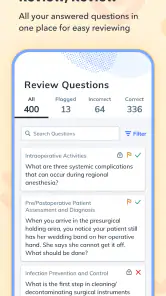
My preferred workflow is simple: select the certification area that matches your goal, answer a small group of questions without looking anything up, review the explanations immediately, and record the concepts that caused hesitation. Later, I revisit those weak areas instead of endlessly repeating questions I already know.
This approach turns the app into a feedback loop. The first pass measures recall. The explanation builds understanding. A later pass checks whether the lesson stayed with you. That is more effective than using the app as background entertainment during a commute, especially for questions involving several plausible answers.
A second useful workflow is to separate learning sessions from testing sessions. During learning sessions, I pause after each question and study the rationale. During testing sessions, I avoid interruptions and use a mock test to practise stamina and decision-making. Mixing both modes in every session can make it difficult to tell whether a high score reflects knowledge or familiarity with the format.
Three details that affect the real value
First, the breadth of exam coverage is both a strength and a responsibility. Someone preparing for one specialty may be tempted to browse unrelated certification material because it is available. That can create a false sense of productivity. I would keep the selected exam visible in my study plan and use broader content only when it supports a clearly related weakness.
Second, explanations should be treated as study notes, not as a complete nursing reference. When an answer raises a subject I do not understand, I would verify the underlying concept in a trusted textbook, class resource, or official exam outline. The app is excellent at prompting targeted review, but a question bank is not the same as a full curriculum.
Third, mock tests are most valuable when used at the right time. Early in preparation, short question sets reveal gaps without exhausting you. Closer to the exam, a mock test can show whether you maintain concentration across a longer session. Taking full mocks too frequently may leave you focused on scores rather than fixing the causes of wrong answers.
Everyday use: the five-minute gap that becomes useful
Imagine a nurse working alternating shifts and studying for a certification exam. A long evening study block may not happen after a demanding day, but a short break before work or a quiet period after lunch can still support a handful of questions. Pocket Prep Nursing fits that situation better than a heavy reference book because the session can begin and end quickly.
The important part is to use those short sessions deliberately. I would choose one topic, answer a manageable set, and save the difficult concepts for a longer review later. Short bursts are good for retrieval practice, but they are not enough by themselves for learning complex clinical frameworks. The app works best as the flexible layer around deeper study, not as the entire plan.
Where it compares well with familiar alternatives
Compared with printed review books, the app is easier to carry and better suited to repeated, low-friction practice. A book may still be better when you want to annotate extensively, read a complete explanation in context, or study without a screen. The choice is not really paper versus phone; it is quick retrieval practice versus slower, more comprehensive reading.
Compared with video courses, Pocket Prep Nursing puts more pressure on you to make a decision. Videos can be reassuring when a topic is completely unfamiliar, but passive watching can hide weak recall. The app exposes uncertainty immediately. I would use video or classroom instruction for difficult foundations and the question bank to test whether those foundations hold up.
Compared with a general flashcard app, this nursing tool has a more direct connection to certification-style practice. Flashcards are useful for terminology, values, and concise facts, but they may not reproduce the judgement required when multiple answers appear reasonable. Pocket Prep Nursing is the better choice when your main problem is applying knowledge to questions rather than remembering isolated words.
Limitations I would take seriously
The first limitation is that question practice can become mechanical. A large bank may encourage users to chase completion rather than understanding. If you notice yourself answering quickly, skipping explanations, or choosing familiar options without reasoning, stop and change the routine. More questions will not automatically produce better preparation.
The second is screen fatigue. Studying nursing content on a phone is convenient, but it is not always comfortable for long reading sessions. I would reserve the app for active practice and use a larger screen or printed material for extended review. This also helps separate rapid testing from deeper concentration.
The third is cost uncertainty at the point of planning. Since individual in-app purchases range widely, I would inspect the available purchase description for the specific exam before committing. The free installation makes trying the app sensible, but the paid value depends on the access option you need and the number of weeks you will use it. A short-term learner and someone preparing across several months may reach different conclusions.
There is also a risk of overconfidence. A strong result inside one question bank does not guarantee readiness for every wording style or every clinical scenario. I would combine this app with the official exam blueprint and another source of comprehensive content. That is especially important if your weak area is foundational knowledge rather than test technique.
Who is likely to get the most from it
I think the app is a strong fit for nursing students, working nurses, and repeat test-takers who already have some subject knowledge and need a consistent way to practise. It is particularly useful for people who study in irregular spaces: between shifts, during commutes, or in short sessions that would otherwise be lost.
It also suits learners who benefit from immediate feedback. If you want to know not only whether an answer was wrong but why your reasoning failed, the question-and-explanation format gives each session a clear purpose. The broad certification coverage is helpful when your exam target is one of the areas supported by the app and you want to avoid juggling several unrelated study tools.
I would be more cautious recommending it to someone starting nursing education from the beginning. Beginners may need structured teaching, diagrams, demonstrations, and longer explanations before question practice becomes productive. The app can reveal what you do not know, but it may not teach every prerequisite in enough depth for a complete novice.
I would also hesitate if you strongly prefer handwritten notes, printed references, or instructor-led discussion. The free installation is a low-risk way to test that preference, but convenience on a phone does not make the format universally comfortable. People who need extensive context before answering may get more value from a textbook or course, then return to this app for reinforcement.
What the ratings and platform details suggest
The app has an average rating of 4.6 from around 874 ratings, with roughly 84 written reviews, and it has passed 100K+ installs. Those figures suggest that it has found a real audience among learners, but they should be treated as supporting evidence rather than proof that it matches your exam perfectly. A question bank can be highly rated and still be the wrong fit for someone who needs a full lecture-based course.
It was released on February 11, 2021, and the current version is 3.29.1. The minimum operating system is Android 8.0, so users on older devices should check compatibility before building their study routine around it. These details matter less than content quality, but an app that cannot run reliably on your phone is not useful during a tightly scheduled preparation period.
My buy-or-skip judgement
I would start with the free installation, identify my exact certification exam, and test the app through several focused sessions. If the questions feel relevant, the explanations help me correct mistakes, and the workflow fits my schedule, paying can make sense. The potential value is strongest for someone who will use the bank repeatedly rather than open it only a few times.
I would skip the paid option if I were looking for a complete nursing course, extensive visual teaching, or a single authoritative reference. I would also skip it if the purchase required more spending than I was comfortable with and I already owned a question bank that matched my exam well. Free access is useful for evaluating fit, but it should not pressure you into buying content you will not finish.
My overall view is positive but specific: Pocket Prep Nursing is best as a disciplined practice partner. It helps convert small pockets of time into active recall, offers unusually broad certification coverage, and can make weak areas visible before the real exam. Its value depends on reviewing explanations, checking difficult concepts elsewhere, and choosing the paid level carefully. If you want a portable nursing question bank rather than a replacement for every other study resource, this is worth trying first and considering for paid access only after the free experience proves useful.
Pocket Prep Nursing 2026 Frequently Asked Questions
What devices and operating systems can run Pocket Prep Nursing 2026?
Pocket Prep Nursing 2026 is available for Android and iOS, so it can fit into a study routine on a phone or tablet. On Android, the listed minimum requirement is version 8.0. Before downloading, check that your device meets the relevant platform requirements and has enough available storage for the app and its content. Keeping your operating system current can also help with compatibility.
What is Pocket Prep Nursing 2026, and who is it designed for?
Pocket Prep Nursing 2026 is a mobile study and practice app designed for nursing students, graduates, and candidates preparing for nursing licensure or certification exams. It provides practice questions, explanations, progress tracking, and study tools intended to support regular revision. The app is most useful for learners who want flexible practice on Android or iOS, although it should be used alongside official exam materials and a structured nursing study plan.
Does Pocket Prep Nursing 2026 include realistic nursing exam questions?
The app offers nursing-focused practice questions covering subjects commonly associated with licensure and certification preparation, such as clinical care, pharmacology, patient safety, and professional practice. Questions are generally presented in an exam-style format and are accompanied by explanations to help users understand the reasoning behind each answer. The app promotes preparation for 36 nursing certification exams with more than 28,000 practice questions and mock tests. However, users should remember that practice content is not an exact reproduction of the official examination.
Is Pocket Prep Nursing 2026 free to download and use?
Pocket Prep Nursing 2026 can typically be downloaded at no initial cost, but access to its complete question bank and advanced study features may require a subscription or in-app purchase. In-app purchase options range from $20.99 to $124.99 per item, and the exact number of free questions, available plans, trial conditions, and renewal terms can change. Check the current store listing and subscription details before starting a trial, and review cancellation settings carefully to avoid unwanted renewals.
Can I use Pocket Prep Nursing 2026 without an internet connection?
Some study functions may be available offline after the relevant content has been loaded, making the app convenient for reviewing during commutes or in places with limited connectivity. Nevertheless, features such as account synchronization, updates, subscription verification, performance backups, or newly delivered content may require an internet connection. Before relying on offline study, open the app online and confirm that your selected questions and explanations are accessible.
Pros
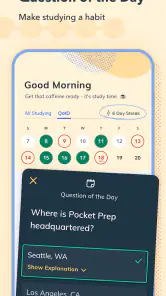
- Short quizzes make it easy to study during brief breaks.
- Explanations clarify why each answer is correct or incorrect.
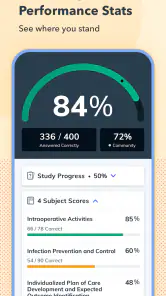
- Progress tracking helps identify weak nursing topics.
- Practice questions cover several major nursing exam areas.
- The interface is clean and simple to navigate on mobile.
Cons
- Full access may require a costly subscription.
- Some questions may not match your exam’s exact difficulty.
- Offline study options can be limited depending on the plan.
- Frequent practice can feel repetitive over time.
- It should supplement
- not replace
- textbooks or clinical review.
- Category
- Education
- Version
- 3.29.1