Pocket Prep Behavioral Health
- 400.00
- 4.5
- Installs
- 50.00K
- Price
- Free

Screenshots
Analysis by Reviewed
I found Pocket Prep Behavioral Health most useful when treated as a focused study companion rather than a complete course. It is an education app from Pocket Prep, Inc. built around preparation for social work and counseling exams, and its central idea is simple: give me practice questions and mock-test work I can fit into the gaps of an ordinary day. That makes it especially interesting in a shared household, where study time may happen at a kitchen table, during a commute, or in short breaks between responsibilities.
The app is free to install and suitable for Everyone, although its subject matter is clearly aimed at people preparing for professional exams. It has a 4.5 average from around 2.9 thousand ratings, with more than 50 thousand installs. Those figures suggest a reasonably established study tool, but they do not change the main question I would ask before using it: do I want targeted exam practice, or do I need a full teaching platform with lessons, lectures, and personal tutoring?
How it fits into a shared household
My favorite use case is a person who has already studied the material elsewhere and needs a reliable way to keep recalling it. Imagine a parent, partner, or roommate preparing for a counseling exam while sharing a device or living space with other people. A short question session can fit before dinner, while waiting for an appointment, or after everyone else has gone to bed. The app works best in that rhythm because practice does not require setting up a large study area or opening a stack of books.
That convenience does not mean the app turns a busy home into a quiet library. Notifications, interruptions, and conversations can break concentration, especially during a mock test. I would use shorter practice sessions when the household is active and reserve full-length test work for a time when I can protect my attention. The distinction matters: a missed question during casual practice is useful feedback, while a disrupted mock exam can make the result difficult to interpret.
For a shared-device household, I would also decide in advance who the device belongs to during study time. The app is designed around an individual learner’s progress, so passing a phone back and forth between two people preparing for different exams would make the experience harder to read. One person might see questions intended for another person’s preparation, and the resulting history would no longer represent either learner clearly.
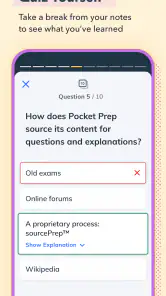
The practical strength is not simply having questions available; it is being able to turn small spare moments into deliberate recall practice. That is more valuable than casually scrolling through explanations because it forces me to make a choice before seeing the answer. I would keep a notebook or separate document nearby for concepts that repeatedly cause trouble, rather than assuming that answering a question once means the topic is mastered.
What I would do before handing over a shared phone
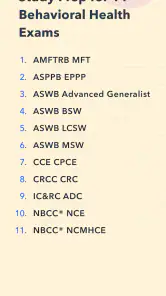
I would begin by identifying the exact exam path I am following. The app covers thirteen social work and counseling exams, so the useful content depends heavily on choosing the right professional target. A household member who is studying social work should not simply open the app and start answering whatever appears first. The first session should be used to understand how the relevant exam preparation is organized and whether the question style matches the learner’s current stage.
More From Our News Desk

Clash of Clans Is Won Between the Battles

Android Auto Makes the Case for Quieter Car Software

MobiOffice: Transforming Mobile Productivity with Seamless Integration

EA SPORTS FC™ Mobile Soccer: Redefining Mobile Sports Gaming

How Microsoft OneDrive Became a Mobile Productivity Giant

How Google Translate Breaks Language Barriers Effortlessly
That initial check is an important boundary. A practice app can help with recall, judgment, and familiarity with exam wording, but it should not replace the official exam outline, required textbooks, class notes, or supervised professional training. I would compare the subjects I am seeing in practice with the current materials supplied by my school, licensing body, or instructor. If the app becomes the only source of information, it may encourage a narrow form of preparation focused on selecting answers rather than understanding why they are correct.
On a shared device, I would also avoid letting another person casually continue an unfinished session. Even a well-meaning partner or child could change the practice history or answer questions without understanding the study goal. The app is rated for Everyone, which describes its store age classification, not the professional level of its content. In a home with younger users, I would explain that the material is for the exam candidate and is not an educational game for casual browsing.
The free entry point makes it easy to test the workflow before spending money. I would use that opportunity to judge three things: whether the questions feel relevant to my exam, whether the explanations help me correct misunderstandings, and whether the pace suits my routine. In-app purchases range from $20.99 to $124.99 per item, so I would not buy an option simply because I had already invested time in the free experience. I would first decide whether the paid material adds enough value to my particular study plan.
Keeping progress meaningful when more than one person studies
Coordination is where a household arrangement can either work smoothly or become confusing. I would give each learner a clear study window and keep one person’s practice history separate from another’s whenever possible. If only one device is available, the safest approach is to have one learner finish a session, record the topics that need review, and then stop rather than allowing several people to build a mixed history.
I would also agree on a simple language for discussing results. Instead of announcing a score as if it were a final prediction, I would say which topic caused difficulty and what the next review action will be. For example, after missing several questions involving professional judgment, the learner might return to class notes, write down the rule being tested, and then use a later practice session to check whether the mistake was understood. This makes the app part of a study loop instead of a scoreboard in the household.
Mock tests deserve a separate agreement. I would not begin one while someone else expects to use the phone, needs to make a call, or may interrupt with household tasks. The value of a mock test comes partly from maintaining focus and pacing. If a session is repeatedly interrupted, I would label it as practice rather than treating the outcome as a trustworthy readiness check.
There is also a useful coordination role for a study partner who is not taking the exam. That person does not need access to the app or the learner’s account to help. They can protect a quiet period, ask the learner to explain a difficult concept in plain language, or help notice whether study sessions are becoming too passive. I prefer this kind of support because it respects the candidate’s ownership of the preparation rather than turning the household into an informal testing committee.
Account boundaries and responsible expectations
I would treat the app as a personal study workspace. The developer is Pocket Prep, Inc., and the current version is 3.29.1, with Android support beginning at version 8.0. Those details matter in a shared home because an older spare phone may not be compatible, while a newer household tablet may be used by several people. Before planning a family study arrangement, I would install it on the device that the actual candidate will use most often and confirm that the experience is comfortable there.
I would not assume that sharing a device means sharing one learner’s preparation with everyone else. Account access, purchase decisions, and progress should be handled by the person studying. If a household member is helping financially, I would still keep the candidate involved in deciding whether an in-app purchase is worthwhile. The price range is substantial enough that this should be a deliberate study-budget decision, not an accidental tap made during a busy evening.
Another boundary is emotional. Exam preparation can make every missed answer feel personal, especially when family members are watching progress. I would avoid using the app to pressure someone with comments such as “you should be scoring higher by now.” The better approach is to look for patterns: Are mistakes concentrated in one topic? Is the learner rushing? Are explanations being reviewed? That turns the practice history into information rather than judgment.
Because the app focuses on social work and counseling exams, I would be careful about who is invited to interpret the material. A partner can offer encouragement, but professional questions may involve ethical, legal, or clinical nuance that deserves an instructor’s explanation. If an answer seems inconsistent with course materials, I would flag it for a qualified teacher or compare it with authoritative exam guidance instead of treating the app as the final authority.
Age context, trust, and the right kind of supervision
The Everyone rating makes the app broadly accessible from a store-age perspective, but the intended activity is still serious exam preparation. I would be comfortable with an adult learner using it around children, yet I would not confuse an age label with a guarantee that every topic is suitable for every child’s independent use. The content belongs to a professional education setting, and younger household members may not understand the context behind counseling or behavioral-health questions.
Trust should work both ways. An adult preparing for an exam should be allowed uninterrupted study time and should not have every result inspected by family members. At the same time, if the device is shared, the candidate needs to communicate when it is occupied and avoid leaving personal study information open for another person to browse. These are ordinary household manners, but they become more important when an app stores a record of repeated performance and exam preparation.
I would also be cautious about using practice questions as conversation starters about real people in the family. Behavioral-health study material can resemble everyday situations, but an exam question is not a diagnosis and a household disagreement is not a case study. The app can support professional learning; it should not be used to label relatives, evaluate a partner’s mental health, or replace appropriate care.
For a teenager interested in counseling or social work, I would frame the app as a glimpse into professional exam preparation rather than a shortcut into practice. The material may be useful for understanding the seriousness of the field, but the learner still needs formal education, ethical training, and supervision. I would encourage questions about the concepts while keeping clear boundaries around personal advice and clinical interpretation.
Where it beats ordinary alternatives
Compared with a printed question book, the app is easier to carry and better suited to irregular schedules. A book can provide depth and annotation, but it is less convenient when I have only a few minutes. Compared with general flashcard apps, this tool is more directly tied to social work and counseling exam preparation. A homemade deck can be excellent for memorizing definitions, yet it may not reproduce the feeling of choosing between plausible professional answers.
Compared with video courses, the app is more active but less explanatory. Watching a lecture can help when I do not understand a subject at all, while practice questions are stronger once I have a foundation and need to identify weak spots. I would use the app after reading or attending class, not as my only introduction to complex material.
That trade-off is especially important for learners who want a teacher-like experience. If I need someone to walk me through a difficult ethical scenario step by step, a course, instructor, or study group may be the better first choice. If I already understand the broad ideas but keep forgetting details or misreading exam-style wording, Pocket Prep’s question-centered format becomes much more attractive.
One non-obvious benefit is that practice can reveal a problem with test technique rather than knowledge. If I know the concepts but repeatedly choose an answer too quickly, the solution may be slowing down, identifying the question’s priority, and explaining why the other options are weaker. I would use missed questions diagnostically instead of merely repeating them until the correct choice feels familiar.
Limitations I noticed in the study workflow
The biggest limitation is scope. Practice questions and mock tests cannot provide the same depth as a complete curriculum. Learners who are starting from zero may find the app demanding because it asks them to apply ideas before they have built a strong framework. I would not recommend relying on it alone for a high-stakes professional exam.
The second limitation is the risk of false confidence. A good run of answers can feel reassuring, but familiar question patterns are not the same as broad competence. I would rotate between app practice, official outlines, detailed reading, and conversations with instructors. The app is most reliable as one instrument in that mix.
There is also a practical cost decision. Although the app is free to install, the in-app purchase range means the complete study experience may require a meaningful payment. I would compare that expense with the price of a book, course, or tutoring session based on what I actually need. Someone who only wants occasional revision may be satisfied with limited use, while someone planning an intensive preparation period should examine the purchase terms carefully before committing.
Finally, shared-device use adds friction that a solo learner may never notice. Mixed progress, interruptions, and accidental access can undermine the clean feedback that makes practice valuable. I would rather use a personal phone with a short, consistent routine than a household tablet that is always available but constantly changing hands.
My household verdict
I would recommend Pocket Prep Behavioral Health to an exam candidate who wants structured practice in small sessions and already has, or is building, a broader source of instruction. It is particularly well suited to a busy adult sharing a home, provided the learner sets clear device boundaries and protects mock-test time. The free installation makes trying the format straightforward, while the paid options deserve a considered decision based on exam relevance and study budget.
I would skip it as a primary resource if I need extensive teaching from the beginning, personal feedback on written answers, or direct guidance through complicated professional situations. I would also avoid making it a shared family quiz app. Its value comes from a focused learner using the results to adjust study, not from several people casually taking turns.
My final view is positive but measured. The app gives social work and counseling candidates a practical way to convert spare minutes into purposeful recall, and its mock-test approach can expose weak habits that reading alone may hide. In a household, the winning arrangement is simple: one clearly identified learner, a protected study routine, respectful account boundaries, and other resources available when a question needs deeper explanation. Used that way, it feels less like another app competing for attention and more like a compact checkpoint in a serious preparation plan.
Pocket Prep Behavioral Health Frequently Asked Questions
Which exams does Pocket Prep Behavioral Health help users prepare for?
Pocket Prep Behavioral Health is aimed at people studying for social work and counseling exams, with practice questions and mock tests as its main preparation tools. The app may suit users who want to test their knowledge and get familiar with exam-style practice. Before downloading, check that the exam you are taking is among the exams covered and that its subject matter matches your credential and region.
What is Pocket Prep Behavioral Health?
Pocket Prep Behavioral Health is a mobile study app designed to help students and professionals prepare for behavioral health and related certification exams. It typically combines practice questions, explanations, progress tracking, and review tools in one place. The app is intended to support structured revision and exam familiarity, rather than replace textbooks, supervised training, or official preparation materials.
Who can benefit from using Pocket Prep Behavioral Health?
The app may be useful for students, recent graduates, and behavioral health professionals preparing for a relevant licensing or certification examination. It can also help users who want short study sessions during commutes, breaks, or between classes. Before downloading, check that the specific exam covered by the app matches your credential, profession, and region, since behavioral health requirements vary by jurisdiction.
Does Pocket Prep Behavioral Health work offline?
Offline access can be useful when studying without a reliable internet connection, but availability may depend on the app version, subscription level, and whether questions or study content have been downloaded in advance. After installing the app, review its download and synchronization settings before traveling. Some features, such as account updates, analytics, or content refreshes, may still require an internet connection.
Is Pocket Prep Behavioral Health free to use?
Pocket Prep Behavioral Health is free to download, and in-app purchases are available for users who want access to paid options. The app may offer free access to a limited selection of questions or basic features, while a paid plan can unlock a larger question bank, detailed explanations, performance analytics, and additional study modes. Review the current purchase details in your app store before subscribing, and check renewal and cancellation conditions.
Pros
- Short quizzes make it easy to study during brief breaks.
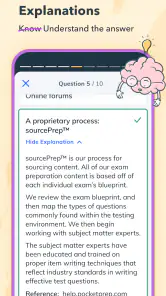
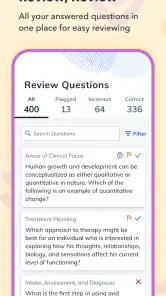
- Explanations help reinforce why each answer is correct.
- Practice questions cover several behavioral health exam topics.
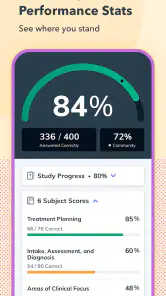
- Progress tracking makes it simple to monitor study activity.
- The mobile format supports studying without carrying review books.
Cons
- Some advanced features require a paid subscription.
- Question difficulty may not fully match your actual certification exam.
- A large question bank can feel repetitive during intensive study.
- It is a study aid
- not a replacement for supervised clinical training.
- Offline access and certain tools may vary by subscription plan.
- Category
- Education
- Version
- 3.29.1