Memrise: Languages for life
- 66.97K
- 4.5
- Installs
- 10.00M
- Price
- Free

Screenshots


Analysis by Reviewed
I approach language apps with one practical question: will I actually open one on an ordinary day, and will it help me say something useful? Memrise: Languages for Life is an education app from Memrise that puts vocabulary and spoken language at the center of its learning experience. I find that focus appealing for learners who want more than a stack of grammar exercises, though it works best when paired with practice beyond the screen.
Cost, access, and what the price tells you
The app is free to download, and its age rating is Everyone. It also offers in-app purchases, with listed item prices ranging from $0.99 to $329.99. That range is broad, so I would check the purchase details shown in the app before paying rather than assume every learner needs a paid option. Free access makes it easy to try the learning style first; whether a purchase feels worthwhile depends on the particular content and access you want.
Memrise has a 4.5 average from around 1.6 million ratings and over 10 million installs. Those figures suggest it has reached a large audience, but they cannot tell you whether its teaching approach suits your goals. I would treat a short trial of the lessons as more useful than popularity alone when deciding whether to keep it.
Why Memrise Stands Out
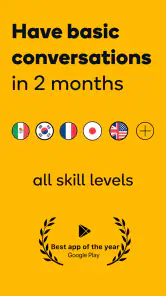
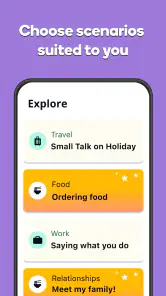
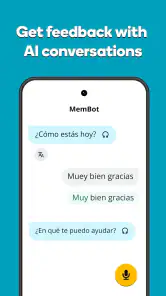
Right off the bat, what I love about Memrise is its emphasis on real-life language use. Instead of bombarding you with endless grammar drills, it immerses you in everyday conversations, cultural nuances, and practical vocabulary. It's like having a mini language immersion trip right in your pocket! The app offers a wide range of languages, from the widely spoken Spanish and French to the less common Icelandic and Mongolian. So, whether you're prepping for a vacation or brushing up on your skills for business, Memrise has got you covered.
User Experience and Features
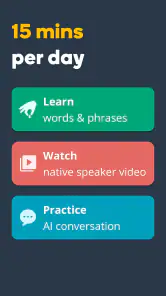
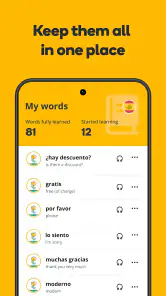
Now, let's talk about the user experience. Navigating through Memrise is a breeze. The interface is intuitive, colorful, and just plain fun. The app uses spaced repetition, a scientifically proven method to help you remember vocabulary effectively. Plus, with its Learn with Locals feature, you get to hear native speakers use the language in various contexts, which is super helpful for picking up the accent and rhythm.
That audio is most useful when I turn a quick session into active listening rather than background noise. I pause after a clip and try to repeat the phrase before moving on, then revisit the words I keep missing. This small habit makes the native-speaker material more actionable: it draws attention to how a phrase sounds, not just what it means. It still does not replace a real conversation, where another person can respond unexpectedly, so I would use it as preparation rather than proof of speaking ability.
Memrise also gamifies the learning experience with points, levels, and leaderboards. Trust me, there's nothing quite like the satisfaction of leveling up after a solid study session. And if you're competitive like me, the leaderboards will keep you motivated to learn more and climb to the top!
More From Our News Desk

Weather by Xiaomi Review: Clear at a Glance, Less Clear Up Close

X Under Pressure: Can It Recover When Posting Goes Wrong?

Clash of Clans Is Won Between the Battles

Android Auto Makes the Case for Quieter Car Software

MobiOffice: Transforming Mobile Productivity with Seamless Integration

EA SPORTS FC™ Mobile Soccer: Redefining Mobile Sports Gaming
For a realistic routine, I would use a commute or a wait in line for one short review session, then pick one useful phrase to try later that day. That is a better fit for this format than opening the app once a week and expecting a long session to do all the work. Spaced repetition can help bring words back at sensible intervals, but it asks for consistency; when I skip practice, a streak or score cannot substitute for the missed recall.
A useful variation is to decide what you want to do with a phrase before studying it. If I am preparing for a trip, I focus on recognizing and saying a practical expression, then listen again without reading to see whether I can catch it by ear. If I am learning for a class, I treat new vocabulary as material to bring into my own sentences rather than as a complete lesson. This gives each brief session a purpose and makes it easier to notice whether the app is helping with the goal I actually have.
I would also avoid treating every correct answer as permanent knowledge. A word can feel familiar because it has just appeared on screen, yet still be hard to recall the next day or use in a different sentence. When something repeatedly slips, I slow down and say it aloud, then make a note of where I might use it. That extra effort is especially worthwhile for phrases whose sound is unfamiliar. It turns review from a score chase into a check on what I can retrieve without a prompt.
The Community and Support
One of the underrated features of Memrise is its vibrant community. You can connect with fellow learners, share tips, and even participate in community-created courses. It's a great way to stay inspired and learn from others who are on the same journey as you. Plus, if you ever hit a snag, Memrise's support team is responsive and always ready to help.
Community-created material can be useful when you want to explore a topic that feels more specific than a general beginner path. I would still judge a course by its examples and consistency before relying on it: learner-made material may vary in how clearly it is organized. If your priority is a tightly sequenced grammar syllabus, detailed explanations, or instructor feedback, a course-led platform or a teacher may be a better companion. Memrise’s conversational emphasis is a strength, but it is not a complete substitute for every kind of study.
It helps to think of the app as one part of a learning setup, not a single solution that must cover every skill. I might use its short reviews to keep words active, a grammar reference when I need to understand why a sentence is formed a certain way, and a conversation partner when I need to respond in real time. That division of effort is more realistic than expecting vocabulary practice to correct writing or make spontaneous speaking comfortable on its own.
The app is a particularly good fit for someone who wants to build everyday vocabulary, hear spoken examples, and keep lessons manageable around work or travel plans. It may be less suitable if you need a formal curriculum, extensive writing correction, or live speaking practice as your main activity. I would combine it with writing a few original sentences or speaking with a person when those are the skills I most need to improve.
Who gets the most value from it?
Memrise was released on May 20, 2013, and its current version is 2025.12.02.0, with Android support beginning at version 8.0. The practical value is not the version number itself; it is whether the app’s style fits the job. For a traveler, the useful workflow is to review phrases before leaving and listen closely to the spoken examples. For a learner already taking classes, it can serve as a vocabulary companion between lessons instead of competing with the class’s grammar plan.
Compared with flashcard apps, Memrise’s spoken material and conversational framing make it feel less like maintaining a deck of isolated translations. Compared with a traditional course, it is easier to dip into but may offer less of the structured explanation some learners want. I would choose it for repeated exposure and a flexible routine, and choose a more lesson-driven alternative when I need a clear grammar sequence or direct correction.
That comparison matters if you are deciding between several kinds of language tool. A plain flashcard system can be a better fit if you already have a trusted word list and want precise control over how you organize it. A structured course is more helpful when you need explanations and a planned progression. Memrise sits between those approaches: its listening and conversational framing give vocabulary more context than a bare card, while its flexible sessions suit learners who do not want every study moment to feel like a formal class.
It is also worth being honest about motivation. Points and leaderboards can make a short session feel rewarding, but I would not let a high score stand in for being able to understand or use a phrase. If competition nudges you to return, that is useful; if it makes you rush through prompts, slow down and prioritize recall. The best sign that the routine is working is not simply that I completed a session, but that I can recognize or produce a phrase later when it is relevant.
For someone with a packed schedule, a small repeatable habit is more practical than waiting for a free hour. I might review while waiting for an appointment, choose one expression that applies to a planned conversation, and later try to use it without looking at the screen. A learner with more time can extend that routine by writing a few original examples or using a separate resource for grammar. The app works best when the next step is clear, rather than when each session becomes another task to finish.
On the other hand, I would not make this my main tool if my immediate need were to pass an exam built around detailed grammar, produce polished writing, or receive correction from a fluent speaker. Those goals call for different kinds of feedback. Someone who wants to learn a handful of phrases for a holiday may find the emphasis on practical language more immediately useful than a demanding textbook plan, while someone pursuing advanced accuracy should expect to supplement it substantially.
Its free starting point also makes the decision fairly simple: try the learning format first, then consider a purchase only if the specific paid access suits your routine. Since in-app items span a wide price range, I would not treat the existence of purchases as evidence that everyone must pay to get value. Check what an item includes and whether you will use it before committing.
That is the sensible way to judge paid value here: decide whether the free experience already supports your habit, then consider a purchase only for a concrete reason. I would ask myself what access I am buying, how often I expect to use it, and whether it addresses a real obstacle in my learning. A large price range makes it especially important not to assume that the most expensive option is automatically the best match. If I cannot name the specific benefit I need, I would keep using the free access rather than pay out of vague optimism.
Before starting, it is reasonable to wonder whether the app is suitable for a complete beginner. I would approach it as a way to build familiarity with words and spoken examples, while adding a clearer grammar resource if the basics feel confusing. Another common concern is whether brief sessions can make a difference: they can support steady recall, but the benefit depends on returning and using what you learn. For speaking confidence, I would use the audio to prepare and then seek chances to speak with a person, since listening to examples is not the same as handling an unpredictable exchange.
It is also a practical choice for learners who are unsure which language routine they can sustain. Because the app is free to download, I can test whether its format fits my day before making a spending decision. I would sample the kind of material I plan to study, try a few short sessions at the time I would realistically use it, and notice whether the spoken examples help me remember. If the habit feels forced or the learning path does not match my needs, that is useful information too; there is no reason to pay simply because I have installed it.
Parents and younger learners may also appreciate that its content rating is Everyone, but age suitability does not automatically mean the teaching style suits every child. I would sit with a younger learner at first, see whether the prompts hold their attention, and make sure sessions remain an aid to learning rather than a substitute for conversation and schoolwork. For an adult learning independently, the same principle applies: the app can make practice easy to start, while the learner still needs to connect words to real situations.
So, what's the final verdict? Memrise: Languages for Life is a fantastic app for anyone looking to learn a new language in a fun, engaging, and effective way. Whether you're a beginner or brushing up on your skills, this app is designed to make language learning accessible and enjoyable. So go ahead, give it a try, and let the language adventure begin!
My recommendation is to start with a concrete goal—understanding common travel phrases, for example—and see whether the review rhythm and audio keep you coming back. If they do, Memrise can be a useful, low-friction part of learning; if you need extensive grammar teaching or feedback from a conversation partner, use another resource for that core need. I would skip paying until I know which access I want, but I would gladly try the free app when vocabulary and spoken examples are the priority.
Memrise: Languages for life Frequently Asked Questions
What languages can I learn with Memrise?
Memrise is designed for language learning, and its store description emphasizes connecting with culture and speaking confidently. Before downloading, consider which language you want to study and whether the app’s approach fits your goals. You can explore its available learning options and decide whether they suit the kind of practice you want to do.
What operating system does Memrise require, and is it available on Android and iOS?
Memrise is available as an app for Android and iOS. On Android, it requires version 8.0 or later, so check your device’s software version before installing. If you are using an iPhone or iPad, review the app’s compatibility details in the relevant app store before downloading to make sure it works with your device.
Is Memrise free to download, and are there optional purchases?
Memrise is free to download, so you can try its language-learning approach without paying upfront. The app also offers in-app purchases, with individual items ranging from $0.99 to $329.99. If you are considering an upgrade, check the purchase details shown in the app before confirming, and decide whether the available options suit your learning needs and budget.
Who develops Memrise, and is it suitable for all ages?
Memrise is an education app developed by Memrise, and its content rating is Everyone. Its focus on learning languages can appeal to people with different goals, from exploring a new language to building confidence with one they already study. As with any learning app, the best fit depends on the learner’s interests, preferred pace, and reasons for studying.
What is Memrise and how does it work?
Memrise is a language learning application designed to help users learn new languages through a variety of engaging methods. It utilizes spaced repetition, gamified learning, and mnemonic techniques to enhance memory retention. The app offers a wide range of languages, and users can choose courses based on their proficiency level and learning goals. With interactive lessons, quizzes, and user-generated content, Memrise makes language learning fun and effective.
Pros
- User-friendly interface
- Offline mode available
- Wide variety of languages
- Includes gamified learning
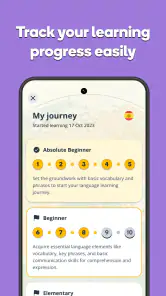
- Tracks progress effectively
Cons
- Limited advanced lessons
- In-app purchases required
- Occasional app crashes
- Pronunciation tools need improvement
- Repetitive exercises
- Category
- Education
- Version
- 2025.12.02.0











