NREMT EMT EXAM PREP 2026
- 24.00
- 4.6
- Installs
- 10.00K
- Price
- Free
Screenshots
Analysis by Reviewed
Preparing for the NREMT EMT exam is less about collecting endless study material and more about using your limited time well. I found NREMT EMT EXAM PREP 2026 most useful when I treated it as a focused practice tool rather than a complete replacement for a textbook, class, or instructor. Its purpose is clear: it puts targeted exam practice and simulated testing into an education app that I can open whenever I have a spare block of time.
That focus makes the app easy to understand. It is free to install, developed by Prepia Inc, and aimed at learners working toward EMT certification. The app is rated for Everyone, so it is presented as suitable for a broad audience, although the subject matter is naturally most relevant to EMT students and candidates. With a 4.6 average from around two hundred ratings and more than ten thousand installs, it has already attracted a modest but meaningful group of learners.
How I Would Decide Whether This EMT Prep App Fits
My first decision criterion would be study style. If I learn best by answering questions, checking my reasoning, and gradually becoming comfortable with exam pressure, this app makes sense. If I need long explanations, diagrams, instructor feedback, or a carefully sequenced medical curriculum, I would look elsewhere or use this alongside another resource.
The distinction matters because practice questions and teaching are not the same thing. A question can reveal that I do not understand a topic, but it may not fully explain the clinical principle behind the correct answer. I would therefore use the app after learning a subject, not as my only source of instruction. That approach turns each practice session into a way to identify weak areas instead of simply chasing a higher score.
I also considered how well the app suits short sessions. EMT candidates often study around work, school, family responsibilities, or clinical commitments. A dedicated practice app is more convenient than opening a large book when I have only a few minutes. I can use a short session for recall, then reserve longer study periods for reviewing notes and working through difficult concepts.
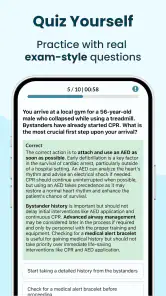
Another important criterion is whether practice feels close enough to an exam situation to expose careless habits. The inclusion of exam simulators gives the app more value than a simple collection of isolated questions. I would use targeted practice early in my preparation, then gradually add simulated sessions once I need to work on pacing, concentration, and decision-making under pressure.
What the app is trying to solve
The app addresses a common problem: knowing that I should study is not the same as knowing what to do during a particular study session. A broad EMT textbook can be thorough but intimidating. Random online questions can be convenient but inconsistent. NREMT EMT EXAM PREP 2026 sits between those options by giving my revision a more direct exam-oriented purpose.
More From Our News Desk

Clash of Clans Is Won Between the Battles

Android Auto Makes the Case for Quieter Car Software

MobiOffice: Transforming Mobile Productivity with Seamless Integration

EA SPORTS FC™ Mobile Soccer: Redefining Mobile Sports Gaming

How Microsoft OneDrive Became a Mobile Productivity Giant

How Google Translate Breaks Language Barriers Effortlessly
That does not mean every session will automatically be productive. I still need to review why an answer was right or wrong, write down recurring mistakes, and return to the underlying material. The app works best as the active part of a larger routine. It gives me something to do, but I remain responsible for turning mistakes into knowledge.
My practical study workflow
I would begin with targeted practice rather than immediately relying on full simulations. After each session, I would keep a small list of topics that caused hesitation, not just questions answered incorrectly. Hesitation is useful information: it can show that I guessed correctly without having a reliable understanding.
For example, I might complete a short practice session before work, mark the concepts that felt uncertain, and review those concepts from class notes later that evening. The next day, I would return to related questions instead of repeating the same set mechanically. This creates a useful loop: practice, diagnose, review, and retest.
A less obvious benefit of this workflow is that it separates knowledge gaps from test-taking problems. If I repeatedly miss questions on one subject, I probably need content review. If my answers are strong in targeted practice but fall apart during a longer simulator, the problem may be fatigue, pacing, or concentration. That distinction helps me choose the next step instead of assuming that more random questions will fix everything.
Where NREMT EMT EXAM PREP 2026 Wins
The strongest part of the app is its narrow purpose. It is not trying to be a general medical encyclopedia or a broad language-learning platform. Its identity is built around NREMT EMT exam preparation, which makes it easier for me to open the app with a specific intention. That directness is valuable when I am tempted to spend more time organizing study materials than actually practicing.
The combination of targeted questions and exam simulators is also important. Targeted practice is better for learning from a particular weakness, while simulations are better for checking whether I can apply what I know in a sustained exam-like session. Having both approaches in one place reduces the need to switch constantly between unrelated study tools.
I especially like the possibility of using the app at different stages of preparation. Early on, I would use it to discover which areas deserve attention. In the middle of my preparation, I would use it to reinforce material after class or textbook study. Near the exam, I would use simulations to check whether my performance remains steady when questions are presented in a longer sequence.
That progression is more useful than treating every question as an isolated score. A single result can be misleading, especially if I happened to recognize familiar wording. A pattern across targeted practice and simulations gives me a better sense of whether I am improving consistently.
Useful habits that make the practice more effective
One practical tip is to avoid using simulations only when I feel confident. That creates a flattering but incomplete picture. I would schedule them even after an ordinary study day, because the purpose is to discover how well I perform when I am not perfectly prepared. The results can reveal whether I need to improve endurance before exam day.
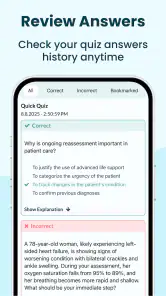
I would also avoid rushing through explanations or corrections. The value of a practice app is not just the number of questions completed. When I miss an item, I would ask what caused the mistake: did I misunderstand the clinical idea, overlook a key word, confuse two priorities, or change a correct first answer without a good reason? Those categories lead to different solutions.
A third useful approach is to keep “near misses” separate from clear mistakes. A question answered correctly through guessing should not be treated as mastered. Recording those uncertain answers gives me a more honest revision list and prevents a high-looking practice result from hiding fragile knowledge.
The app’s free entry point is another advantage. I can try its practice approach without committing to a purchase immediately. That matters because study tools are personal: some learners prefer a question-based interface, while others need videos, detailed lessons, or printed material. Being able to test the workflow first makes the decision less risky.
Version, access, and everyday convenience
The current version is 2.1.020, and it supports devices using Android 7.0 or later. That broad operating-system requirement should make it approachable for many Android users, including people who do not own a recent phone. I would still pay attention to how comfortably questions display on my particular screen, since reading clinical scenarios for a long time is easier on a clear, responsive device.
The app is free, but it includes in-app purchases ranging from $7.99 to $59.99 per item. I see that as a reason to evaluate the free experience before paying for anything. The right question is not simply whether paid material exists, but whether it adds enough practice or structure to justify becoming part of my study budget.
For someone studying during commutes, lunch breaks, or between classes, the app’s main convenience is that it keeps exam practice close at hand. I would not use a phone session as my only serious study block, but it can prevent small gaps in the day from disappearing. Short, deliberate practice is more useful than opening the app repeatedly without reviewing mistakes.
Where Another Study Option May Fit Better
This app is not the best choice for every EMT candidate. If I am starting from the beginning and do not yet understand the core material, I would want a structured course, instructor-led training, or a comprehensive textbook first. Practice questions can show me what I do not know, but they cannot always provide the depth or sequence needed to build a foundation.
I would also look for another primary resource if I learn visually or need demonstrations. EMT education can involve procedures, assessment sequences, anatomy, communication, and prioritization. A question-focused app may support those subjects, but it should not be assumed to replace hands-on training or supervised instruction.
Students who want detailed personal feedback may prefer working with a teacher or study group. An app can tell me how I performed within its practice environment, while an instructor can challenge my reasoning, correct a misconception, and explain why one decision is safer or more appropriate in context. That human element is especially valuable when I keep making the same type of mistake.
There is also a difference between exam familiarity and real-world readiness. Passing practice questions does not by itself create field judgment, communication skills, or practical confidence. I would be cautious about using any exam-preparation app as evidence that I am ready to perform clinical responsibilities without the required education and supervised experience.
How it compares with common alternatives
Compared with a textbook, NREMT EMT EXAM PREP 2026 is more immediate and interactive, but likely less suitable for deep reference reading. A textbook is better when I need a complete explanation, want to compare related concepts, or need to study away from a screen. The app is better when I want to retrieve information actively and see where my recall breaks down.
Compared with a general flashcard app, this product has a more specific exam purpose. Flashcards can be excellent for definitions, lists, and quick recall, but they may not challenge me to interpret a scenario or choose between competing priorities. I would use flashcards for memorization and this app for applied practice rather than expecting one to replace the other.
Compared with a live review course, the app is more flexible and usually easier to fit around an unpredictable schedule. A course offers accountability, explanation, and the chance to ask questions, while the app lets me repeat practice whenever I want. The better option depends on whether my main obstacle is access to questions or difficulty understanding the material.
Compared with random free question websites, a dedicated app may feel more coherent because it is designed around EMT exam preparation instead of a general collection of study pages. However, I would still judge the quality of explanations and the usefulness of the questions, not just the convenience of having them in an app. Free does not automatically mean complete, and paid does not automatically mean better.
The cost of switching between study tools
Switching resources can create hidden costs. I may lose time learning a new interface, rebuild a progress routine, or scatter my attention across several question banks. That is why I would give this app a defined trial period and a clear purpose, such as diagnosing weak topics or adding simulations to my existing plan.
If the app fits my workflow, staying with it can make revision simpler. If it does not provide enough explanation for my needs, I would not force it to become my only resource just because I have already used it. The sensible compromise is to keep it for active testing while using a textbook, class notes, or an instructor for clarification.
The in-app purchase range also makes switching decisions worth considering before upgrading. I would first identify what I actually need: more targeted practice, more simulation work, or a clearer learning path. Paying for additional access without knowing which problem I am solving could make my study routine more expensive without making it better.
My Recommendation for EMT Candidates
I recommend NREMT EMT EXAM PREP 2026 to EMT students who already have access to foundational instruction and want a convenient way to practice exam-style thinking. Its free starting point, focused subject, targeted practice, and simulator-based approach give it a useful role in a broader preparation plan. I would especially recommend it to learners who struggle to turn spare time into consistent revision.
I would not recommend relying on it alone if I were still learning the basic EMT curriculum, needed extensive explanations, or wanted hands-on guidance. In those situations, a course, instructor, or comprehensive reference should come first. The app can reinforce that learning, but it should not be mistaken for the whole educational process.
My preferred plan would be simple: use targeted practice to identify weak areas, review those areas from reliable instructional material, then use simulations to test consistency and stamina. I would track uncertain answers as carefully as incorrect ones, and I would judge progress by repeated performance rather than one encouraging session.
Overall, Prepia Inc has made a focused education app that earns its place as a practical companion for NREMT EMT exam preparation. It is not a substitute for instruction, clinical training, or thoughtful review, and the paid items deserve a careful look before purchase. Still, for a learner who wants structured question practice on an Android device, NREMT EMT EXAM PREP 2026 is a sensible tool to try. My final view is straightforward: use it when your main need is disciplined exam practice, and pair it with deeper resources when your main need is understanding.
The best results will come from treating every missed or uncertain answer as a study clue, not merely as a score. That mindset is what turns this app from a quick quiz tool into a useful part of a serious EMT preparation routine.
NREMT EMT EXAM PREP 2026 Frequently Asked Questions
What device requirements should I check before downloading NREMT EMT EXAM PREP 2026?
NREMT EMT EXAM PREP 2026 is an Education app from Prepia Inc, and it requires Android 7.0 or later. Check your device’s operating system before installing so you can avoid compatibility issues. The app is free to download, and its age rating is Everyone, making it suitable for a broad range of learners preparing for EMT certification.
Who develops NREMT EMT EXAM PREP 2026, and is it widely used?
NREMT EMT EXAM PREP 2026 is developed by Prepia Inc. It has more than 10,000 installs and a 4.6 average rating from 217 ratings, with 24 written reviews. Those figures offer a useful sense of its reach and user reception, but they cannot tell you whether its teaching style will suit you. Consider trying the app’s available study features and checking whether its practice approach matches your needs.
What is NREMT EMT EXAM PREP 2026?
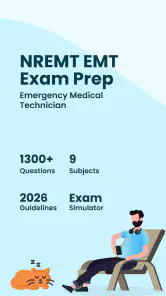
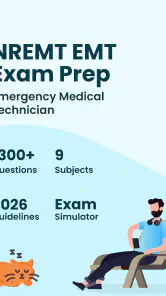
NREMT EMT EXAM PREP 2026 is a mobile study app designed to help aspiring Emergency Medical Technicians prepare for the National Registry of Emergency Medical Technicians EMT certification examination. It typically focuses on essential topics such as airway management, cardiology, trauma, medical emergencies, operations, and patient assessment through practice questions, explanations, and review materials. Its store summary highlights targeted practice and exam simulators, making it a study aid for reviewing exam-related material.
Can this app replace an EMT course or official NREMT resources?
No. NREMT EMT EXAM PREP 2026 should be used as a supplementary study tool rather than a replacement for an accredited EMT course, hands-on clinical training, instructor guidance, or official NREMT information. Passing the exam also requires practical knowledge, sound clinical judgment, and familiarity with current testing requirements. Always compare the app’s content with the latest official NREMT guidelines and your course materials.
Does NREMT EMT EXAM PREP 2026 include realistic practice questions?
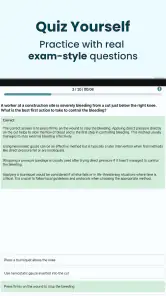
The app is intended to provide exam-style practice covering the major knowledge areas tested at the EMT level. Users can generally expect question-based revision, answer explanations, and opportunities to identify weak subjects. However, practice questions are not guaranteed to be identical to those on the real examination. Treat every quiz as preparation, and focus on understanding why an answer is correct rather than memorizing choices.
Pros
- Covers core EMT topics aligned with current NREMT-style exam objectives.
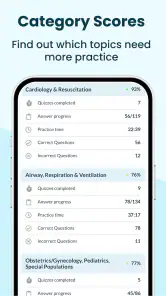
- Practice questions help identify weak areas before test day.
- Explanations make it easier to understand why an answer is correct.
- Useful for short study sessions during commutes or breaks.
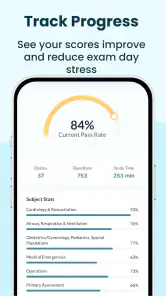
- Progress tracking can help maintain a consistent preparation routine.
Cons
- Some advanced topics may require a textbook or instructor for deeper explanation.
- Question wording may not perfectly match the official NREMT exam.
- Full access to all study content may require an in-app purchase.
- Repeated practice can feel limited after completing the question bank.
- The app should supplement
- not replace
- hands-on EMT training and skills practice.
- Category
- Education
- Version
- 2.1.020