COMPTIA EXAM PREP 2026
- 94.00
- 4.6
- Installs
- 50.00K
- Price
- Free
Screenshots
Analysis by Reviewed
Preparing for an IT certification can feel less like learning a subject and more like trying to organize a very large pile of notes. That is where COMPTIA EXAM PREP 2026 tries to help. I used it as a focused education app for certification practice, and its central value is straightforward: it gives you a place to work through exam-style questions for several CompTIA paths instead of relying on scattered browser searches or a stack of disconnected study materials.
The app is developed by Prepia Inc and is available free of charge, with optional in-app purchases ranging from $4.99 to $124.99 per item. It is rated for Everyone, runs on Android 7.0 and later, and the current version is 2.1.019. The app has reached over 50 thousand installs, with an average rating of 4.6 from more than 800 ratings. Those figures suggest that it has found a useful audience, although they do not replace checking whether its practice style matches the way you personally learn.
Why the practice-test approach matters
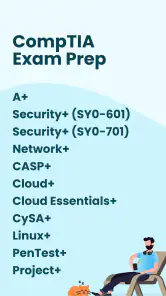
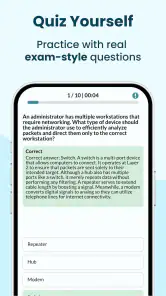
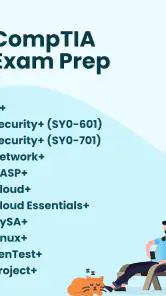
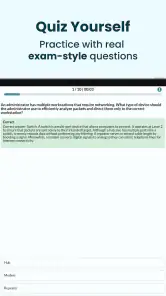
The most important capability here is not simply that the app covers A+, Security+, Network+, CySA+, Linux+ and other CompTIA-related exams. It is the way a question-based tool can turn vague preparation into a repeatable routine. Instead of asking myself whether I “understand networking” in a broad sense, I can sit down, answer a set of questions, and identify the areas that make me hesitate.
That distinction matters because certification study has two separate jobs. The first is learning concepts, such as troubleshooting methods, security principles or operating-system administration. The second is becoming comfortable applying those concepts under exam conditions. A practice-test app is much better at the second job than a general article or video course. It encourages retrieval, and retrieval is often more revealing than rereading a chapter that already feels familiar.
I found the multi-certification focus particularly useful for people who are still deciding where to specialize. Someone beginning with A+ may later move toward Network+ or Security+, while a learner already working in security may prefer CySA+ or Linux+. Having these paths within the same app makes it easier to keep one study tool available as your goals change. At the same time, the broad catalog can become distracting if you open the app without a clearly chosen exam target.
My advice is to treat the application as a diagnostic and rehearsal tool, not as a complete replacement for technical study. A wrong answer tells you where to investigate, but the question alone may not teach the underlying subject deeply enough. If I missed a question about a protocol, command or security practice, I would write down the concept, study it elsewhere, and then return to the app to see whether I could solve a similar problem later.
Turning short sessions into useful study
The strongest everyday use is short, deliberate practice. I would rather complete a focused session during a lunch break or on a commute than promise myself a long evening study block that never happens. The app suits this rhythm because practice questions can be used as a starting point even when I have only limited time and attention.
More From Our News Desk

Clash of Clans Is Won Between the Battles

Android Auto Makes the Case for Quieter Car Software

MobiOffice: Transforming Mobile Productivity with Seamless Integration

EA SPORTS FC™ Mobile Soccer: Redefining Mobile Sports Gaming

How Microsoft OneDrive Became a Mobile Productivity Giant

How Google Translate Breaks Language Barriers Effortlessly
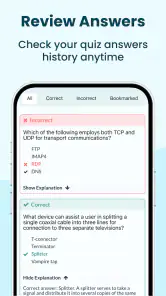
A useful routine is to begin with questions from one certification rather than jumping between every available subject. After answering, I would separate mistakes into three groups: facts I had never learned, concepts I misunderstood, and questions where I changed a correct answer because I lacked confidence. Each group needs a different response. The first calls for reading or a lesson, the second calls for explanation and examples, and the third calls for more timed practice.
This approach also prevents a common mistake: measuring progress by the number of questions completed. A large question count can feel productive while hiding the same repeated weaknesses. The better measure is whether the reason behind a mistake becomes clear. I would use the app to expose those weak points, then keep a small external note with the topic, the mistaken assumption and the corrected rule.
Another practical tip is to avoid memorizing answer positions or familiar wording. If a question looks recognizable, I would pause and explain why the selected answer is right before moving on. Practice tools become less valuable when they are treated like flashcards with fixed patterns. The real exam requires choosing a solution from a situation, not recognizing a sentence.
How it fits beside other study options
Compared with a textbook, this app is faster to open and more active. A textbook is usually better when I need a structured explanation, diagrams, background and a clear progression from basic ideas to advanced ones. Compared with video courses, the app demands more from me because I must retrieve an answer rather than listen passively. Videos can be easier for a first introduction, but they can also create the illusion that a topic is understood simply because the explanation sounded clear.
Compared with free question pages on the web, a dedicated app offers a more concentrated environment. I do not have to sift through unrelated search results each time I want to practice. The trade-off is that I should not assume every question represents the full depth or wording of an official examination. I would still consult the relevant CompTIA objectives and use authoritative technical references when a question exposes a gap.
The app is therefore most convincing as the middle layer in a study plan. A book, course or lab can build understanding; this application can test recall and exam readiness; hands-on work can show whether the knowledge transfers to real systems. Using only one of those methods leaves a noticeable weakness.
A realistic study scenario
Imagine I am working toward Security+ while holding a full-time job. On weekdays, I may have fifteen minutes before leaving home and another short window in the evening. I could use the first session for a small group of questions, mark the concepts that caused trouble, and spend the second session reviewing one of those concepts from a trusted source. The next day, I would return to practice rather than immediately reading another chapter.
After several sessions, I might notice that my errors are not random. Perhaps I can identify broad security principles but struggle when two answers both sound reasonable. That tells me I need to pay closer attention to the wording of scenarios, the order of a response and the distinction between prevention, detection and recovery. The app’s value in this situation is not that it magically fills the gap; it makes the gap visible while my study time is still manageable.
For a learner preparing for A+, the same workflow can be applied to hardware, operating systems and troubleshooting decisions. For someone considering Linux+, the questions can act as a checkpoint after hands-on command-line practice. In both cases, I would avoid using the app as a substitute for actually working with systems. Recognition on a screen is not the same as being able to diagnose a fault or complete a task under pressure.
Connectivity and studying on the move
Because this is a question-practice tool, a session is most useful when it fits naturally into the time available. On a commute or between errands, I would open it only when I can give the questions enough attention to think through the choices. A brief interruption can make a technical scenario harder to follow, so a quiet stretch at a desk may suit difficult material better than a crowded journey.
Connectivity is worth considering before relying on the app for a particular study window. I would check that it is ready to use while I have a dependable connection, especially before leaving home or work. If access becomes unreliable, I would avoid repeatedly restarting a session and instead switch to a saved note or textbook topic until I can return to the questions. That way, a connection hiccup does not turn a short study break into wasted time.
For data-conscious study, I would make question sessions the main app activity and use a separate reference when I need a longer explanation. That keeps the routine focused and makes it easier to decide when to stop. It is also a useful trade-off: the app can help identify what to review, while a book or trusted technical resource can provide the deeper context that a practice prompt may not offer.
The friction points I would keep in mind
The broad exam coverage is helpful, but it also creates a risk of unfocused preparation. If I select questions from several certifications simply because they are available, I can spend time on material that is interesting but irrelevant to my next exam. Before opening a session, I would decide which certification objective I am targeting and keep the rest out of the routine.
There is also a difference between practice confidence and exam readiness. A familiar question format can make progress feel faster than it really is. I would want to explain answers in my own words, solve related problems without seeing the choices, and combine app practice with hands-on exercises. This is especially important for technical subjects where memorizing terminology is not enough.
The free entry point is welcome, but the optional purchase range means that some of the available study experience may depend on what a learner chooses to buy. Since the individual items vary in cost, I would inspect what a purchase unlocks before spending money and compare it with the price of a book, course or lab platform that covers the same exam. The app can be inexpensive to try, but “free” should not be confused with a complete certification program.
I would also be cautious about using any practice question as unquestionable authority. Certification objectives and technical products change over time, and a question can be poorly understood even when the answer appears obvious. When an explanation conflicts with official objectives or reliable documentation, I would investigate rather than force my notes to match the app. That habit is useful for exam preparation and for IT work generally.
Who is likely to benefit most
This is a good fit for a learner who already has some study material and needs a practical way to test retention. It is particularly useful for people who study in short bursts, switch between locations, or need a clear signal about which topics deserve another look. The multiple certification focus is also convenient for an IT learner planning a progression rather than a single exam.
It may be less suitable for a complete beginner who expects a guided course from the first principles. If I knew very little about networking, security or operating systems, I would not rely on practice questions alone. I would first build a foundation through lessons, documentation and hands-on work, then use this app to challenge that foundation.
It is also not the best choice for someone who dislikes question-based learning or needs extensive explanations after every answer. A classroom, instructor-led course or detailed textbook may be more satisfying in that case. The app rewards self-direction: I need to notice patterns in my mistakes and decide how to correct them.
For experienced IT workers, the app can be a convenient refresher, but experience does not guarantee exam readiness. Certification questions may emphasize formal terminology or the “best” response among several technically possible ones. I would use the practice sessions to adjust to that style while checking the official objectives for scope.
My recommendation after using it
COMPTIA EXAM PREP 2026 earns its place as a focused practice companion rather than a one-stop training course. I like the way it turns an intimidating certification goal into individual decisions that I can review and revisit. Its greatest effect is organizational: it shows me what I can answer now, what I only recognize vaguely, and what needs proper study.
The app is free to start, suitable for Everyone, and maintained by Prepia Inc, with version 2.1.019 available for devices running Android 7.0 or later. Its 4.6 average and growing install base make it worth considering, but the practical question is more important than the rating: do you need repeated exam practice across CompTIA subjects? If the answer is yes, this is a sensible addition to a broader plan.
I would recommend trying it with one clearly selected certification, keeping a mistake log, and refusing to treat a high practice result as proof that the real exam is guaranteed. Use the questions to direct your reading, pair them with labs or demonstrations, and review weak areas instead of endlessly repeating familiar ones. With that disciplined approach, the app can make limited study time considerably more purposeful.
COMPTIA EXAM PREP 2026 Frequently Asked Questions
Does CompTIA Exam Prep 2026 cost anything to download?
The app is free to download, so you can explore it before deciding whether it suits your study routine. It also offers in-app purchases, with individual items priced from $4.99 to $124.99. Check the purchase details in the app before confirming anything, particularly if you are considering paid content or features. The free download does not mean every study resource or option is necessarily included at no charge.
Which devices can run CompTIA Exam Prep 2026?
CompTIA Exam Prep 2026 is an education app for mobile devices, and its minimum operating-system requirement is version 7.0. Before downloading, check that your device meets this requirement and has enough available storage for the app and any study content you choose to access. Keeping your operating system compatible can also help the app install and run as expected.
What is CompTIA Exam Prep 2026?
CompTIA Exam Prep 2026 is a mobile study app designed to help candidates prepare for CompTIA certification exams using practice questions, mock tests, explanations, and progress tracking. Depending on the selected certification, the content may cover areas such as networking, security, hardware, troubleshooting, cloud concepts, and IT fundamentals. It is best used as a revision companion rather than a complete replacement for official CompTIA study materials.
Which CompTIA certifications does the app support?
The available certifications can vary according to the app version, subscription plan, and the developer’s current content library. The app’s summary names A+, Security+, Network+, CySA+, and Linux+, among other options. Before downloading or paying, check whether it specifically supports the exam you plan to take. Also compare the listed exam objectives and exam code with the official CompTIA website, since certification objectives can change over time.
Are the practice questions updated for the 2026 exams?
The app may advertise preparation for 2026, but users should still verify how recently its questions and explanations were reviewed. Certification exams are periodically updated, and older practice material may not fully match the latest objectives, terminology, or question style. Look for an update date, supported exam code, release notes, or a statement from the developer confirming alignment with the current official CompTIA exam objectives.
Pros
- Covers key CompTIA exam domains in one convenient mobile study tool.
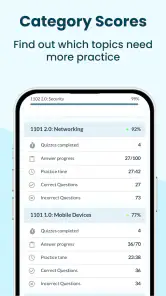
- Practice questions help identify weak areas before test day.
- Useful for short study sessions during commutes or breaks.
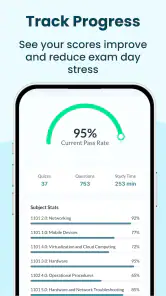
- Progress tracking makes it easier to monitor preparation over time.
- Suitable for learners preparing without constant access to a computer.
Cons
- Question quality may vary and should not replace official CompTIA materials.
- Some explanations may be too brief for difficult technical concepts.
- Full access to all content may require an in-app purchase.
- The app may not cover every update to the 2026 exam objectives immediately.
- Heavy repetition can make practice feel less engaging over longer sessions.
- Category
- Education
- Version
- 2.1.019