ATI TEAS Exam Prep 2026
- 37.00
- 4.7
- Installs
- 10.00K
- Price
- Free

Screenshots
Analysis by Reviewed
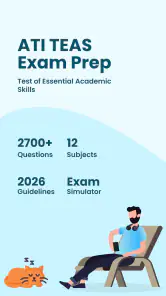
Preparing for a nursing entrance exam is less about finding one impressive study tool and more about building a routine that exposes weak areas before test day. I spent time with ATI TEAS Exam Prep 2026 from Prepia Inc, an education app focused on ATI TEAS preparation. Its central appeal is straightforward: it brings a large bank of practice questions, tests, and study guides into a phone-friendly format instead of asking you to manage several separate resources.
That focus makes the app easy to understand. It is not trying to be a general nursing school companion or a broad medical reference. It is aimed at people preparing for the ATI TEAS and wanting repeated practice across the exam’s subject areas. The app is free to install, rated for Everyone, and available for devices running Android 7.0 or later. I also found the current version, 2.1.030, relevant for anyone checking compatibility before committing to a study routine.
My overall impression is positive, but with an important qualification: this is most useful when you already intend to study actively. The app can give structure to practice, but it cannot replace understanding, a realistic schedule, or another explanation when a question exposes a deeper gap. Its strongest capability is the breadth of its question-based preparation, and that is where its real value becomes clear.
Why the large practice bank matters more than a simple quiz app
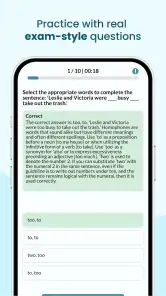
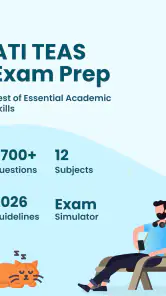
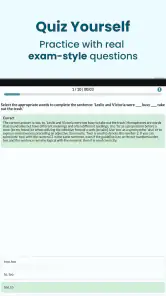
The headline feature is a collection of about 1,900 TEAS practice questions, supported by tests and study guides. A large bank changes how I use a preparation app. Instead of memorizing the wording of a small set of repeated questions, I can return to a subject later and encounter a different combination of concepts. That matters because recognizing an answer from memory is not the same as being ready for an exam.
I see three practical benefits in that approach. First, repeated questions can reveal patterns in my mistakes. If I keep missing a certain kind of reading question or make the same calculation error in mathematics, the problem becomes visible. Second, a broad bank makes short sessions more worthwhile because I do not exhaust the material immediately. Third, tests can shift preparation from isolated recall toward working through a longer sequence without constantly changing resources.
The study guides add a second layer. Practice questions tell me where I struggle, while a guide gives me something to review before I try again. I would not treat the guides as a complete textbook, but they can make the app more useful than a quiz-only product. The key is to use them after identifying a weakness, not simply read everything passively and assume the information will stick.
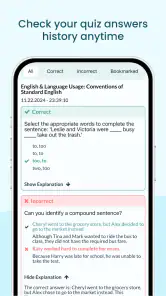
That distinction is easy to overlook. Many learners open an exam-prep app, answer a few questions, glance at a score, and move on. I get more from it when I treat each result as a decision point. A correct answer that required guessing deserves a review too. A wrong answer should be classified: did I misunderstand the concept, misread the question, rush the calculation, or forget a basic fact? The app supplies the practice material, but this classification is what turns volume into learning.
More From Our News Desk

Clash of Clans Is Won Between the Battles

Android Auto Makes the Case for Quieter Car Software

MobiOffice: Transforming Mobile Productivity with Seamless Integration

EA SPORTS FC™ Mobile Soccer: Redefining Mobile Sports Gaming

How Microsoft OneDrive Became a Mobile Productivity Giant

How Google Translate Breaks Language Barriers Effortlessly
Using questions as a diagnostic tool
My preferred workflow is to begin with a mixed practice session rather than immediately spending all my time on the subject I like best. A mixed set gives a more honest picture of readiness. Afterward, I would separate the results into three groups: confident correct answers, uncertain correct answers, and incorrect answers. The second and third groups deserve attention, because a lucky answer can hide the same weakness as a wrong one.
From there, I would use the study material selectively. If a mathematics item exposes a problem with a particular process, I would review that concept and then return to related questions. If a science question reveals unfamiliar terminology, I would make a short handwritten explanation in my own words. This is more efficient than rereading every guide from beginning to end.
A useful but non-obvious advantage of a large bank is that it supports delayed checking. I would avoid looking up an answer immediately after every difficult question. Instead, I would mark the issue mentally or on paper, finish a small group, and then review the errors together. That preserves some exam pressure and helps me notice whether the mistake was a one-off slip or part of a pattern.
The trade-off is that a question bank can create false confidence if I measure progress only by the number of items completed. Finishing many questions is not automatically meaningful. I would rather complete a smaller session carefully, explain why each answer is right, and revisit mistakes later than rush through a long list for the sake of a larger total.
What the app feels like in an everyday study routine
Imagine a student who works during the day and has only a limited evening window. A practical session could start with a short diagnostic test, continue with review of the weakest topic, and finish with a few fresh questions from that same area. The phone format is well suited to this kind of routine because it removes the need to spread books, notes, and loose worksheets across a desk.
I would not use every session in the same way. On a busy day, I would focus on a compact group of questions and carefully inspect the errors. On a day with more time, I would take a longer test under stricter conditions, putting the phone aside except when needed for the app itself. This variation matters because short practice builds familiarity, while longer sessions test concentration and pacing.
The app also fits a useful “waiting time” pattern, such as reviewing a few questions before an appointment or during a commute when it is safe and practical to do so. However, I would reserve serious timed work for a quiet place. A phone is convenient, but notifications, interruptions, and a small screen can make casual practice feel easier than the real exam environment.
For that reason, I would pair app sessions with occasional paper-based work or a distraction-free desk session. The app should be the engine for repetition and diagnosis, not the only setting in which I study. That combination gives me the convenience of mobile practice without allowing convenience to hide weaknesses in concentration or endurance.
Where ATI TEAS Exam Prep 2026 fits best
The strongest scenario is a learner who has a target exam ahead, knows that practice is necessary, and needs one central place to keep working through questions. The app is especially sensible for someone who has already covered at least some of the underlying material and now wants to test recall, application, and consistency.
It can also help a student who has tried studying from a large textbook but struggles to turn reading into action. A book may explain a topic thoroughly, yet it does not automatically show whether I can answer exam-style questions under pressure. Moving between a guide and a question set creates a more active loop: learn, attempt, inspect, and repeat.
Another good use is a final review period in which the goal is not to learn every subject from the beginning but to locate the areas most likely to cost points. The practice bank can help prioritize time. If one subject is consistently strong and another produces uncertain answers, I can stop distributing my study hours evenly and concentrate where the return is likely to be higher.
That does not mean I would recommend relying on the app alone for a student starting with major gaps. A question can show that an answer is wrong, but a short explanation may not be enough for someone who has never learned the underlying topic. In that situation, a class, instructor, detailed textbook, or other teaching resource may be the better primary tool, with this app used for checking progress afterward.
How I would combine it with other preparation resources
I would give each resource a distinct job. The app would handle retrieval practice, timed tests, and identifying recurring errors. A textbook or class would handle difficult explanations. Personal notes would hold the mistakes I make repeatedly. This division prevents the common problem of collecting multiple resources that all do the same thing while leaving no time to use them properly.
When I miss a question, I would write a brief correction rather than copy a long explanation. For example, I might record the rule I forgot, the step where my calculation went wrong, or the clue in the wording that I ignored. Before a later test, I would read those notes first. This creates a personal review layer around the app and makes the practice bank more valuable over time.
I would also avoid treating a high result from one test as proof that I am ready. A better check is consistency across separate sessions, especially after a delay. If performance drops when the questions are unfamiliar or when I am tired, that tells me more than a single comfortable attempt. The app’s breadth supports this kind of repeated check, provided I do not rush through the material.
Compared with free web searches, the advantage is organization. Searching online can produce explanations and sample questions, but it can also scatter attention across pages of uneven quality. Compared with a printed book, the app is easier to carry and better suited to quick practice. Compared with a full course, it is likely to feel lighter and less guided. I see it as a focused practice companion rather than a complete classroom replacement.
Costs, access, and the limits of convenience
The app is free, which makes it easy to try before deciding whether it belongs in a longer study plan. There are in-app purchases ranging from $7.99 to $99.99 per item, so I would check what a paid option unlocks and whether it matches my needs before spending money. The free entry point is useful, but I would not assume that every part of the experience has the same level of access without reviewing the purchase choices inside the app.
This pricing structure creates a practical decision. If I only need occasional practice or want to test whether the question style suits me, starting free is sensible. If I plan to use the app as my main preparation tool for several weeks, I would compare the cost of the relevant purchase with a book, course, or other preparation option. The right choice depends on how much guidance I need, not simply on the size of the question bank.
There is also a screen-fatigue issue. Studying on a phone can be comfortable for short sessions but tiring during extended reading or a long test. I would use a larger screen when possible, keep a notebook nearby, and take breaks rather than turning every spare minute into another quiz. Convenience helps me study more often, but it does not make sustained concentration effortless.
Because the app is rated Everyone, it is broadly accessible from an age-rating perspective, but the subject matter is still specialized. A general student looking for basic school revision would not get much value from it. The intended audience is someone with a clear ATI TEAS goal, not someone browsing for casual educational quizzes.
Who should choose it and who should look elsewhere
I would recommend trying it if you learn best by answering questions, want a substantial amount of practice in one app, and are willing to review mistakes instead of chasing scores. It is a particularly good fit for independent learners who can create their own schedule and recognize when they need outside explanation.
I would be more cautious if you need a teacher-like path from the first lesson to the last. The app can organize practice, but independent preparation still requires judgment. Someone who is easily discouraged by unexplained errors may prefer a course with deeper instruction and direct support. Likewise, a learner who already owns a comprehensive preparation book may gain more by using the app only for extra testing rather than replacing the book entirely.
The developer, Prepia Inc, has positioned this as an education app specifically around ATI TEAS exam preparation, and its audience is reflected in its reception: it holds a 4.7 average from over 500 ratings and has passed 10,000 installs. Those figures suggest that it has found a real audience, but they should not decide the purchase for me. My own study style matters more than popularity. A highly rated practice tool is still a poor match if I need extensive teaching rather than repeated testing.
I would also skip it as a sole resource if my exam date is very close and my foundational knowledge is weak. In that situation, I would first seek a structured review plan and use the app to target the most urgent gaps. The question bank can make limited time more focused, but it cannot turn a rushed schedule into a complete course.
My final assessment after using its focused approach
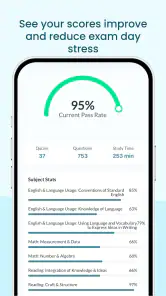
What I like most about ATI TEAS Exam Prep 2026 is not simply that it contains many questions. It is that the large practice supply can support a smarter cycle of diagnosis and correction. Used thoughtfully, it helps me stop guessing which subjects deserve attention and start basing that decision on repeated evidence from my own answers.
The app works best when I give every session a purpose: diagnose, review, drill, or simulate. It works less well when I open it without a plan and measure success by how quickly I can finish questions. That difference is important. The tool can encourage productive repetition, but the learner still has to interpret results and find a fuller explanation when practice reveals a conceptual gap.
For a student preparing for the ATI TEAS who wants a portable, focused practice companion, I think it is worth trying at no initial cost. I would keep a notebook, schedule longer tests away from distractions, and compare any paid purchase with the price and depth of other study resources. I would not present it as a substitute for every book, class, or instructor.
In the end, ATI TEAS Exam Prep 2026 earns my recommendation for the learner who needs repetition, structure, and a way to uncover weak areas. Its best result comes from using the questions as feedback rather than entertainment. If that matches the way you study, the app can become a practical part of your preparation; if you need step-by-step teaching first, another resource should lead the plan.
ATI TEAS Exam Prep 2026 Frequently Asked Questions
What devices and operating systems can run ATI TEAS Exam Prep 2026?
ATI TEAS Exam Prep 2026 is an education app developed by Prepia Inc. It supports Android devices running version 7.0 or later, so check your device’s operating system before downloading. The app is free to download, while some content is available through in-app purchases. Keeping your device and app updated can also help provide a smoother study experience.
What is ATI TEAS Exam Prep 2026?
ATI TEAS Exam Prep 2026 is a study app designed to help nursing and allied-health students prepare for the Test of Essential Academic Skills. It typically organizes practice material around the main exam areas: Reading, Mathematics, Science, and English and Language Usage. The app is most useful for reviewing concepts, completing practice questions, and becoming familiar with the exam’s format before test day.
Does ATI TEAS Exam Prep 2026 include all four sections of the TEAS exam?
The app is intended to support preparation for the four core TEAS sections: Reading, Mathematics, Science, and English and Language Usage. It advertises 1,900 TEAS practice questions, tests, and study guides. Before downloading or paying, check the current app-store description to confirm that the subjects and content match the TEAS blueprint used by your nursing program.
Is ATI TEAS Exam Prep 2026 suitable for beginners?
Yes, the app can be helpful for beginners because it allows students to review fundamental topics before attempting full practice tests. It is especially useful if you need a structured starting point or want to identify weak areas. Nevertheless, it should not replace a complete study plan. Students with limited preparation time should combine the app with official TEAS guidance and additional review resources.
Is ATI TEAS Exam Prep 2026 free to use?
The app is free to download, but in-app purchases range from $7.99 to $99.99 per item. Review the available options carefully before starting a trial or entering payment details so you understand which study materials or features require a purchase. Pricing and available content can change, so check the app-store listing before buying.
Pros
- Covers core TEAS subjects in one focused study app.
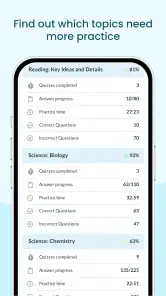
- Practice questions help identify weak areas before test day.
- Short study sessions fit easily into busy nursing-school schedules.
- Progress tracking makes it easier to monitor preparation over time.
- Useful for reviewing concepts without carrying printed study materials.
Cons
- Some advanced features may require a paid subscription or in-app purchase.
- Question difficulty may not always match the official TEAS exam.
- Content updates may vary as the 2026 exam requirements change.
- Limited app-based practice cannot fully replace detailed textbooks or classes.
- A stable internet connection may be needed for certain lessons or features.
- Category
- Education
- Version
- 2.1.030