ASWB BSW LCSW MSW | Exam Prep
- 18.00
- 4.7
- Installs
- 10.00K
- Price
- Free
Screenshots
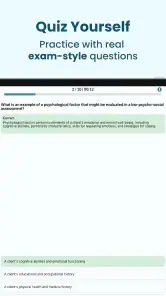
Analysis by Reviewed
Preparing for a social work licensing exam is a very different task from casually reading about social work. I found ASWB BSW LCSW MSW | Exam Prep most useful when I treated it as a focused practice companion rather than a complete replacement for a textbook, class, or official exam guidance. It is an education app from Prepia Inc., aimed at people working toward BSW, MSW, LCSW, or advanced generalist testing. The free download makes it easy to try, while optional in-app purchases range from $5.99 to $64.99 per item.
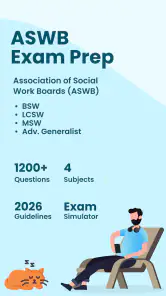
What appealed to me first was the narrow purpose. Instead of mixing general study subjects with unrelated learning tools, the app stays centered on ASWB-style preparation. That focus matters when I have only a short study window and want to answer practice questions immediately. The store summary points toward the 2026 testing cycle, but I would still use current official examination materials alongside it before relying on any preparation app for a high-stakes test.
How I built a useful daily study routine
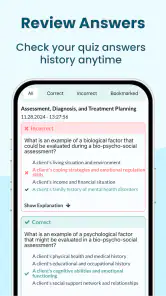
My baseline workflow was simple: open the app, choose a manageable group of questions, answer without looking anything up, and then review the reasoning behind each mistake. That last step is more important than the raw score. A correct answer based on guessing does not show reliable understanding, while a wrong answer can reveal whether I misunderstood ethics, client safety, assessment priorities, or the order of intervention.
I recommend beginning with short sessions instead of trying to finish a large amount of material in one sitting. A brief practice block fits naturally into a commute, a lunch break, or the quiet period after work. The goal is to create a repeatable habit in which every session has three parts: attempt, review, and note-taking. The app handles the practice portion, but the learning improves when I record why an option was stronger than the alternatives.
One practical method is to keep a small error log outside the app. I divide the page into the topic, the answer I chose, the best answer, and the clue I missed. This exposes patterns that a single session score can hide. For example, I might know the relevant rule but repeatedly choose an action that is too advanced for the situation. That is a reasoning problem, not simply a memory problem, and it deserves a different kind of review.
The app is especially convenient for people who already have course notes or a review book. I would use those materials to learn a concept, then use this app to test whether I can apply it under pressure. That division of labor is more realistic than expecting question practice alone to teach every subject in depth. It also makes the app less intimidating for someone returning to study after time away from school.
Another useful routine is to separate learning sessions from checking sessions. During a learning session, I pause after difficult questions and study the explanation carefully. During a checking session, I answer at a steady pace and avoid repeatedly changing choices. Mixing those two purposes can make progress hard to judge. A practice score is more meaningful when I know whether I was studying openly or simulating exam conditions.
More From Our News Desk

Clash of Clans Is Won Between the Battles

Android Auto Makes the Case for Quieter Car Software

MobiOffice: Transforming Mobile Productivity with Seamless Integration

EA SPORTS FC™ Mobile Soccer: Redefining Mobile Sports Gaming

How Microsoft OneDrive Became a Mobile Productivity Giant

How Google Translate Breaks Language Barriers Effortlessly
Who benefits most from this focused approach
This app makes the most sense for social work students and professionals who already understand the broad subject areas but need repeated practice with exam-style decisions. It can also help someone identify weak areas before spending money on a larger preparation course. Because it supports several ASWB pathways in its positioning, it is relevant to more than one stage of a social work career, although I would carefully match my own exam level with the material I am using.
A realistic example would be a working MSW graduate with twenty minutes available before an evening shift. I would complete a small practice set, mark the questions that required guessing, and review only those afterward. On the next day, I would revisit the same concepts using notes rather than immediately repeating the identical questions. This prevents familiarity with the wording from being mistaken for genuine improvement.
It is less suitable for a person starting from zero who needs full lessons, lectures, or extensive explanations before attempting questions. It is also not the best single resource for someone who wants a complete study calendar, instructor feedback, or a formal classroom environment. In those cases, a structured course or a comprehensive review guide would provide the foundation, with this app serving as an extra practice layer.
Settings and preparation choices worth checking
Before settling into a routine, I would check which exam track best matches my goal. The names BSW, MSW, LCSW, and advanced generalist point to different professional stages, so selecting material casually could waste valuable study time. I would also make sure the app is running properly on my device and that the content I am using fits my intended examination cycle.
The current version is 2.1.020, and the app supports Android 7.0 or later. That broad compatibility is helpful if I use an older phone for studying, but compatibility alone does not guarantee that every device feels equally comfortable. A smaller screen can make long explanations tiring, so I prefer a stable sitting with good lighting for review and use short mobile sessions mainly for answering.
I would also inspect the purchase screens before building a long-term plan. The app is free to install, but it includes optional purchases, with individual items priced from $5.99 to $64.99. I would not buy immediately simply because I had a difficult session. First I would establish whether the free material fits my learning style, then decide whether an expanded package addresses a specific need.
That distinction matters because more content is not automatically better. If my problem is weak prioritization, purchasing a larger question collection may give me more opportunities to repeat the same mistake. If my problem is limited exposure to different scenarios, an additional package could be more useful. I would make the decision based on the gap in my study process rather than on the size of the purchase.
Notifications, sound, and display preferences are also worth reviewing when those controls are available on the device or within the app. I prefer a quiet study environment and disable distractions before starting. This is not a special feature claim about the application; it is a simple way to keep a short practice session from turning into fragmented phone use.
Faster patterns that improve review quality
The fastest approach is not answering as many questions as possible. It is reducing repeated mistakes. I use a three-pass pattern: first answer naturally, then review every uncertain response, and finally revisit only the concepts that caused trouble. This keeps easy questions from consuming the same attention as questions that expose a real weakness.
I also separate confidence from correctness. After choosing an answer, I mentally classify it as certain, probable, or guessed. A guessed correct answer goes into the review list just like a wrong answer. This is one of the most useful habits for practice apps because a lucky result can otherwise create false confidence.
Another strong pattern is to explain the decision aloud in one sentence. I might say, “This option comes first because it addresses immediate safety before longer-term planning.” If I cannot explain the choice without repeating the answer wording, I probably need to study the underlying principle again. This turns passive tapping into active reasoning without requiring any extra app feature.
For users with limited time, I would alternate topic-focused sessions with mixed sessions. A focused session helps repair one weak area, while a mixed session tests whether I can recognize the right approach when the subject changes unexpectedly. Studying only one topic for too long can make the questions feel easier than they really are because the context gives away the type of answer to expect.
I would avoid restarting a question repeatedly until I get it right. That pattern trains recognition of a familiar screen rather than flexible understanding. Instead, I note the error, move on, and return later after a gap. If the app allows me to review previous material, that delayed return is where I would get the most value. If it does not provide the exact tracking tools I want, my external error log fills the gap.
A further improvement is to use different physical conditions for different purposes. I answer a few questions on my phone when practicing speed and use a larger screen or printed notes when studying explanations. This prevents eye strain from becoming confused with mental difficulty. It also reflects the fact that a mobile practice tool is convenient, but convenience should not dictate the entire study environment.
Where the app reaches its limits
The main limitation is the natural limit of a question-practice app: answering items is not the same as mastering the whole examination. I still need a broader plan for content review, professional ethics, test-day strategy, and checking current requirements through authoritative sources. The app can help me rehearse decisions, but it should not be treated as the final authority on licensing rules or eligibility.
I would also be cautious about interpreting the average rating as proof that the app will suit every learner. It has a 4.7 average from around 275 ratings, with 18 written reviews, and more than 10K installs. Those figures suggest a positive reception and a real user base, but they do not tell me whether the questions match my exact exam level or whether the explanations fit my preferred learning style.
The Everyone age rating makes the app broadly accessible, which is appropriate for an educational preparation tool. Still, the intended audience is more specific than the age label suggests. A younger learner can open it, but the content is designed around professional social work examinations, so meaningful use depends on having the relevant academic or professional context.
The optional pricing is another point to consider. Free access lowers the barrier to testing the workflow, but serious preparation may tempt users toward paid material before they have evaluated their weaknesses. I prefer a staged decision: try the available practice, identify the topic that needs help, compare the cost with books or courses, and only then consider an in-app purchase.
There is also a risk of overfitting to app questions. If I memorize familiar patterns, I may perform well inside the app without becoming better at unfamiliar wording. To counter that, I would combine the practice with notes, case discussions, and occasional questions from a separate reputable source. The goal is transfer: applying the same reasoning when the presentation changes.
People who need accessibility features, detailed progress analytics, or instructor-led explanations should investigate the app carefully on their own device before committing to it as a primary resource. A focused mobile tool can be excellent for repetition and portability while still falling short for learners who depend on richer guidance. That is not a flaw unique to this product; it is an important trade-off of choosing a compact practice format.
My verdict after using it as a study companion
I see ASWB BSW LCSW MSW | Exam Prep as a practical addition to a serious study plan, especially when I need quick, repeatable practice rather than another long chapter to read. Its strongest quality is focus: it puts ASWB-related preparation in reach during small pockets of time and encourages me to confront decisions instead of merely highlighting information.
I would recommend starting with the free option, matching the question level to the intended exam, and keeping an external record of uncertain answers. Those three habits make the experience more useful than simply chasing a high score. I would also review any paid option slowly, because the right purchase depends on whether I need more questions, broader explanations, or something the app is not designed to provide.
Prepia Inc. has positioned this as an education app for a clearly defined professional goal, and its 2026-oriented summary makes timing relevant for current candidates. Even so, I would pair it with official guidance and a broader resource before exam day. The app is best at rehearsal, not at replacing every part of preparation.
My final view is positive but deliberate: use it when you want portable practice, a way to expose recurring reasoning errors, and a convenient bridge between study sessions. Skip it as your only resource if you need teaching from the beginning, personalized feedback, or a complete licensing roadmap. For the right learner, the real advantage is a repeatable habit of answering, reviewing, and correcting—not simply having another set of questions on a phone.
ASWB BSW LCSW MSW | Exam Prep Frequently Asked Questions
What devices and operating systems can run ASWB BSW LCSW MSW | Exam Prep?
ASWB BSW LCSW MSW | Exam Prep is an education app from Prepia Inc. It supports Android devices running version 7.0 or later, so check your device’s operating system before downloading. Having a compatible device helps you access the study material smoothly, whether you are reviewing between classes or fitting practice into your workday.
What is ASWB BSW LCSW MSW | Exam Prep?
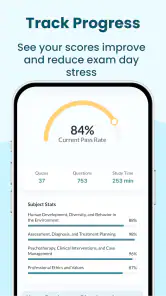
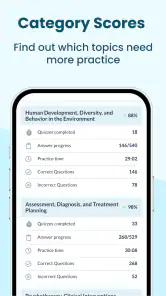
ASWB BSW LCSW MSW | Exam Prep is a study app designed to help social work students and professionals prepare for Association of Social Work Boards licensing examinations. It generally brings practice questions, review topics, explanations, and progress tools into one place. The content is intended to support preparation for BSW, MSW, and clinical-level exams, although users should confirm that the available material matches their specific exam category and jurisdiction.
Which ASWB exams can I prepare for with this app?
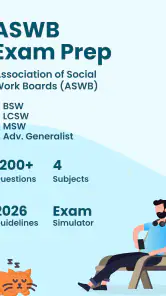
The app is aimed at several common ASWB examination levels, including the Bachelor’s, Master’s, and Clinical exams, often identified as BSW, MSW, and LCSW preparation. Its summary also refers to Advanced Generalist tests. Coverage can vary by version, subscription, or update, so it is important to review the app listing before downloading. It should be used as a supplementary study resource rather than as a replacement for the official ASWB exam guide, current rules, or state licensing instructions.
Does the app include practice questions and explanations?
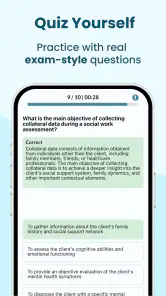
Yes, the main purpose of an exam-preparation app like this is to provide practice questions that help you become familiar with the wording, decision-making style, and major subject areas found on social work licensing tests. Explanations are particularly useful because they show why an answer is considered most appropriate. However, users should still compare explanations with official ASWB materials and professional ethics standards, especially when questions involve jurisdiction-specific requirements.
Is ASWB BSW LCSW MSW | Exam Prep free to use?
The app is free to download, but some study features, question banks, mock exams, or advanced progress tools can require in-app purchases. Individual purchases range from $5.99 to $64.99. Before starting, check the store page for the current pricing structure, trial conditions, renewal terms, and available content. If a free version is offered, it may provide only a limited sample of the complete preparation material.
Pros
- Covers BSW
- MSW
- LCSW
- and ASWB exam categories in one app.
- Practice questions help identify weak topics before test day.
- Short study sessions fit easily into a busy social work schedule.
- Explanations can reinforce key concepts after answering questions.
- Useful portable revision tool for studying without carrying textbooks.
Cons
- Question quality and accuracy may vary across different exam sections.
- Some advanced topics may require additional textbooks or official resources.
- Repeated practice can become predictable after extended use.
- A subscription or in-app purchases may be needed for full access.
- It cannot replace supervised practice or guidance from a qualified instructor.
- Category
- Education
- Version
- 2.1.020